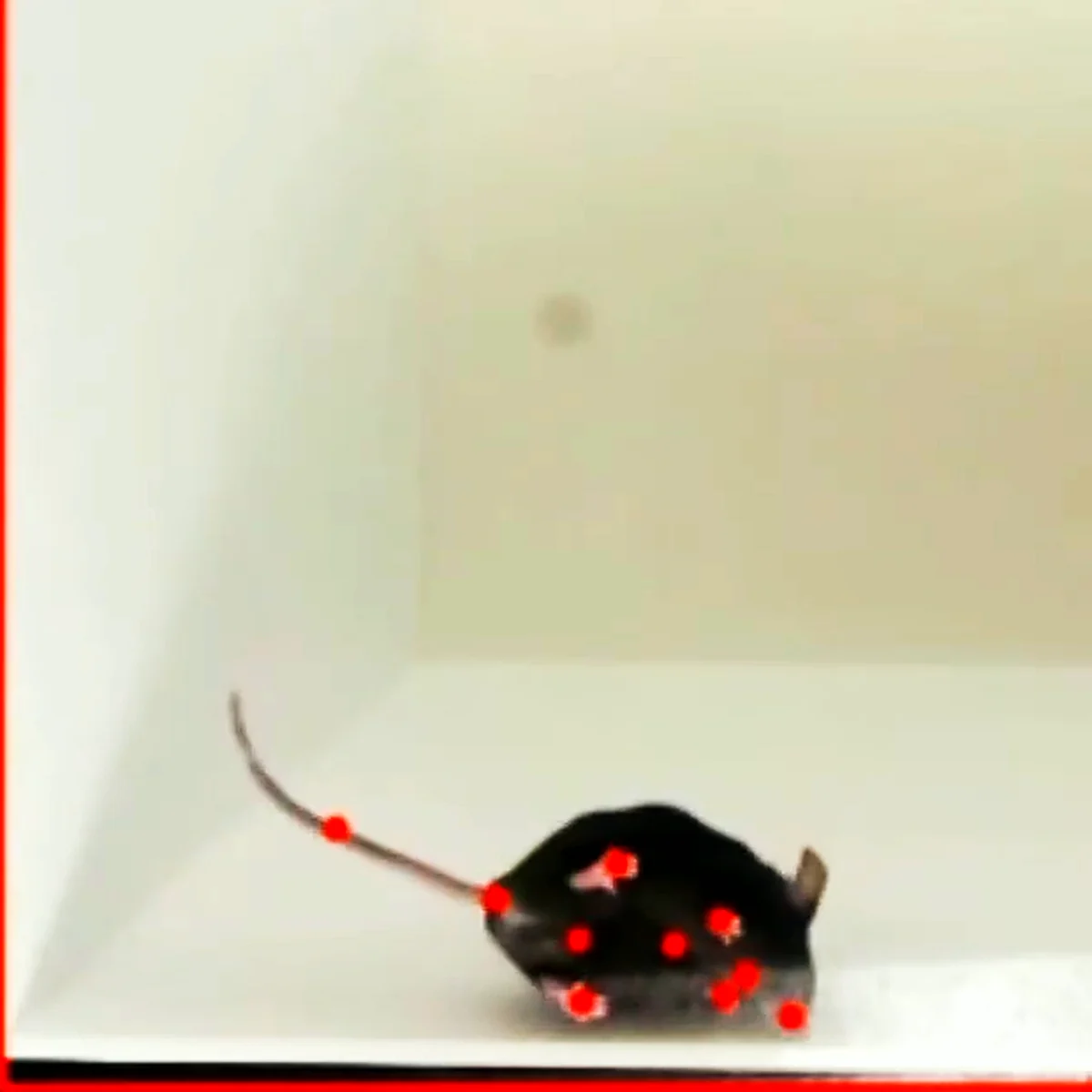

1 / 4
Dry Morris Water Maze
SKU ME-DMWM-M01
$1,490.00
IncludesStandard care
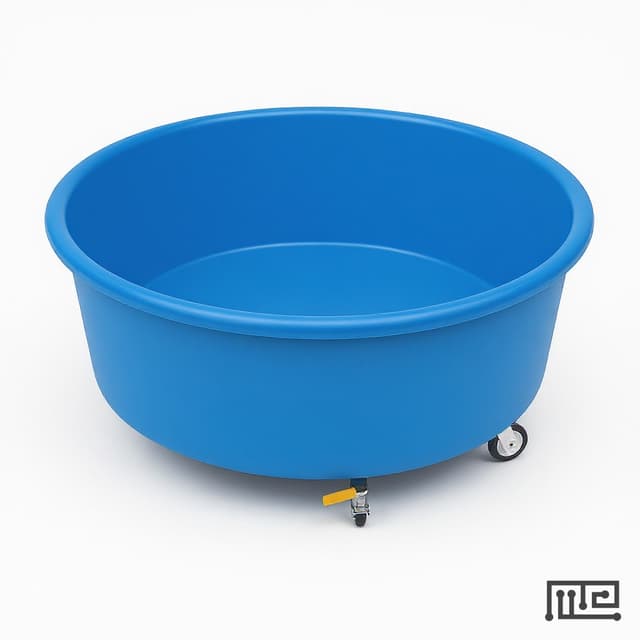
The Dry Morris Water Maze is a dry land version of the Morris Water Maze (MWM).
The task is used in the assessment of spatial learning and memory. Much like the Morris Water Maze, the Dry Morris Water Maze is a hidden-goal task that requires the food-deprived
CE MarkedBAA available
Scientist guidance

Louise Corscadden, PhD
Director of Science · ConductScience
Ask Louise about Dry Morris Water Maze fit, setup, configuration, or quote prep.
Already working with us? Sign in to connect this with My Scientist.
Key Specifications
Full details →- Model fit
- Food-deprived subjects
- SKU family
- CS-958410
- Shipping box
- 65.0 x 36.0 x 27.0 cm
- Ordering
- Online checkout and quote request available
- Category
- Behavioral Mazes
- Build notes
- Confirm accessories, station layout, and support needs before purchase
The Dry Morris Water Maze is a dry land version of the Morris Water Maze (MWM). The task is used in the assessment of spatial learning and memory. Much like the Morris Water Maze, the Dry Morris Water Maze is a hidden-goal task that requires the food-deprived subjects to locate the hidden food rewards. This food-motivated task is less stress-inducing than the conventional MWM which uses the fear of drowning to motivate the subject to find the hidden platform. This task requires the use of hippocampal-based learning to remember and locate the hidden rewards. This ability can be affected by lesions and drugs.
Specifications
| 4 Ft (Mouse) | 6 Ft (Rat) |
|---|---|
| Polyethylene exterior | Polyethylene exterior |
| Non-cloggable drain placed on the side or under. The choice on order. | Non cloggable drain placed on side or under. Choice on order. |
| 1 Platform included | 1 Platform included |
| Model | SKU | Listed price | Status | Shipping box |
|---|---|---|---|---|
| 4ft (Mouse) | ME-DMWM-M01 | $1,490.00 | Available | 65.0 x 36.0 x 27.0 cm |
| 6ft (Rat) | ME-DMWM-R01 | $1,890.00 | Available | 65.0 x 36.0 x 27.0 cm |
No Q&A yet. Have a question? Ask below.
Have a question about this product?
Track rodents with ConductVision
ConductVision is our video-tracking software. Record your sessions on video, and it scores standard rodent tests, such as those listed below.
Examples of tests it scores
To check whether ConductVision scores your protocol in this apparatus, ask in your quote request.
Ask a question
Have a question? Just ask.
Send it over and we'll email you a personalized answer — no call, no scheduling.
Personalized email reply
Usually within one business day
Helpful answers published here
Prefer to talk it through?
Accessories
Enhance your setup with compatible accessories
Total: $0.00
Frequently Bought Together
Total: $3,230.00
Use this apparatus with
The complete Dry Morris Water Maze workflow
Track behavior
Automate target-zone time, latency, zone occupancy, path order, and event timing for Dry Morris Water Maze studies.
ConductVision Dry Morris Water Maze ->Run protocol
Stepwise dry-land spatial acquisition setup, trial timing, exclusion rules, and reporting checkpoints.
ConductMaze Dry Morris Water Maze Protocol ->Analyze output
Summarize target-zone time, group differences, and quality-control flags before export.
Dry Morris Water Maze Calculator ->Configuration considerations
Common Dry Morris Water Maze setup decisions
Use these notes to scope species, cohort, tracking, and automation needs. Only verified product or support routes are linked from this section.
This productStandard
Dry Morris Water Maze
Dry circular arena with escape or goal location analogs for place learning
spatial learning without swim stress, hypothermia, or aquatic motor load.
Quote
Request QuoteBuyableScaled option
Dry Morris Water Maze Species Variant
Mouse, rat, aquatic, insect, or large-animal scaling as appropriate
Use species-specific dimensions and lighting so the apparatus tests the intended construct instead of body size, visibility, or handling tolerance.
Quote
View options ->SpecialtyAutomation
Dry Morris Water Maze With Tracking
Camera, gates, sensors, cue control, or event logging as required
Best when the protocol needs reproducible timing, high-throughput scoring, or defensible endpoint extraction across cohorts.
Quote
Configure tracking ->§ 1
Introduction
The Dry Morris Water Maze is a spatial assay built around spatial learning without swim stress, hypothermia, or aquatic motor load. Interpretable data depend on matching the apparatus geometry, subject species, trial structure, and scoring rules to the behavioral construct under study. 1
Dry-land spatial acquisition protocols depend on stable geometry, consistent trial timing, and pre-defined scoring rules. Without those controls, target-zone time can be shifted by motivation, locomotion, light level, odor, cue salience, or handling rather than the intended behavioral construct. 1
This methods section summarizes setup, endpoint definitions, common confounds, sample output, adjacent assays, and reporting details needed to evaluate Dry Morris Water Maze results alongside the product specifications. 1
§ 2
Methods
2.1 Procedure
Dry-land spatial acquisition with standardized setup, trial timing, and endpoint extraction.
Pre-test setup
- 1.Define construct: Pre-register whether the study uses Dry Morris Water Maze for spatial behavior, screening, cohort comparison, or apparatus validation.
- 2.Calibrate apparatus: Verify dry circular arena with escape or goal location analogs for place learning, visibility, lighting, surface condition, cue placement, and camera field of view before animals enter the room.
- 3.Set scoring rules: Define target-zone time, omissions, exclusions, latency cutoffs, and event thresholds before acquisition starts.
- 4.Control carryover: Use consistent cleaning, handling, acclimation, and inter-trial timing so odor, stress, and fatigue do not become hidden treatment variables.
Trial sequence
- 1.Start trial: Place the subject at the protocol-defined start location and begin synchronized video or event logging.
- 2.Record behavior: Capture target-zone time, path order, latency, dwell time, and relevant zone or arm events throughout the trial.1
- 3.Apply endpoint rules: Score only committed entries or events that meet the pre-defined body-position and timing criteria.
- 4.End and reset: Stop at the maximum duration, completion criterion, or humane endpoint, then clean and reset the apparatus.
- 5.Export QC: Review tracking loss, outlier latency, immobility, omissions, and apparatus notes before group-level analysis.
Critical methodological constraints
- Odor trails. Document odor trails because it can shift target-zone time independent of the intended construct.
- Motivation. Keep motivation stable across cohorts and sessions.
- Room cues. Audit room cues before interpreting group differences.
- Locomotor activity. Report locomotor activity when it changes engagement, exploration, or measurable trial completion.
- Surface preference. Flag surface preference during QA because it often explains apparent assay failure.2
2.2 Measurement & Analysis
Core Dry Morris Water Maze endpoints for behavioral interpretation and apparatus quality control.
Target-zone time
Spatial memory proxy
Target-zone time is the primary endpoint for this page and should be paired with latency and quality-control flags.1
Goal latency
Latency and initiation
Goal latency helps distinguish task performance from motivation, freezing, fatigue, or handling effects.
Path efficiency
Spatial or zone strategy
Path efficiency captures how the subject solved the task, not only whether it reached the endpoint.
Search errors
Engagement control
Search errors identifies omissions, low exploration, sensor dropouts, or species-specific non-response.
Cue instability
Quality-control flag
Cue instability should be reviewed before exporting final group summaries.
+ Additional metrics: trial duration, zone dwell, event count, path efficiency, tracking confidence, exclusions, and session-level notes.
2.3 target-zone time ratio (analysis)
A compact percentage summary for Dry Morris Water Maze output.
§ 3
Results
PubMed publication counts, sample apparatus output, and recent papers from a dated PubMed snapshot.
3.2 Sample apparatus output
Representative Dry Morris Water Maze output for methods review and endpoint interpretation.
§ 4
Discussion
Limitations of the paradigm, methodological caveats, and current directions.
4.1 Common confounds
Variables that can shift Dry Morris Water Maze results apart from the effect under study.
Odor trails
Odor trails can change apparent Dry Morris Water Maze performance without reflecting the intended behavioral construct. Control it in setup and report it in methods.
Motivation
Motivation can change apparent Dry Morris Water Maze performance without reflecting the intended behavioral construct. Control it in setup and report it in methods.
Room cues
Room cues can change apparent Dry Morris Water Maze performance without reflecting the intended behavioral construct. Control it in setup and report it in methods.
Locomotor activity
Locomotor activity can change apparent Dry Morris Water Maze performance without reflecting the intended behavioral construct. Control it in setup and report it in methods.
Surface preference
Surface preference can change apparent Dry Morris Water Maze performance without reflecting the intended behavioral construct. Control it in setup and report it in methods.
4.2 Construct validity caveats
Dry Morris Water Maze is strongest when endpoint definitions, apparatus settings, and exclusion rules are specified before testing. Treat a single summary metric as a screening signal, then confirm interpretation with latency, engagement, comparator assays, and quality-control review. 1
4.3 Special considerations
When should I choose Dry Morris Water Maze?
Choose Dry Morris Water Maze when the research question matches spatial learning without swim stress, hypothermia, or aquatic motor load. and the lab can control odor trails, motivation, and trial timing.
What setup variables should be specified before testing?
Specify species, cohort size, apparatus dimensions, lighting, tracking method, automation level, cleaning workflow, endpoint definitions, and exclusion criteria before data collection begins.
What makes the data interpretable?
Interpretation is strongest when the apparatus configuration, trial timing, scoring thresholds, confound controls, and comparator assays are documented together with the primary endpoint.
4.4 Current directions
Quarterly editorial review of emerging Dry Morris Water Maze methodology. Q2 2026
Methods
Endpoint standardization
Define target-zone time, latency, exclusions, and engagement flags before comparing cohorts.
Emerging
Automated scoring
Camera and event-log workflows can reduce observer burden and improve consistency when zone definitions and event thresholds are validated.
Methods
Comparator batteries
Dry Morris Water Maze should link to adjacent maze, motor, or motivation assays when interpretation depends on controls.
Emerging
Integrated method reporting
Apparatus dimensions, protocol fit, tracking compatibility, and endpoint definitions should be reported together so results are easier to reproduce.
§ 5
References
10 selected methods and validation references for Dry Morris Water Maze.
- Dudchenko PA. An overview of the tasks used to test working memory in rodents. Neurosci Biobehav Rev. 2004;28(7):699-709. doi:10.1016/j.neubiorev.2004.09.002
- Shoji H, et al. Comprehensive behavioral test battery for mice. Curr Protoc Mouse Biol. 2012;2:153-187. Find source
- Vorhees CV, Williams MT. Assessing spatial learning and memory in rodents. ILAR J. 2014;55(2):310-332. Find source
- Lalonde R. The neurobiological basis of spontaneous alternation. Neurosci Biobehav Rev. 2002;26(1):91-104. doi:10.1016/S0149-7634(01)00041-0
- Walf AA, Frye CA. The use of the elevated plus maze as an assay of anxiety-related behavior in rodents. Nat Protoc. 2007;2(2):322-328. doi:10.1038/nprot.2007.44
- Pellow S, Chopin P, File SE, Briley M. Validation of open:closed arm entries in an elevated plus-maze as a measure of anxiety in the rat. J Neurosci Methods. 1985;14(3):149-167. doi:10.1016/0165-0270(85)90031-7
- Crawley JN, Goodwin FK. Preliminary report of a simple animal behavior model for the anxiolytic effects of benzodiazepines. Pharmacol Biochem Behav. 1980;13(2):167-170. doi:10.1016/0091-3057(80)90067-2
- File SE, Wardill AG. Validity of head-dipping as a measure of exploration in a modified hole-board. Psychopharmacologia. 1975;44(1):53-59. Find source
- Walsh RN, Cummins RA. The Open-Field Test: a critical review. Psychol Bull. 1976;83(3):482-504. doi:10.1037/0033-2909.83.3.482
- Brown RE, Corey SC, Moore AK. Differences in measures of exploration and fear in MHC-congenic C57BL/6J and B6-H-2K mice. Behav Genet. 1999;29(4):263-271. Find source

Dry Morris Water Maze
$1,490.00
Added to quoteView Quote