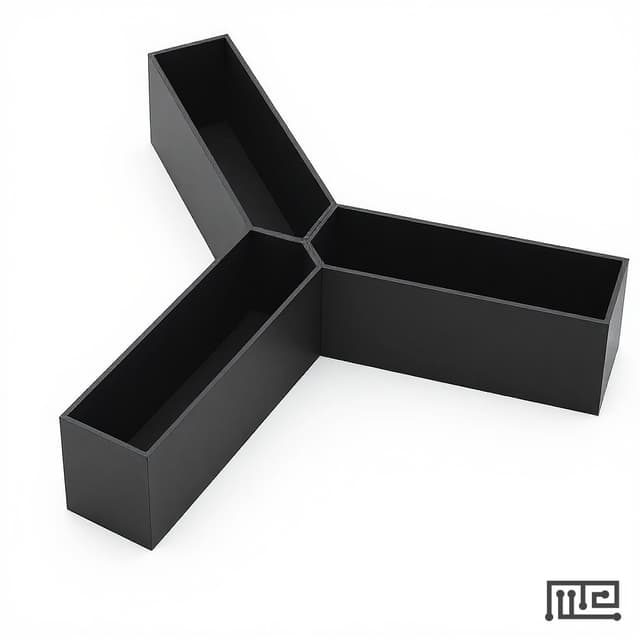
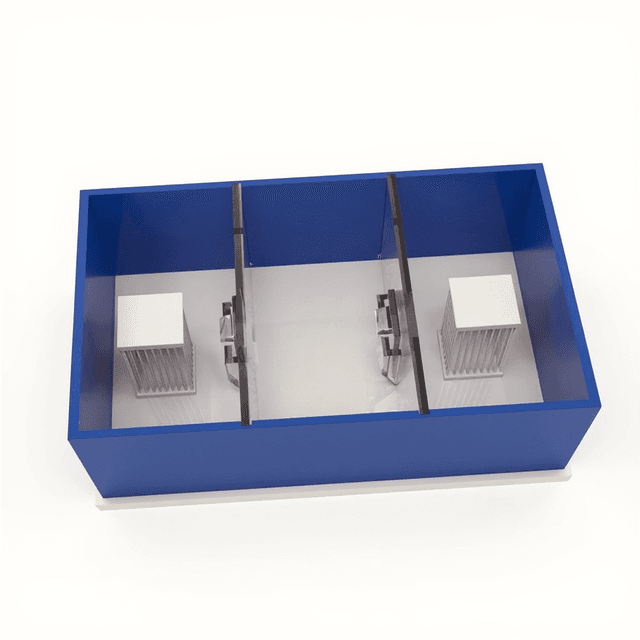
The Y maze exploits the natural tendency of rodents to explore novel environments through spontaneous alternation behavior. When placed in the maze, intact animals typically alternate arm entries, avoiding recently visited locations - a behavior dependent on functional hippocampal circuitry and spatial working memory processes. The automated door system controls access to specific arms, allowing researchers to create defined choice points and measure decision-making patterns.
The three-arm configuration creates a simple choice paradigm where animals must remember their previous location to demonstrate successful alternation. Automated doors operate silently to prevent acoustic cues that could influence behavioral responses. The system records entry sequences, allowing calculation of alternation percentages and analysis of spatial memory performance. Non-reflective surfaces eliminate visual landmarks that could serve as external cues, ensuring that behavioral responses depend on internal spatial representations rather than environmental markers.