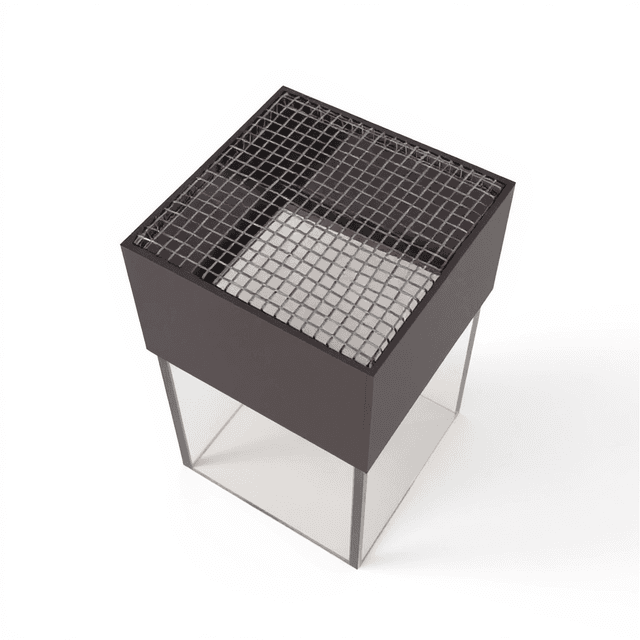
Automated Zebrafish T Maze
Automated behavioral assessment system for zebrafish spatial learning and memory studies featuring 6 maze areas, 7 sensor-controlled doors, and integrated reward delivery systems.
| interior-width | 9 cm |
| maze-areas | A1, A2, P1, P2, S0, S12 |
| maze-doors | DA1, DA2, DP1, DP2, DS0, DS1, DS2 |
| maze-sensors | MA1, MA2, MP1, MP2, MS0, MS1, MS2 |
| interior-wall-height | 10 cm |
| interior_width | 9 cm |

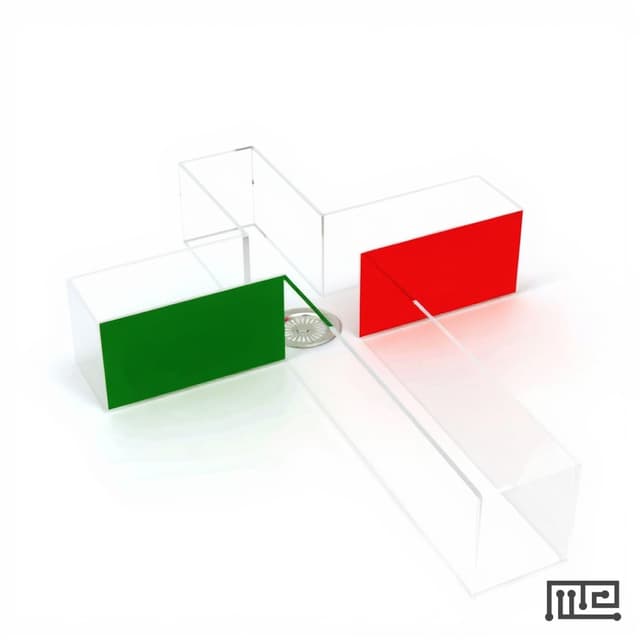
The Automated Zebrafish T Maze is a precision-engineered behavioral assessment system designed for automated spatial learning and memory studies in zebrafish (Danio rerio). Constructed from clear acrylic with 1/2-inch thick walls, the maze features a systematic configuration of 6 distinct areas (S0, S12, A1, A2, P1, P2) connected by automated door systems and sensor arrays for real-time behavioral tracking.
The system incorporates 7 automated doors, 7 sensor arrays, 2 reward dispensers, and 2 adjustable-speed water stirrers to enable fully automated experimental protocols. With interior dimensions of 9 cm width and 10 cm wall height, the apparatus provides optimal spatial constraints for zebrafish navigation studies while maintaining visual transparency for behavioral observation and video tracking integration.
How It Works
The system operates on the principle of automated spatial choice behavior assessment through sensor-controlled navigation pathways. Zebrafish are introduced into the starting area (S0) and must navigate through sensor-monitored zones to reach goal arms (A1, A2) based on spatial or visual cues. The seven sensor arrays (MS0, MS1, MS2, MA1, MA2, MP1, MP2) detect fish position and trigger automated door operations (DS0, DS1, DS2, DA1, DA2, DP1, DP2) to control pathway access.
Reward delivery is managed through two automated dispensers positioned at goal locations, with LED light indicators signaling food availability. Water stirrers maintain consistent water circulation and can be adjusted for speed to optimize experimental conditions. The system records choice behaviors, latency times, and path efficiency metrics through the integrated sensor network.
The Conduct T-maze software coordinates all system components, enabling programmable experimental protocols including acquisition trials, reversal learning paradigms, and memory retention tests. Removable colored wall inserts (2 green, 2 red) provide visual discrimination cues while maintaining the maze's modular experimental design.
Features & Benefits
interior-width
- 9 cm
maze-areas
- A1
- A2
- P1
- P2
- S0
- S12
maze-doors
- DA1
- DA2
- DP1
- DP2
- DS0
- DS1
- DS2
maze-sensors
- MA1
- MA2
- MP1
- MP2
- MS0
- MS1
- MS2
interior-wall-height
- 10 cm
interior_width
- 9 cm
interior_wall_height
- 10 cm
acrylic_thickness
- 1/2 inch
water_height
- 10 cm
sensor_array_length
- 8 cm
number_of_doors
- 7
number_of_sensors
- 7
maze_areas
- 6 (S0, S12, A1, A2, P1, P2)
maze_doors
- 7 (DS0, DS1, DS2, DA1, DA2, DP1, DP2)
maze_sensors
- 7 (MS0, MS1, MS2, MA1, MA2, MP1, MP2)
reward_dispensers
- 2
water_stirrers
- 2 (speed adjustable)
wall_inserts
- 4 (2 green, 2 red, removable)
food_delivery_led
- LED light equipped
software
- Conduct T-maze
Behavioral Construct
- spatial learning
- spatial memory
- choice behavior
- navigation
- reversal learning
- memory consolidation
- cognitive flexibility
Automation Level
- fully-automated
Material
- Clear Acrylic
- clear acrylic with 1⁄2 inch thick acrylic
Species
- Zebrafish
Display Type
- LED
Dimensions
- 38 cm x 51 cm
Research Domain
- Behavioral Pharmacology
- Developmental Biology
- Learning & Memory
- Neurodegeneration
- Neuroscience
- Toxicology
Weight
- 21.0 kg
Dimensions
- L: 43.2 mm
- W: 38.0 mm
- H: 27.9 mm
Comparison Guide
| Feature | This Product | Typical Alternative | Advantage |
|---|---|---|---|
| Number of Automated Zones | 6 distinct areas (S0, S12, A1, A2, P1, P2) with systematic designation | Basic models often provide 3-4 zones with limited pathway options | More complex spatial protocols and detailed navigation analysis are possible with increased zone resolution. |
| Sensor Array Integration | 7 sensor arrays with 8 cm detection length for comprehensive tracking | Entry-level systems may have fewer sensors or manual detection methods | Real-time position tracking enables automated protocol control and precise behavioral metrics. |
| Door Control System | 7 automated doors with programmable operation sequences | Manual systems require experimenter intervention for pathway control | Eliminates handling stress and experimenter bias while enabling complex sequential protocols. |
| Reward Delivery Automation | 2 automated dispensers with LED visual cues and programmable timing | Manual reward systems rely on experimenter timing and placement | Consistent reward delivery timing improves learning protocol standardization and reduces variability. |
| Visual Cue System | 4 removable colored inserts (2 green, 2 red) with modular design | Fixed cue configurations or limited color options | Flexible cue manipulation supports diverse discrimination tasks and protocol adaptations. |
| Water Circulation Control | 2 adjustable-speed stirrers for optimized flow conditions | Static water systems or basic circulation without speed control | Maintains water quality and allows flow optimization for different experimental conditions. |
This automated system provides comprehensive spatial learning assessment capabilities with integrated sensor networks, programmable door controls, and dual reward delivery systems. The modular design with removable visual cues and adjustable water circulation offers experimental flexibility while maintaining automated protocol precision.
Practical Tips
Test all sensor detection zones daily before experiments using a standardized object to verify consistent triggering thresholds.
Why: Environmental factors can affect sensor sensitivity and detection accuracy over time.
Clean sensor windows weekly with appropriate solvents and inspect door mechanisms for smooth operation.
Why: Algae growth and debris accumulation can interfere with automated detection and door function.
Acclimate zebrafish to the maze environment for 10-15 minutes before beginning behavioral trials.
Why: Initial exploration reduces novelty stress and improves consistency of spatial learning measurements.
If doors fail to operate properly, check sensor alignment and clean contact surfaces on door mechanisms.
Why: Misaligned sensors or debris can prevent proper door triggering and disrupt automated protocols.
Monitor water stirrer function during long experimental sessions to ensure consistent circulation patterns.
Why: Variable water flow can affect fish swimming behavior and introduce confounding factors in spatial learning data.
Verify water temperature stability before placing zebrafish in the maze system for behavioral testing.
Why: Temperature fluctuations can affect fish activity levels and confound behavioral learning measurements.
Use consistent lighting conditions and minimize external visual distractions in the testing environment.
Why: Environmental consistency reduces variability in spatial navigation behaviors and improves protocol reproducibility.
Inspect and test reward dispenser function before each experimental session to ensure proper food delivery.
Why: Inconsistent reward delivery can disrupt learning protocols and affect behavioral acquisition patterns.
Setup Guide
What’s in the Box
- Acrylic T-maze chamber with walls and translucent base
- Control box with interface connections
- 7 automated door mechanisms (DS0, DS1, DS2, DA1, DA2, DP1, DP2)
- 7 sensor arrays with mounting hardware (MS0, MS1, MS2, MA1, MA2, MP1, MP2)
- 2 automated reward dispensers with LED indicators
- 2 adjustable-speed water stirrers
- 4 removable wall inserts (2 green, 2 red)
- Conduct T-maze software installation package
- Power cables and system connections
- User manual and protocol documentation (typical)
Warranty
ConductScience provides a one-year manufacturer warranty covering system components and technical support for software operation and protocol development.
Compliance
What behavioral parameters can be automatically measured during T-maze trials?
The sensor array system records choice selection, latency to choice, time spent in each zone, swimming patterns, and trial completion metrics through the integrated software.
How do I configure different learning paradigms using the automated system?
The Conduct T-maze software allows programming of acquisition trials, reversal learning, alternation tasks, and memory retention protocols with customizable reward schedules and door control sequences.
What is the optimal water depth and circulation speed for adult zebrafish?
The system accommodates 10 cm water height with adjustable stirrer speeds that can be optimized based on fish size, experimental duration, and behavioral requirements.
Can the visual cue inserts be customized for specific discrimination tasks?
The system includes 2 green and 2 red removable wall inserts, and the modular design allows for custom cue configurations while maintaining structural integrity.
How does the automated reward delivery system synchronize with choice behaviors?
Reward dispensers are triggered by sensor detection in goal areas with programmable delays and LED visual cues, enabling precise temporal control of reinforcement delivery.
What data formats does the software provide for statistical analysis?
Consult the software documentation for specific export formats and data structure details compatible with standard statistical analysis packages.
How many zebrafish can be tested simultaneously in this system?
The system is designed for single-fish testing to ensure accurate behavioral tracking and prevent social interference with spatial learning assessments.
What maintenance is required for the automated door and sensor systems?
Regular cleaning of sensor windows, door mechanism lubrication, and periodic calibration checks ensure consistent automated operation and accurate behavioral detection.
Have a question about this product?