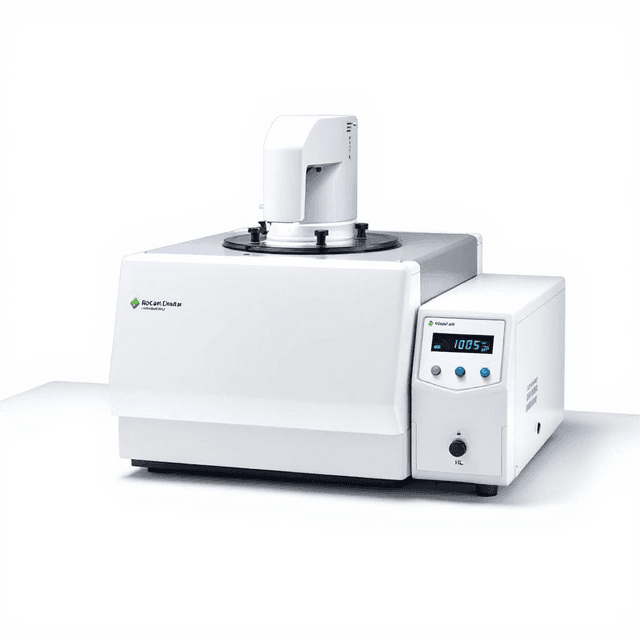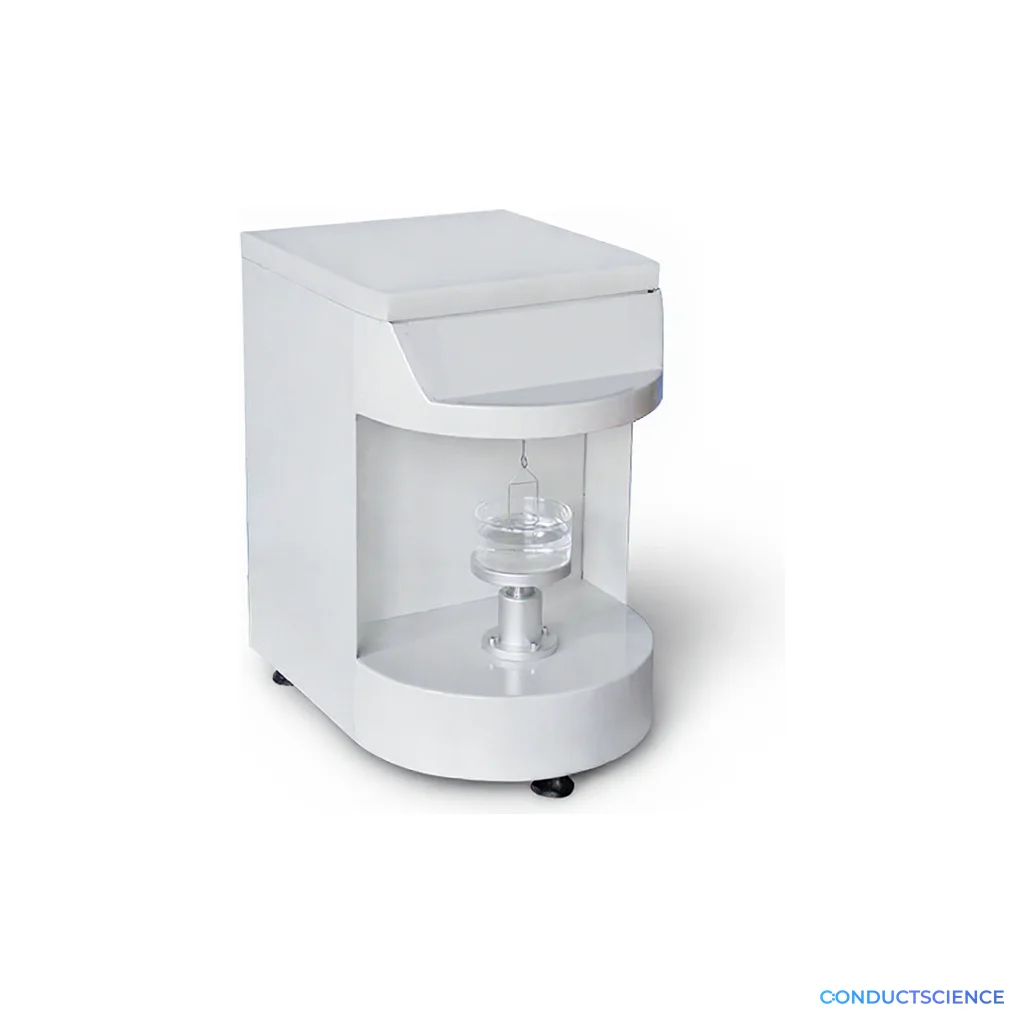
Automatic Surface Tensiometer
Precision surface tensiometer with 0-200.0 mN/m range and 0.01 mN/m resolution for automated surface tension measurement using the du Noüy ring method.
| Automation Level | semi-automated |
| Measuring Range | 0~200.0mN/m |
| Weight | 12kg |
| Repeatability Error | ≤±1%FS |
| Platinum Ring Specification | Ring radius(R) 9.55mm, wire radius(r) 0.3mm |
| Standard Accessory | Platinum ring, hook, glass vessel, 1000-milligram weight*2, 500-milligram weight*1 |
The Automatic Surface Tensiometer (BIO-0841) is a precision analytical instrument designed for quantitative measurement of surface tension in liquid samples using the du Noüy ring method. The instrument operates across a measurement range of 0-200.0 mN/m with 0.01 mN/m resolution and ≤±1% full-scale accuracy, providing reliable surface tension data for research and quality control applications.
The system features automated measurement protocols with digital readout and includes calibrated platinum ring accessories conforming to standard specifications (ring radius 9.55mm, wire radius 0.3mm). The benchtop design incorporates precision force measurement electronics with temperature compensation capabilities, making it suitable for routine surface tension analysis in laboratory environments requiring consistent, reproducible measurements.
How It Works
The instrument operates on the du Noüy ring method, where a calibrated platinum ring is brought into contact with the liquid surface and then slowly withdrawn. As the ring lifts away from the liquid, a meniscus forms due to surface tension forces. The maximum force required to detach the ring from the liquid surface is directly proportional to the surface tension, following the relationship γ = F/(2π(R+r)), where γ is surface tension, F is the detachment force, R is the ring radius, and r is the wire radius.
The system employs precision load cell technology to measure the detachment force with ≤±1% full-scale accuracy. Digital processing algorithms compensate for environmental factors and provide automated calculation of surface tension values. The platinum ring specifications (9.55mm radius, 0.3mm wire diameter) conform to standard tensiometry requirements, ensuring reproducible contact geometry and reliable force transmission during measurement cycles.
Features & Benefits
Automation Level
- semi-automated
Measuring Range
- 0~200.0mN/m
Weight
- 12kg
Repeatability Error
- ≤±1%FS
Platinum Ring Specification
- Ring radius(R) 9.55mm, wire radius(r) 0.3mm
Standard Accessory
- Platinum ring, hook, glass vessel, 1000-milligram weight*2, 500-milligram weight*1
External Size(W*D*H)
- 260*200*310mm
Package Size(W*D*H)
- 300*300*400mm
Brand
- ConductScience
Research Domain
- Analytical Chemistry
- Clinical Diagnostics
- Environmental Monitoring
- Food Science
- Materials Science
- Pharmaceutical QC
Accuracy
- ≤±1%FS
Power/Voltage
- AC110/220V, 50/60Hz
Weight
- 10.0 lbs
Dimensions
- L: 31.0 in
- W: 26.0 in
- H: 20.0 in
Comparison Guide
| Feature | This Product | Typical Alternative | Advantage |
|---|---|---|---|
| Measurement Range | 0-200.0 mN/m | Entry-level models often offer narrower ranges or lower maximum values | Accommodates the full spectrum of surface tensions encountered in research and quality control applications. |
| Resolution | 0.01 mN/m | Basic instruments may provide 0.1 mN/m resolution | Enables detection of small surface tension changes critical for formulation optimization and contamination detection. |
| Accuracy Specification | ≤±1% full-scale | Some models specify ±2-5% accuracy | Meets stringent analytical requirements for quantitative surface tension analysis and regulatory compliance. |
| Calibration Accessories | Includes 1000mg (×2) and 500mg (×1) certified weights | Many instruments require separate purchase of calibration weights | Enables immediate calibration verification and ongoing quality assurance without additional procurement. |
| Ring Specifications | Platinum ring with 9.55mm radius, 0.3mm wire diameter | Standard ring geometry varies by manufacturer | Conforms to established methodology standards for direct comparison with published reference data. |
| Power Compatibility | Universal AC 110/220V, 50/60Hz | Some models require specific voltage configurations | Simplifies international laboratory installation without voltage converters or special power requirements. |
This tensiometer combines precision measurement specifications with comprehensive accessory inclusion and automated operation capabilities. The instrument provides research-grade accuracy with the convenience of standardized methodology and complete calibration support for immediate deployment in analytical workflows.
Practical Tips
Perform calibration verification at the beginning of each measurement session using the provided weights.
Why: Environmental factors and electronic drift can affect measurement accuracy over time.
Clean the platinum ring with appropriate solvent followed by flame cleaning between sample types.
Why: Contamination residues significantly affect surface tension measurements and can cause systematic errors.
Allow samples to equilibrate to measurement temperature for at least 15 minutes before analysis.
Why: Temperature variations directly influence surface tension values and measurement repeatability.
If measurements appear inconsistent, verify the ring is properly positioned and free from deformation.
Why: Ring geometry changes or improper alignment alter the force transmission and invalidate surface tension calculations.
Perform triplicate measurements on each sample and report the mean value with standard deviation.
Why: Multiple measurements provide statistical confidence and help identify potential measurement outliers.
Use appropriate personal protective equipment when handling samples and cleaning solvents.
Why: Chemical exposure risks vary with sample types and cleaning protocols used in surface tension analysis.
Maintain a log of ring cleaning procedures and calibration verification results.
Why: Documentation supports quality assurance requirements and helps identify trends in instrument performance.
Store calibration weights in a clean, dry environment away from potential contamination sources.
Why: Weight accuracy directly affects calibration validity and subsequent measurement reliability.
Setup Guide
What’s in the Box
- Automatic Surface Tensiometer main unit
- Platinum ring (9.55mm radius, 0.3mm wire)
- Suspension hook
- Glass sample vessel
- 1000mg calibration weight (2 pieces)
- 500mg calibration weight (1 piece)
- Power cable
- User manual and calibration certificate (typical)
Warranty
ConductScience provides a standard one-year manufacturer warranty covering defects in materials and workmanship, with technical support for calibration procedures and measurement protocols.
Compliance
What calibration procedure is required for accurate measurements?
Perform daily calibration verification using the provided 500mg and 1000mg weights. Full calibration involves zero-point adjustment and span calibration using certified weights. Monthly cleaning and inspection of the platinum ring is recommended to maintain measurement accuracy.
How does temperature affect surface tension measurements?
Surface tension typically decreases with increasing temperature. Ensure samples equilibrate to measurement temperature and maintain consistent environmental conditions. The instrument should be operated in a temperature-controlled laboratory environment for reproducible results.
What sample volume and container requirements apply?
Use the provided glass vessel or equivalent clean glassware with sufficient volume to allow complete ring immersion without vessel wall interference. Minimum sample volume of approximately 50mL is recommended for reliable measurements.
How frequently should the platinum ring be cleaned?
Clean the platinum ring between samples to remove contamination that could affect surface tension measurements. Use appropriate solvents followed by flame cleaning or chemical cleaning protocols. Ring condition directly impacts measurement accuracy and repeatability.
What measurement precision can be expected with different sample types?
The instrument provides ≤±1% full-scale repeatability for most liquid samples. Precision may vary with sample viscosity, volatility, and surface-active component concentration. Multiple measurements per sample are recommended for statistical analysis.
How does this method compare to pendant drop or bubble pressure techniques?
The du Noüy ring method provides rapid measurements suitable for routine analysis and quality control. Pendant drop methods offer higher precision for research applications, while bubble pressure techniques work well for dynamic surface tension studies.
What data output and documentation capabilities are available?
Consult product datasheet for specific data recording and output options. Standard tensiometers typically provide digital readout with options for data logging or external device connectivity for measurement documentation.
Are there specific requirements for installation environment?
Install on a vibration-free, level surface away from air currents and temperature fluctuations. The measurement chamber should be protected from dust and drafts that could affect ring-liquid interface stability during measurements.
Is this tensiometer suitable for educational and teaching laboratory settings?
Yes. The Automatic Surface Tensiometer is well-suited for undergraduate and graduate teaching laboratories. Its automated du Noüy ring measurement method provides consistent, reproducible results that students can readily interpret, making it ideal for demonstrating surface tension principles in physical chemistry, pharmaceutical sciences, and materials science coursework. The semi-automated operation requires minimal training, and the included platinum ring, calibration weights, and glass vessel provide everything needed to begin measurements immediately.
Have a question about this product?
Accessories
Enhance your setup with compatible accessories