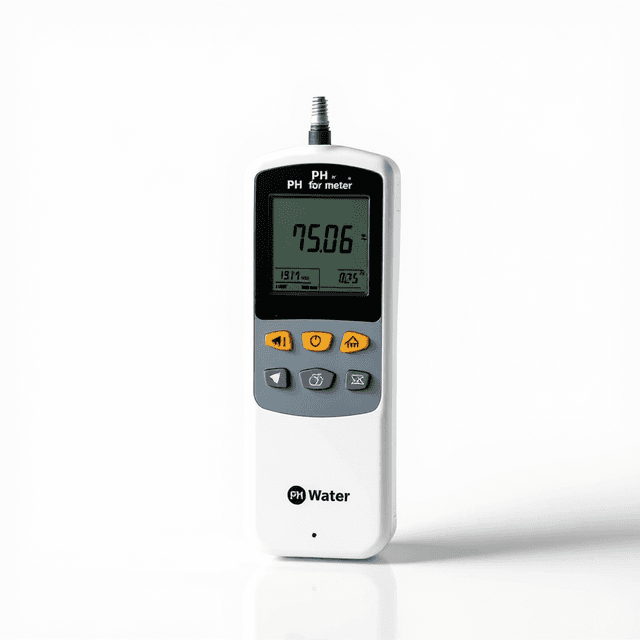
Benchtop Conductivity Meter
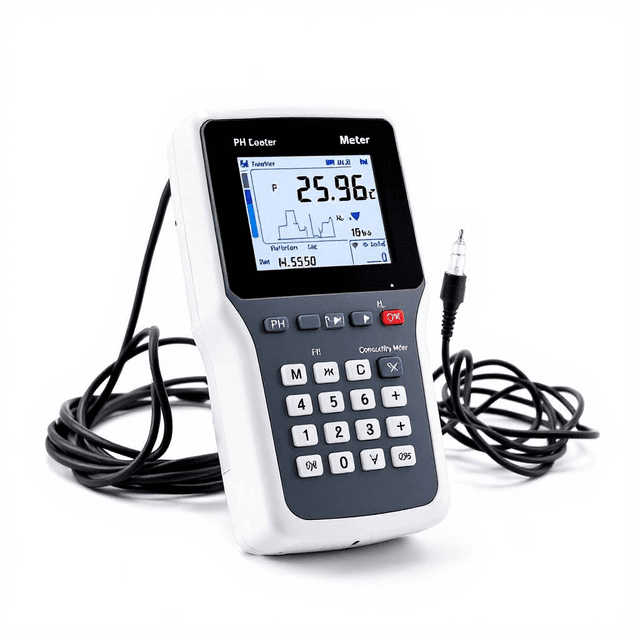
Multi-parameter benchtop conductivity meter measuring conductivity, TDS, resistivity, salinity, and temperature with data storage for 450 groups and temperature compensation.

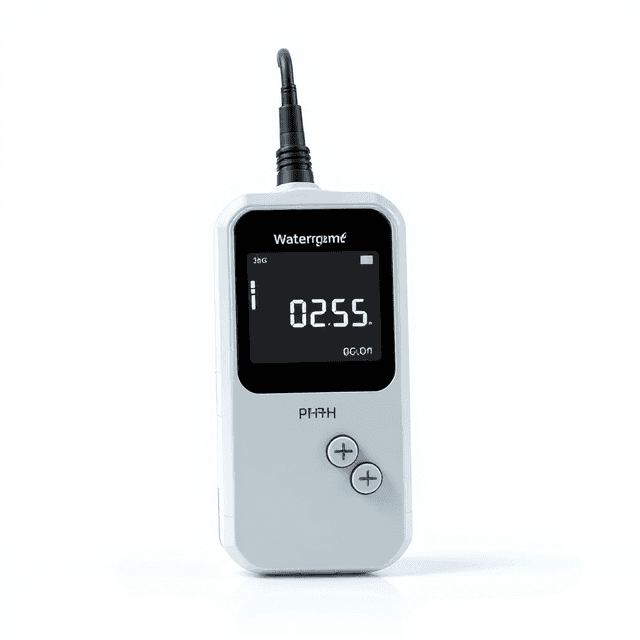
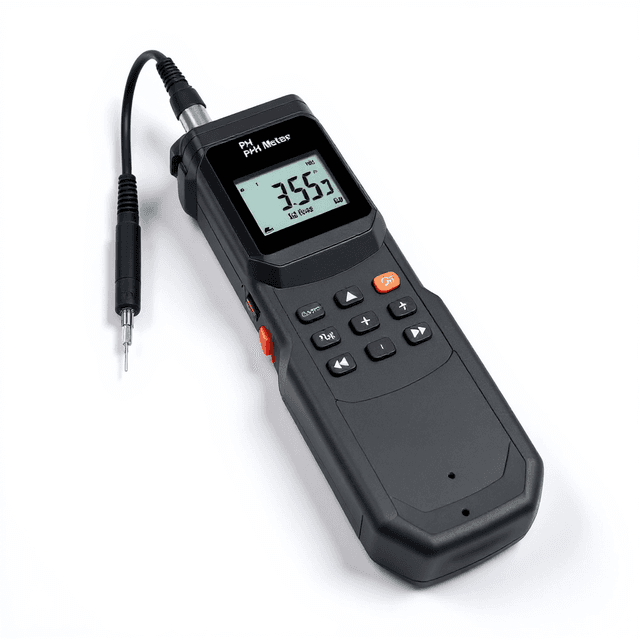
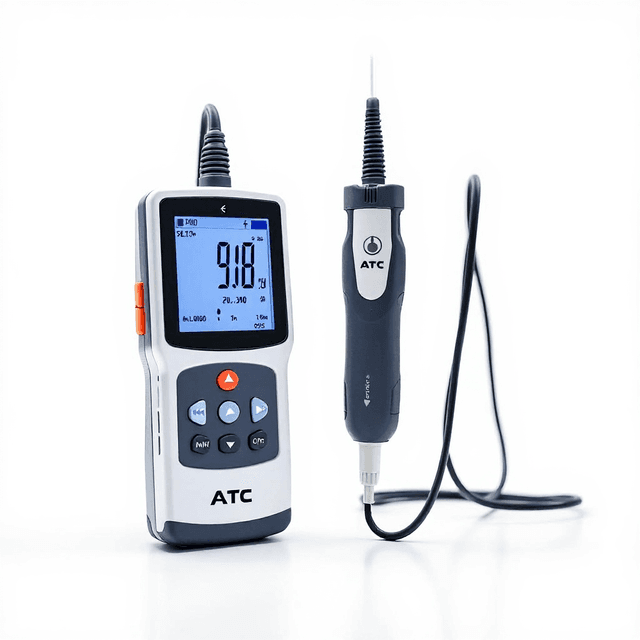
The Benchtop Conductivity Meter is a multi-parameter water quality analyzer designed for laboratory and field measurements of electrical conductivity, total dissolved solids (TDS), resistivity, salinity, and temperature. This compact desktop instrument provides precise measurements across multiple parameters simultaneously, making it essential for water quality assessment, solution preparation, and environmental monitoring applications.
Featuring integrated data storage for 450 measurement groups and temperature compensation capabilities, the meter enables systematic data collection and analysis workflows. The instrument's compact benchtop design (200×170×64mm) makes it suitable for both permanent laboratory installation and portable field use, while maintaining measurement accuracy of ±0.2°C for temperature readings with 0.1°C resolution.
How It Works
Conductivity measurement operates on the principle that dissolved ions in aqueous solutions conduct electrical current proportional to their concentration. The meter applies a known voltage between two electrodes and measures the resulting current flow, calculating conductivity as the reciprocal of electrical resistance normalized for electrode geometry. Temperature compensation algorithms adjust readings to standard reference temperatures, as conductivity varies approximately 2% per degree Celsius.
Total dissolved solids (TDS) values are derived from conductivity measurements using empirical conversion factors, while resistivity represents the inverse of conductivity. Salinity calculations utilize established algorithms correlating ionic strength to conductivity for natural water samples. The integrated temperature sensor provides simultaneous thermal measurement for compensation and independent temperature logging.
Data storage functionality captures measurement groups with associated metadata, enabling time-series analysis and quality control documentation. The instrument processes multiple parameters simultaneously, displaying real-time values and storing complete measurement sets for subsequent analysis.
Features & Benefits
Weight
- 2.2 kg
Dimensions
- L: 6.4 mm
- W: 20.0 mm
- H: 17.0 mm
Comparison Guide
| Feature | This Product | Typical Alternative | Advantage |
|---|---|---|---|
| Multi-parameter Measurement | Measures conductivity, TDS, resistivity, salinity, and temperature simultaneously | Entry-level models often measure only conductivity and temperature | Reduces sample volume requirements and measurement time while providing comprehensive ionic characterization from a single probe insertion. |
| Data Storage Capacity | 450 measurement groups with organized data management | Basic models typically offer 50-100 data points | Supports extended sampling campaigns and quality control protocols without frequent data downloads or external logging equipment. |
| Temperature Accuracy | ±0.2°C accuracy with 0.1°C resolution | Standard models often provide ±0.5°C accuracy | Enables more precise temperature compensation for conductivity measurements, improving data quality in thermally variable environments. |
| Compact Design | 200×170×64mm footprint with 550g instrument weight | Benchtop instruments vary widely in size and portability | Optimizes laboratory space utilization while maintaining portability for field applications and multi-location use. |
| Power Requirements | DC12V power supply | Models vary from AC mains to battery power options | Provides flexibility for both laboratory installation and field deployment with portable battery systems. |
This benchtop conductivity meter distinguishes itself through comprehensive multi-parameter measurement capabilities, substantial data storage capacity, and precise temperature compensation in a compact, field-deployable design. The combination of five simultaneous measurement parameters with organized data management addresses the needs of laboratories requiring efficient water quality characterization protocols.
Practical Tips
Use at least two certified conductivity standards bracketing your expected sample range for accurate calibration.
Why: Multi-point calibration compensates for probe non-linearity and ensures accuracy across your measurement range.
Allow thermal equilibration between probe and sample before taking readings, especially when transitioning between different temperature solutions.
Why: Temperature gradients affect both conductivity measurements and compensation accuracy, leading to measurement errors.
Store the conductivity probe in appropriate storage solution or deionized water to maintain electrode condition.
Why: Proper storage prevents electrode contamination and maintains stable measurement response over extended periods.
Verify measurement stability by monitoring reading drift over 30-60 seconds before recording final values.
Why: Stable readings indicate complete thermal equilibration and minimize measurement uncertainty in recorded data.
Check probe connection integrity if readings appear erratic or temperature compensation fails to function.
Why: Poor electrical connections can cause measurement instability and disable automatic temperature compensation algorithms.
Rinse the probe with deionized water between samples to prevent cross-contamination, especially when measuring different conductivity ranges.
Why: Carryover effects from high-conductivity samples can bias subsequent low-conductivity measurements.
Ensure the DC12V power adapter is properly grounded and inspect cables regularly for damage.
Why: Electrical safety is critical when using electronic instruments near aqueous solutions and conductive samples.
Setup Guide
What’s in the Box
- Benchtop Conductivity Meter main unit
- Conductivity/temperature probe (typical)
- DC12V power adapter
- Connecting cable (typical)
- User manual and quick start guide (typical)
- Calibration certificate (typical)
Compliance
Warranty & ConductCare
ConductScience provides a standard one-year manufacturer warranty covering defects in materials and workmanship, with technical support for calibration procedures and troubleshooting assistance.
What conductivity measurement ranges does this meter support?
The meter supports multiple conductivity measurement ranges - consult the product datasheet for specific range values and resolution specifications for your application requirements.
How does the temperature compensation function work?
The integrated temperature sensor provides automatic compensation with ±0.2°C accuracy and 0.1°C resolution, applying standard temperature coefficients to normalize conductivity readings to reference temperatures.
What data export formats are available?
The instrument stores 450 measurement groups internally - consult the product datasheet for specific data export formats and connectivity options for laboratory information system integration.
How frequently should calibration be performed?
Calibration frequency depends on measurement accuracy requirements and sample types, but typically weekly verification with certified standards is recommended for quantitative applications.
Can this meter measure low-conductivity samples like ultrapure water?
The meter includes resistivity measurement capability indicating suitability for low-conductivity samples - verify the specific lower detection limit in the product datasheet for your application.
What probe maintenance is required?
Regular probe cleaning with appropriate solvents, periodic calibration verification, and electrode condition monitoring are essential for maintaining measurement accuracy and extending probe life.
Is the meter suitable for field deployment?
The compact 550g design and DC12V power requirements enable field use with portable battery systems, though environmental operating conditions should be verified in the specifications.
Have a question about this product?
Accessories
Enhance your setup with compatible accessories
Upgrade Options