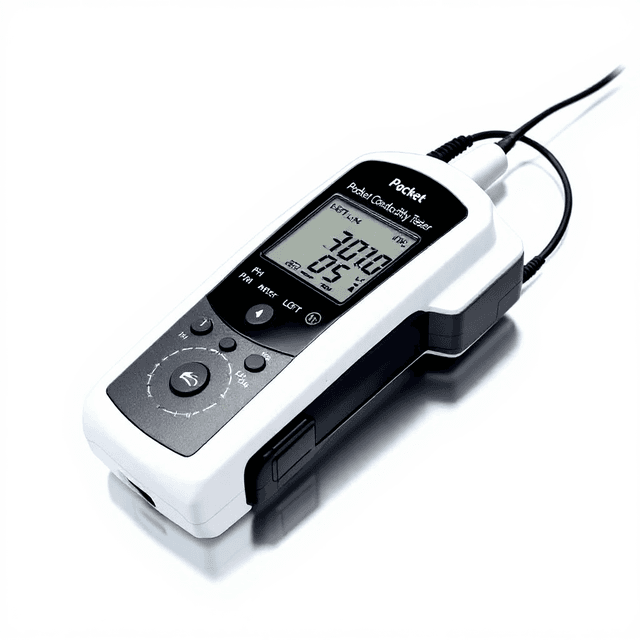
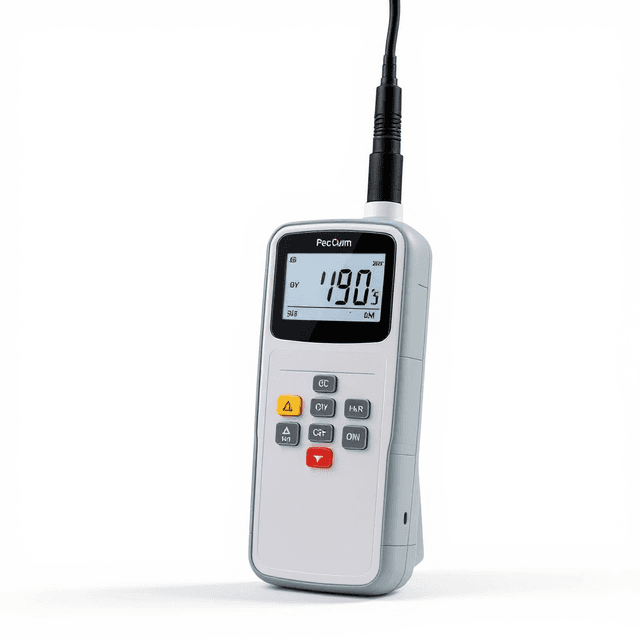
Pocket Conductivity Tester
Portable handheld conductivity meter with multiple range capability, IP57 water resistance, and manual temperature compensation for field and laboratory ionic content analysis.

Louise Corscadden, PhD
Director of Science · ConductScience
Ask Louise about Pocket Conductivity Tester fit, setup, configuration, or quote prep.
Already working with us? Sign in to connect this with My Scientist.
Key Specifications
Full details →- Model fit
- Configured during quote
- SKU family
- LH-0006
- Shipping box
- 2.0 x 18.5 x 5.0 cm
- Ordering
- Online checkout and quote request available
- Category
- pH Meters
- Build notes
- Confirm accessories, station layout, and support needs before purchase
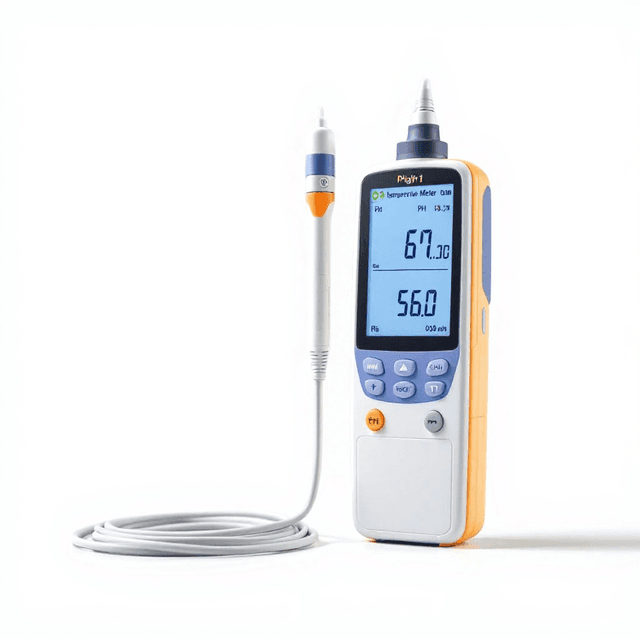
The Pocket Conductivity Tester is a compact, handheld instrument designed for field and laboratory measurement of solution conductivity. This portable device measures electrical conductivity across multiple ranges with 0.1/1 μS/cm and 0.01 mS/cm resolution, providing researchers with rapid assessment of ionic content in aqueous samples. The instrument features single-point calibration capability and manual temperature compensation from 0-99.9°C for accurate measurements across varying environmental conditions.
With IP57 water resistance rating and battery operation, this tester enables conductivity measurements in diverse research settings including environmental field sampling, water quality monitoring, and laboratory solution preparation. The compact 185×50×20 mm form factor and 30-gram weight facilitate portability while maintaining ±1.5% full-scale accuracy for reliable quantitative analysis.
How It Works
Conductivity measurement relies on the principle that dissolved ionic species in solution conduct electrical current proportional to their concentration. The instrument applies a low-voltage alternating current between two electrodes immersed in the sample solution. Ionic species in solution facilitate current flow, with higher ion concentrations producing greater conductivity values.
The tester measures the electrical resistance between electrodes and calculates conductivity as the reciprocal of resistance, normalized for electrode geometry. Temperature compensation adjusts readings to account for the temperature dependence of ionic mobility, as conductivity typically increases 2-3% per degree Celsius. Manual temperature compensation allows users to input sample temperature for accurate conductivity determination across the 0-99.9°C range.
Multiple measurement ranges accommodate samples from low-conductivity purified water to high-ionic-strength solutions, with automatic range selection optimizing resolution and accuracy for each sample type.
Features & Benefits
Shipping weight
- 0.03 lb
Shipping box
- L: 2.0 cm
- W: 18.5 cm
- H: 5.0 cm
| Feature | This Product | Typical Alternative | Advantage |
|---|---|---|---|
| Measurement Resolution | 0.1/1 μS/cm and 0.01 mS/cm resolution across multiple ranges | Entry-level portable meters often provide single resolution settings | Multiple resolution options optimize measurement precision for both low and high conductivity samples |
| Temperature Compensation | Manual temperature compensation from 0-99.9°C | Basic models may lack temperature compensation features | Temperature correction ensures measurement accuracy across varying sample conditions |
| Water Resistance | IP57 ingress protection rating | Lower-cost units often have limited water resistance | Enhanced durability enables reliable field measurements in wet environments |
| Calibration System | Single-point calibration capability | Some units require multi-point calibration procedures | Simplified calibration reduces setup time while maintaining measurement accuracy |
| Physical Design | Compact 185×50×20 mm form factor weighing 30 grams | Varies by model, with some units being larger or heavier | Ultra-portable design facilitates field sampling and reduces user fatigue |
| Power Requirements | Battery operation using two button cells | Some models require rechargeable batteries or AC adapters | Standard battery format ensures power availability in remote field locations |
This conductivity tester combines analytical accuracy with field portability through its multi-range resolution capability, temperature compensation, and water-resistant design. The single-point calibration system balances measurement precision with operational simplicity for routine conductivity analysis.
Practical Tips
Use conductivity standards that bracket your expected sample range and verify standard certificates are current.
Why: Appropriate calibration range selection ensures measurement accuracy for your specific application.
Rinse the electrode thoroughly with deionized water between samples and store according to manufacturer specifications.
Why: Proper electrode care prevents contamination and maintains measurement precision over time.
Allow samples to equilibrate to measurement temperature and input accurate temperature values for compensation.
Why: Temperature uniformity and accurate compensation are critical for precise conductivity determination.
If readings drift or appear unstable, check electrode condition and verify complete immersion in sample.
Why: Electrode contamination or inadequate sample contact are common causes of measurement errors.
Record both conductivity value and sample temperature for each measurement to enable data validation.
Why: Temperature documentation allows verification of temperature compensation accuracy in data analysis.
Avoid measuring conductivity in corrosive solutions that may damage the electrode or instrument housing.
Why: Chemical compatibility ensures instrument longevity and prevents safety hazards during measurements.
Perform regular calibration checks with certified standards to verify measurement accuracy over time.
Why: Calibration drift detection prevents systematic errors in conductivity measurements.
Monitor battery voltage indicators and replace batteries before complete depletion to prevent data loss.
Why: Adequate power ensures stable operation and prevents measurement interruption during critical sampling.
Setup Guide
What’s in the Box
- Pocket Conductivity Tester main unit
- Conductivity electrode (integrated or attached)
- Button batteries (2 units)
- User manual and operating instructions
- Calibration certificate (typical)
- Protective carrying case (typical)
Warranty
ConductScience provides a one-year manufacturer warranty covering defects in materials and workmanship, with technical support available for calibration guidance and troubleshooting assistance.
Compliance
What conductivity range does this instrument cover and what resolution can I expect?
The tester provides multiple resolution settings of 0.1/1 μS/cm and 0.01 mS/cm, covering applications from ultrapure water analysis to high-conductivity solutions. Consult product datasheet for specific measurement range limits.
How do I perform temperature compensation for accurate measurements?
The instrument features manual temperature compensation from 0-99.9°C. Input the actual sample temperature to correct for temperature-dependent conductivity variations, typically 2-3% per degree Celsius.
What calibration procedure is required and how often should I calibrate?
Single-point calibration using a conductivity standard of known value is required. Calibration frequency depends on measurement accuracy requirements and sample types, but daily calibration is recommended for quantitative analysis.
Can this instrument be used for field measurements in wet conditions?
Yes, the IP57 water resistance rating protects against water ingress during field use. The battery operation eliminates AC power requirements for remote sampling locations.
What type of electrode maintenance is required?
Clean the electrode with deionized water between samples and inspect for contamination or damage. Store in appropriate storage solution if specified by manufacturer to maintain electrode performance.
How does this compare to laboratory benchtop conductivity meters?
This portable unit trades some precision and features for portability and field capability. Laboratory meters typically offer higher resolution, automated temperature compensation, and data logging capabilities.
What is the expected battery life during typical use?
Battery life depends on usage frequency and measurement conditions. Consult product datasheet for specific operational life estimates with button cell batteries.
Can I use this for monitoring cleaning solution effectiveness?
Yes, conductivity measurement effectively monitors ionic content in cleaning solutions, allowing assessment of solution strength and contamination levels during cleaning validation procedures.
Have a question about this product?
Have a question? Just ask.
Send it over and we'll email you a personalized answer — no call, no scheduling.
Prefer to talk it through?