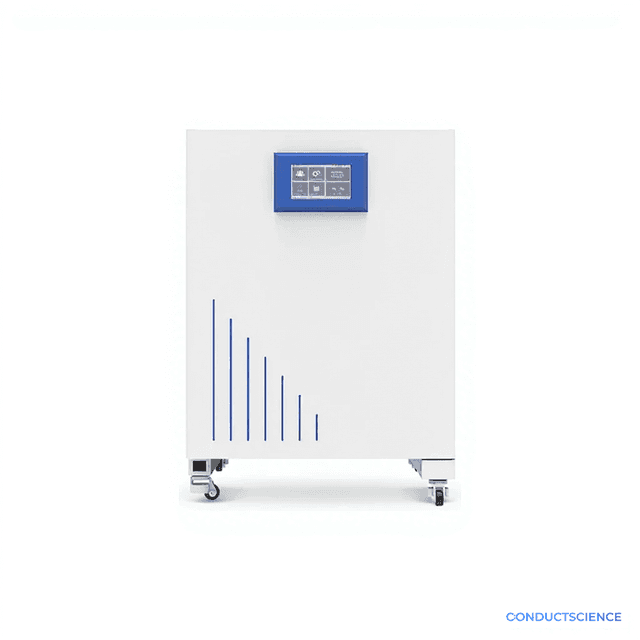
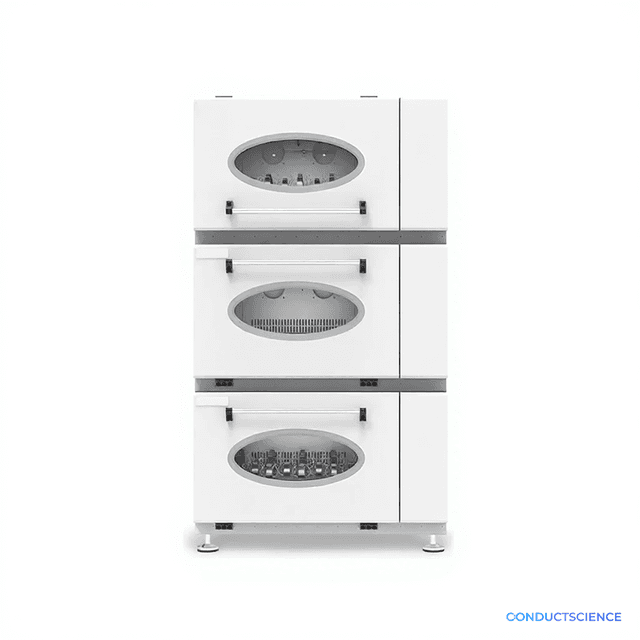
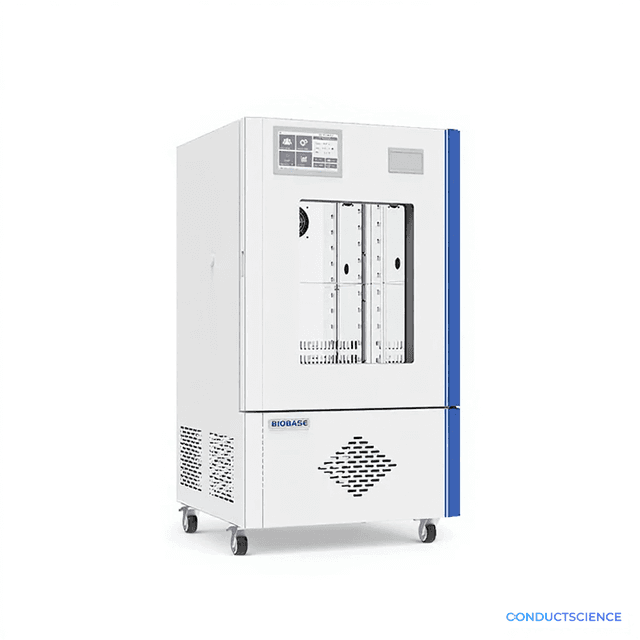
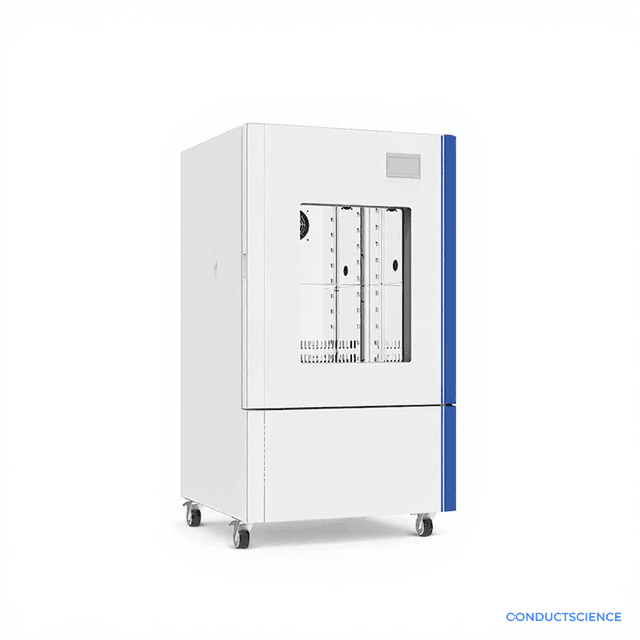
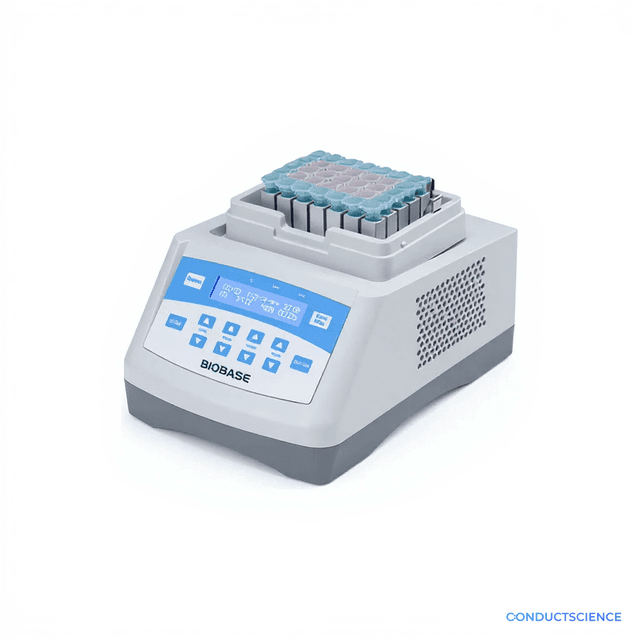
Benchtop Drying Oven / Incubator
Dual-function benchtop system providing precise temperature control for both incubation (RT+5°C to 80°C) and drying oven applications (80°C to 220°C) with ±0.5°C stability and programmable timing.
| temperature_control | Microprocessor temperature control |
| inner_chamber_structure | Round angle structure |
| shelves | Adjustable shelves |
| observation_window | Double-layer glass observation window |
| safety_features | Over-temperature protection |
| Automation Level | semi-automated |
The Benchtop Drying Oven/Incubator provides dual-function temperature control for laboratory applications requiring precise environmental conditions. This microprocessor-controlled stainless steel system operates across two distinct temperature ranges: incubation mode (RT+5°C to 80°C) for biological specimens and cultures, and drying oven mode (80°C to 220°C) for sample preparation and sterilization protocols. Temperature fluctuation is maintained within ±0.5°C throughout both operating ranges.
The round-angle stainless steel interior minimizes contamination risk and facilitates cleaning, while the double-layer glass observation window enables sample monitoring without thermal disruption. Available in five capacity configurations (35L, 53L, 87L, 149L, and 248L) with adjustable shelving to accommodate varying laboratory throughput requirements. The LED display provides clear temperature readouts, and programmable timing extends from 1 to 9999 minutes for extended protocols.
How It Works
The system employs convective heat transfer through forced air circulation within a stainless steel chamber. In incubation mode, the microprocessor controller maintains temperatures from RT+5°C to 80°C by cycling heating elements based on feedback from internal temperature sensors. The round-angle chamber design promotes uniform air distribution and eliminates hot spots that could affect biological specimens.
For drying applications, the system operates from 80°C to 220°C using the same convective heating principle but at higher thermal output. The double-layer glass window provides thermal insulation while allowing visual monitoring of samples without opening the chamber. Over-temperature protection prevents thermal runaway, while the stainless steel construction ensures chemical compatibility with most laboratory solvents and biological media.
The programmable timer function allows unattended operation for extended protocols, automatically maintaining set temperatures for durations from 1 minute to over 6 days. Temperature fluctuation is controlled within ±0.5°C through continuous monitoring and rapid response heating control.
Features & Benefits
temperature_control
- Microprocessor temperature control
inner_chamber_structure
- Round angle structure
shelves
- Adjustable shelves
observation_window
- Double-layer glass observation window
safety_features
- Over-temperature protection
Capacity
- 35 L
- 53 L
- 87 L
- 149 L
- 248 L
Automation Level
- semi-automated
Temperature Range (Incubator)
- RT+5~80°C
Temperature Range (Oven)
- 80~220°C
Temperature Fluctuation
- ±0.5°C
Internal Dimensions (W×D×H)
- 340×325×320mm
External Dimensions (W×D×H)
- 620×490×490mm
Temperature Range
- 5ºC to 200ºC
Material
- Stainless Steel
Display Type
- LED
Research Domain
- Analytical Chemistry
- Cell Biology
- Environmental Monitoring
- Materials Science
- Microbiology
- Pharmaceutical QC
Power/Voltage
- 850W
Weight
- 27kg
Weight
- 59.52 kg
Dimensions
- L: 13.39 mm
- W: 12.8 mm
- H: 12.6 mm
Comparison Guide
| Feature | This Product | Typical Alternative | Advantage |
|---|---|---|---|
| Temperature Range Versatility | Dual-mode operation: RT+5°C to 80°C (incubation) and 80°C to 220°C (drying) | Single-purpose units typically cover either incubation or drying ranges, not both | Eliminates need for multiple pieces of equipment, saving laboratory bench space and capital costs. |
| Temperature Control Precision | ±0.5°C fluctuation control with microprocessor regulation | Basic models often provide ±1-2°C control with simple thermostatic systems | Ensures consistent thermal conditions required for sensitive biological cultures and precise analytical measurements. |
| Capacity Range Options | Five capacity configurations from 35L to 248L available | Limited size options with fewer capacity choices | Allows laboratories to select optimal size based on throughput requirements without oversizing equipment. |
| Interior Design | Round-angle stainless steel construction with adjustable shelving | Standard rectangular chambers with corner joints that can harbor contaminants | Facilitates thorough cleaning and reduces contamination risk between different sample types. |
| Observation Capability | Double-layer glass observation window for thermal efficiency | Single-layer windows or solid doors requiring opening for sample monitoring | Enables continuous sample monitoring without disrupting chamber thermal conditions. |
| Programming Flexibility | Timer programmable from 1 to 9999 minutes for extended protocols | Basic timers with shorter maximum duration or manual-only operation | Supports extended unattended protocols and ensures consistent processing times across batches. |
This dual-function system combines incubation and drying capabilities in a single unit with precise temperature control and flexible capacity options. The stainless steel construction and programmable operation provide laboratory-grade performance for both biological and analytical applications.
Practical Tips
Place a calibrated reference thermometer in the chamber center and compare readings after thermal equilibration to verify temperature accuracy.
Why: Temperature accuracy is critical for reproducible results in both biological cultures and analytical measurements.
Clean the stainless steel interior with appropriate laboratory detergents after each use with different sample types.
Why: The round-angle design facilitates cleaning, but regular maintenance prevents cross-contamination between experiments.
Allow adequate air circulation around sample containers by avoiding overcrowding and using perforated trays when possible.
Why: Proper air circulation ensures uniform temperature distribution and optimal heat transfer to all samples.
Never exceed the maximum temperature rating for your specific application and ensure adequate laboratory ventilation when drying samples that may release vapors.
Why: Over-temperature protection prevents equipment damage, but proper ventilation protects laboratory personnel from potential sample emissions.
Record chamber temperature alongside sample temperatures when precision is critical, as thermal gradients may exist during heating or cooling transitions.
Why: Sample temperature may differ from chamber reading during thermal transitions, affecting time-sensitive protocols.
If temperature recovery seems slow after door opening, check door seal integrity and verify shelves are not blocking internal air circulation patterns.
Why: Poor seals or blocked airflow reduce heating efficiency and extend thermal recovery times.
Program longer stabilization periods for protocols requiring precise temperature control, especially when switching between incubation and drying modes.
Why: Thermal mass and chamber design require time to reach uniform temperature distribution throughout the internal volume.
Setup Guide
What’s in the Box
- Benchtop Drying Oven/Incubator main unit
- Adjustable stainless steel shelves (typical)
- Power cord
- User manual and operation guide
- Calibration certificate (typical)
Warranty
ConductScience provides a standard one-year manufacturer warranty covering defects in materials and workmanship, with technical support available for installation and operational guidance.
Compliance
References
Background reading relevant to this product:
What is the temperature uniformity across the chamber volume?
The round-angle stainless steel design promotes uniform air circulation, with temperature fluctuation controlled to ±0.5°C. Consult product datasheet for detailed uniformity specifications across chamber volume.
Can the unit transition between incubation and drying modes automatically?
The system requires manual setting changes to transition between temperature ranges. Incubation mode operates RT+5°C to 80°C, while drying mode operates 80°C to 220°C.
What types of samples should not be placed in this unit?
Avoid volatile solvents with low flash points, explosive materials, and samples that may generate toxic vapors when heated. The unit is not suitable for vacuum applications or samples requiring inert atmosphere.
How often does the temperature control system require calibration?
Calibration frequency depends on usage and accuracy requirements. For critical applications, quarterly verification against a calibrated reference thermometer is recommended.
What is the recovery time after door opening?
Recovery time varies with ambient conditions and temperature setpoint. The 850W heating capacity provides rapid reheating, though specific recovery times should be determined for critical applications.
Can multiple temperature programs be stored in memory?
The microprocessor control allows programmable timing from 1-9999 minutes. Consult product datasheet for specific programming capabilities and memory functions.
What maintenance is required for optimal performance?
Regular cleaning of stainless steel interior, periodic calibration verification, and inspection of door seals. The round-angle design facilitates thorough cleaning between different sample types.
Is this oven suitable for metallurgy lab sample preparation and drying?
Yes. The dual-purpose Drying Oven/Incubator is well suited for metallurgy laboratories that require both low-temperature drying of analytical samples and higher-temperature oven work for sample preparation, moisture removal, and apparatus drying. The oven mode (80°C to 220°C) covers the temperature range typically needed for drying geological and metallurgical specimens, while the incubator mode can be used for controlled lower-temperature processes. The stainless steel interior resists corrosion from mineral residues and is easy to clean between sample batches.
Can I use this unit for drying laboratory glassware and apparatus in addition to samples?
Yes. The adjustable shelving accommodates glassware, crucibles, and other laboratory apparatus. The forced micro-air circulation provides even heat distribution to dry equipment efficiently. Multiple capacity options (35L through 248L) are available to match your throughput requirements.
Have a question about this product?
Upgrade Options