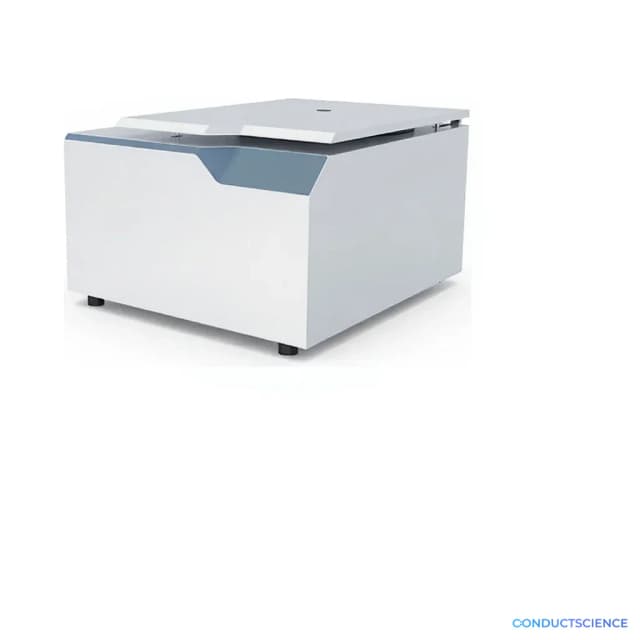
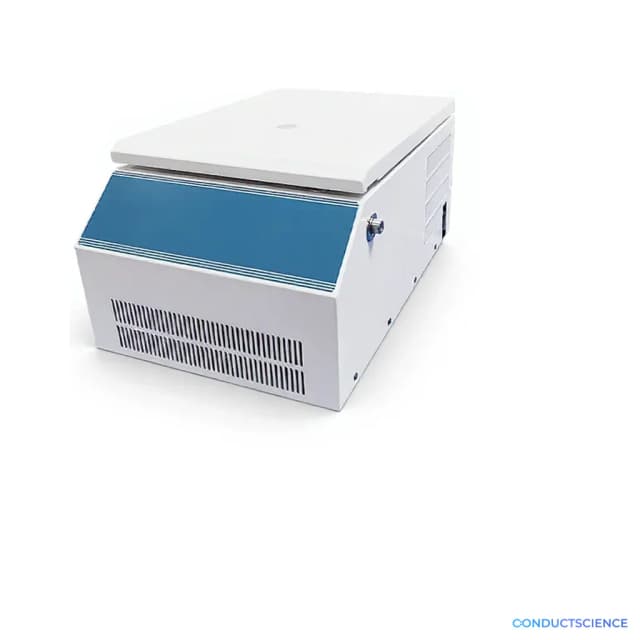
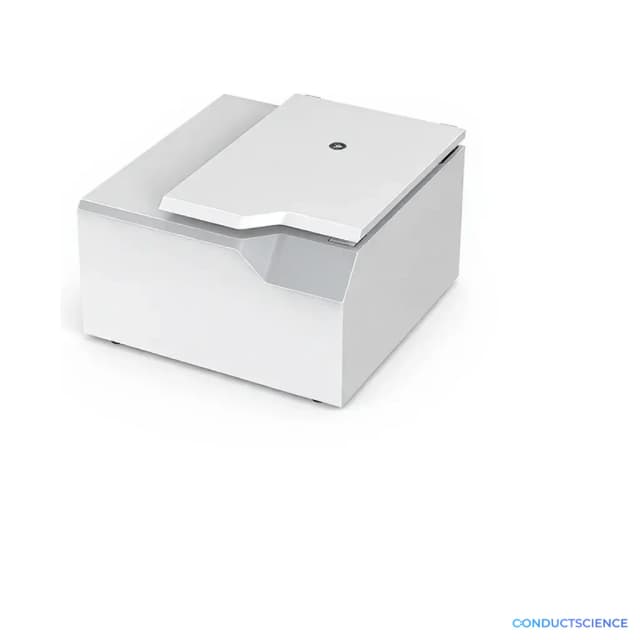
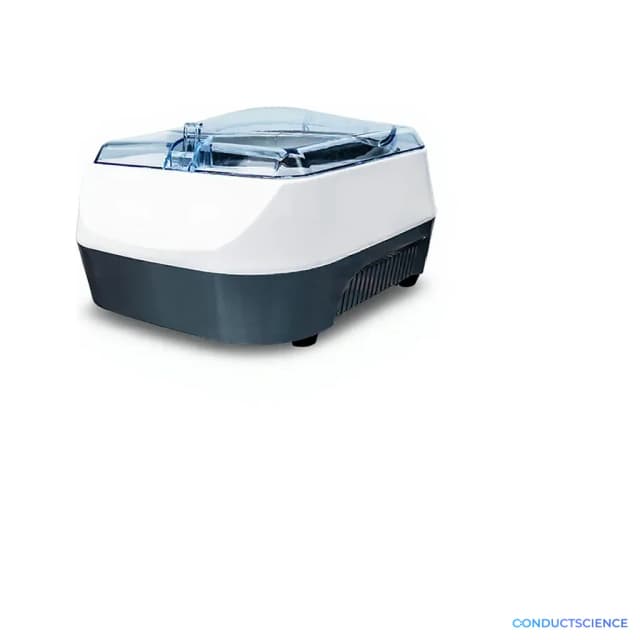
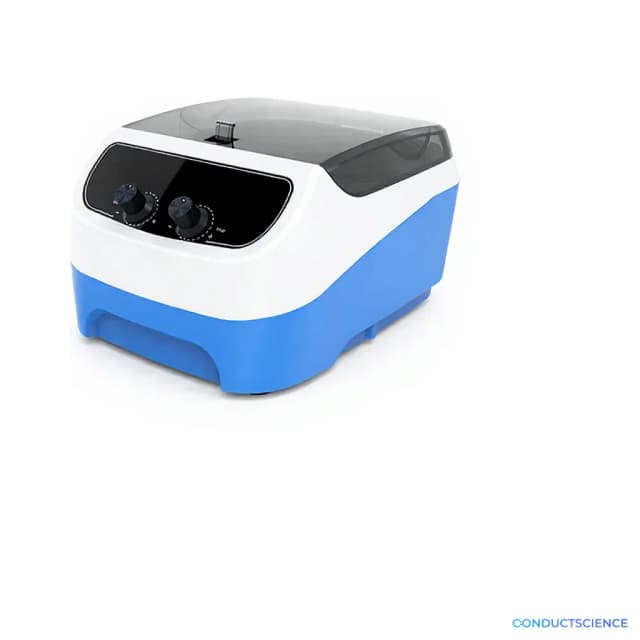
Benchtop Low-Speed Centrifuge, 6000 RPM, 4x750ml
High-capacity benchtop centrifuge operating up to 5,000 rpm and 3,962 × g for gentle separation of large sample volumes up to 4 × 500 ml.
| Automation Level | semi-automated |
| Max. Speed | 5000rpm |
| Max. RCF | 3962xg |
| Max. Capacity | 4*500ml |
| Speed Precision | ±10rpm |
| Time Range | 1s~99h59min/Continuous/Short-span |

The Table Top Low Speed Large Capacity Centrifuge provides reliable centrifugal separation for high-volume laboratory applications requiring gentle processing conditions. Operating at speeds up to 5,000 rpm with maximum relative centrifugal force of 3,962 × g, this benchtop unit accommodates up to 4 × 500 ml samples in swing bucket configuration. The precision speed control (±10 rpm) and programmable timer (1 second to 99 hours 59 minutes) enable reproducible separations for routine sample preparation workflows.
Designed for continuous operation in clinical and research laboratories, the centrifuge features low noise operation (≤65 dB) suitable for open laboratory environments. Multiple rotor configurations support various tube formats including 2-7 ml blood collection tubes with capacities ranging from 48 to 72 tubes per run, making it suitable for batch processing in hematology, clinical chemistry, and cell biology applications.
How It Works
Centrifugal separation relies on the application of centrifugal force to overcome Brownian motion and gravitational settling, enabling rapid separation of particles based on density differences. When samples rotate in the centrifuge rotor, particles experience acceleration proportional to the square of rotational velocity and radius from the axis of rotation, expressed as relative centrifugal force (RCF) in units of × g.
The swing bucket rotor design allows sample tubes to orient horizontally during centrifugation, creating a longer sedimentation path compared to fixed-angle rotors. This configuration provides gentler separation conditions and cleaner interfaces between separated phases, particularly beneficial for fragile samples or when maintaining intact cellular structures is important.
Precise speed control (±10 rpm) ensures reproducible RCF values across runs, while the programmable timer enables standardized processing times. The low-speed operation up to 5,000 rpm makes this centrifuge suitable for applications requiring moderate centrifugal forces without generating excessive heat or mechanical stress on samples.
Features & Benefits
Automation Level
- semi-automated
Max. Speed
- 5000rpm
Max. RCF
- 3962xg
Max. Capacity
- 4*500ml
Speed Precision
- ±10rpm
Time Range
- 1s~99h59min/Continuous/Short-span
Noise
- ≤65dB(A)
External Size(L*W*H)
- 500*620*410mm
Package Size(L*W*H)
- 620*740*710mm
Swing Rotor
- 5M00024
48*2/3/4/5/7ml blood collection tube
- 4000
2952
- 2/3/4ml blood collection tube
5M00025
- 48*5/7ml blood collection tube
5M00026
- 72*2/3/4/5/7ml blood collection tube
Brand
- ConductScience
Research Domain
- Analytical Chemistry
- Cell Biology
- Clinical Diagnostics
- Environmental Monitoring
- Microbiology
- Pharmaceutical QC
Weight
- 80kg(220V), 85kg(110V)
Weight
- 80.0 kg
Dimensions
- L: 41.0 mm
- W: 50.0 mm
- H: 62.0 mm
Comparison Guide
| Feature | This Product | Typical Alternative | Advantage |
|---|---|---|---|
| Maximum Speed | 5,000 rpm | Entry-level models often limited to 3,000-4,000 rpm | Higher speed capability provides greater flexibility for various separation protocols requiring different centrifugal forces. |
| Sample Capacity | 4 × 500 ml or 48-72 tubes | Smaller models typically handle 2 × 250 ml or fewer tubes | Large capacity enables batch processing and reduces the number of centrifugation runs needed for high-volume workflows. |
| Speed Precision | ±10 rpm | Basic models may have ±50 rpm or greater variation | Precise speed control ensures reproducible RCF values and consistent separation results across experiments. |
| Timer Range | 1s to 99h59min plus continuous | Limited timer ranges often maximum 60 minutes | Extended timing capability supports long protocols and continuous operation for specialized applications. |
| Noise Level | ≤65 dB(A) | Higher noise levels often 70-80 dB | Quieter operation allows use in open laboratory environments without excessive noise disruption. |
| Rotor Configuration | Swing bucket with multiple tube adapters | Fixed configurations with limited tube format options | Multiple adapter options provide flexibility to handle various tube formats and sample volumes in one instrument. |
This centrifuge combines high sample capacity with precise speed control and quiet operation. The swing bucket rotor design and multiple tube format compatibility make it particularly suitable for laboratories requiring flexible, high-throughput sample processing capabilities.
Practical Tips
Verify speed accuracy periodically using a tachometer or strobe light, especially after rotor changes or if vibration is observed.
Why: Speed accuracy directly affects RCF calculations and separation reproducibility.
Clean rotor and buckets after each use with appropriate detergents and dry thoroughly to prevent corrosion.
Why: Regular cleaning prevents sample cross-contamination and extends rotor lifespan.
Always balance samples by placing tubes of equal weight in opposing positions across the rotor.
Why: Proper balancing prevents excessive vibration and mechanical stress that can damage the centrifuge.
Inspect tube integrity before centrifugation and replace cracked or damaged tubes to prevent breakage.
Why: Tube failure during centrifugation can damage the rotor and create safety hazards.
If excessive vibration occurs, stop immediately and check for proper rotor installation and sample balance.
Why: Vibration indicates mechanical problems that can cause equipment damage if not addressed promptly.
Document centrifugation parameters (speed, time, temperature) in laboratory notebooks for protocol reproducibility.
Why: Standardized documentation enables consistent results and troubleshooting of separation issues.
Allow the centrifuge to reach full speed before starting the timer for consistent separation times.
Why: Acceleration time variability can affect separation efficiency and reproducibility between runs.
Check rotor attachment and tightness monthly, especially in high-use laboratories.
Why: Loose rotor attachment can cause vibration and potential safety hazards during operation.
Setup Guide
What’s in the Box
- Table top centrifuge main unit
- Swing bucket rotor (5M00024)
- Tube adapters for various formats (typical)
- Power cord
- User manual and documentation
- Warranty card (typical)
Warranty
ConductScience provides standard 1-year manufacturer warranty covering parts and labor with technical support for installation and operation guidance.
Compliance
What is the maximum sample volume per tube and total capacity?
Maximum capacity is 4 × 500 ml containers in swing bucket configuration, or alternatively 48-72 blood collection tubes (2-7 ml) depending on adapter selection.
How precise is the speed control and what RCF can be achieved?
Speed control precision is ±10 rpm with maximum speed of 5,000 rpm generating up to 3,962 × g relative centrifugal force.
Is this centrifuge suitable for temperature-sensitive samples?
The unit operates at room temperature without active cooling. For temperature-sensitive samples, pre-chill samples and work in temperature-controlled environments, or consider a refrigerated centrifuge model.
What tube formats are compatible with the available rotors?
The swing bucket rotor accommodates 2-7 ml blood collection tubes with various adapter configurations supporting 48-72 tubes per run, plus larger 500 ml containers.
How long can the centrifuge operate continuously?
The timer supports continuous operation mode in addition to programmable times from 1 second to 99 hours 59 minutes for extended protocols.
What are the power requirements and noise levels?
Available in 110V and 220V models with noise levels ≤65 dB(A) suitable for open laboratory environments.
How much bench space is required for installation?
Benchtop footprint is 500×620×410mm requiring stable, level surface with adequate clearance around air vents for cooling.
Have a question about this product?
Replacement Parts & Consumables
Upgrade Options