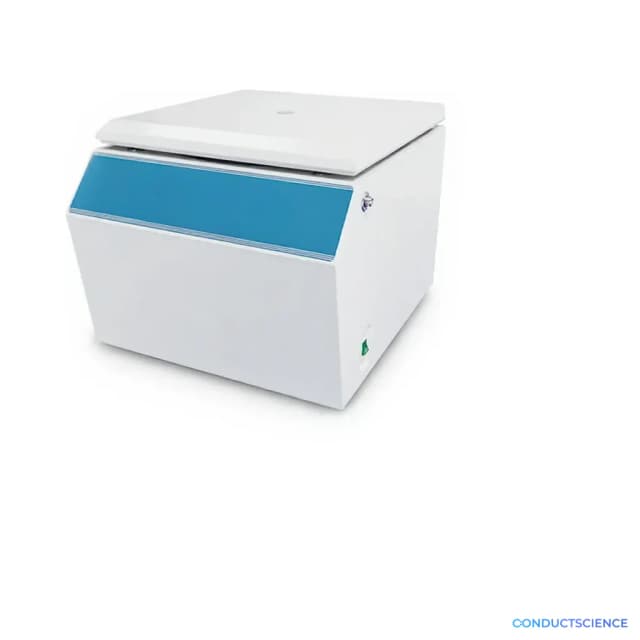
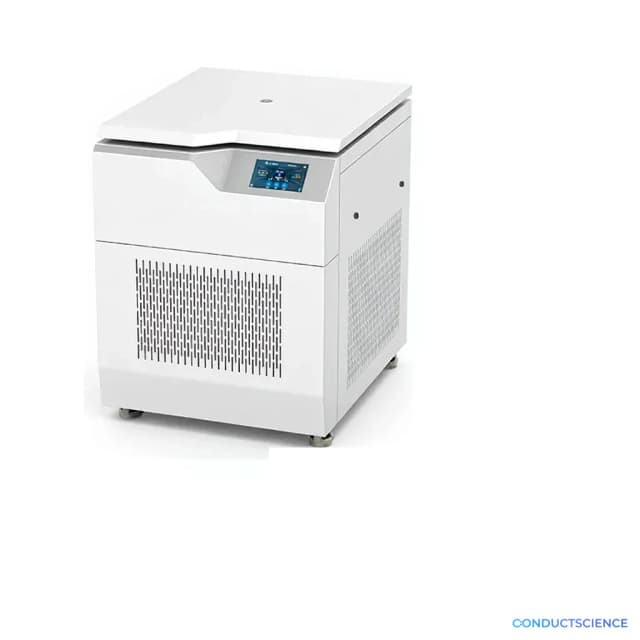
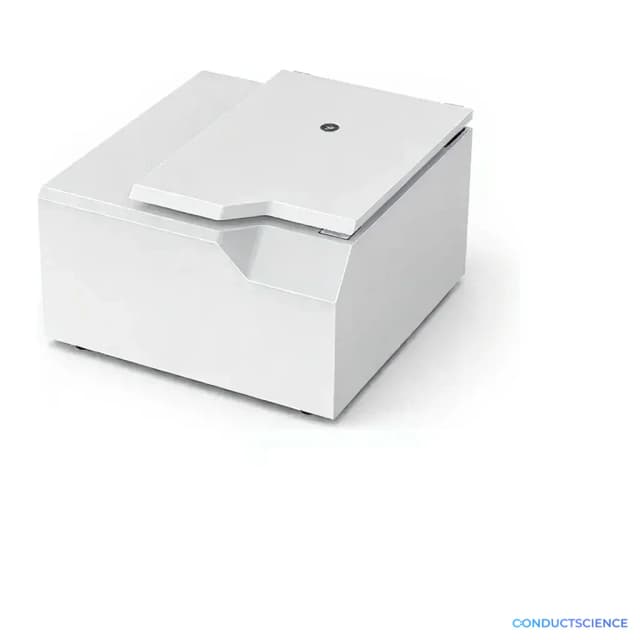
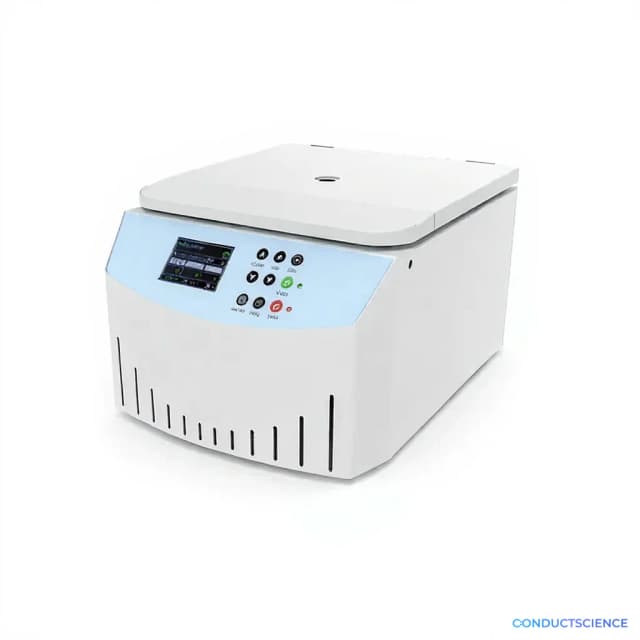
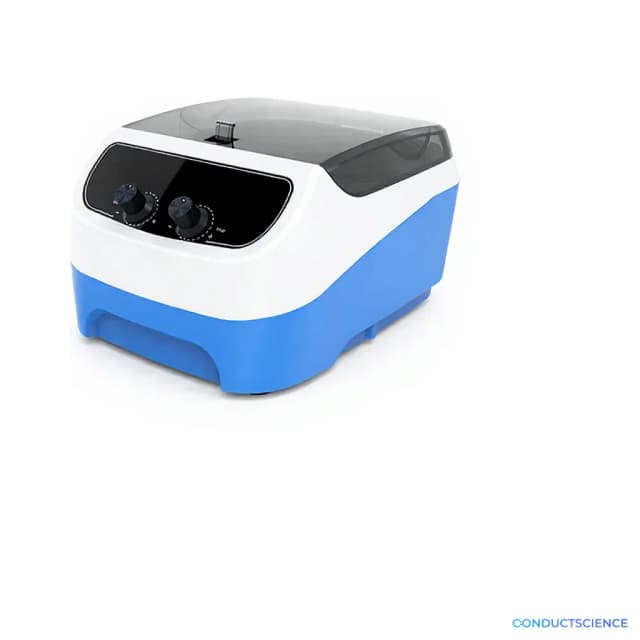
Blood Centrifuge
Benchtop blood centrifuge accommodating 24×10ml tubes with maximum RCF of 2147×g for routine blood component separation and biological sample processing.
| Automation Level | manual |
| Max. Capacity | 24*10ml |
| Max. RCF | 2147×g |
| Net Weight(kg) | 21 |
| Gross Weight(kg) | 25 |
| Centrifugable Tube Types | Vacuum blood collection tube 3/5/7/10ml; PRP tube 3/5/7/10ml; PP tube, EP tube 3/5/7/10ml, etc. |

The Blood Centrifuge (BIO-0341) is a benchtop centrifuge designed for routine processing of blood samples and other biological specimens in clinical and research laboratories. This unit accommodates up to 24 tubes of 10ml capacity and achieves a maximum relative centrifugal force of 2147×g, making it suitable for standard blood component separation protocols including serum isolation, plasma preparation, and cell pellet formation.
The centrifuge accepts multiple tube formats including vacuum blood collection tubes, platelet-rich plasma (PRP) tubes, and standard polypropylene tubes in 3ml, 5ml, 7ml, and 10ml volumes. With its 21kg net weight, the unit provides stable operation during high-speed runs while maintaining a compact footprint suitable for routine laboratory workflows.
How It Works
Centrifugal separation operates on the principle of differential sedimentation, where particles of different densities separate under applied centrifugal force. When the rotor spins, samples experience forces significantly greater than gravity, causing denser components to migrate toward the bottom of the tube while lighter components remain in the supernatant.
The maximum RCF of 2147×g creates sufficient force to separate blood components based on their density differences: red blood cells (density ~1.09 g/ml) settle to form the packed cell volume, while plasma (density ~1.02 g/ml) remains as the upper layer. The separation efficiency depends on the applied force, centrifugation time, and the density differential between components.
Temperature control during centrifugation prevents hemolysis and maintains sample integrity, particularly important for heat-sensitive analytes and enzymatic assays requiring stable biological activity post-separation.
Features & Benefits
Automation Level
- manual
Max. Capacity
- 24*10ml
Max. RCF
- 2147×g
Net Weight(kg)
- 21
Gross Weight(kg)
- 25
Centrifugable Tube Types
- Vacuum blood collection tube 3/5/7/10ml; PRP tube 3/5/7/10ml; PP tube, EP tube 3/5/7/10ml, etc.
Brand
- ConductScience
Research Domain
- Analytical Chemistry
- Cell Biology
- Clinical Diagnostics
- Immunology
- Microbiology
- Pharmaceutical QC
Weight
- 46.3 kg
Dimensions
- L: 944.88 mm
- W: 393.7 mm
- H: 38.0 mm
Comparison Guide
| Feature | This Product | Typical Alternative | Advantage |
|---|---|---|---|
| Sample Capacity | 24×10ml tubes maximum | Entry-level models often accommodate 8-12 tubes | Higher throughput reduces processing time for batch sample workflows and increases laboratory efficiency. |
| Maximum RCF | 2147×g | Basic models may offer 1500-1800×g | Higher centrifugal force ensures complete separation of blood components and faster processing times for routine protocols. |
| Tube Compatibility | Vacuum blood collection, PRP, and PP tubes in 3-10ml volumes | Limited compatibility with fewer tube types | Versatile tube acceptance eliminates need for multiple centrifuges or specialized adapters in diverse laboratory workflows. |
| Base Stability | 21kg net weight | Lighter models may experience vibration issues | Stable operation during high-speed runs prevents sample mixing and maintains consistent separation quality. |
The BIO-0341 Blood Centrifuge combines substantial sample capacity with versatile tube compatibility and sufficient RCF for comprehensive blood processing protocols. The stable 21kg base weight and 2147×g maximum force support reliable operation in routine clinical and research laboratory environments.
Practical Tips
Always balance tube loads by placing samples opposite each other in the rotor or using water-filled balance tubes of equal weight.
Why: Unbalanced loads cause excessive vibration and can damage the centrifuge drive mechanism or produce incomplete separations.
Clean the rotor and chamber weekly with mild detergent and dry thoroughly to prevent corrosion and sample contamination.
Why: Residual biological material can harbor contaminants and metal corrosion reduces rotor life and balance accuracy.
Verify speed accuracy annually using a calibrated tachometer or professional service to ensure consistent RCF delivery.
Why: Speed drift affects separation efficiency and can lead to incomplete blood component isolation or inconsistent results.
Inspect tubes for cracks before centrifugation and never exceed the maximum tube volume capacity of 10ml.
Why: Tube failure at high speed creates safety hazards and can contaminate the chamber with biohazardous material.
Allow the centrifuge to reach full speed before starting the timer to ensure consistent separation times across samples.
Why: Acceleration time variations can affect separation completeness and reproducibility between sample batches.
If excessive vibration occurs during operation, stop immediately and check for proper tube placement and rotor seating.
Why: Vibration indicates imbalance or mechanical issues that can damage the centrifuge and compromise sample separation quality.
Setup Guide
What’s in the Box
- Blood Centrifuge main unit
- Rotor assembly (typical)
- Tube adapters for multiple sizes (typical)
- Power cord
- User manual and operation guide
- Warranty documentation (typical)
Warranty
ConductScience provides a one-year manufacturer warranty covering parts and labor, with technical support available for troubleshooting and maintenance guidance. Extended warranty options and service contracts are available for high-throughput laboratory environments.
Compliance
What is the minimum centrifugation time required for complete serum separation?
Serum separation typically requires 10-15 minutes at maximum speed (2147×g), though optimal time may vary based on sample volume, hematocrit, and desired serum clarity. Consult specific protocols for your analytical requirements.
Can this centrifuge accommodate microtubes smaller than 3ml?
The specifications indicate compatibility with tubes from 3ml minimum. For smaller volumes like 1.5ml microtubes, verify rotor adapter availability or consider alternative tube holders that fit the standard positions.
What is the recommended maintenance schedule for routine use?
Weekly cleaning of rotor and chamber, monthly inspection of rotor for wear or corrosion, and annual professional calibration verification. High-volume labs may require more frequent maintenance intervals.
How does the maximum RCF compare to requirements for PRP preparation?
The 2147×g maximum RCF exceeds typical PRP preparation requirements (200-400×g), making this unit suitable for both low-speed PRP isolation and higher-speed serum separation protocols.
What safety features prevent operation with unbalanced loads?
Consult product datasheet for specific safety mechanisms. Standard practice requires manual load balancing using opposite tube positions or balance tubes filled with equivalent volumes.
Is temperature control available during centrifugation?
Temperature control specifications are not provided in the basic model information. Consult product datasheet for thermal management features if temperature-sensitive samples require cooling during centrifugation.
Have a question about this product?
Accessories
Enhance your setup with compatible accessories
Replacement Parts & Consumables
Frequently Bought Together