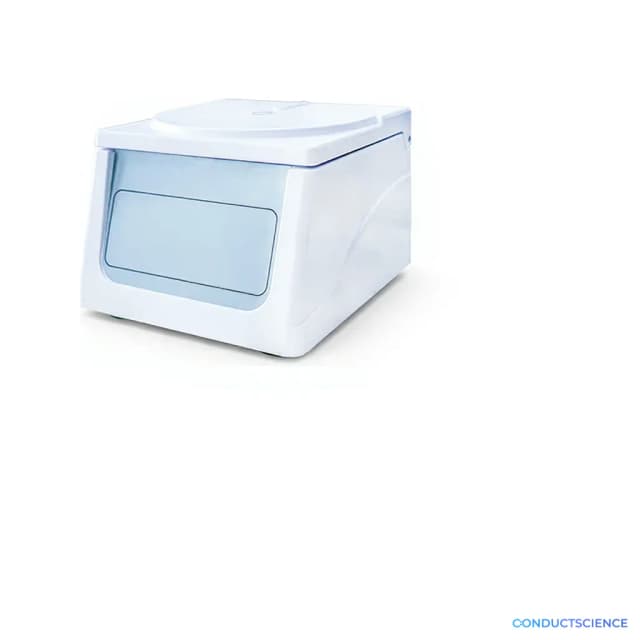
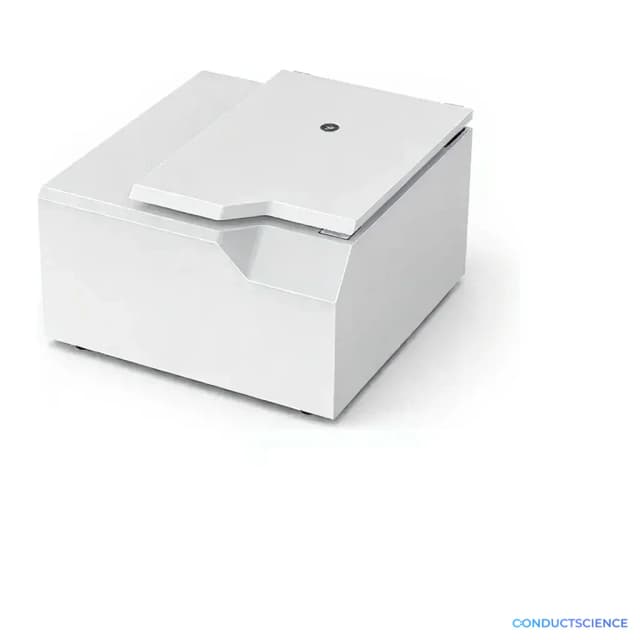
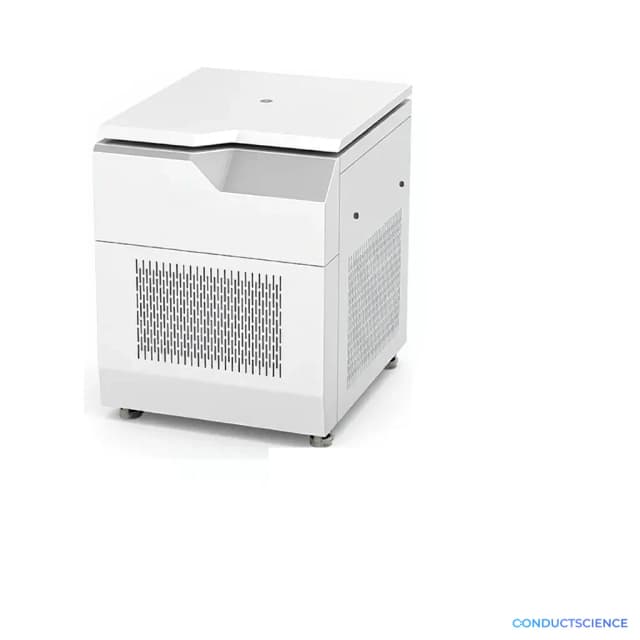
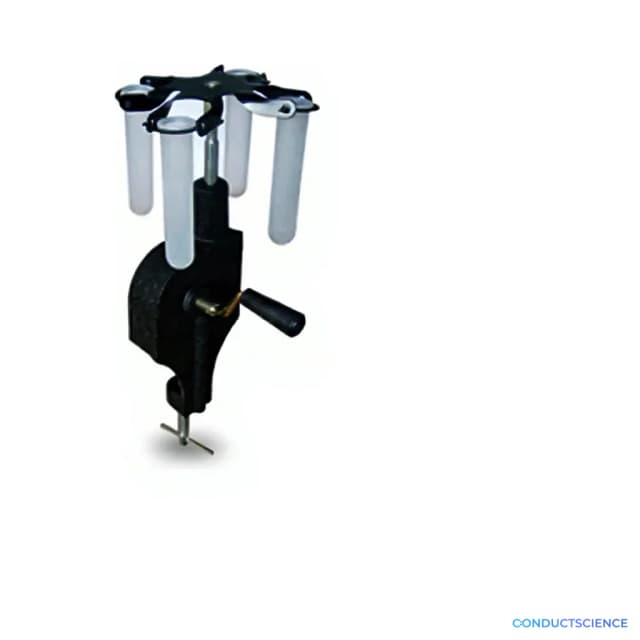
Blood Bag Centrifuge - Laboratory Grade Refrigerated
High-capacity refrigerated centrifuge for blood bag processing, operating up to 7000 rpm with temperature control from -20°C to +40°C.

Louise Corscadden, PhD
Director of Science · ConductScience
Ask Louise about Blood Bag Centrifuge - Laboratory Grade Refrigerated fit, setup, configuration, or quote prep.
Already working with us? Sign in to connect this with My Scientist.
Key Specifications
Full details →- Model fit
- 3 selectable configurations
- SKU family
- BIO-0942
- Shipping box
- 90.0 x 67.0 x 82.0 cm
- Ordering
- Online checkout and quote request available
- Category
- Centrifuges
- Build notes
- Confirm accessories, station layout, and support needs before purchase
The Blood Bag Centrifuge is a refrigerated, high-capacity centrifuge designed for processing blood bags and other large-volume biological specimens in blood banking, clinical laboratories, and research facilities. This floor-standing unit operates at speeds up to 7000 rpm with a maximum relative centrifugal force of 10,956×g, providing sufficient separation power for blood component preparation and fractionation protocols.
Equipped with a CFC-free refrigeration system maintaining temperatures from -20°C to +40°C with ±1°C accuracy, the unit ensures temperature-controlled processing critical for maintaining biological sample integrity. The centrifuge accommodates up to 4 bags of 1200 ml capacity, making it suitable for high-throughput blood processing operations while operating at noise levels ≤60 dB for laboratory comfort.
How It Works
The Blood Bag Centrifuge operates on the principle of density-based separation using centrifugal force. When blood bags are subjected to high-speed rotation, the centrifugal acceleration forces components of different densities to migrate radially outward at different rates. Red blood cells, being the densest components, sediment to the outer radius, while plasma remains in the inner portion of the bag.
The refrigeration system maintains precise temperature control throughout the separation process, preventing thermal damage to temperature-sensitive blood components and maintaining optimal viscosity for efficient separation. The rotor design accommodates blood bags in a horizontal orientation, maximizing separation efficiency while minimizing hemolysis and cellular damage.
Speed accuracy of ±20 rpm ensures reproducible separation protocols, while the programmable timing system (0-99 minutes 59 seconds) allows for standardized processing procedures. The combination of controlled acceleration, maintained temperature, and precise timing produces consistent blood component separation for clinical and research applications.
Features & Benefits
Shipping weight
- 210.0 lb
Shipping box
- L: 90.0 cm
- W: 67.0 cm
- H: 82.0 cm
| Feature | This Product | Typical Alternative | Advantage |
|---|---|---|---|
| Processing Capacity | 4×1200ml blood bags (4800ml total) | Benchtop models typically handle 4×50-250ml containers | Enables high-throughput blood banking operations and large-volume biological sample processing. |
| Temperature Control Range | -20°C to +40°C with ±1°C accuracy | Many models offer 4°C to ambient or limited sub-zero capability | Accommodates protocols requiring sub-zero processing and precise temperature maintenance. |
| Maximum RCF | 10,956×g at 7000 rpm | Research centrifuges often provide higher RCF for smaller volumes | Optimized for efficient blood component separation at clinically relevant volumes. |
| Noise Level | ≤60 dB operation | Laboratory centrifuges typically operate at 55-70 dB | Maintains quiet operation suitable for clinical laboratory environments. |
| Power Requirements | 1500W with dual voltage options (220V/110V) | Smaller units typically require 500-1000W power | Provides robust refrigeration and motor performance for consistent large-volume processing. |
This blood bag centrifuge provides specialized high-capacity processing capabilities with precise temperature control and quiet operation. The combination of large-volume accommodation, sub-zero temperature capability, and robust construction addresses the specific requirements of blood banking and clinical laboratory applications.
| Model | SKU | Listed price | Status | Shipping box |
|---|---|---|---|---|
| BIO-0321 — 8000 RPM, 6×2400ml, CFC-free | BIO-0321 | $10,625.00 | Available | 90.0 x 67.0 x 82.0 cm |
| BIO-0319-CFC — 7000 RPM, 4×1200ml, CFC-free | BIO-0319-CFC | $10,625.00 | Available | 90.0 x 67.0 x 82.0 cm |
| BIO-0320 — 7000 RPM, 4×1200ml | BIO-0320 | $10,625.00 | Available | 90.0 x 67.0 x 82.0 cm |
Practical Tips
Verify temperature accuracy monthly using a calibrated thermometer placed in a water-filled container during operation.
Why: Temperature accuracy is critical for maintaining blood component integrity during processing.
Clean the rotor and chamber after each use with appropriate disinfectants for biohazardous materials.
Why: Prevents cross-contamination between samples and maintains hygienic conditions for blood processing.
Always balance loads diametrically opposite and ensure blood bags are properly secured to prevent shifting during acceleration.
Why: Proper balancing prevents dangerous vibration and ensures consistent centrifugal force application.
Allow the rotor to come to complete stop before opening the chamber and wear appropriate PPE when handling blood products.
Why: Prevents exposure to biohazardous aerosols and ensures safe handling of potentially infectious materials.
Record actual temperature and speed readings for each run to maintain protocol documentation and traceability.
Why: Documentation supports quality control requirements and enables troubleshooting of separation inconsistencies.
If unusual vibration occurs, immediately stop operation and check for proper load balancing and rotor installation.
Why: Excessive vibration can indicate dangerous operating conditions that could damage equipment or compromise safety.
Pre-cool the chamber to target temperature before loading blood bags to minimize processing time and temperature fluctuations.
Why: Reduces thermal stress on blood components and ensures consistent starting conditions for separation protocols.
Monitor refrigeration system performance regularly and ensure adequate ventilation around the compressor unit.
Why: Proper cooling system function is essential for temperature control and extends equipment lifespan.
Setup Guide
What’s in the Box
- Blood bag centrifuge main unit
- Rotor assembly (typical)
- Power cable
- User manual and operating instructions
- Calibration certificate (typical)
- Safety documentation
- Warranty information
Warranty
ConductScience provides a standard one-year manufacturer warranty covering parts and labor, with technical support available for installation guidance and operational assistance.
Compliance
What is the maximum blood bag volume this centrifuge can process?
The centrifuge accommodates 4 blood bags with maximum capacity of 1200 ml each, for a total processing volume of 4800 ml per run.
Can this centrifuge maintain sub-zero temperatures during operation?
Yes, the CFC-free refrigeration system maintains temperatures from -20°C to +40°C with ±1°C accuracy throughout the centrifugation process.
How precise is the speed control for reproducible protocols?
Speed accuracy is ±20 rpm at the maximum 7000 rpm, providing sufficient precision for standardized blood separation protocols.
What safety considerations apply to blood bag centrifugation?
Proper load balancing is critical for safe operation. The unit operates at ≤60 dB noise levels and includes standard centrifuge safety features for biohazardous materials.
Can this centrifuge be used for other large-volume samples besides blood bags?
While designed for blood bags, the rotor can accommodate other large-volume containers up to 1200 ml capacity, subject to proper balancing and compatibility verification.
What maintenance is required for the refrigeration system?
The CFC-free compressor requires routine maintenance typical of laboratory refrigeration systems. Consult product datasheet for specific maintenance schedules and procedures.
How does this compare to smaller benchtop centrifuges for blood processing?
This floor-standing unit offers significantly higher capacity (4×1200ml vs typical 4×50ml) and more robust temperature control, making it suitable for blood banking operations rather than small-scale research applications.
Have a question about this product?
Have a question? Just ask.
Send it over and we'll email you a personalized answer — no call, no scheduling.
Prefer to talk it through?