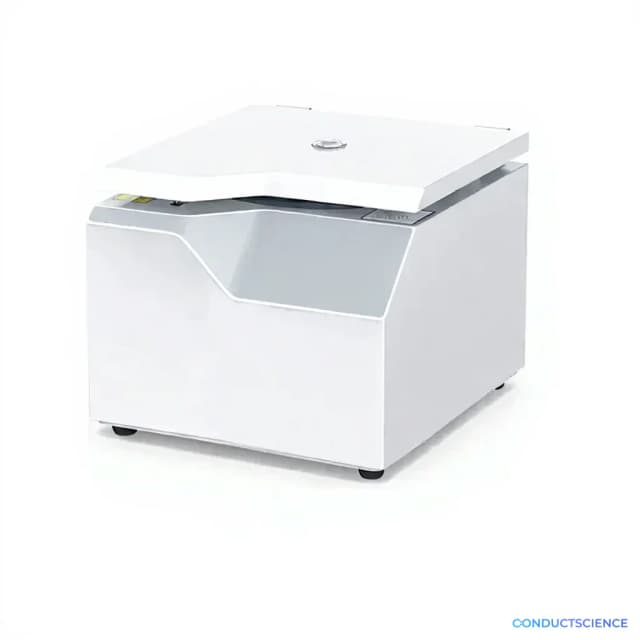
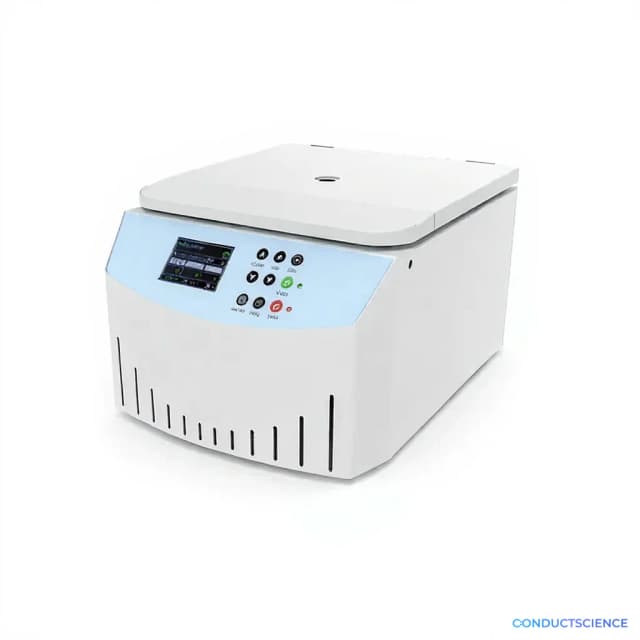
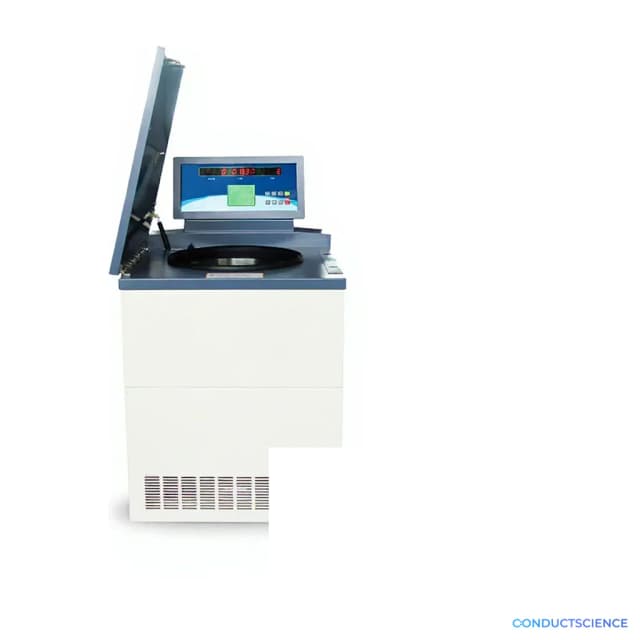
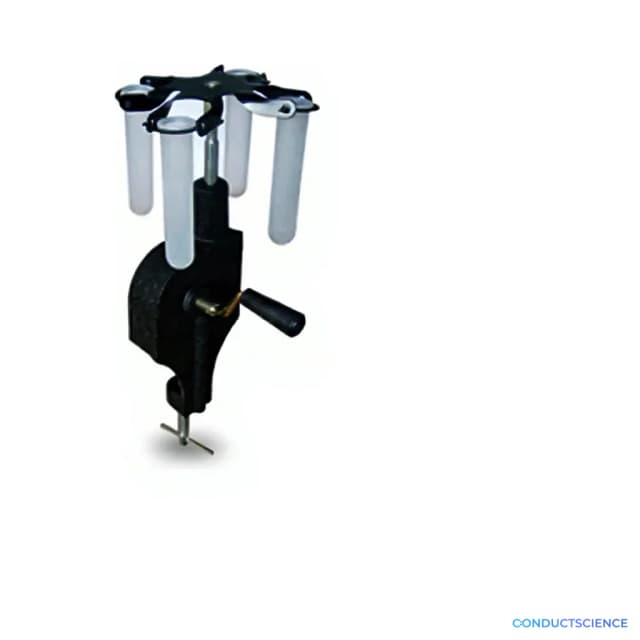
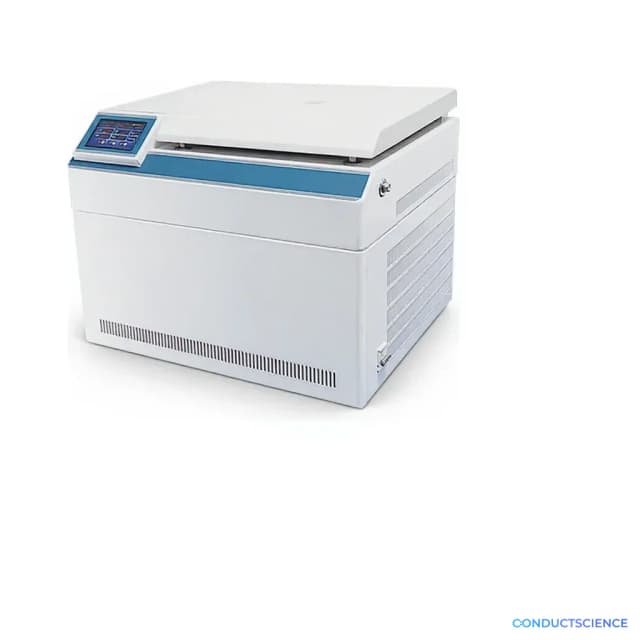
Capillary Centrifuge
Benchtop capillary centrifuge for high-speed separation of microvolume samples in standard microhematocrit tubes, supporting clinical and research laboratory workflows.
| Automation Level | manual |
| Brand | ConductScience |
| Weight | 22kg |

The Capillary Centrifuge is a benchtop centrifuge designed for high-speed separation of microvolume samples in capillary tubes. This instrument provides precise centrifugal force application for rapid separation of cellular components, serum, and other liquid phases in clinical and research laboratory settings.
The unit accommodates standard microhematocrit capillary tubes and delivers consistent rotational speeds for reproducible separation results. With its compact footprint and robust construction, this centrifuge supports routine sample processing workflows requiring rapid, high-quality phase separation in small sample volumes.
How It Works
The Capillary Centrifuge-BKC-MH12-B operates on the principle of centrifugal sedimentation, where rotation generates centrifugal force that acts on particles based on their density differences. When capillary tubes containing sample mixtures are subjected to high-speed rotation, denser components migrate toward the tube bottom while lighter components remain toward the top, creating distinct separated phases.
The centrifugal force (RCF) generated is proportional to the square of the rotational velocity and the radius of rotation. This force overcomes Brownian motion and other factors that normally keep particles in suspension, enabling rapid and complete separation even in microvolume samples. The fixed-angle rotor design ensures consistent force application across all sample positions.
Sample separation occurs as the centrifugal field accelerates particles according to their sedimentation coefficient, which depends on particle size, shape, and density relative to the surrounding medium. This allows for clear delineation of phases such as serum and cellular components in blood samples, or separation of precipitates from solution matrices.
Features & Benefits
Automation Level
- manual
Brand
- ConductScience
Research Domain
- Analytical Chemistry
- Cell Biology
- Clinical Diagnostics
- Immunology
- Microbiology
- Pharmaceutical QC
Weight
- 22kg
Weight
- 22.0 kg
Dimensions
- L: 42.0 mm
- W: 43.6 mm
- H: 38.0 mm
Comparison Guide
| Feature | This Product | Typical Alternative | Advantage |
|---|---|---|---|
| Weight and Stability | 22 kg gross weight | Entry-level models often weigh 10-15 kg | Heavier construction provides superior vibration dampening and stability during high-speed operation. |
| Construction Quality | ConductScience engineering with robust design | Basic models may use lighter materials | Durable construction ensures consistent performance and longevity in demanding laboratory environments. |
| Application Focus | Specialized capillary tube centrifugation | General microcentrifuges with adapters | Purpose-built design optimizes separation efficiency and sample handling for capillary formats. |
| Laboratory Integration | Benchtop design with professional specifications | Varies by model and manufacturer | Professional-grade specifications ensure compatibility with established laboratory protocols and quality standards. |
The Capillary Centrifuge-BKC-MH12-B combines substantial construction weight with specialized capillary tube optimization. The 22 kg gross weight indicates robust engineering for stable, vibration-free operation during high-speed centrifugation cycles.
Practical Tips
Always balance opposing rotor positions with samples of equal volume and density to prevent vibration and ensure uniform separation.
Why: Proper balancing prevents mechanical stress and maintains separation quality across all samples.
Clean the rotor thoroughly after each use and inspect for cracks or wear, especially around tube holders.
Why: Regular cleaning prevents contamination and early detection of wear extends rotor lifespan and ensures safety.
Verify speed accuracy periodically using a calibrated tachometer or strobe light according to manufacturer recommendations.
Why: Speed accuracy directly affects RCF calculations and separation reproducibility in quantitative applications.
Never attempt to stop the rotor manually and always wait for complete stop before opening the lid.
Why: Rotor momentum can cause injury and premature stopping can disrupt sample separation or damage the drive mechanism.
If unusual vibration occurs, immediately stop the unit and check for proper sample balancing and rotor installation.
Why: Vibration indicates imbalance that can damage bearings and compromise separation quality if not corrected.
Record centrifugation parameters (speed, time, temperature) for each run to ensure reproducible separation conditions.
Why: Consistent parameters enable method validation and troubleshooting of separation variability.
Allow samples to reach room temperature before centrifugation unless protocol specifically requires cold processing.
Why: Temperature equilibration prevents condensation and ensures consistent viscosity for predictable separation behavior.
Setup Guide
What’s in the Box
- Capillary centrifuge main unit
- Fixed-angle rotor assembly
- Power cord
- User manual and operating instructions
- Safety documentation
- Rotor balancing accessories (typical)
Warranty
ConductScience provides a standard one-year manufacturer warranty covering defects in materials and workmanship. Technical support is available to assist with installation, operation, and troubleshooting throughout the product lifecycle.
Compliance
What types of capillary tubes are compatible with this centrifuge?
The unit is designed for standard microhematocrit capillary tubes. Consult the product datasheet for specific tube dimensions and capacity specifications.
What is the maximum RCF this centrifuge can generate?
Maximum relative centrifugal force values depend on the specific RPM capability and rotor radius. Refer to the technical specifications for precise RCF calculations.
How many samples can be processed simultaneously?
Sample capacity depends on the rotor configuration. The 'MH12' designation may indicate 12-position capacity, but verify exact specifications in the product documentation.
What maintenance procedures are required?
Regular maintenance includes rotor cleaning, inspection for wear or damage, and periodic calibration verification. Follow manufacturer's maintenance schedule for optimal performance.
Can this centrifuge be used for PCR tube separation?
This unit is specifically designed for capillary tubes. For PCR tubes or other microtubes, verify compatibility or consider a microcentrifuge designed for those tube types.
What safety features are included?
Standard safety features typically include lid interlock systems, imbalance detection, and overspeed protection. Consult the safety documentation for complete details.
How does this compare to microcentrifuges?
Capillary centrifuges are optimized for microhematocrit tubes and similar capillary formats, while microcentrifuges typically handle various microtube formats with different rotor options.
Have a question about this product?
Upgrade Options