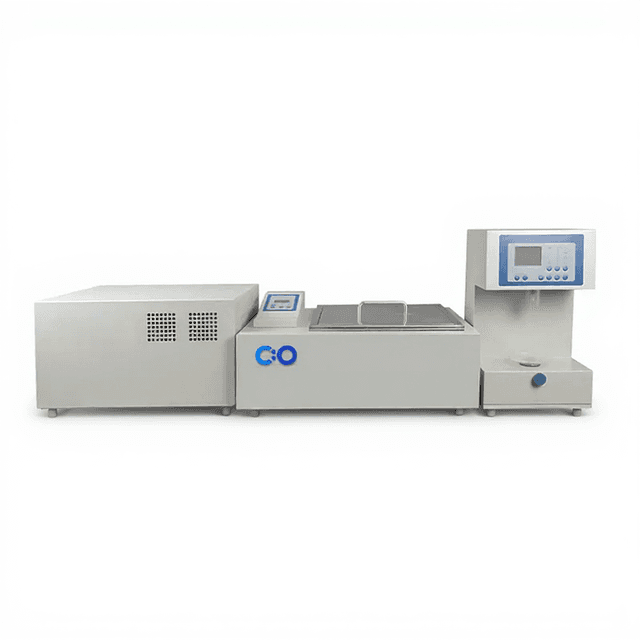
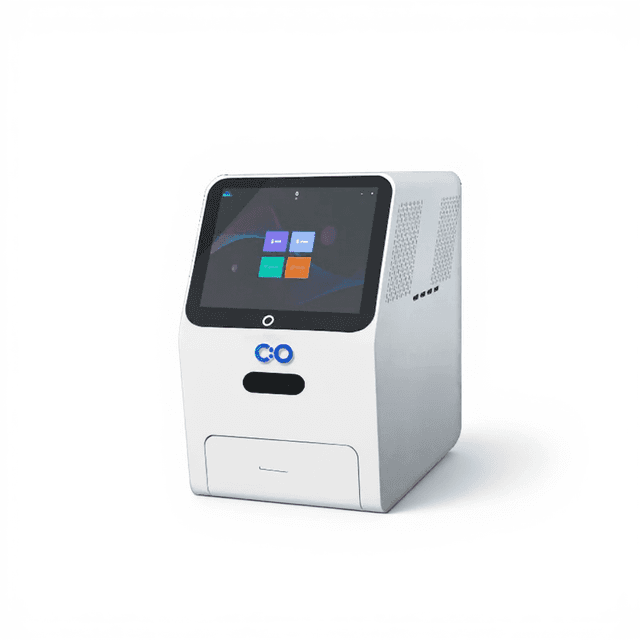
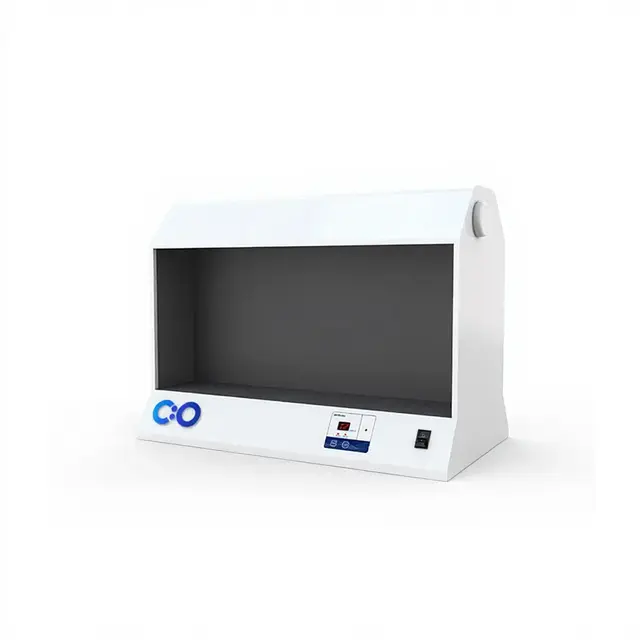
Clarity Tester
Controlled illumination system for standardized visual inspection of solution clarity and particulate matter in pharmaceutical and analytical laboratories, featuring adjustable three-primary-color fluorescent lighting with timing functions.
| illumination | adjustable |
| timing_function | automatic time and alarm |
| test_mode | continuous testing |
| operator_capacity | CT-1: single operator, CT-2: dual operator |
| lighting_system | three-primary-color fluorescent lamp |
| lighting_control | good lighting sensor, electronic inductor and shading |

The Clarity Tester provides standardized illumination control for visual inspection protocols in pharmaceutical and analytical laboratories. The instrument features adjustable three-primary-color fluorescent lighting with integrated timing and alarm functions, enabling consistent evaluation of solution clarity and particulate matter detection under controlled conditions.
Available in single-operator (BIO-CT-1) and dual-operator (BIO-CT-2) configurations, the system incorporates lighting sensors, electronic inductors, and shading mechanisms to eliminate flash interference during visual assessments. The adjustable illumination range supports various inspection protocols requiring reproducible lighting conditions for quantitative visual clarity evaluation.
How It Works
The Clarity Tester operates on the principle of controlled illumination geometry for standardized visual inspection. The instrument employs a three-primary-color fluorescent lamp system that provides consistent, adjustable lighting conditions across the visible spectrum. This multi-wavelength illumination enables detection of particulate matter and assessment of solution clarity through direct visual observation under standardized conditions.
The integrated lighting control system incorporates optical sensors and electronic inductors to maintain stable illumination intensity while eliminating flash interference and ambient light variations. The shading mechanism ensures that only the controlled illumination reaches the sample, creating reproducible viewing conditions. Timing functions allow for standardized inspection intervals, while alarm systems provide alerts for protocol compliance during extended observation periods.
The dual-operator configuration (BIO-CT-2) enables independent or comparative assessments by multiple observers, supporting inter-operator validation studies and reducing subjective variation in visual inspection protocols.
Features & Benefits
Model
- BIO-CT-1
- BIO-CT-2
illumination
- adjustable
timing_function
- automatic time and alarm
test_mode
- continuous testing
operator_capacity
- CT-1: single operator, CT-2: dual operator
lighting_system
- three-primary-color fluorescent lamp
lighting_control
- good lighting sensor, electronic inductor and shading
Automation Level
- semi-automated
Research Domain
- Analytical Chemistry
- Clinical Diagnostics
- Food Science
- Materials Science
- Pharmaceutical QC
Weight
- 22.05 kg
Dimensions
- L: 42.0 mm
- W: 43.6 mm
- H: 38.0 mm
Comparison Guide
| Feature | This Product | Typical Alternative | Advantage |
|---|---|---|---|
| Illumination System | Adjustable three-primary-color fluorescent lighting with electronic control | Single-color LED or basic fluorescent systems without spectral control | Multi-wavelength illumination enhances particulate detection and provides more comprehensive clarity assessment. |
| Timing Functions | Integrated automatic timing and alarm system | Manual timing or no timing control | Ensures standardized inspection intervals for protocol compliance and reproducible results. |
| Operator Capacity | Single (CT-1) or dual operator (CT-2) configurations available | Typically single-operator designs only | Dual-operator option enables comparative assessments and inter-operator validation studies. |
| Flash Interference Control | Lighting sensors, electronic inductors, and shading system | Basic shading or no interference control | Maintains stable viewing conditions independent of ambient lighting variations. |
| Operation Mode | Continuous testing capability with semi-automated functions | Basic on/off operation without automated features | Supports extended inspection sessions and batch processing workflows. |
The Clarity Tester combines controlled three-primary-color illumination with integrated timing functions and interference elimination systems. The availability of dual-operator configurations and continuous testing capability provides enhanced flexibility for pharmaceutical and analytical inspection protocols.
Practical Tips
Verify illumination uniformity across the inspection area using reference standards before each session.
Why: Ensures consistent lighting conditions for reproducible visual assessments.
Replace fluorescent lamps when illumination intensity decreases or color balance shifts.
Why: Maintains optimal spectral characteristics for accurate particulate detection and clarity evaluation.
Allow 15-minute warm-up period for lamp stabilization before beginning inspections.
Why: Fluorescent lamps require stabilization time to reach consistent color temperature and intensity.
Position samples at consistent distances from the illumination source and maintain standard viewing angles.
Why: Standardized geometry ensures reproducible inspection conditions across different operators and sessions.
Check lighting sensor alignment if illumination appears uneven or unstable.
Why: Proper sensor alignment is critical for electronic inductor feedback control and stable illumination.
Document environmental conditions, operator information, and instrument settings for each inspection session.
Why: Provides traceability and enables investigation of any anomalous results or inter-session variations.
Avoid looking directly at the fluorescent illumination source during operation.
Why: Protects operator vision and prevents eye strain during extended inspection sessions.
Setup Guide
What’s in the Box
- Clarity Tester main unit (BIO-CT-1 or BIO-CT-2 configuration)
- Power cable and adapter (typical)
- Reference standards for calibration verification (typical)
- User manual and operation protocols (typical)
- Sample holders and positioning guides (typical)
- Calibration certificate (typical)
Warranty
ConductScience provides a standard one-year manufacturer warranty covering defects in materials and workmanship, with technical support available for setup, operation, and troubleshooting assistance.
Compliance
What illumination wavelengths are provided by the three-primary-color fluorescent system?
The system uses three-primary-color fluorescent lamps covering the visible spectrum. Consult the product datasheet for specific wavelength ranges and spectral distribution characteristics.
How do the timing and alarm functions support standardized inspection protocols?
The integrated timing system allows preset inspection intervals with audible alarms to ensure consistent observation periods across samples and operators, supporting protocol compliance and reproducible results.
What is the difference between single and dual-operator configurations?
The BIO-CT-1 supports single-operator inspection, while the BIO-CT-2 enables two operators to perform independent or comparative assessments simultaneously for inter-operator validation studies.
How does the lighting control system maintain illumination stability?
The system incorporates lighting sensors and electronic inductors to monitor and maintain stable illumination intensity while eliminating flash interference through controlled shading mechanisms.
What sample container sizes and types are compatible with the inspection area?
The adjustable illumination system accommodates various container sizes for pharmaceutical and analytical samples. Consult the product specifications for dimensional limits and positioning requirements.
Can the system be used for both particulate detection and general clarity assessment?
Yes, the controlled illumination and viewing geometry support both particulate matter detection and overall solution clarity evaluation in accordance with visual inspection protocols.
What calibration procedures are required for consistent operation?
Regular verification of illumination uniformity and intensity using reference standards ensures consistent performance. The product manual provides specific calibration intervals and procedures.
Have a question about this product?
Accessories
Enhance your setup with compatible accessories
Upgrade Options