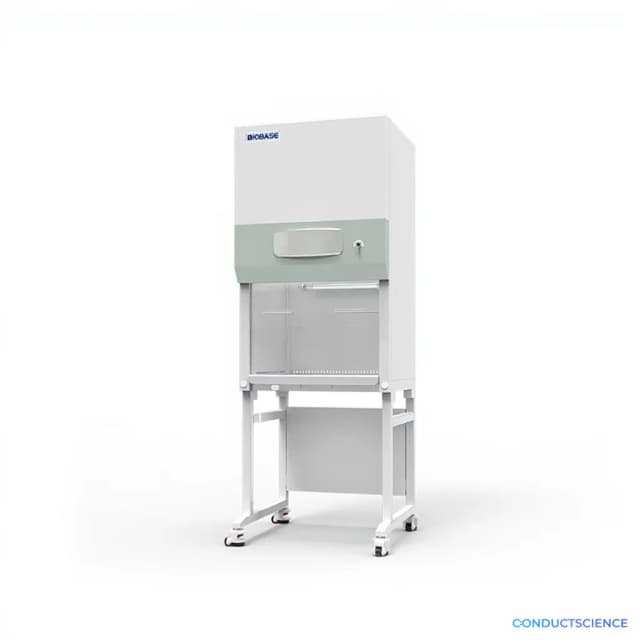
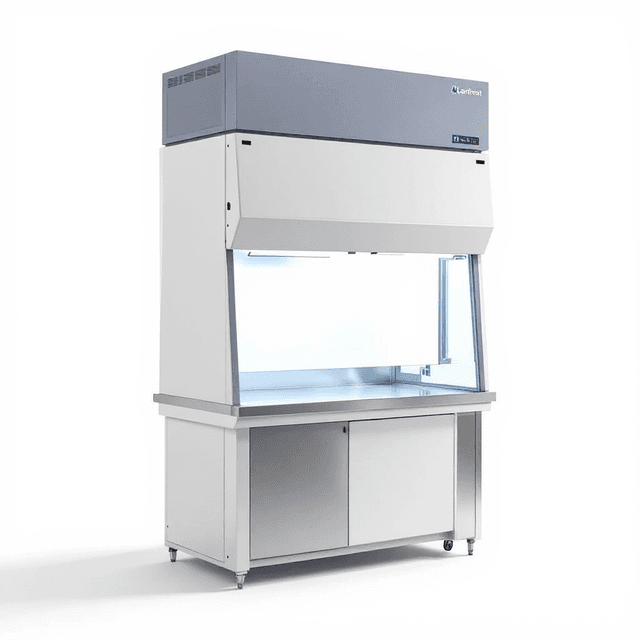
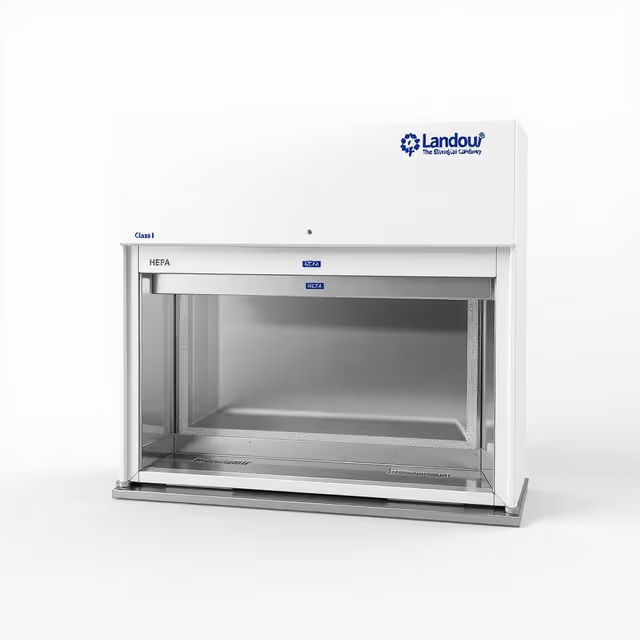
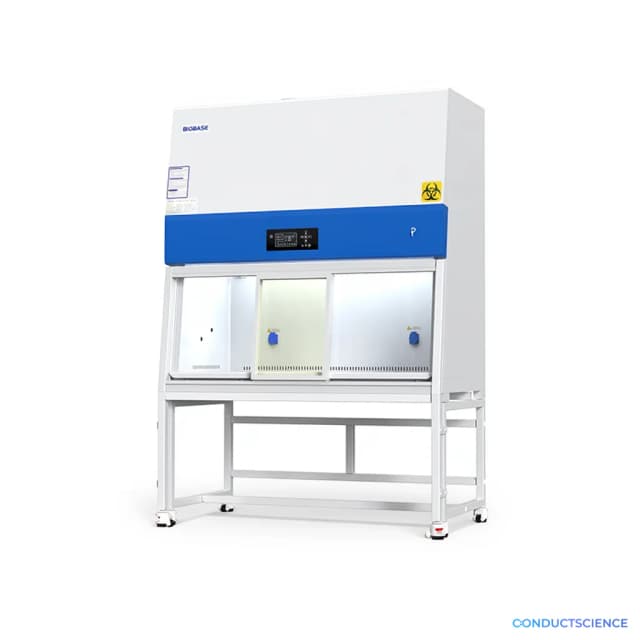
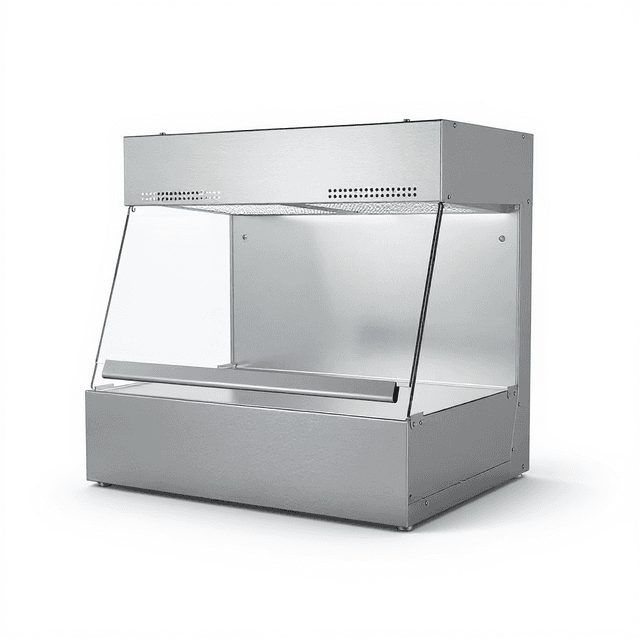
Class II B2 Biological Safety Cabinet - 5ft
Class II Type B2 biological safety cabinet with 5-foot working area, 100% total exhaust, and dual ULPA filtration for high-containment microbiological work with volatile chemicals.
| Automation Level | semi-automated |

The Class II B2 Biological Safety Cabinet provides a 5-foot working area with 100% total exhaust and dual ULPA filtration for high-containment microbiological work. This biosafety cabinet maintains negative pressure throughout the work chamber, exhausting all air outside the facility rather than recirculating filtered air back into the laboratory. The B2 configuration enables safe manipulation of volatile toxic chemicals and radionuclides in combination with microbiological agents.
The cabinet features dual ULPA filtration systems with separate supply and exhaust air handling. Internal dimensions of 1350 x 600 x 660 mm accommodate large equipment and multiple simultaneous procedures. The 40W UV lamp with timer provides surface decontamination between work sessions. At 340 kg operational weight, the unit requires proper structural support and dedicated exhaust connection to facility HVAC systems.
How It Works
Class II B2 biological safety cabinets operate on the principle of directional airflow and physical containment through negative pressure. The cabinet draws air from the laboratory through the front opening at a minimum face velocity of 100 feet per minute, creating an inward airflow that prevents aerosols from escaping the work chamber. Unlike other Class II cabinet types, the B2 configuration exhausts 100% of the air outside the facility rather than recirculating any portion back into the laboratory space.
The dual ULPA filtration system consists of separate supply and exhaust filter arrays. Supply air passes through ULPA filters before entering the work chamber as vertical laminar flow, protecting materials from environmental contamination. All air from the work chamber and the front intake passes through exhaust ULPA filters before being discharged outside the building through a dedicated exhaust system. This design prevents any recirculation of potentially contaminated air or volatile chemical vapors.
The negative pressure gradient is maintained throughout the work chamber relative to both the laboratory and the internal plenum spaces. This multi-level containment approach provides personnel protection, product protection, and environmental protection simultaneously, making it suitable for work with microbiological agents combined with volatile toxic chemicals or radionuclides.
Features & Benefits
Automation Level
- semi-automated
Research Domain
- Cancer Research
- Cell Biology
- Environmental Monitoring
- Immunology
- Microbiology
- Pharmaceutical QC
Weight
- 340.0 kg
Dimensions
- L: 42.0 mm
- W: 43.6 mm
- H: 38.0 mm
Comparison Guide
| Feature | This Product | Typical Alternative | Advantage |
|---|---|---|---|
| Working Width | 5-foot (1500mm) external width with 1350mm internal workspace | Standard models often provide 4-foot widths with more limited workspace | Accommodates multiple operators or larger equipment setups for complex procedures |
| Exhaust Configuration | 100% total exhaust with dual ULPA filtration | A1/A2 types recirculate 70% of air through HEPA filters | Enables safe use of volatile chemicals and radionuclides that cannot be recirculated |
| UV Decontamination | 40W UV lamp with programmable timer control | Entry-level models may lack UV systems or offer manual-only operation | Provides automated surface decontamination scheduling between work sessions |
| Internal Work Height | 660mm vertical clearance in work chamber | Compact models often provide reduced vertical space | Allows manipulation of taller equipment while maintaining proper laminar airflow |
| Construction Weight | 340 kg operational weight indicating substantial construction | Lighter units may compromise structural stability or filtration capacity | Heavy construction typically correlates with better vibration resistance and airflow stability |
This B2 cabinet combines the chemical compatibility advantages of 100% exhaust ventilation with an extra-wide 5-foot workspace and integrated UV decontamination. The dual ULPA filtration and substantial construction provide reliable containment for demanding microbiological work involving volatile reagents.
Practical Tips
Schedule NSF/ANSI 49 recertification annually or after any maintenance affecting airflow systems, including filter changes or motor repairs.
Why: Containment performance can degrade over time and must be verified to maintain safety standards.
Monitor differential pressure indicators regularly and replace ULPA filters when airflow velocity drops below specification.
Why: Clogged filters reduce containment effectiveness and increase energy consumption.
Allow the cabinet to run for 5-10 minutes before beginning work to establish stable airflow patterns and remove any residual particles.
Why: Initial startup creates turbulence that can compromise both containment and product protection.
Never use open flames or high-heat sources within the cabinet, as this disrupts airflow patterns and poses fire risk.
Why: Heat sources create thermal drafts that compromise laminar flow and containment integrity.
Position materials toward the rear of the work surface and avoid blocking the rear air intake grilles with equipment.
Why: Proper airflow requires unobstructed intake areas to maintain the designed air velocity profile.
If airflow alarms activate, check for blocked intake grilles or overloaded work surfaces before calling for service.
Why: Simple obstructions are the most common cause of airflow disruptions and can be resolved without service calls.
Document UV lamp runtime and replace lamps based on both time and intensity measurements, not just visual appearance.
Why: UV output degrades before visible changes occur, reducing decontamination effectiveness.
Clean the work surface and interior walls with appropriate disinfectants after each use, working from clean to contaminated areas.
Why: Regular cleaning prevents buildup of contaminants that could compromise subsequent work or create safety hazards.
Setup Guide
What’s in the Box
- Class II B2 Biological Safety Cabinet main unit
- Power cord and electrical connections (typical)
- UV lamp (40W, installed)
- User manual and operation guide (typical)
- Installation and certification requirements documentation (typical)
Warranty
ConductScience provides standard 1-year manufacturer warranty covering defects in materials and workmanship, with technical support for installation guidance and operational troubleshooting.
Compliance
What exhaust requirements are needed for proper B2 cabinet operation?
The cabinet requires a dedicated building exhaust system capable of handling 100% of the cabinet's airflow. The exhaust must be connected directly to the cabinet's exhaust plenum and discharge outside the building, never recirculating back into the facility.
How does the B2 configuration differ from other Class II cabinet types?
B2 cabinets exhaust 100% of air outside the building rather than recirculating filtered air like A1/A2 types. This allows safe use of volatile chemicals and radionuclides but requires higher energy consumption and dedicated exhaust connections.
What certification testing is required after installation?
NSF/ANSI 49 certification must be performed by qualified technicians, including airflow velocity measurements, ULPA filter integrity testing, smoke pattern visualization, and biological containment validation.
Can this cabinet be used for work with volatile organic solvents?
Yes, the 100% exhaust design makes B2 cabinets suitable for procedures involving volatile chemicals that cannot be safely recirculated through HEPA filtration, unlike other Class II cabinet types.
What is the recommended UV lamp usage protocol?
The 40W UV lamp with timer should typically operate 30 minutes before and after each work session for surface decontamination. UV exposure time may vary based on specific pathogen requirements and institutional protocols.
How much clearance space is required around the cabinet?
Consult product datasheet for specific clearance requirements, but generally allow adequate space for airflow, maintenance access, and connection to exhaust ductwork. Front access requires sufficient room for operator positioning.
What structural considerations are needed for installation?
The 340 kg operational weight requires verification of floor loading capacity and may need structural reinforcement. The location must also accommodate exhaust ductwork routing and electrical connections.
Have a question about this product?
Upgrade Options