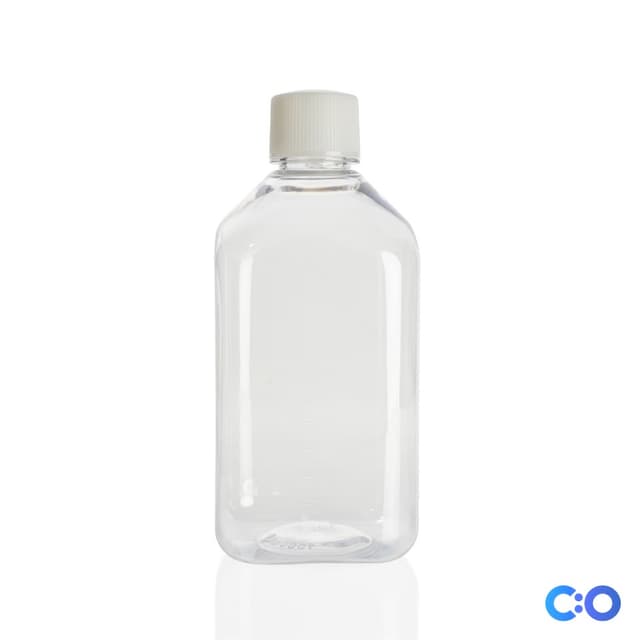
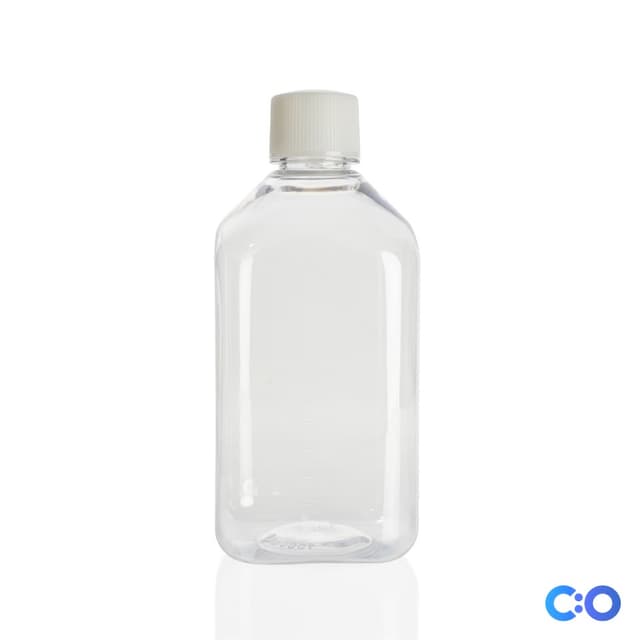
ConductScience Spray Bottles, 500mL, HDPE (Pack of 30)
$18.00 per unit | 30 units per pack Bulk pricing: Pack of 30 at $540.00 ($18.00 per unit)
| Automation Level | manual |

The ConductScience 500mL HDPE spray bottles provide chemical-resistant liquid dispensing for laboratory applications. Constructed from high-density polyethylene, these bottles offer durability and compatibility with a wide range of solvents and aqueous solutions commonly used in research environments. The adjustable nozzle allows for controlled dispensing from fine mist to directed stream, enabling precise application for various laboratory protocols.
These spray bottles are designed for routine laboratory tasks requiring controlled liquid dispensing, including surface cleaning, reagent application, and equipment maintenance. The 500mL capacity provides adequate volume for extended use while maintaining ergonomic handling characteristics. The HDPE construction ensures long-term stability when storing and dispensing laboratory chemicals within the material's compatibility range.
How It Works
The spray bottle operates through manual pressure generation via a trigger-actuated pump mechanism. When the trigger is depressed, the pump creates negative pressure in the intake tube, drawing liquid from the bottle reservoir through a dip tube that extends to the bottom of the container. The pump then pressurizes this liquid and forces it through the nozzle assembly.
The adjustable nozzle mechanism controls droplet size and spray pattern through variable orifice geometry. Rotating the nozzle tip adjusts the exit aperture, allowing fine mist generation for broad coverage applications or concentrated stream formation for targeted dispensing. The HDPE material provides chemical resistance through its non-polar polymer structure, which resists attack by many organic solvents and aqueous solutions while maintaining structural integrity.
Features & Benefits
Automation Level
- manual
Research Domain
- Analytical Chemistry
- Cell Biology
- Environmental Monitoring
- Industrial Hygiene
- Materials Science
- Microbiology
- Pharmaceutical QC
Weight
- 30.92 kg
Dimensions
- L: 43.2 mm
- W: 36.0 mm
- H: 28.8 mm
Comparison Guide
| Feature | This Product | Typical Alternative | Advantage |
|---|---|---|---|
| Material Construction | High-density polyethylene (HDPE) | Basic models often use polystyrene or lower-grade plastics | HDPE provides superior chemical resistance and durability for laboratory solvent use |
| Nozzle Adjustability | Adjustable nozzle with mist to stream settings | Fixed nozzle designs offer limited spray patterns | Variable spray patterns accommodate different application requirements from broad coverage to targeted dispensing |
| Volume Capacity | 500mL capacity | Entry-level bottles often limited to 250mL or smaller volumes | Larger volume reduces refill frequency during extended laboratory procedures |
| Chemical Compatibility | Chemical-resistant construction suitable for laboratory solvents | Consumer-grade bottles may not withstand laboratory chemicals | Laboratory-specific design ensures safe and reliable performance with research chemicals |
This spray bottle combines HDPE chemical resistance with adjustable spray functionality in a practical 500mL size. The construction provides durability for laboratory environments while the adjustable nozzle offers application flexibility.
Practical Tips
Always verify chemical compatibility with HDPE before introducing new solvents to prevent bottle degradation.
Why: Chemical incompatibility can cause bottle failure and create safety hazards.
Prime the pump with several trigger pulls after filling to ensure consistent spray pattern.
Why: Air bubbles in the system can cause irregular dispensing and reduced spray quality.
Label bottles clearly with chemical contents and appropriate hazard warnings according to laboratory protocols.
Why: Clear labeling prevents accidental misuse and ensures compliance with safety requirements.
Store bottles in an upright position to prevent leakage and maintain pump prime.
Why: Proper storage prevents seal degradation and ensures consistent performance.
Flush the system with compatible solvent when switching between different chemicals.
Why: Cross-contamination can affect experimental results and create unexpected chemical reactions.
If spray pattern becomes irregular, check for clogs in the nozzle and clear with appropriate solvent.
Why: Particle buildup in the nozzle can restrict flow and affect dispensing accuracy.
Setup Guide
What’s in the Box
- 500mL HDPE spray bottle with trigger assembly
- Adjustable nozzle
- Dip tube (typical)
- User instructions (typical)
Warranty
ConductScience provides a standard warranty covering manufacturing defects. Technical support is available for product selection and compatibility questions.
Compliance
What chemical compatibility should I verify before use?
Check chemical resistance charts for HDPE compatibility with your specific solvents. HDPE generally resists aqueous solutions, alcohols, and many organic solvents but may not be suitable for strong oxidizers or aromatic hydrocarbons.
How do I adjust between mist and stream settings?
Rotate the nozzle tip clockwise for stream setting and counterclockwise for mist. The adjustment is continuous, allowing intermediate spray patterns between these extremes.
Can these bottles be autoclaved for sterilization?
Consult product datasheet for specific temperature ratings. HDPE typically softens at temperatures above 120°C, which may limit autoclave compatibility.
What is the maximum operating pressure for the pump mechanism?
The manual pump generates pressure through trigger action. Consult product specifications for maximum pressure ratings to avoid damage to seals or nozzle.
How should I clean the bottle between different chemicals?
Thoroughly rinse with compatible solvent, then flush with distilled water if appropriate. Allow complete drying before introducing new chemicals to prevent cross-contamination.
What is the expected service life under normal laboratory use?
Service life depends on chemical exposure and usage frequency. HDPE provides good durability, but seals and pump components may require replacement with extended use of aggressive solvents.
Have a question about this product?
Accessories
Enhance your setup with compatible accessories
Frequently Bought Together
Related Products