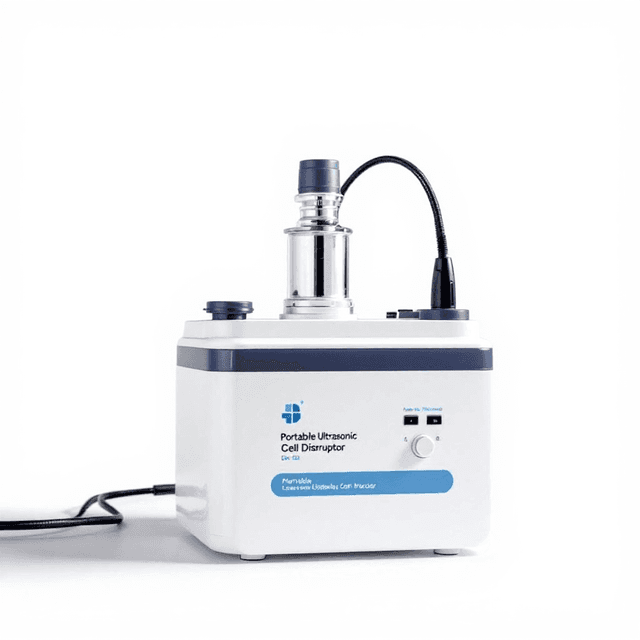
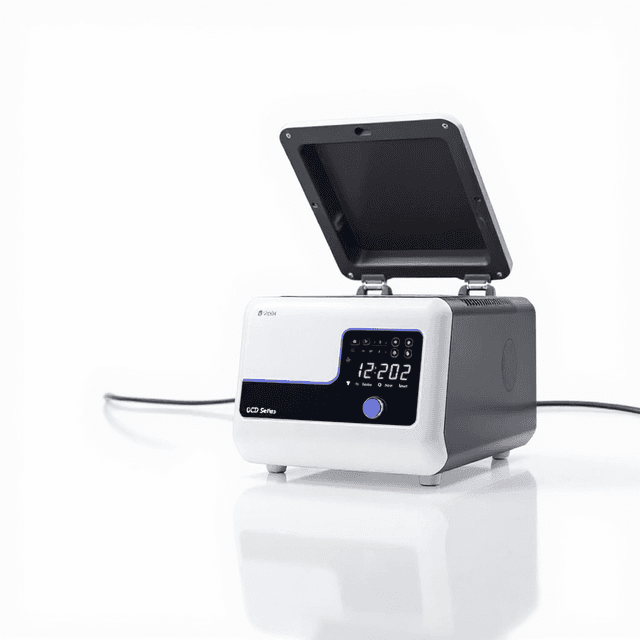
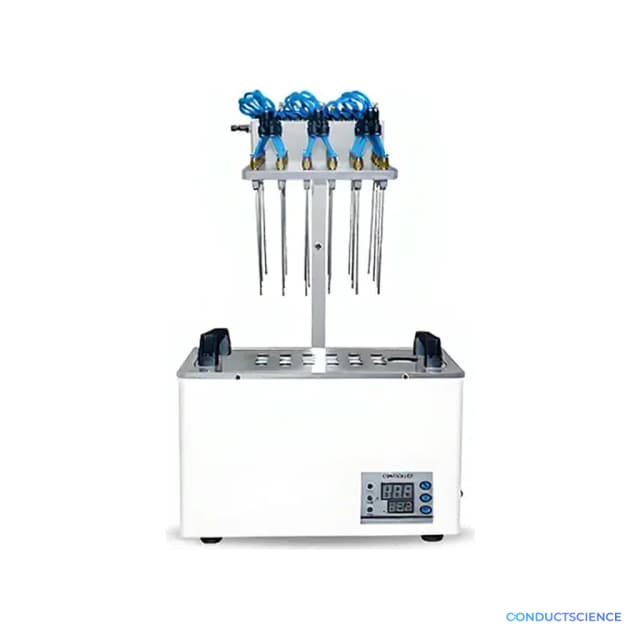
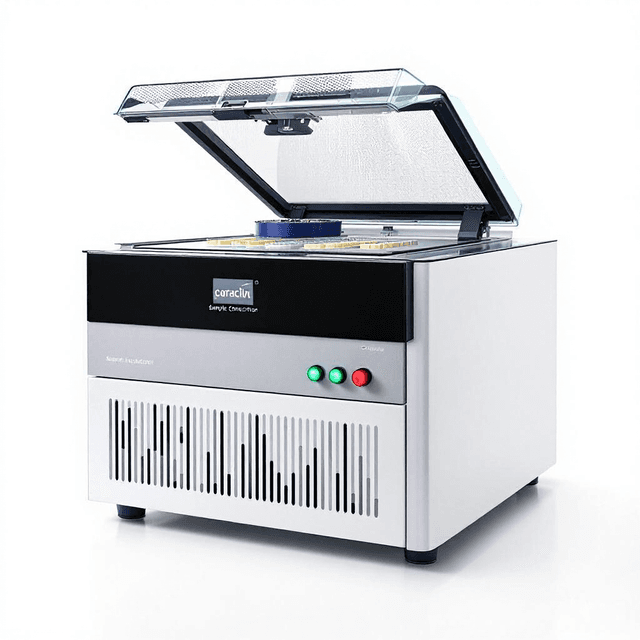
Continuous Flow Ultrasonic Cell Disruptor
High-power continuous flow ultrasonic processor for large-scale cell disruption and sample homogenization, with adjustable 1000-4000W output and 100L/day processing capacity.
| Automation Level | semi-automated |
| Frequency | 19.5~20.5KHz |
| Standard Amplitude-change PoleΦ | Φ40*250mm or Φ40*370mm |
| Crushing Capacity/Once | 500~10000ml |
| Crushing Capacity/Continuously | 100L/day |
| Ultrasonic Power(W) | 1000~4000W, adjustable |

The Continuous Flow Ultrasonic Cell Disruptor is a high-power ultrasonic processor designed for large-scale cell lysis, tissue homogenization, and particle dispersion applications. Operating at 19.5-20.5 kHz frequency with adjustable power from 1000-4000W, this system delivers consistent ultrasonic energy through direct contact with samples via titanium amplitude-change poles. The continuous flow design enables processing of large sample volumes up to 100L per day, making it suitable for industrial-scale sample preparation workflows.
The system features comprehensive safety monitoring including overtemperature, overload, and no-load protection systems, with programmable time controls up to 99 hours 59 minutes. Standard configuration includes soundproof housing to minimize laboratory noise exposure during extended processing runs. Optional accessories expand functionality to include temperature-controlled processing and automated sample handling capabilities.
How It Works
Ultrasonic cell disruption utilizes high-frequency sound waves to generate cavitation bubbles in liquid media. When the titanium amplitude-change pole vibrates at 19.5-20.5 kHz, it creates alternating pressure zones that form microscopic bubbles. These bubbles rapidly collapse, generating intense localized forces that mechanically disrupt cellular membranes and break apart particles.
The continuous flow design maintains consistent processing conditions by circulating samples through the ultrasonic field via peristaltic pump systems. This approach prevents localized heating and ensures uniform energy distribution throughout the sample volume. The adjustable power output (1000-4000W) allows optimization for different sample types, with higher power settings for tough cellular matrices and lower settings for sensitive biological materials.
Temperature monitoring and pulse mode operation prevent thermal degradation of heat-sensitive compounds during extended processing runs. The system's safety interlocks automatically shut down operation if overheating, overloading, or no-load conditions are detected, protecting both samples and equipment integrity.
Features & Benefits
Automation Level
- semi-automated
Frequency
- 19.5~20.5KHz
Standard Amplitude-change PoleΦ
- Φ40*250mm or Φ40*370mm
Crushing Capacity/Once
- 500~10000ml
Crushing Capacity/Continuously
- 100L/day
Ultrasonic Power(W)
- 1000~4000W, adjustable
Time Set
- Optional: continuous/pulse
Max. Working Time
- 99h59min59sec
Safety System
- Over temperature; Time; Overload; No load
Standard Accessories
- Main machine, energy converter, standard amplitude, sound proof box(or supporting frame)
Optional Accessories
- Stainless steel reactor, peristaltic pump, low temperature water tank
Package Size(W*D*H)
- 675*305*450mm(Main body); 430*415*730mm(Soundproof box)
Brand
- ConductScience
Research Domain
- Analytical Chemistry
- Cell Biology
- Food Science
- Industrial Hygiene
- Materials Science
- Microbiology
- Pharmaceutical QC
Power/Voltage
- AC220V, 50/60Hz(Standard); AC110V, 50/60Hz(Optional)
Weight
- 32kg
Weight
- 32.0 kg
Dimensions
- L: 45.0 mm
- W: 67.5 mm
- H: 30.5 mm
Comparison Guide
| Feature | This Product | Typical Alternative | Advantage |
|---|---|---|---|
| Maximum Power Output | 1000-4000W adjustable | Entry-level models often offer 500-1500W fixed power | Higher power enables faster processing of tough samples and greater flexibility in protocol optimization. |
| Processing Mode Options | Continuous flow with 100L/day capacity | Most systems operate in batch mode only | Continuous flow eliminates sample handling variability and enables high-throughput workflows. |
| Batch Size Range | 500-10,000ml per batch | Standard systems typically handle 50-2000ml volumes | Large volume capability reduces the number of processing cycles needed for industrial-scale sample preparation. |
| Frequency Range | 19.5-20.5 kHz | Fixed frequency systems common in this range | Frequency range optimization allows fine-tuning of cavitation energy for specific sample characteristics. |
| Safety Systems | Overtemperature, overload, no-load, and time monitoring | Basic models may have limited safety features | Comprehensive monitoring prevents sample loss and equipment damage during unattended operation. |
| Noise Control | Standard soundproof box included | Many systems require separate noise enclosures | Integrated noise control enables operation in occupied laboratories without additional soundproofing investment. |
This system offers high power output capability up to 4000W with continuous flow processing for large-scale applications. The integrated safety monitoring and soundproof housing provide operational convenience, while the adjustable power and pulse modes enable optimization across diverse sample types from delicate cell cultures to tough tissue matrices.
Practical Tips
Verify ultrasonic power output monthly using calorimetry method with known water volumes to ensure consistent energy delivery.
Why: Power output can drift over time due to component aging, affecting processing reproducibility.
Inspect and clean the amplitude pole threads weekly during regular use, applying anti-seize compound during reassembly.
Why: Thread contamination and corrosion can cause amplitude pole seizure, requiring costly replacement of both pole and converter.
Start new sample types at minimum power settings and increase incrementally while monitoring temperature and disruption effectiveness.
Why: Over-processing can denature proteins or generate excessive heat, while under-processing wastes time and resources.
If ultrasonic generation becomes inconsistent, check amplitude pole tightness and inspect for tip damage or cavitation erosion.
Why: Loose connections or damaged poles reduce energy transfer efficiency and can cause system overload protection to activate.
Document processing parameters including power level, time, temperature, and sample characteristics for each application to enable protocol optimization.
Why: Systematic parameter tracking enables identification of optimal conditions and troubleshooting of processing inconsistencies.
Never operate the system without proper amplitude pole installation, as this can damage the energy converter and create safety hazards.
Why: No-load operation can cause converter overheating and acoustic energy reflection that may damage internal components.
Use pulse mode with 50% duty cycle for temperature-sensitive samples and continuous mode only for thermostable applications.
Why: Pulse operation prevents thermal degradation while maintaining effective disruption, preserving sample integrity during extended processing.
Replace amplitude poles when tip diameter decreases by more than 1mm or when visible pitting/erosion appears on the working surface.
Why: Worn poles reduce processing efficiency and can create acoustic hot spots that damage the energy converter.
Setup Guide
What’s in the Box
- Main ultrasonic generator unit
- Energy converter assembly
- Standard amplitude-change pole (Φ40×250mm or Φ40×370mm)
- Soundproof box enclosure
- Supporting frame hardware
- Power cord (typical)
- Operating manual (typical)
- Safety documentation (typical)
Warranty
ConductScience provides standard 1-year manufacturer warranty covering defects in materials and workmanship. Technical support includes installation guidance, parameter optimization, and troubleshooting assistance for the duration of the warranty period.
Compliance
What sample volumes can be processed and what are the throughput limitations?
The system processes 500-10,000ml per individual batch, with continuous flow capability enabling up to 100L per day throughput. Processing time depends on sample characteristics and desired disruption level, typically ranging from minutes to hours per batch.
How do I select the appropriate power setting for different sample types?
Start with 1000W for delicate samples like mammalian cells or protein solutions, increase to 2000-3000W for bacterial cultures or plant tissues, and use maximum 4000W for tough matrices like fungal cell walls. Monitor temperature and adjust pulse settings accordingly.
What maintenance is required for the titanium amplitude poles?
Inspect poles for erosion or pitting after every 50 hours of operation. Clean with isopropanol and check thread integrity. Replace poles when tip diameter decreases by more than 1mm or when processing efficiency noticeably decreases.
Can the system handle temperature-sensitive samples during extended processing?
Yes, use pulse mode with duty cycles of 30-50% and monitor sample temperature. Optional low-temperature water tank accessory provides active cooling. Pulse intervals of 2-5 seconds on, 2-5 seconds off typically maintain temperatures below 40°C.
What data output and process monitoring capabilities are available?
The system provides real-time power output display and processing time monitoring. Safety systems log overtemperature and overload events. For detailed process documentation, consult product datasheet for available data logging options.
How does continuous flow mode compare to batch processing for reproducibility?
Continuous flow provides superior batch-to-batch consistency by maintaining constant residence time and ultrasonic exposure. This eliminates variability from manual sample handling and ensures uniform processing conditions across large sample volumes.
What are the noise levels and laboratory safety considerations?
The standard soundproof box significantly reduces operational noise. Always wear hearing protection when operating without enclosure. Ensure adequate ventilation as the system generates heat during operation. Follow lockout/tagout procedures during maintenance.
Have a question about this product?
Upgrade Options