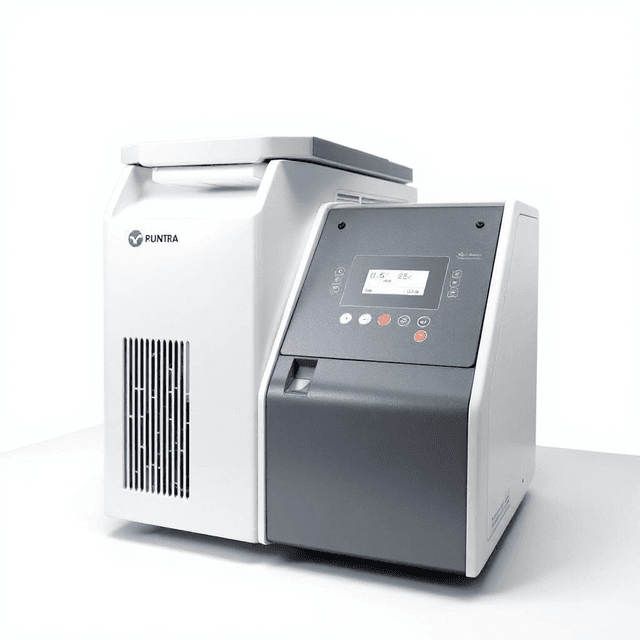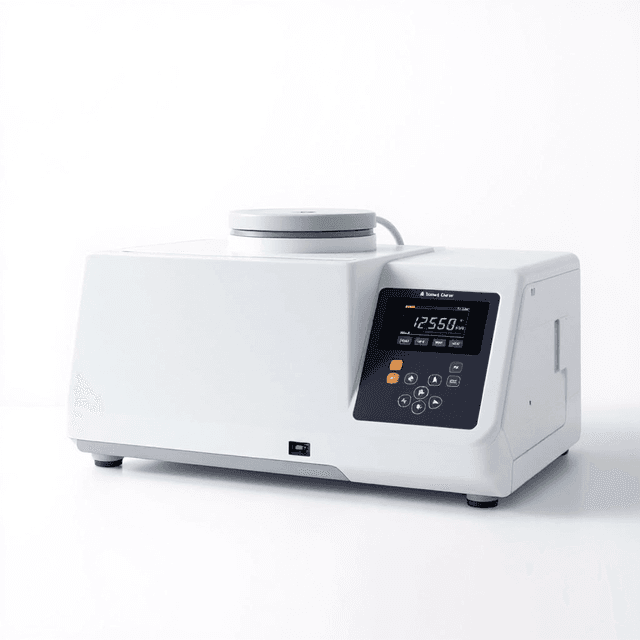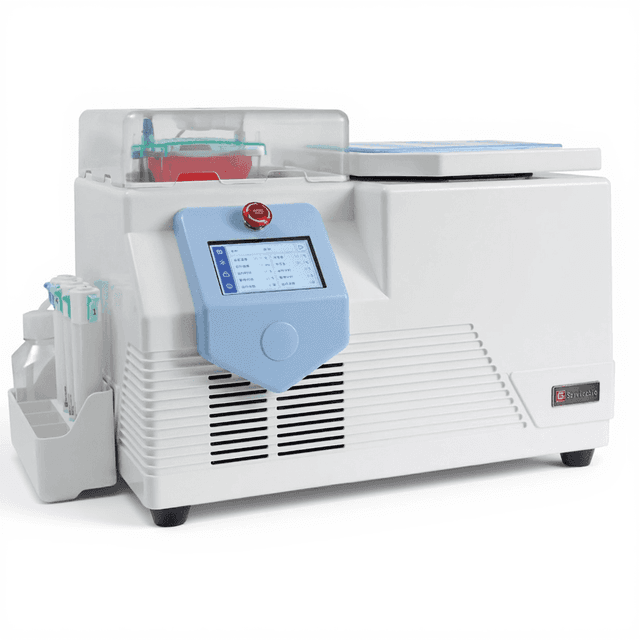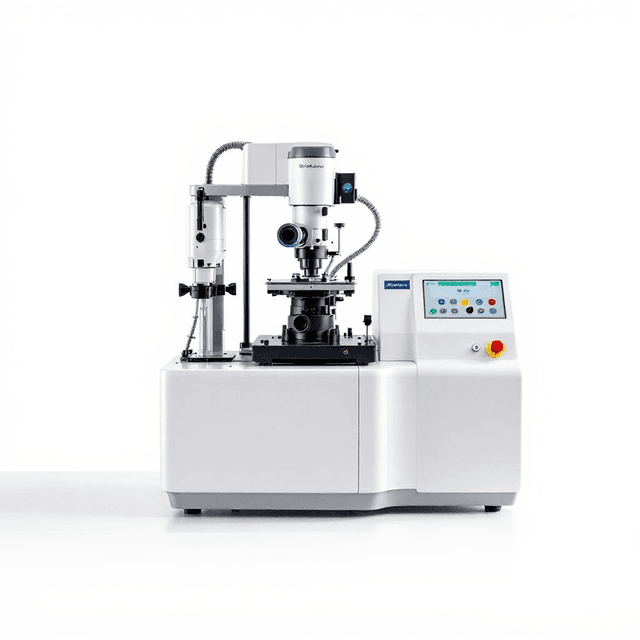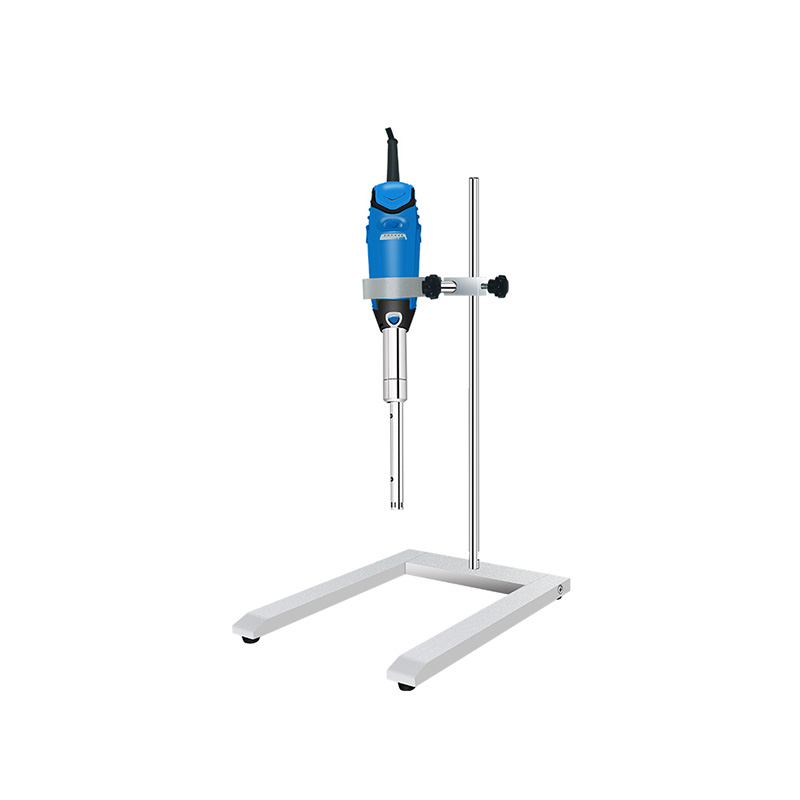
Homogenizer BK-H6B
Handheld high-speed homogenizer for laboratory applications

Louise Corscadden, PhD
Director of Science · ConductScience
Ask Louise about Homogenizer BK-H6B fit, setup, configuration, or quote prep.
Already working with us? Sign in to connect this with My Scientist.
Key Specifications
Full details →- Model fit
- Configured during quote
- SKU family
- BIO-BK-H6B
- Sizing
- Model-specific dimensions confirmed from the selected configuration
- Ordering
- Online checkout and quote request available
- Category
- Homogenizers
- Build notes
- Confirm accessories, station layout, and support needs before purchase
Professional handheld high-speed homogenizer for laboratory and industrial applications. The BK-H6B delivers reliable mixing, emulsification, and sample preparation with a 1000~32000 r/min speed range and support for materials up to 2000 mPa·s viscosity.
Ideal for: Cell disruption, tissue homogenization, liquid-liquid mixing, liquid-solid dispersion, and emulsification in biochemistry, food science, nanomaterials, coatings, and environmental applications.
Key Capabilities: One-handed operation, double insulation protection, stainless steel construction, easy-to-change dispersing shafts (6G, 8G, 10G), and flexible coupling for quick maintenance.
How It Works
The BK-H6B operates through high-speed mechanical force application to disrupt samples and enable mixing and emulsification. The instrument utilizes a motor-driven mechanism that applies controlled shearing forces, breaking down particles and creating uniform dispersions through physical disruption.
During operation, samples are placed in appropriate containers and subjected to the homogenizer's mechanical action. The disruption process creates uniform particle size distribution and ensures complete mixing for downstream processing. The mechanical nature of the homogenization process preserves sample integrity while effectively achieving desired emulsification and dispersion results.
The compact design incorporates precision engineering to deliver consistent performance while maintaining operator safety. The unit's construction allows for easy cleaning and maintenance between samples, preventing cross-contamination in multi-sample processing workflows.
Features & Benefits
| Feature | This Product | Typical Alternative | Advantage |
|---|---|---|---|
| Speed Range | 1000~32000 r/min | Some models limited to 20000 r/min | Extended speed range enables processing of diverse sample types with varying viscosity requirements. |
| Maximum Viscosity | 2000 mPa·s | Entry-level models often limited to 1000 mPa·s | Handles high-viscosity materials suitable for industrial applications including heavy oils and polymers. |
| Dispersing Shafts | Three sizes (6G, 8G, 10G) + sterile variants | Limited shaft options or single shaft design | Multiple shaft options enable optimization for specific sample volumes and viscosity ranges. |
| Power Consumption | 120W | Higher-power models consume 150-200W | Efficient design reduces energy consumption while maintaining robust performance. |
| Weight | 3.1 kg (net) | Benchtop models typically 2-5 kg | Optimal weight distribution provides stability while maintaining portability. |
The BK-H6B combines extended speed range, high viscosity handling, and versatile shaft options to provide flexible homogenization solutions for both laboratory research and industrial applications.
Practical Tips
Start at lower speeds (6-stage controller) and gradually increase to find optimal processing without generating excessive heat.
Why: Prevents thermal damage to heat-sensitive samples while achieving desired homogenization results.
Match shaft size to sample volume: 6G for <50ml, 8G for 10-60ml, 10G for 30-150ml.
Why: Ensures optimal mechanical efficiency and consistent homogenization across the sample volume range.
Disassemble and clean all shaft components immediately after use, especially when processing oils or viscous materials.
Why: Prevents residue buildup and maintains consistent performance across multiple samples.
Always secure sample containers properly and wear appropriate PPE. Never insert objects while motor is running.
Why: Prevents sample spillage, aerosol generation, and potential operator injury.
Process small batches and avoid continuous operation beyond 15-20 minute intervals without cooling breaks.
Why: Maintains motor longevity and prevents thermal issues in extended processing sessions.
Record processing parameters (speed, time, shaft used) for each sample type to build reproducible protocols.
Why: Enables method validation and ensures consistent results across research studies.
Setup Guide
What’s in the Box
- BK-H6B homogenizer drive unit
- Single column stand
- Power cord (AC220V standard; AC110V optional)
- Standard 10G dispersing shaft
- User manual and operation guide
- Basic maintenance tool kit
- Safety instructions and technical specifications
Warranty
ConductScience provides a standard one-year manufacturer warranty covering defects in materials and workmanship. Technical support is available to assist with operational questions and troubleshooting throughout the warranty period and beyond.
What's the difference between the various shaft options (6G, 8G, 10G)?
The shaft designation refers to the rotor speed and capacity range. 6G is for small volumes (0.2-50ml) with lower viscosity, 8G for medium volumes (10-60ml), and 10G for larger volumes (30-150ml) with higher viscosity materials. Choose based on your sample volume and viscosity requirements.
Can the BK-H6B handle viscous materials?
Yes! The BK-H6B is designed to handle materials up to 2000 mPa·s viscosity. The 10G shaft is specifically recommended for high-viscosity applications (up to 2000 cP). Always match the shaft to your material's viscosity for optimal performance.
Is the BK-H6B suitable for sterile or aseptic applications?
Yes, sterile variants (6G-ST, 8G-ST, 10G-ST) are available for applications requiring aseptic conditions. These shafts are designed to minimize contamination risk in sensitive applications.
What power supply options are available?
The standard model comes with AC220V, 50/60Hz power supply. An AC110V version with an external transformer is available upon request. Please specify your power requirement when ordering.
How do I clean and maintain the BK-H6B?
The dispersing shaft and working head are easy to disassemble. After each use, rinse the shaft with distilled water and wipe dry. For stubborn residues, use a soft brush or cloth. The coupling connection makes this process quick and flexible. Store all components in a clean, dry place.
What's the typical lifespan of the dispersing shaft?
With proper maintenance and cleaning, the stainless steel (SS316L) dispersing shaft should last many years. The PTFE seal ring may need replacement after extended use, which can be easily done due to the flexible coupling design.
Can I use the BK-H6B continuously?
The BK-H6B is designed for micro batch processing. While it can operate continuously, it is optimized for batch applications. Allow brief cooling periods between lengthy operations to extend motor life.
Is the homogenizer suitable for both liquid-liquid and liquid-solid dispersions?
Yes, the BK-H6B excels at both applications. It's ideal for mixing, emulsification and homogenization of liquid-liquid mixtures, as well as dispersion of liquid and solid powder combinations.
Have a question about this product?
Have a question? Just ask.
Send it over and we'll email you a personalized answer — no call, no scheduling.
Prefer to talk it through?