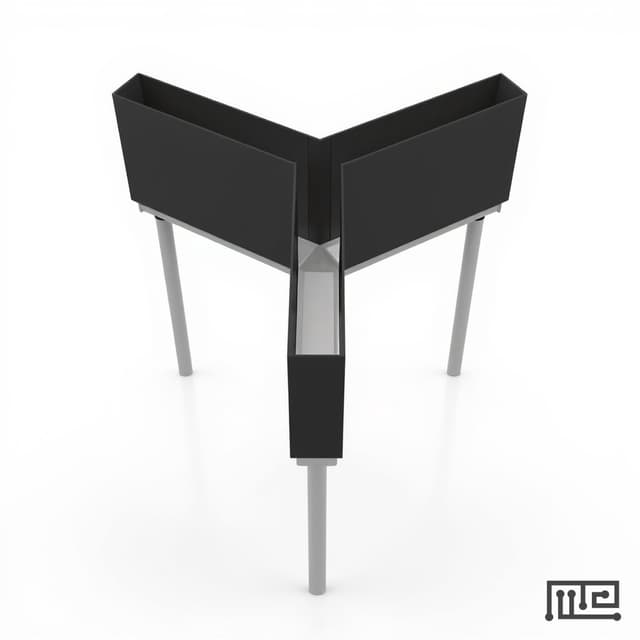
Diamond Maze
Compact diamond-shaped behavioral maze for studying spatial choice behavior, navigation, and nest selection in insects, particularly ants.
| Automation Level | manual |
| Species | Ant, Insect |

The Diamond Maze is a specialized behavioral apparatus designed for studying spatial choice behavior and navigation in insects, particularly ants. This compact maze features a diamond-shaped configuration with precise dimensions optimized for insect movement patterns and decision-making studies. The apparatus measures 20cm x 20cm with a 1cm height, creating an optimal environment for observing binary choice behaviors and nest selection preferences.
The maze is constructed with a 17cm distance between the home nest and target nest locations, allowing researchers to examine spatial memory, path optimization, and decision-making processes in controlled laboratory conditions. This standardized design enables reproducible studies of insect navigation, foraging behavior, and spatial cognition across different experimental paradigms.
How It Works
The Diamond Maze operates on the principle of binary spatial choice, where insects must navigate between two distinct target locations from a central starting position. The diamond configuration creates equal-distance pathways to each target nest, eliminating spatial bias and ensuring that choice behavior reflects genuine preference or learned associations rather than path length differences.
During experimental sessions, insects are introduced at the home nest position and allowed to explore the maze environment. The 17cm distance between home and target nests provides sufficient space for insects to establish spatial memories and develop navigation strategies. Researchers can modify environmental cues, introduce chemical gradients, or alter physical maze properties to examine how different factors influence spatial choice behavior.
The standardized dimensions and geometry enable quantitative analysis of movement patterns, choice latencies, and path optimization strategies. Data collection typically involves tracking individual insect movements, recording choice frequencies, and measuring temporal parameters of decision-making processes.
Features & Benefits
Behavioral Construct
- spatial choice
- navigation
- decision-making
- spatial memory
- foraging behavior
- nest selection
Automation Level
- manual
Research Domain
- Behavioral Pharmacology
- Learning and Memory
- Neuroscience
Species
- Ant
- Insect
Weight
- 21.0 kg
Dimensions
- L: 43.2 mm
- W: 38.0 mm
- H: 27.9 mm
Comparison Guide
| Feature | This Product | Typical Alternative | Advantage |
|---|---|---|---|
| Maze Configuration | Diamond-shaped design with equal-distance pathways | Linear T-maze or Y-maze configurations | Eliminates path length bias and provides more naturalistic navigation scenarios for spatial choice studies. |
| Platform Dimensions | 20cm x 20cm testing area | Varies from smaller 10cm designs to larger 30cm+ platforms | Optimized size balances adequate space for insect movement with practical laboratory footprint and observation capabilities. |
| Wall Height | 1cm containment walls | Higher barriers or enclosed chambers | Allows natural movement patterns while maintaining containment, enabling visual cue recognition and natural behaviors. |
| Nest Separation | 17cm distance between home and target nests | Variable distances depending on design | Provides optimal distance for spatial memory formation while maintaining manageable experimental timescales. |
The Diamond Maze combines standardized dimensions with a unique geometric design optimized for binary choice experiments in insects. The equal-distance pathway configuration and 1cm wall height provide controlled experimental conditions while maintaining naturalistic movement patterns.
Practical Tips
Conduct experiments at consistent times of day and maintain stable environmental conditions throughout testing sessions.
Why: Insect activity levels and behavioral responses can vary with circadian rhythms and environmental factors.
Clean maze surfaces with ethanol between trials and inspect for damage that could affect insect movement patterns.
Why: Residual odors and surface irregularities can introduce uncontrolled variables affecting choice behavior.
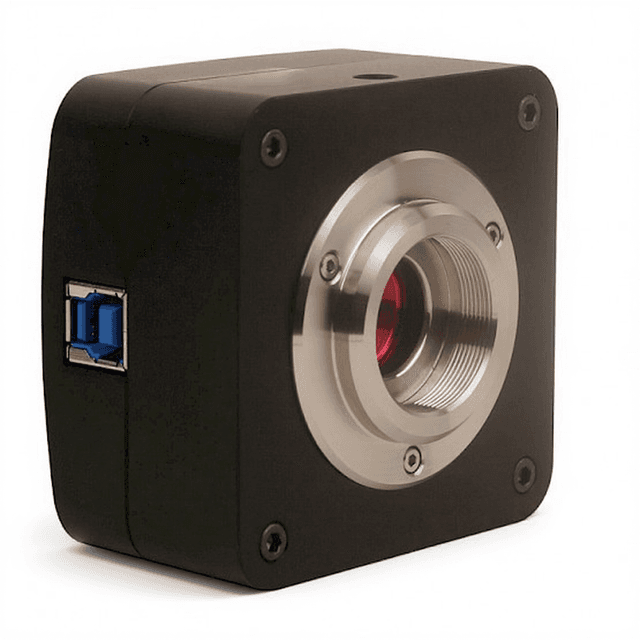
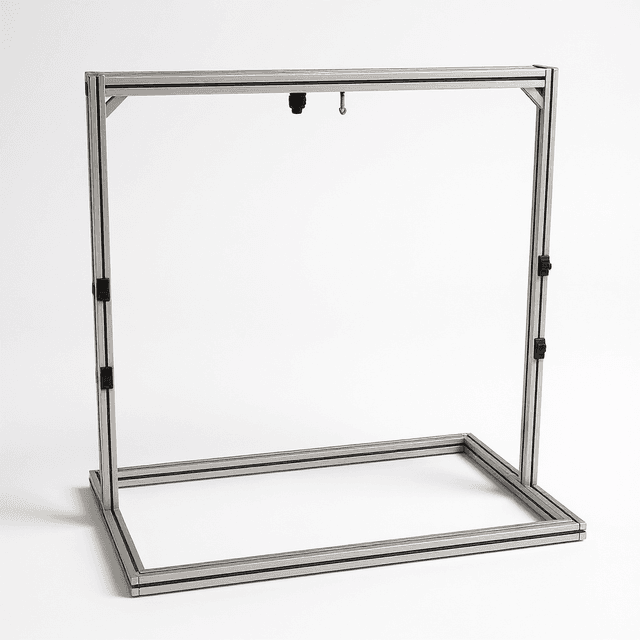
Use video recording with overhead cameras to capture complete movement trajectories and enable detailed path analysis.
Why: Visual tracking provides quantitative movement data beyond simple choice outcomes, enabling analysis of decision-making processes.
If insects show persistent side preferences, rotate the maze orientation between sessions to control for environmental biases.
Why: External visual cues or vibrations can create unintended spatial preferences that confound experimental results.
Verify maze dimensions periodically and ensure level positioning using appropriate measuring tools.
Why: Dimensional accuracy and level positioning are critical for maintaining equal pathway distances and preventing gravitational bias.
Handle insects gently during transfer procedures and maintain appropriate temperature and humidity for species welfare.
Why: Stress from handling can affect behavioral responses and compromise experimental validity while ensuring ethical treatment.
Setup Guide
What’s in the Box
- Diamond Maze apparatus (typical)
- User manual with setup instructions (typical)
- Protocol guide for behavioral testing (typical)
Warranty
ConductScience provides a standard 1-year manufacturer warranty covering defects in materials and workmanship, along with technical support for setup and experimental protocol optimization.
Compliance
References
Background reading relevant to this product:
What insect species can be tested in this maze configuration?
The maze is optimized for ants and similar small insects. The 1cm wall height effectively contains most ant species while allowing natural movement patterns. Larger insects may require modification of containment methods.
How do you eliminate olfactory cues between experimental sessions?
Clean the maze surface with ethanol or similar solvent between trials, allow complete drying, and consider using different maze orientations to prevent scent trail interference in subsequent experiments.
What parameters should be measured during choice experiments?
Key measurements include choice latency, path length, movement velocity, choice frequency, and reversal learning performance. Video tracking enables detailed analysis of movement patterns and decision points.
How many trials are typically required for reliable behavioral assessment?
Consult established protocols for your specific research question, but typical studies use 10-20 trials per individual across multiple testing sessions to establish reliable choice preferences and learning curves.
Can environmental gradients be established across the maze?
Yes, the design accommodates temperature, humidity, or chemical gradients. Ensure gradients are stable and measurable, and consider potential effects on insect locomotion when interpreting results.
What recording equipment is recommended for movement tracking?
Overhead video recording with sufficient resolution for automated tracking software is standard. Ensure adequate contrast between insects and maze surface, and use consistent lighting to minimize tracking errors.
Have a question about this product?