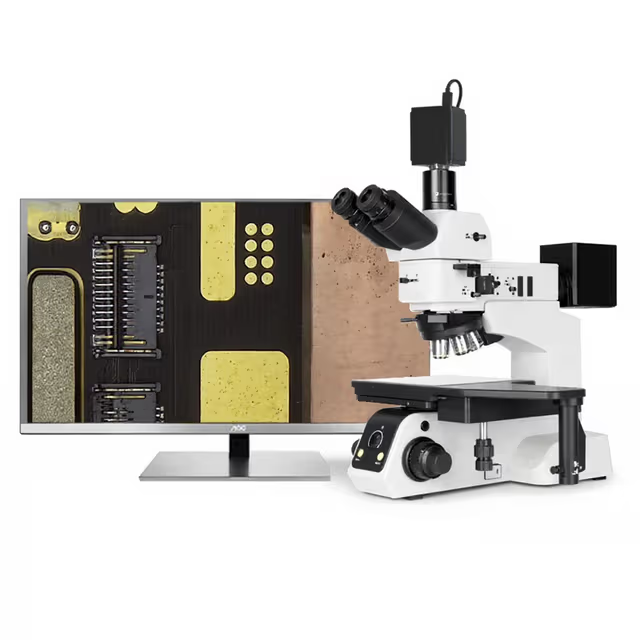
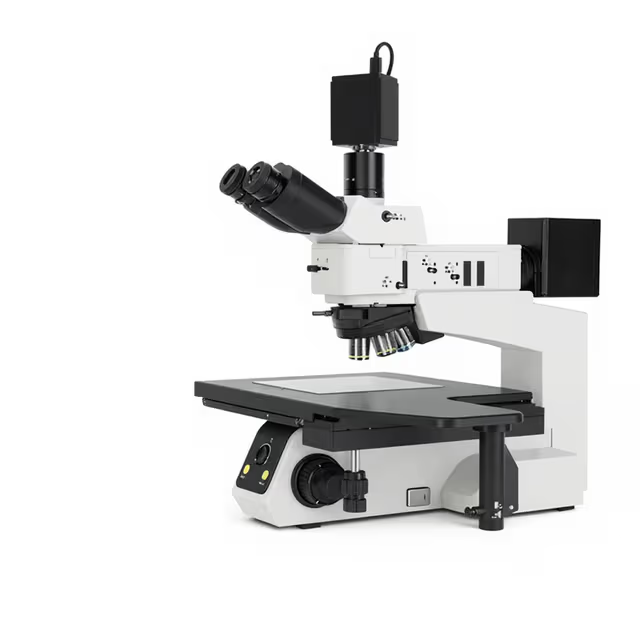
Fluorescence Biological Microscope
Laboratory fluorescence microscope with ELWD condenser (NA 0.3) for biological specimen examination and fluorescent marker visualization.
| Automation Level | manual |
| Transmission Lighting System | ELWD condenser NA0.3 |
| Brand | ConductScience |

The Fluorescence Biological Microscope is a laboratory-grade optical instrument designed for examination of biological specimens using fluorescence illumination techniques. This microscope system incorporates an ELWD (Extra Long Working Distance) condenser with numerical aperture 0.3, providing enhanced working distance while maintaining adequate light-gathering capability for routine fluorescence microscopy applications.
The system enables researchers to visualize fluorescent markers, proteins, and cellular structures in biological samples across various magnifications. The condenser configuration supports standard fluorescence protocols while accommodating thicker specimens or specialized sample preparations that require extended working distances between the objective and specimen plane.
How It Works
Fluorescence microscopy operates on the principle of fluorophore excitation and emission. When fluorescent molecules absorb light photons of a specific wavelength, electrons are promoted to higher energy states. As these electrons return to ground state, they emit photons at longer wavelengths (lower energy) than the excitation light, producing the characteristic fluorescent signal.
The microscope employs dichroic mirrors and filter sets to separate excitation and emission wavelengths. Excitation light passes through the specimen, exciting fluorophores present in the sample. The resulting fluorescent emission is collected by the objective lens and directed to the eyepieces or camera system. The ELWD condenser provides uniform illumination while maintaining extended working distance, particularly beneficial when working with thick specimens or specialized sample chambers.
The numerical aperture of 0.3 in the condenser system determines the light-gathering capacity and resolution characteristics of the illumination pathway, balancing light collection efficiency with the extended working distance requirements of the ELWD design.
Features & Benefits
Automation Level
- manual
Transmission Lighting System
- ELWD condenser NA0.3
Brand
- ConductScience
Research Domain
- Cancer Research
- Cell Biology
- Developmental Biology
- Histopathology
- Microbiology
- Neuroscience
Weight
- 29.98 kg
Dimensions
- L: 64.0 mm
- W: 80.0 mm
- H: 62.0 mm
Comparison Guide
| Feature | This Product | Typical Alternative | Advantage |
|---|---|---|---|
| Condenser Working Distance | ELWD (Extra Long Working Distance) design | Standard condensers offer shorter working distances | Accommodates thicker specimens and specialized sample chambers without compromising illumination quality |
| Condenser Numerical Aperture | NA 0.3 | Entry-level systems often have lower NA values | Provides adequate light-gathering capacity for routine fluorescence applications while maintaining extended working distance |
| Illumination System | Transmission lighting with fluorescence capability | Basic models may offer only brightfield illumination | Enables both fluorescence and brightfield techniques in a single instrument for comprehensive sample analysis |
| Optical Design | Fluorescence-optimized optical pathway | Standard microscopes may not be optimized for fluorescence | Minimizes background fluorescence and maximizes signal detection for weak fluorescent markers |
This fluorescence biological microscope combines ELWD condenser technology with fluorescence-optimized optics to provide extended working distance capabilities while maintaining adequate numerical aperture for routine biological fluorescence applications. The system supports versatile observation modes through its transmission lighting design.
Practical Tips
Verify condenser alignment using a test slide with known fluorescent markers before beginning experimental sessions.
Why: Proper alignment ensures uniform illumination and optimal signal-to-noise ratio across the field of view.
Clean condenser optics weekly with appropriate lens cleaning solutions and lint-free tissues.
Why: Contaminated optics reduce illumination efficiency and can introduce artifacts in fluorescence imaging.
Allow the illumination system to warm up for 10-15 minutes before critical fluorescence measurements.
Why: Thermal stabilization ensures consistent illumination intensity and color temperature throughout the session.
If fluorescence signal appears weak, first check filter cube positioning and condenser centering before increasing illumination intensity.
Why: Misaligned optics are often the cause of poor fluorescence performance rather than insufficient illumination power.
Document illumination settings and exposure parameters for each specimen type to ensure reproducible imaging conditions.
Why: Consistent imaging parameters are essential for quantitative fluorescence analysis and comparative studies.
Use appropriate eye protection when working with high-intensity fluorescence illumination sources.
Why: Extended exposure to intense excitation light can cause eye strain and potential retinal damage.
Store specimens in dark conditions between observations to minimize photobleaching of fluorescent markers.
Why: Photobleaching reduces fluorescence intensity over time and can compromise experimental results.
Setup Guide
What’s in the Box
- Fluorescence biological microscope main unit (typical)
- ELWD condenser NA 0.3
- Standard objective lenses (typical)
- Eyepieces (typical)
- Power cord (typical)
- User manual and documentation (typical)
- Calibration certificate (typical)
Warranty
ConductScience provides a one-year manufacturer warranty covering defects in materials and workmanship, with technical support for installation and operational questions.
Compliance
What working distance does the ELWD condenser provide compared to standard condensers?
The ELWD (Extra Long Working Distance) design provides significantly extended working distance compared to standard condensers, though specific measurements should be confirmed in the product datasheet. This extended distance accommodates thicker specimens and specialized sample chambers.
How does the NA 0.3 specification affect image resolution and light collection?
The numerical aperture of 0.3 represents a balance between light-gathering efficiency and working distance. While lower than high-NA condensers, it provides adequate illumination for routine fluorescence work while maintaining the extended working distance benefits.
What types of fluorescence filter sets are compatible with this microscope?
The system accommodates standard fluorescence filter cubes for common fluorophores. Specific filter compatibility and mounting specifications should be verified in the technical documentation for your particular fluorescence applications.
Can this microscope be used for both fluorescence and brightfield imaging?
Yes, the transmission lighting system supports both fluorescence and brightfield observation modes, providing versatility for comprehensive sample examination using multiple contrast techniques.
What maintenance is required for the ELWD condenser system?
Regular cleaning of condenser optics with appropriate lens cleaning materials and periodic alignment verification are recommended. The extended working distance design may require less frequent adjustment than standard condensers.
How does this compare to inverted fluorescence microscopes for cell culture work?
This upright configuration is well-suited for prepared specimens, tissue sections, and samples that can be mounted on standard slides, while inverted systems are preferred for live cell culture in dishes or flasks.
Have a question about this product?
Accessories
Enhance your setup with compatible accessories
Replacement Parts & Consumables
Frequently Bought Together
Upgrade Options
Related Products