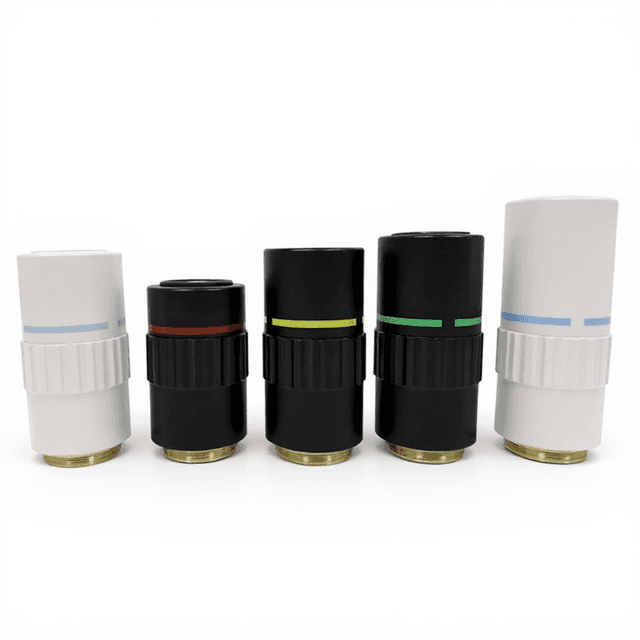
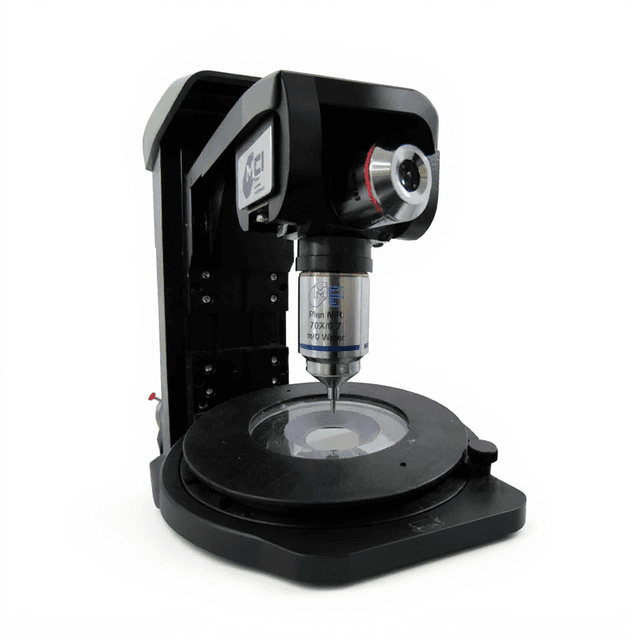
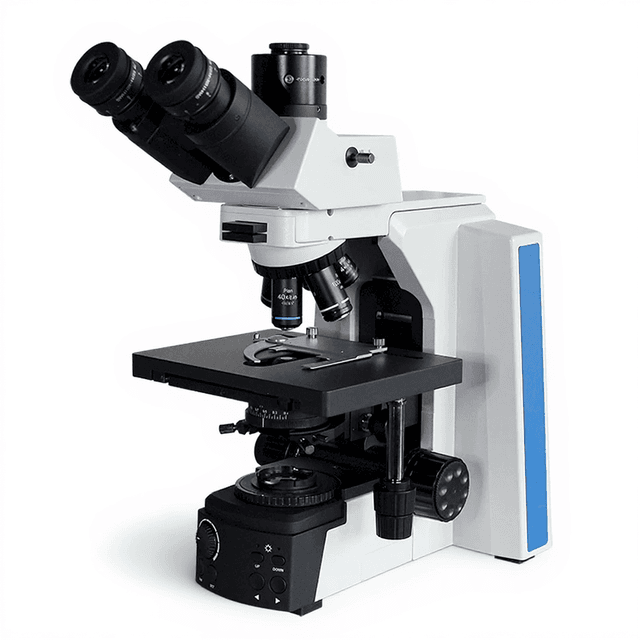
Infinity Plan Achromatic Biological Microscope Objective lens for Infinity Biological Microscopes
Infinity-corrected plan achromatic biological microscope objective with 0.1 numerical aperture for low-power specimen observation and orientation in research microscopy applications.

Louise Corscadden, PhD
Director of Science · ConductScience
Ask Louise about Infinity Plan Achromatic Biological Microscope Objective lens for Infinity Biological Microscopes fit, setup, configuration, or quote prep.
Already working with us? Sign in to connect this with My Scientist.
Key Specifications
Full details →- Model fit
- Configured during quote
- SKU family
- MCX-0006
- Shipping box
- 4.9 x 6.6 x 6.6 cm
- Ordering
- Online checkout and quote request available
- Category
- Microscopy
- Build notes
- Confirm accessories, station layout, and support needs before purchase
The Infinity Plan Achromatic Biological Microscope Objective represents a fundamental optical component designed for infinity-corrected biological microscope systems. This objective lens features a numerical aperture of 0.1, positioning it as a low-power objective suitable for initial specimen observation and orientation tasks in biological microscopy workflows.
Plan achromatic objectives correct for chromatic aberration across the visible spectrum while maintaining flat field characteristics, ensuring consistent image quality across the entire field of view. The infinity optical design allows for integration of additional optical elements in the light path without affecting the objective's optical performance, making it compatible with modern research microscope platforms that utilize infinity-corrected optical systems.
How It Works
Plan achromatic objectives employ a multi-element lens design that corrects for both chromatic and spherical aberrations while maintaining a flat image field. The achromatic correction addresses chromatic aberration by combining crown and flint glass elements with different dispersion characteristics, bringing two wavelengths (typically red and blue) to the same focal point and reducing color fringing.
The infinity optical design means that light rays emerging from the objective are collimated (parallel), requiring a tube lens to form the intermediate image. This configuration allows for the insertion of filters, polarizers, or other optical components in the parallel light path without introducing aberrations. The 0.1 numerical aperture determines the light-gathering capacity and theoretical resolution limit, calculated as λ/2NA, where λ is the wavelength of light.
The plan correction ensures that the entire field of view remains in focus simultaneously, eliminating the field curvature present in simpler objective designs. This flat-field characteristic is essential for digital imaging applications where the entire sensor area must receive sharp focus.
Features & Benefits
Product Type
- Microscope
Microscope Type
- Biological / Compound
Application
- Clinical Research
- Life Science
Skill Level
- Intermediate
Brand
- ConductScience
Research Domain
- Cell Biology
- Developmental Biology
- Environmental Monitoring
- Histopathology
- Materials Science
- Microbiology
Shipping weight
- 1.9 lb
Shipping box
- L: 4.9 cm
- W: 6.6 cm
- H: 6.6 cm
| Feature | This Product | Typical Alternative | Advantage |
|---|---|---|---|
| Numerical Aperture | 0.1 NA | Entry-level objectives often range from 0.04 to 0.25 NA | Provides balanced performance between depth of field and light gathering for initial specimen examination. |
| Optical Correction | Plan achromatic design | Basic objectives may offer only achromatic correction without field flattening | Flat field correction ensures consistent image quality across the entire viewing area for digital imaging applications. |
| Optical System | Infinity-corrected design | Older systems may use finite conjugate optics | Allows integration of filters and accessories in the optical path without introducing aberrations. |
| Application Focus | Biological microscopy optimization | General-purpose objectives may not optimize for biological specimens | Optical parameters specifically designed for biological specimen characteristics and typical laboratory conditions. |
This infinity plan achromatic objective with 0.1 numerical aperture provides flat-field imaging with chromatic aberration correction, making it suitable for biological specimen overview and orientation tasks. The infinity optical design ensures compatibility with modern microscope systems and allows for optical accessory integration.
Practical Tips
Clean lens surfaces only when necessary using appropriate lens cleaning solutions and tissue to avoid coating damage.
Why: Excessive cleaning can damage anti-reflection coatings and degrade optical performance over time.
Always start specimen examination with the lowest magnification objective before proceeding to higher powers.
Why: This prevents specimen damage and allows proper field orientation before engaging higher magnification objectives with shorter working distances.
Verify parfocal alignment with other objectives using a standard test specimen after installation.
Why: Proper parfocal alignment minimizes refocusing requirements when switching between objectives during examination.
Ensure adequate clearance between objective and specimen slide to prevent contact during focusing.
Why: Contact between objective and specimen can damage both the lens and the sample, particularly important with unknown working distances.
Match condenser numerical aperture to objective NA for optimal resolution and contrast.
Why: Proper aperture matching ensures the objective operates at its designed resolution limit and provides optimal image contrast.
If image quality appears degraded, check for contamination on both objective surfaces and tube lens.
Why: Contamination anywhere in the optical path affects final image quality, but tube lens contamination is often overlooked in infinity systems.
Store objectives with protective caps on both ends when not installed in the microscope.
Why: Dust and contamination on lens surfaces significantly degrade optical performance and can be difficult to remove without damage.
Setup Guide
What’s in the Box
- Infinity plan achromatic microscope objective
- Protective lens caps (typical)
- Certificate of optical specifications (typical)
Warranty
ConductScience provides standard manufacturer warranty coverage for optical components, typically including one year protection against manufacturing defects with technical support for proper installation and usage guidance.
Compliance
References
Background reading relevant to this product:
What magnification does this 0.1 NA objective provide?
Magnification is not specified in the provided product data - consult the product datasheet for magnification specifications, as this varies by manufacturer design even for objectives with the same numerical aperture.
Is this objective compatible with my existing microscope system?
Compatibility depends on your microscope's optical design (infinity vs finite conjugate) and thread specifications. This is an infinity-corrected objective, so it requires an infinity-corrected microscope system with appropriate tube lens.
What is the working distance for this objective?
Working distance specifications are not provided in the basic product information - consult the detailed product datasheet for working distance, which is critical for clearance calculations with specimen slides and coverslips.
How does the plan correction benefit my imaging applications?
Plan correction ensures the entire field of view remains in focus simultaneously, eliminating field curvature. This is particularly important for digital imaging where the entire camera sensor must receive sharp focus.
What thread standard does this objective use?
Thread specifications are not detailed in the provided information - most biological microscope objectives use RMS (Royal Microscopical Society) threading, but confirm thread type and pitch before installation.
Can this objective be used for fluorescence microscopy?
While achromatic objectives can transmit fluorescence wavelengths, the correction level may not be optimal for demanding fluorescence applications. Consider apochromatic objectives for critical fluorescence work.
What maintenance does this objective require?
Regular cleaning of lens surfaces with appropriate solvents and lens tissue, protection from dust and contamination, and periodic verification of optical performance using resolution test targets.
How does this compare to higher NA objectives?
The 0.1 NA provides lower resolution but greater depth of field compared to higher NA objectives, making it suitable for specimen overview rather than fine detail examination.
Have a question about this product?
Have a question? Just ask.
Send it over and we'll email you a personalized answer — no call, no scheduling.
Prefer to talk it through?
Accessories
Enhance your setup with compatible accessories
Frequently Bought Together
Upgrade Options

Related Products