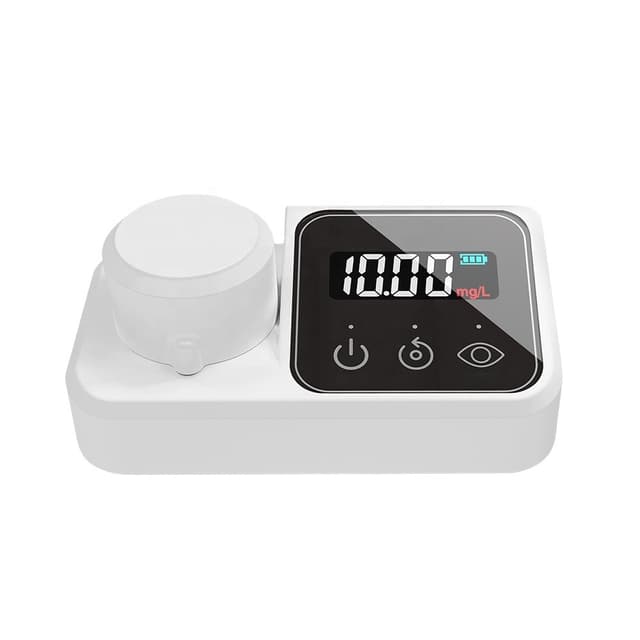
Handheld ORP Meter
Portable ORP meter measuring 0 to ±1999 mV with 1 mV resolution, featuring replaceable electrodes and waterproof design for field and laboratory electrochemical monitoring.

Louise Corscadden, PhD
Director of Science · ConductScience
Ask Louise about Handheld ORP Meter fit, setup, configuration, or quote prep.
Already working with us? Sign in to connect this with My Scientist.
Key Specifications
Full details →- Model fit
- Configured during quote
- SKU family
- CS-LH-ORP-169E
- Shipping box
- 19.5 x 9.7 x 4.8 cm
- Ordering
- Online checkout and quote request available
- Category
- Portable Analyzers
- Build notes
- Confirm accessories, station layout, and support needs before purchase
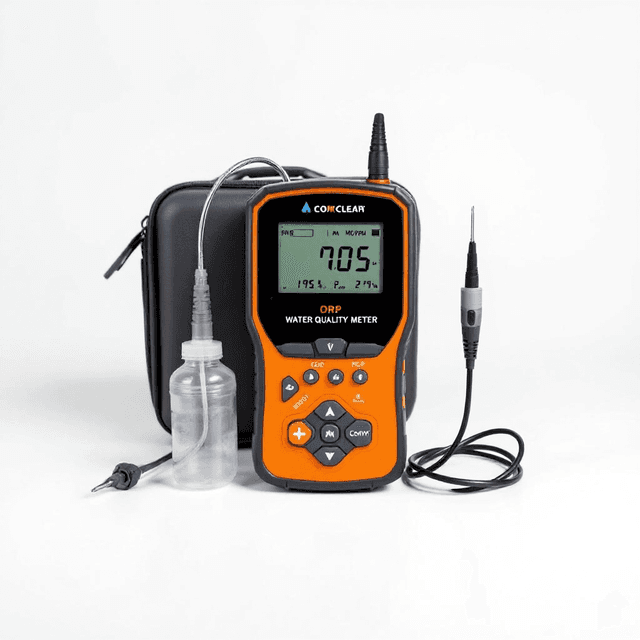
The Handheld ORP Meter (Model ORP-169E) provides portable oxidation-reduction potential measurements with a measurement range of 0 to ±1999 mV and 1 mV resolution. The instrument features a replaceable electrode system compatible with standard ORP electrodes sharing the same connector type, enabling researchers to adapt the meter for various electrochemical monitoring applications.
Designed for field and laboratory use, the waterproof housing protects against moisture ingress during environmental monitoring. The compact 195×97×48 mm form factor and 277 g weight facilitate handheld operation in diverse sampling locations. Battery operation provides approximately 700 hours of continuous use with four 1.5V batteries, supporting extended monitoring campaigns without frequent power replacement.
How It Works
ORP measurement operates through electrochemical potential difference measurement between a platinum sensing electrode and a reference electrode (typically silver/silver chloride). When immersed in solution, the platinum electrode surface equilibrates with dissolved redox-active species, generating a voltage proportional to the solution's electron availability. The reference electrode provides a stable potential baseline, enabling quantitative measurement of the sample's oxidizing or reducing character.
The instrument's electronic circuitry amplifies and digitizes the millivolt-level potential difference, displaying results with 1 mV resolution across the 0 to ±1999 mV range. Positive readings indicate oxidizing conditions where electron acceptors predominate, while negative values signify reducing environments with excess electron donors. Temperature compensation may be applied through manual adjustment based on sample temperature, as electrode response exhibits thermal dependence.
Features & Benefits
Product name
- handheld orp meter ORP-169E
Measuring range
- 0~±1999mV
Research Domain
- Analytical Chemistry
- Environmental Monitoring
- Food Science
- Industrial Hygiene
- Microbiology
- Pharmaceutical QC
Calibration
- 1 point
Feature
- ⢠eplaceable electrode, usable with virtually any electrode that shares the same connector⢠Small size, portable⢠Waterproof
Model
- ORP-169E
Operation conditions
- 0~50°C, RH<95%(Without magnetic interference around the meter & conspicuous centrum)
Optional accessories
- ORP electrode
Automation Level
- manual
Brand
- ConductScience
Accuracy
- ±5mV
Power/Voltage
- 4Ã 1.5V approximately 700 hours of continuous use
Dimensions
- 195Ã97Ã48mm
Weight
- 277g
Shipping weight
- 0.42 lb
Shipping box
- L: 19.5 cm
- W: 9.7 cm
- H: 4.8 cm
| Feature | This Product | Typical Alternative | Advantage |
|---|---|---|---|
| Measurement Range | 0 to ±1999 mV | Entry-level handheld meters often provide narrower ranges or lower resolution | Covers the full range of environmental and industrial redox conditions in a single instrument. |
| Resolution and Accuracy | 1 mV resolution with ±5 mV accuracy | Basic handheld units may offer 10 mV resolution with lower accuracy specifications | Enables detection of subtle redox changes critical for research applications. |
| Electrode Compatibility | Replaceable electrode with standard connector | Many handheld meters feature fixed electrodes or proprietary connections | Allows application-specific electrode selection and cost-effective replacement when sensors reach end of life. |
| Battery Life | 700 hours continuous operation | Typical handheld meters provide 100-500 hours of operation | Reduces battery replacement frequency during extended field campaigns and monitoring studies. |
| Environmental Protection | Waterproof construction | Standard handheld meters may offer splash-resistant but not waterproof protection | Enables reliable operation in wet field conditions and laboratory environments with moisture exposure. |
The ORP-169E combines wide measurement range with replaceable electrode flexibility and extended battery operation. The waterproof design and compact form factor support reliable field deployment while maintaining laboratory-grade measurement precision.
Practical Tips
Use fresh ORP standard solutions for calibration as aged standards may drift from certified values.
Why: Standard solution stability directly affects measurement accuracy and traceability to reference values.
Store the electrode in distilled water when not in use to maintain reference junction hydration.
Why: Proper electrode storage prevents junction drying that can cause measurement drift and response delays.
Allow readings to stabilize for 1-2 minutes before recording, especially in samples with low ionic strength.
Why: Electrode equilibration time varies with sample conductivity and can affect measurement precision.
If readings appear unstable, check electrode connector cleanliness and ensure proper immersion depth.
Why: Poor electrical contact or insufficient submersion can cause erratic readings and measurement errors.
Record sample temperature alongside ORP measurements as electrode response exhibits thermal dependence.
Why: Temperature data enables post-measurement corrections and improves data interpretation accuracy.
Rinse electrode thoroughly between samples to prevent cross-contamination and chemical damage.
Why: Sample carryover can affect subsequent measurements while aggressive chemicals may damage electrode materials.
Inspect electrode connector pins regularly for corrosion or damage that could affect electrical contact.
Why: Connector integrity is critical for stable measurements and premature replacement can be costly.
Setup Guide
What’s in the Box
- ORP-169E handheld meter (typical)
- User manual (typical)
- Four 1.5V batteries (typical)
- Carrying case (typical)
- ORP electrode (optional accessory)
Warranty
ConductScience provides standard manufacturer warranty coverage including technical support for instrument setup and operational guidance. Consult product documentation for specific warranty terms and service procedures.
Compliance
References
Background reading relevant to this product:
What electrode types are compatible with this meter?
The meter accepts ORP electrodes with standard connectors. Most platinum-tipped ORP combination electrodes from major manufacturers should be compatible, though specific connector verification is recommended.
How frequently should calibration be performed?
Calibration frequency depends on measurement precision requirements and sample matrix effects. For routine monitoring, weekly calibration is typical, while critical measurements may require daily verification with ORP standards.
Can this meter store measurement data?
Based on the provided specifications, data storage capabilities are not indicated. Measurements would typically be recorded manually or through external data logging systems if required.
What is the expected electrode lifespan?
ORP electrode lifespan varies with usage conditions and sample types. Platinum electrodes typically provide 1-2 years of service with proper maintenance, though aggressive samples may reduce operational life.
Is temperature compensation available?
Temperature compensation features are not specified in the product attributes. Manual temperature correction may be necessary based on sample temperature and electrode specifications.
How does this compare to benchtop ORP meters?
This handheld unit offers portability advantages over benchtop instruments while maintaining ±5 mV accuracy. Benchtop meters may provide additional features like automatic temperature compensation and data logging capabilities.
Have a question about this product?
Have a question? Just ask.
Send it over and we'll email you a personalized answer — no call, no scheduling.
Prefer to talk it through?