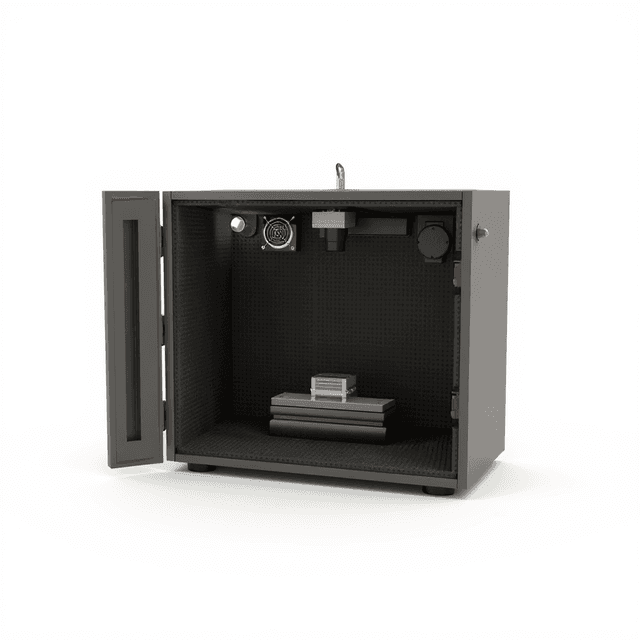
Temperature Controller_Homeothermic Monitoring System
Closed-loop homeothermic control system for maintaining rodent core body temperature during research procedures with ±0.1°C accuracy and multi-channel monitoring capabilities.
| Temperature Setting | 10~50℃ |
| Heating Range | -30-60℃ |
| frequency | 50/60Hz |
| system_type | Closed-loop system |
| probe_type | Rectal probe |
| probe_dimensions | ø1.5 x 15mm |
The Temperature Controller Homeothermic Monitoring System is a closed-loop thermal regulation platform designed for maintaining precise core body temperature in rodent research subjects during extended procedures. The system employs continuous rectal temperature monitoring with feedback-controlled heating pad adjustment to maintain physiological temperature within ±0.1°C accuracy across the 10-50°C setting range.
Available in 1-, 2-, and 4-channel configurations, the system features color touch screen interfaces for real-time temperature display and alarm management. Each channel provides independent temperature control with audible alarms for out-of-range conditions and system status monitoring including idle, warning, standby, and normal operation modes. The system operates on universal input power (90-264V, 50/60Hz) with 24V output to heating elements.
How It Works
The homeothermic monitoring system operates through a closed-loop feedback control mechanism that continuously measures core body temperature via a rectal probe and adjusts heating pad output to maintain set-point temperature. The 1.5mm diameter temperature probe provides real-time thermal monitoring with 0.1°C resolution, while the control unit processes temperature data and modulates heating pad power to counteract heat loss.
The system employs proportional control algorithms to prevent temperature overshoot and maintain stable thermal conditions. When core temperature drops below the set point, the controller increases current to the heating pad; when temperature approaches or exceeds the target, heating is reduced or suspended. Heat insulating pads beneath the heating elements prevent thermal loss to the work surface and improve energy efficiency.
Status monitoring functions track system performance across four operational states: idle mode during startup, warning mode for out-of-range conditions, standby mode for temporary suspension, and normal operation during active temperature control. Audible alarms alert operators to temperature deviations, probe disconnection, or system malfunctions requiring intervention.
Features & Benefits
Channels
- 1 Channel
- 2 Channels
- 4 Channels
Temperature Setting
- 10~50℃
Heating Range
- -30-60℃
warranty
- 2 Years
temperature_setting
- 10~50℃
heating_range
- -30-60℃
frequency
- 50/60Hz
system_type
- Closed-loop system
probe_type
- Rectal probe
probe_dimensions
- ø1.5 x 15mm
heating_pad_size
- 120*205MM
temperature_units
- Centigrade(℃) and Fahrenheit degree (℉)
alarm_function
- Audible alarms
status_monitoring
- idle (IDLE), warning (WARNING), standby (STANDBY), and normal work
control_unit_weight
- 1.3 kg
heat_insulation
- Heat insulating pad underneath heating pad
Automation Level
- semi-automated
Accuracy
- ±0.1℃
- 0.1°C
Weight
- 1Channels: 750g /2Channels: 2.0kg/ 4Channels: 2.5Kg
Power/Voltage
- 24V8.3A output
- 90-264V
- 90-264V 50.60Hz input, 24V8.3A output
Temperature Range
- 0-60℃
Species
- Mouse
- Rat
Display Type
- Color touch screen
Dimensions
- 180mm x 150mm x 110mm
Research Domain
- Addiction Research
- Behavioral Pharmacology
- Learning and Memory
- Neurodegeneration
- Neuroscience
- Toxicology
Weight
- 6.61 kg
Dimensions
- L: 34.0 mm
- W: 25.0 mm
- H: 20.0 mm
Comparison Guide
| Feature | This Product | Typical Alternative | Advantage |
|---|---|---|---|
| Temperature Accuracy | ±0.1°C precision control | Basic heating controllers often provide ±0.5°C or lower precision | Higher accuracy reduces temperature-related experimental variability and improves data consistency. |
| Channel Configuration | Available in 1, 2, or 4-channel configurations | Entry-level systems typically offer single-channel operation only | Multi-channel capability enables simultaneous monitoring of multiple subjects, increasing experimental efficiency. |
| User Interface | Color touch screen with intuitive controls | Basic models often feature simple LED displays with button controls | Touch screen interface simplifies parameter adjustment and provides clear visual feedback during procedures. |
| Power Compatibility | Universal 90-264V input with 50/60Hz compatibility | Some controllers require specific voltage configurations | Universal power input ensures compatibility across international laboratory environments. |
| Temperature Range | 10-50°C setting range with -30 to 60°C heating capability | Limited-range systems may offer narrower temperature windows | Extended range accommodates diverse experimental protocols and environmental conditions. |
| System Monitoring | Four operational states with status monitoring and audible alarms | Basic systems may lack comprehensive status indicators | Enhanced monitoring improves operational safety and enables proactive troubleshooting. |
This homeothermic monitoring system provides closed-loop temperature control with multi-channel capability and touch screen interface. The ±0.1°C accuracy and comprehensive alarm system offer reliable thermal management for extended research procedures requiring precise temperature maintenance.
Practical Tips
Verify temperature accuracy monthly using NIST-traceable thermometer in water bath at multiple set points.
Why: Regular calibration verification ensures measurement accuracy and identifies sensor drift before it affects experimental data.
Clean temperature probes with mild disinfectant between subjects and inspect for physical damage to sensing tip.
Why: Proper probe maintenance prevents cross-contamination and ensures accurate temperature measurement throughout studies.
Allow 10-15 minutes for system warm-up and temperature stabilization before beginning procedures.
Why: Initial stabilization period ensures the heating system reaches thermal equilibrium and provides consistent temperature control.
Position heat insulating pad beneath heating element to prevent thermal loss to work surface.
Why: Proper insulation improves heating efficiency and reduces power consumption while maintaining more stable temperature control.
Check probe connection security if temperature readings appear erratic or alarms activate unexpectedly.
Why: Loose probe connections can cause signal noise or loss, leading to inaccurate temperature readings and inappropriate heating response.
Set temperature alarms 2-3°C above and below target temperature to provide early warning of thermal deviations.
Why: Conservative alarm limits provide time for intervention before temperature excursions reach levels that could affect subject welfare or data integrity.
Record ambient room temperature along with set point and measured temperatures for complete thermal documentation.
Why: Environmental temperature data helps interpret system performance and identifies external factors that may influence temperature control.
Setup Guide
What’s in the Box
- Homeothermic control unit (1, 2, or 4 channel depending on model)
- Heating pad 120x205mm (quantity varies by channel configuration)
- Rectal temperature probe ø1.5x15mm (quantity varies by channel configuration)
- Heat insulating pad
- Power adapter (90-264V input, 24V 8.3A output)
- User manual and setup instructions (typical)
- Calibration certificate (typical)
Warranty
ConductScience provides a comprehensive 2-year manufacturer warranty covering defects in materials and workmanship. Technical support includes calibration guidance, troubleshooting assistance, and replacement part availability throughout the warranty period.
Compliance
What is the temperature response time for the heating system?
Consult product datasheet for specific thermal response characteristics. Response time depends on ambient conditions, subject size, and initial temperature differential.
Can the system maintain temperature during long procedures lasting several hours?
Yes, the closed-loop feedback control is designed for extended operation with continuous monitoring and automatic heating adjustment throughout lengthy procedures.
What probe insertion depth is recommended for accurate temperature measurement?
The 15mm probe length is designed for appropriate rectal insertion depth in rodents. Follow institutional animal care protocols for specific insertion guidelines.
How does the system prevent overheating if the probe becomes disconnected?
The system includes probe disconnection detection with audible alarms and automatic heating suspension to prevent temperature overshoot when sensor input is lost.
What maintenance is required for accurate temperature control?
Regular probe calibration verification, heating pad inspection for damage, and control unit cleaning are recommended. Consult user manual for specific maintenance intervals.
Can multiple units be synchronized for group temperature studies?
Each control unit operates independently. Multi-channel configurations within a single unit provide synchronized control for multiple subjects on that system.
What happens if ambient room temperature exceeds the set point?
The system can provide active heating but not cooling. If ambient temperature exceeds the set point, additional room temperature control may be required.
Have a question about this product?
Frequently Bought Together