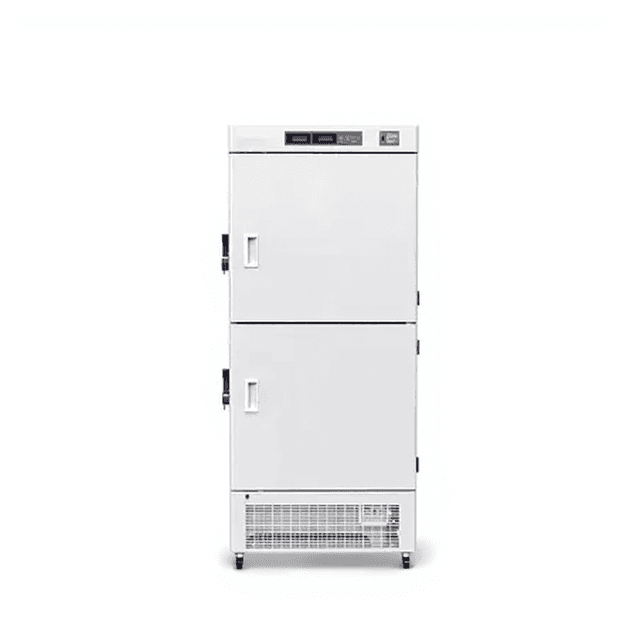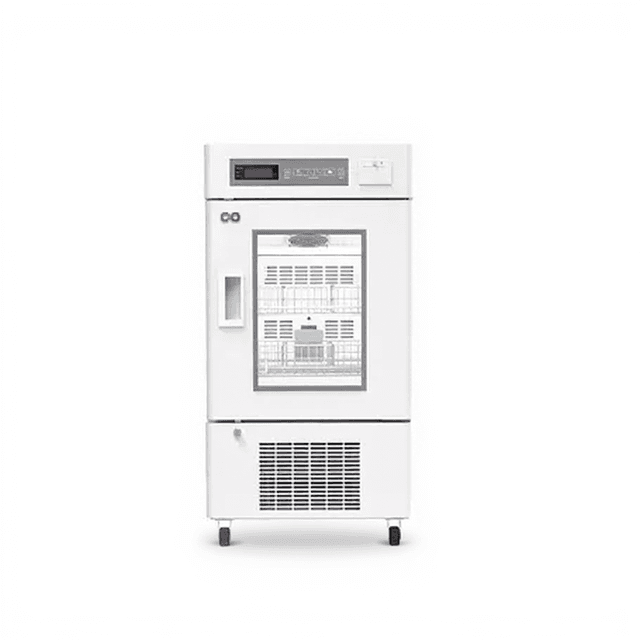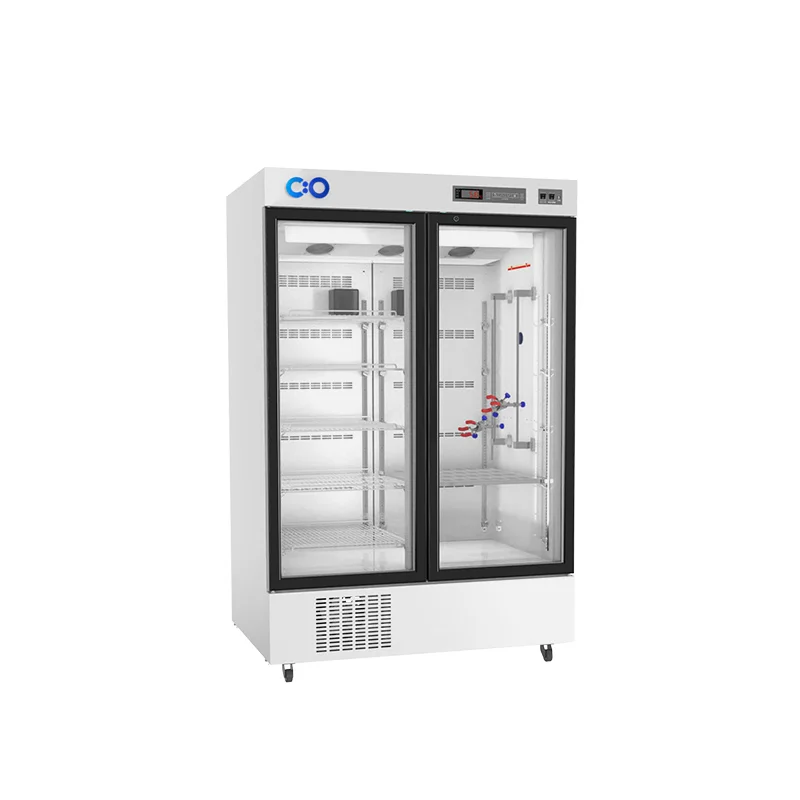
Chromatography Refrigerator 450L 1000L
Precision refrigerators maintaining 2-8°C with ±0.1°C accuracy for chromatographic reagent storage and sample preservation.
Available in 450L and 1000L capacities with heated glass doors and microprocessor control.

Louise Corscadden, PhD
Director of Science · ConductScience
Ask Louise about Chromatography Refrigerator 450L 1000L fit, setup, configuration, or quote prep.
Already working with us? Sign in to connect this with My Scientist.
Key Specifications
Full details →- Model fit
- 2 selectable configurations
- SKU family
- BIO-BSR-5V450 | BIO-BSR-5V1000
- Shipping box
- 52.17 x 24.13 x 22.83 cm
- Ordering
- Online checkout and quote request available
- Category
- Lab Equipment
- Build notes
- Confirm accessories, station layout, and support needs before purchase
The Chromatography Refrigerator series provides precise temperature control for analytical instrument storage and sample preservation in laboratory environments. These units maintain temperatures between 2-8°C with ±0.1°C accuracy and ≤2°C uniformity, supporting the temperature-sensitive requirements of chromatographic instruments and reagents. The microprocessor control system with LED display enables continuous monitoring of internal conditions.
Available in 450L and 1000L capacities, these refrigerators accommodate varying laboratory storage needs from small analytical setups to high-throughput facilities. The electrically heated glass doors prevent condensation while providing visual access to stored materials. Air-cooling refrigeration with R290 refrigerant and automatic defrost functionality ensures reliable operation with minimal maintenance requirements in analytical chemistry workflows.
How It Works
The chromatography refrigerator operates through a closed-loop air-cooling refrigeration system using R290 (propane) refrigerant. The system employs vapor compression refrigeration where the R290 refrigerant undergoes phase changes to absorb heat from the internal chamber and reject it to the external environment. A microprocessor-controlled thermostat monitors internal temperature via precision sensors and cycles the compressor to maintain the setpoint temperature within ±0.1°C accuracy.
The electrically heated glass doors prevent condensation formation by maintaining the door surface temperature slightly above the dew point of ambient air. This heating element operates independently of the cooling system and is controlled by humidity sensors to activate only when condensation conditions exist. The automatic defrost system periodically activates to remove ice buildup on the evaporator coils, ensuring consistent cooling performance and preventing temperature fluctuations that could compromise sample integrity.
Internal air circulation fans distribute cooled air throughout the chamber to achieve ≤2°C temperature uniformity. The LED display provides real-time temperature readout and system status indicators, while alarm functions alert users to temperature excursions or system malfunctions that could affect stored materials.
Features & Benefits
Automation Level
- semi-automated
Temperature Accuracy
- 0.1°C
Temperature Uniformity
- ≤2°C
Temperature Stability
- ≤3°C
Internal Dimensions (W×D×H)
- 580×613×1325mm
External Dimensions (W×D×H)
- 680×747×1885mm
Research Domain
- Analytical Chemistry
- Clinical Diagnostics
- Environmental Monitoring
- Food Science
- Materials Science
- Pharmaceutical QC
Capacity
- 450L
Temperature Range
- 2~8°C
Power/Voltage
- 220W
Weight
- 135kg
Shipping weight
- 297.62 lb
Shipping box
- L: 52.17 cm
- W: 24.13 cm
- H: 22.83 cm
| Feature | This Product | Typical Alternative | Advantage |
|---|---|---|---|
| Temperature Accuracy | ±0.1°C accuracy with microprocessor control | Standard laboratory refrigerators typically offer ±1-2°C accuracy | Precise temperature control maintains analytical reagent stability and ensures method reproducibility in chromatographic applications. |
| Temperature Uniformity | ≤2°C uniformity throughout storage chamber | Basic units may have temperature gradients of several degrees | Uniform conditions eliminate hot spots that could compromise temperature-sensitive standards and mobile phases. |
| Door Design | Electrically heated glass doors prevent condensation | Standard models often have solid doors or unheated glass | Visual access without condensation allows monitoring of stored materials without door opening that disturbs internal conditions. |
| Refrigerant System | R290 propane refrigerant with low environmental impact | Many units still use synthetic refrigerants | Environmental sustainability meets current regulations while providing excellent cooling performance for laboratory applications. |
| Defrost System | Automatic defrost with minimal temperature impact | Manual defrost or systems causing larger temperature excursions | Maintains consistent storage conditions without manual intervention or significant temperature disruption during defrost cycles. |
| Capacity Options | 450L and 1000L models for different laboratory scales | Limited size options or non-optimized internal layouts | Scalable storage solutions accommodate individual instrument support through facility-wide reagent management requirements. |
This chromatography refrigerator series offers superior temperature accuracy, uniformity, and environmental sustainability compared to standard laboratory refrigeration. The specialized features including heated glass doors, precise microprocessor control, and R290 refrigerant system address the specific requirements of analytical chemistry workflows requiring stringent temperature control for reagent storage and sample preservation.
| Model | SKU | Listed price | Status | Shipping box |
|---|---|---|---|---|
| BIO-BSR-5V1000 | BIO-BSR-5V1000 | $3,999.00 | Available | 52.17 x 24.13 x 22.83 cm |
| BIO-BSR-5V450 | BIO-BSR-5V450 | $2,999.00 | Available | 52.17 x 24.13 x 22.83 cm |
Practical Tips
Verify temperature accuracy quarterly using a NIST-traceable calibrated thermometer placed in the center of the storage chamber for at least 30 minutes.
Why: Regular calibration verification ensures continued compliance with analytical method requirements and regulatory standards.
Clean door seals monthly with mild detergent and inspect for cracks or damage that could compromise temperature control.
Why: Proper seal integrity prevents air leakage that can cause temperature fluctuations and increased energy consumption.
Allow at least 5 cm spacing between containers and avoid overloading shelves to maintain proper air circulation throughout the chamber.
Why: Adequate air circulation ensures uniform temperature distribution and prevents localized warm spots that could affect stored materials.
Store mobile phases in sealed containers and label with preparation dates to track stability according to analytical method requirements.
Why: Proper container sealing prevents contamination and evaporation while date tracking ensures reagent quality for analytical accuracy.
If temperature uniformity degrades, check for blocked air vents, overloaded shelves, or damaged circulation fans.
Why: Maintaining proper airflow is critical for uniform temperature distribution and preventing temperature gradients within the storage chamber.
Implement continuous temperature monitoring with data logging capability and set up alarm notifications for temperature excursions.
Why: Continuous monitoring provides documentation for regulatory compliance and early warning of conditions that could compromise stored materials.
Ensure adequate ventilation around the unit and never store flammable solvents in concentrations exceeding manufacturer specifications.
Why: Proper ventilation prevents heat buildup that affects performance while safe storage practices prevent fire hazards in the laboratory environment.
Schedule annual professional inspection of the refrigerant system and compressor to maintain optimal cooling performance.
Why: Professional maintenance prevents system degradation that could lead to temperature control failure and potential loss of valuable stored materials.
Setup Guide
What’s in the Box
- Chromatography refrigerator main unit
- Adjustable storage shelves (typical)
- Temperature monitoring probe (typical)
- Power cord
- User manual and operating instructions
- Calibration certificate (typical)
- Warranty documentation
Warranty
ConductScience provides a one-year manufacturer warranty covering parts and labor, with technical support available for installation guidance and troubleshooting assistance throughout the warranty period.
Compliance
References
Background reading relevant to this product:
What temperature accuracy is required for storing HPLC mobile phases and how does this unit perform?
HPLC mobile phases typically require storage at 2-8°C with minimal temperature variation to prevent microbial growth and maintain buffer stability. This unit provides ±0.1°C accuracy with ≤2°C uniformity throughout the chamber, exceeding typical analytical method requirements for mobile phase storage.
How does the R290 refrigerant system compare to traditional refrigerants for laboratory applications?
R290 (propane) offers superior environmental sustainability with low global warming potential compared to traditional synthetic refrigerants like R134a. It provides excellent thermodynamic properties for precise temperature control while meeting current regulatory requirements for environmentally responsible laboratory equipment.
What is the significance of the heated glass doors for chromatography applications?
Heated glass doors prevent condensation that could obscure visibility and potentially drip onto stored materials. This feature allows visual inspection of stored reagents without opening the door, maintaining stable internal conditions critical for temperature-sensitive chromatographic standards and mobile phases.
How does the automatic defrost system affect temperature stability during operation?
The automatic defrost system operates on a programmed cycle to remove ice buildup without causing significant temperature excursions. The system maintains ≤3°C temperature stability even during defrost cycles, ensuring stored materials remain within acceptable temperature ranges.
What capacity considerations should laboratories evaluate when selecting between 450L and 1000L models?
The 450L model suits individual instrument support or small analytical teams, while the 1000L model accommodates facility-wide reagent storage or high-throughput laboratories. Consider storage volume for mobile phases, standards, and samples, plus allowance for air circulation and future capacity needs.
How should temperature monitoring be implemented for regulatory compliance?
Implement continuous temperature logging using calibrated monitoring devices independent of the unit's display system. Establish alarm protocols for temperature excursions and document regular calibration verification to support analytical method validation and regulatory audit requirements.
What preventive maintenance is required to ensure long-term temperature accuracy?
Perform regular cleaning of door seals, verification of temperature accuracy against calibrated references, and inspection of air circulation pathways. Schedule annual professional calibration and refrigerant system inspection to maintain specified performance parameters.
How does this unit compare to standard laboratory refrigerators for chromatography applications?
This unit provides superior temperature accuracy (±0.1°C vs ±1-2°C typical) and uniformity (≤2°C vs 3-5°C gradients common in standard units) specifically designed for analytical applications requiring precise temperature control for reagent stability and method reproducibility.
Have a question about this product?
Have a question? Just ask.
Send it over and we'll email you a personalized answer — no call, no scheduling.
Prefer to talk it through?
Accessories
Enhance your setup with compatible accessories