ConductVision
$1,490 per yearA 5-year license is $3,990 in total.
The same license also scores standard tests such as the open field, the elevated plus maze, the Y-maze and the Morris water maze. Results export as CSV files.

Motor coordination assessment apparatus with variable rung spacing for evaluating fore and hind-limb coordination in rodents through locomotor testing paradigms.

Director of Science · ConductScience
Ask Louise about Horizontal Ladder fit, setup, configuration, or quote prep.
Already working with us? Sign in to connect this with My Scientist.
The paper
“Schwann cell-secreted PGE2 promotes sensory neuron excitability during development”
Mice were placed on a horizontal ladder (Maze Engineers, Item # 5103, 60 cm) with irregularly placed rungs (1-4 cm) and videotaped from the side.
Maze Engineers is part of ConductScience.
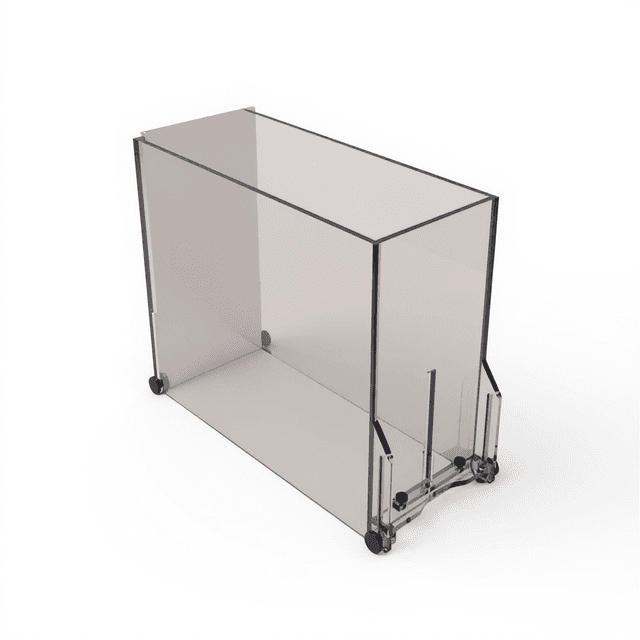
The Horizontal Ladder is a motor coordination assessment apparatus designed for evaluating fore and hind-limb coordination in rodents. This classic behavioral test features variable spacing between rungs with individual rung removability, allowing researchers to systematically assess motor function, locomotor adaptation, and sensorimotor integration. The apparatus supports both aversive and rewarded locomotion paradigms through its flexible experimental design.
Clear walls enable comprehensive video recording and analysis of stepping patterns, foot placement errors, and compensatory movements. The clamp-mounted system provides stable positioning while accommodating different experimental protocols. Available configurations support both mouse and rat studies with species-specific dimensions and full experimental packages.
The horizontal ladder test evaluates sensorimotor integration by challenging animals to navigate across a series of rungs with variable spacing. As animals traverse the apparatus, they must visually assess rung positions and coordinate precise limb placement to maintain forward progression. Missteps, characterized by limb slips through rung gaps, indicate deficits in motor coordination, visual-spatial processing, or sensorimotor integration.
The variable rung spacing creates an unpredictable stepping surface that prevents animals from developing automatic stepping patterns, requiring continuous sensorimotor adaptation. Individual rung removability allows researchers to create specific spacing patterns or introduce irregular gaps that further challenge coordination abilities. Clear walls facilitate high-resolution video recording from multiple angles, enabling detailed analysis of stepping kinematics, error frequency, and compensatory strategies.
Both positive and negative reinforcement paradigms can be implemented by positioning reward zones or aversive stimuli at the apparatus endpoints. This flexibility allows researchers to study motivated locomotion while maintaining standardized coordination assessment protocols.
| Add-on | Size | Price | Details |
|---|---|---|---|
| Full Package w/Two Tubes (Mouse) | 25cm x 25cm x 20cm (L x W x H) Thickness: 3/8 inch | $1,250 | |
| Full Package w/Two Tubes (Rat) | $1,390 | Rat ladder Start and End Basins: 30cm x 30cm x 30cm (L x W x H) Thickness: 3/8 inch |
Add any of these to your quote request.
| Measurement | Mouse Ladder Only | Rat Ladder Only |
|---|---|---|
| Wall height | 15 cm | 20 cm |
| Length | 60 cm | 100 cm |
| Bars length | 10 cm | 15 cm |
| Width of ladder | 8 cm | — |
| Bar diameter | 0.3 cm | 0.3 cm |
| Width of the | — | 13 cm |
| Feature | This Product | Typical Alternative | Advantage |
|---|---|---|---|
| Rung Configuration Flexibility | Variable spacing with individual rung removability | Fixed spacing or limited adjustment options | Enables systematic manipulation of stepping challenges and prevents habituation to predictable patterns. |
| Recording Accessibility | Clear walls for comprehensive video recording | Opaque or partially obstructed viewing | Facilitates detailed kinematic analysis and error quantification from multiple camera angles. |
| Motivational Paradigm Support | Supports both aversive and rewarded locomotion | Limited to single motivational approach | Allows researchers to study coordination under various behavioral contexts and reinforcement conditions. |
| Mounting System | Clamp-based mounting to end plates | Permanent or difficult-to-adjust configurations | Enables rapid protocol modifications and secure positioning for consistent testing conditions. |
| Coordination Assessment Scope | Evaluates both fore and hind-limb coordination | Focus on single limb pair or overall balance | Provides comprehensive motor assessment including interlimb coordination patterns and limb-specific deficits. |
This horizontal ladder apparatus provides comprehensive motor coordination assessment through variable rung spacing and individual rung removability. The clear wall design facilitates detailed video analysis while supporting flexible experimental paradigms for sensitive detection of coordination deficits.
| Model | Size | SKU | Listed price | Status | Shipping box |
|---|---|---|---|---|---|
| Mouse Ladder Only | Wall height 15 cm · Length 60 cm · Bars length 10 cm · Width of ladder 8 cm | ME-HL-5201 (+1) | $495.00 – $1,250.00 | Available | 43.2 x 38.0 x 27.9 cm |
| Rat Ladder Only | Wall height 20 cm · Length 100 cm · Bars length 15 cm · Width of the 13 cm | ME-HL-5202 (+1) | $535.00 – $1,390.00 | Available | 43.2 x 38.0 x 27.9 cm |
Standardize rung spacing patterns and document configurations for each experimental phase to ensure consistent challenge levels across subjects and sessions.
Why: Consistent challenge parameters are essential for valid statistical comparisons and reproducible coordination assessments.
Clean rungs and clear walls with alcohol between subjects to maintain optimal grip and video quality while preventing olfactory confounds.
Why: Residual odors can influence animal behavior while dirty surfaces compromise both safety and data quality.
Record multiple camera angles simultaneously to capture both lateral stepping patterns and ventral limb placement for comprehensive gait analysis.
Why: Single-angle recording may miss critical coordination events and error patterns that are only visible from specific viewpoints.
If animals refuse to traverse, reduce initial rung spacing and implement gradual shaping with food rewards before introducing variable patterns.
Why: Excessive initial difficulty can create avoidance behaviors that interfere with valid coordination assessment.
Establish consistent error scoring criteria before data collection, including definitions for partial slips, complete misses, and correction behaviors.
Why: Objective scoring criteria reduce inter-observer variability and improve the reliability of coordination measurements.
Allow adequate rest periods between trials to prevent fatigue effects that could confound coordination measurements with endurance limitations.
Why: Fatigue can mask true coordination abilities and introduce variability unrelated to the experimental manipulation.
Ensure apparatus height is appropriate for the species and provide soft landing surfaces below to prevent injury from falls during initial training.
Why: Animal welfare considerations are paramount while safety measures prevent injuries that could confound motor function assessments.
Conduct baseline testing with standard spacing before introducing experimental manipulations to establish individual performance profiles.
Why: Individual baselines enable detection of subtle changes and account for natural variation in coordination abilities.
ConductScience provides a standard one-year manufacturer warranty covering defects in materials and workmanship, with technical support for setup and protocol optimization.
Background reading relevant to this product:
What rung spacing variations are possible with this apparatus?
The system allows complete flexibility in rung spacing through individual rung removability and repositioning. Researchers can create uniform spacing, progressive spacing changes, or irregular patterns with specific gaps to target different coordination challenges.
How should video recording be optimized for gait analysis?
Position cameras at multiple angles through the clear walls to capture both lateral and ventral views. Use high-speed recording (minimum 120 fps) with adequate lighting to resolve individual limb movements and identify misstep events during traversal.
What constitutes a scoring error in horizontal ladder testing?
Errors typically include limb slips through rung gaps, inappropriate limb placement, or compensatory movements. Establish consistent scoring criteria including partial slips, complete misses, and correction behaviors for reliable data collection.
How does this compare to other motor coordination tests?
The horizontal ladder provides more sensitive detection of subtle coordination deficits compared to rotarod testing, while offering greater protocol flexibility than beam walking tasks. The variable spacing feature prevents habituation effects common in fixed-pattern tests.
What training protocols are recommended before testing?
Implement 3-5 habituation sessions with standard rung spacing before introducing variable patterns. Allow 2-3 traversals per session to establish baseline performance without overtraining that might mask experimental effects.
Can the apparatus accommodate different motivational paradigms?
Yes, the design supports both positive reinforcement (food rewards, home cage access) and negative reinforcement (bright light, air puff) by positioning stimuli at apparatus endpoints to motivate consistent traversal direction.
What maintenance is required for consistent performance?
Regular cleaning of rungs and clear walls maintains optimal video quality, while periodic inspection of clamp mechanisms ensures secure rung positioning. Check for wear on high-contact surfaces that might affect animal grip or stepping accuracy.
How many trials are needed for reliable coordination assessment?
Typically 3-5 trials per session provide adequate data for statistical analysis while minimizing fatigue effects. Multiple sessions across days may be needed for longitudinal studies or to detect subtle coordination changes.
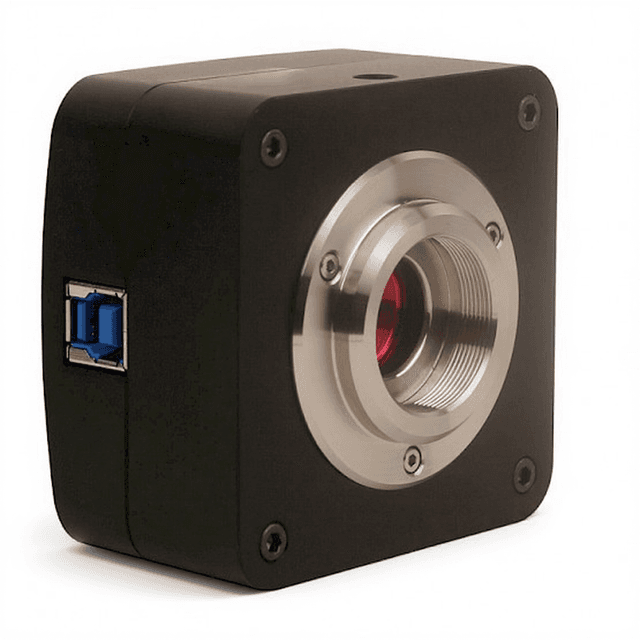
ConductVision is our video-tracking software. Record your sessions on video, and it reports the measures listed below.
A 5-year license is $3,990 in total.
The same license also scores standard tests such as the open field, the elevated plus maze, the Y-maze and the Morris water maze. Results export as CSV files.
Send it over and we'll email you a personalized answer — no call, no scheduling.
Prefer to talk it through?
Enhance your setup with compatible accessories
Creator Insights
Gillian A. Metz and Ian Q. Whishaw are neuroscientists at the Canadian Centre for Behavioural Neuroscience, University of Lethbridge. In 2002 they introduced the ladder rung walking test, in which a rodent crosses a horizontal ladder with irregularly spaced rungs that demands precise limb placement and coordination. The task was designed to reveal subtle motor deficits after cortical and subcortical lesions and is now widely used in models of stroke, spinal cord injury and neurodegeneration. Whishaw has made broad contributions to the behavioral neuroscience of motor systems, skilled reaching and hippocampal function.
To view Gillian A. Metz’s publications, visit PubMed.
Are you Gillian A. Metz? to review your photo and bio, and find out how to submit Creator Insights.
ConductScience celebrates method creators: researchers who, through rigorous and often ingenious experiments, develop the tools that reveal how the brain and body work. These are real scientific discoveries that become everyday instruments for the labs that follow.
Use this apparatus with
No exact ConductVision horizontal-ladder page is currently published. Limb-placement errors are normally scored frame-by-frame from a side-view video rather than overhead tracking; keep automated foot-fault detection as a roadmap gap.
Supporting page not yet builtNo exact ConductMaze horizontal-ladder protocol is currently published. Rung-pattern randomization, training trials, and the placement-error scale belong here once the protocol page ships; keep this as a roadmap gap.
Supporting page not yet builtConfirm side-view camera angle, frame rate, rung spacing, and scoring-window conventions before scoring forelimb and hindlimb placement errors from ladder-crossing video.
Rodent Gait Video Checklist ->Configuration considerations
Use these notes to scope species, cohort, tracking, and automation needs. Only verified product or support routes are linked from this section.
Elevated horizontal ladder with removable metal rungs in a side-view scoring frame
Standard configuration for skilled walking, scoring forelimb and hindlimb placement errors as the animal crosses a horizontal ladder between two platforms.
Quote
Request QuoteRung diameter and ladder width scaled for mouse or rat stride length
Rung diameter and ladder width change stepping mechanics and error rates, so the rung geometry should match the species and stride length of the cohort being tested.
Quote
View options ->Reconfigurable rung sockets for randomized spacing between sessions
Best when the question is skilled placement rather than learned stepping, because irregular rung patterns prevent animals from memorizing a fixed gait and force trial-by-trial limb placement.
Quote
Request automation help§ 1
The Horizontal Ladder measures skilled walking and limb placement by recording how accurately a rodent places its paws on the rungs of a horizontal ladder as it crosses between two platforms. Metz and Whishaw introduced the ladder rung walking test as a way to evaluate fore- and hindlimb stepping, placing, and coordination after motor system lesions. 1
The core readout is a limb-placement error score derived from how often each paw misses, slips off, or replaces a rung during a crossing. Because the rungs can be arranged in an irregular pattern, the task probes trial-by-trial skilled placement rather than a memorized stepping rhythm, making it sensitive to subtle sensorimotor deficits. 1
Rung-pattern regularity, motivation to cross, body size, training state, and video angle all change error scores independent of true placement ability. A defensible protocol randomizes rung patterns across sessions, trains animals to a stable crossing baseline, scores forelimb and hindlimb errors separately, and fixes the side-view camera angle before data are collected. 1
§ 2
Skilled-walking acquisition with rung-pattern randomization, separate fore- and hindlimb placement scoring, and side-view video review.
Critical methodological constraints
Core horizontal-ladder endpoints for skilled walking, limb placement, and quality control.
Hindlimb Errors
Skilled placement
Forelimb Errors
Skilled placement
Foot-Fault Score
Composite accuracy
Steps Per Crossing
Gait sampling
Crossing Time
Speed
+ Additional metrics: error rate per step, limb-specific slip type, rung pattern used, body weight, training day, and per-trial video notes.
A compact fraction of steps that resulted in a placement error during a crossing.
Estimate the N per group needed to detect a literature-anchored motor effect at the endpoint you plan to report. Override the defaults with your own pilot numbers.
§ 3
PubMed publication counts, sample apparatus output, and recent papers from a dated PubMed snapshot.
PubMed volume and co-occurring behavioral methods for horizontal-ladder skilled-walking studies.
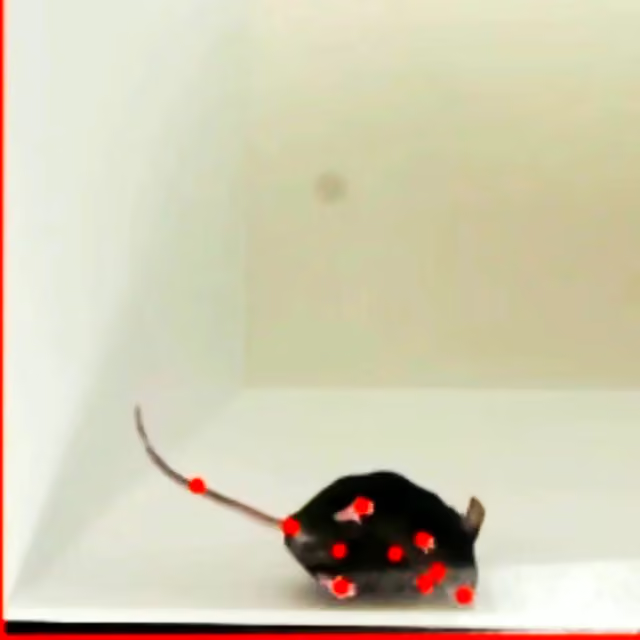
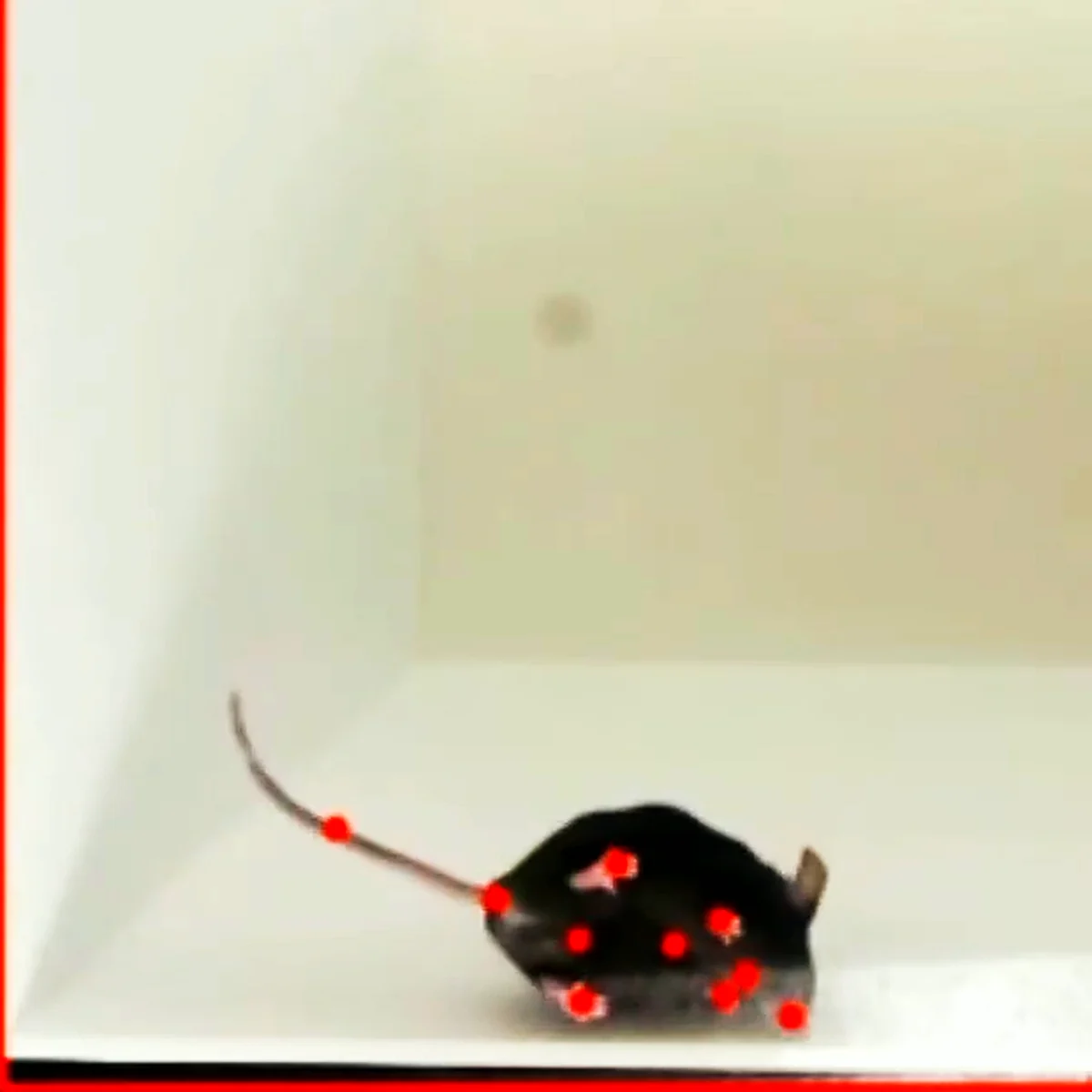
Representative output from an irregular-pattern ladder crossing scored frame by frame from side-view video.
A standardized in vivo platform for preclinical screening of therapeutic interventions in rat thoracic spinal cord injury.
Bastidas J, Jones L, Baptista M, et al.. Exp Neurol. 2026 Sep 21.
Reproducibility remains a challenge in spinal cord injury (SCI) research, and the absence of standardized preclinical models and outcomes slows clinical translation of promising findings.
Very early treadmill exercise facilitates neuroprotection and functional recovery following cerebral ischemia in rats.
Yazdanian M, Seydyousefi M, Moghanlou AE, et al.. Behav Brain Res. 2026 Sep 11.
Exercise is an effective strategy for stroke treatment. However, the time-dependent effects of exercise initiation and the involved mechanisms are controversial.
Motor coordination and behavioural deficits in a mouse model of KMT2B-related dystonia.
Harrer P, Kranz A, Becker L, et al.. Neurobiol Dis. 2026 Sep 11.
Pathogenic variants in KMT2B cause early-onset dystonia, but a mouse model that has undergone comprehensive, dystonia-oriented phenotyping is lacking.
Conditioning electrical stimulation after nerve injury: a clinically feasible strategy to enhance peripheral nerve regeneration.
Webber CA, Rabey KN, Chan KM, et al.. J Neurosurg. 2026 Aug 14.
Early repair of transected peripheral nerves is advocated to maximize recovery; however, clinical delays are common. Conditioning, a well-known method accelerating nerve regeneration, has never been used in a postinjury setting.
Deep cerebellar stimulation restores chronic motor deficits and loss of GABAergic neurons following sensorimotor cortex surgical brain injury in female rats.
Kim M, Chan HH, Fisher B, et al.. Exp Neurol. 2026 Aug.
Acquired brain injury, whether the result of trauma, stroke, or iatrogenic complications, may cause persistent motor and cognitive deficits with limited effective treatments.
Early Multimodal Motor Training After Stroke Promotes Motor Recovery and Whole-Brain Structural Remodeling.
Teichert M, Gull S, Herrmann KH, et al.. J Am Heart Assoc. 2026 Jul 7.
Early task-specific rehabilitation is critical for recovery after stroke, yet it remains unclear whether combining established rehabilitative training principles into an early multimodal motor training (EMT) paradigm improves recovery by engaging only local peri-infarct adaptation or a broader, longitudinally detectabl…
§ 4
Limitations of the paradigm, methodological caveats, and current directions.
Variables that can shift Horizontal Ladder results apart from the effect under study.
A fixed rung pattern lets animals learn a stepping rhythm, so a memorized gait can mask a placement deficit. Randomize the pattern across sessions.
A weak or unmotivating goal increases stalling and hesitation on the ladder, changing crossing time and step sampling without a placement deficit.
Larger or heavier animals interact differently with a fixed rung diameter and spacing, so weight and species should be reported and considered.
Untrained animals confound placement skill with task acquisition. Train to a stable crossing baseline before testing.
Placement errors are observer-scored from video. A fixed side-view angle, adequate frame rate, and ideally a blinded scorer reduce rater variance.
## Horizontal Ladder — methods controls

Confounds controlled in this protocol:

- **Rung-pattern regularity.** A fixed rung pattern lets animals learn a stepping rhythm, so a memorized gait can mask a placement deficit. Randomize the pattern across sessions.
- **Motivation to cross.** A weak or unmotivating goal increases stalling and hesitation on the ladder, changing crossing time and step sampling without a placement deficit.
- **Body size.** Larger or heavier animals interact differently with a fixed rung diameter and spacing, so weight and species should be reported and considered.
- **Training state.** Untrained animals confound placement skill with task acquisition. Train to a stable crossing baseline before testing.
- **Video angle and scoring.** Placement errors are observer-scored from video. A fixed side-view angle, adequate frame rate, and ideally a blinded scorer reduce rater variance.
The horizontal ladder is strongest when the rung pattern is randomized, animals are trained to a stable baseline, and forelimb and hindlimb errors are scored separately from a fixed side-view angle. A single crossing is a screening signal; confirm skilled-walking deficits with error rate per step and an independent motor assay such as gait analysis or the balance beam. 1
Use the balance beam when the question is fine motor coordination and slip-free traversal of a narrow surface. The horizontal ladder is more specific to skilled limb placement on discrete rungs and can localize fore- versus hindlimb deficits.
A regular rung pattern lets animals memorize a stepping rhythm, so learned gait can hide a real placement deficit. Varying the pattern across sessions forces trial-by-trial skilled placement and keeps the task sensitive.
Score forelimb and hindlimb errors separately rather than as a single count. The two index different parts of the sensorimotor system, and which is more affected depends on the model under study.
Quarterly editorial review of emerging Horizontal Ladder methodology. Q2 2026
Adopting a common placement-error scale across labs improves comparability of foot-fault scores between rigs and studies.
High-frame-rate side-view video and automated paw detection improve placement-error consistency and reduce observer burden.
Reporting forelimb and hindlimb errors separately is increasingly expected because each localizes a distinct part of the motor system.
The horizontal ladder is paired with gait analysis, balance beam, and rotarod to separate skilled placement from coordination and endurance.
§ 5
5 selected methods and validation references for Horizontal Ladder.