Inclined Plane Maze
Adjustable inclined surface apparatus for quantitative assessment of rodent motor coordination, balance, and proprioceptive function in neurological research.
| Automation Level | manual |
| Species | Mouse, Rat |

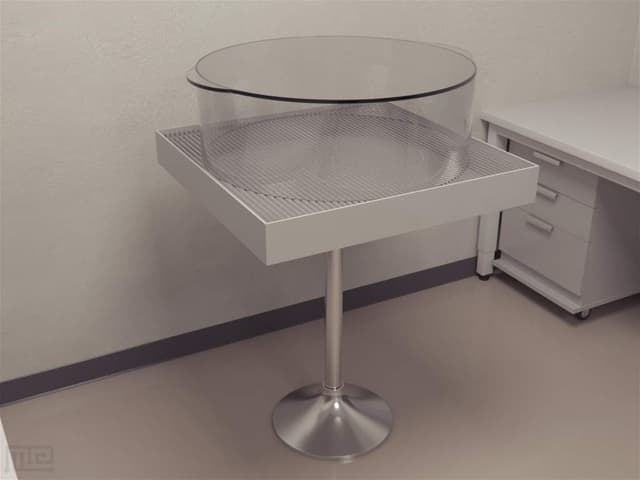
The Inclined Plane Maze is a specialized apparatus designed to assess motor coordination, balance, and proprioceptive function in rodent models. This behavioral testing device consists of an adjustable inclined surface that can be set to various angles to evaluate an animal's ability to maintain position and locomote on sloped terrain. The maze provides quantitative assessment of motor deficits associated with neurological conditions, drug effects, or genetic mutations affecting motor control systems.
Researchers utilize this apparatus to study motor learning, cerebellar function, and the progression of neurodegenerative diseases. The adjustable incline allows for graduated difficulty testing, enabling investigators to determine threshold angles at which motor impairments become apparent. The apparatus is particularly valuable in pharmacological studies where motor side effects must be characterized and in genetic research involving motor system dysfunction.
How It Works
The inclined plane test exploits the natural tendency of rodents to maintain their position on sloped surfaces through integrated motor control involving proprioceptive feedback, vestibular input, and motor output coordination. When placed on an inclined surface, animals must continuously adjust their posture and limb positioning to counteract gravitational forces that would otherwise cause them to slide down the plane.
The test measures the maximum angle at which an animal can maintain its position for a predetermined duration, typically 60 seconds. Motor impairments manifest as reduced maximum angles, increased number of slips or falls, or altered locomotory patterns. The apparatus allows systematic evaluation of motor function by incrementally increasing the incline angle until the animal can no longer maintain position, providing a quantitative threshold measurement.
The behavioral response integrates multiple neural systems including the cerebellum for balance and coordination, proprioceptive pathways for limb position sensing, and motor cortex for voluntary movement control. Deficits in any of these systems will be reflected in reduced performance on the inclined plane test.
Features & Benefits
Behavioral Construct
- Motor Coordination
- Balance
- Proprioception
Automation Level
- manual
Research Domain
- Aging Research
- Behavioral Pharmacology
- Motor Function
- Neurodegeneration
- Neuroscience
- Toxicology
Species
- Mouse
- Rat
Weight
- 6.06 kg
Dimensions
- L: 65.0 mm
- W: 36.0 mm
- H: 27.0 mm
Comparison Guide
| Feature | This Product | Typical Alternative | Advantage |
|---|---|---|---|
| Testing Duration | 60-second trials with immediate threshold determination | Rotarod tests require multiple trials and learning sessions | Enables rapid screening with minimal animal handling stress and faster data collection. |
| Motor System Assessment | Static balance and proprioceptive function evaluation | Dynamic motor coordination tests focus on movement execution | Provides complementary information about postural control systems often affected early in neurological conditions. |
| Equipment Complexity | Simple mechanical adjustment system | Computerized systems require software and maintenance | Reduces technical complexity and potential equipment failures while maintaining quantitative measurement capability. |
| Animal Training Requirements | No prior training needed for valid results | Many motor tests require multiple training sessions | Allows immediate assessment of motor function without confounding effects of learning or adaptation. |
This inclined plane apparatus provides rapid, quantitative assessment of static motor coordination and proprioceptive function without requiring animal training or complex equipment maintenance. The adjustable angle system enables precise threshold determination suitable for detecting subtle motor impairments in research applications.
Practical Tips
Verify angle calibration weekly using a digital inclinometer to ensure measurement accuracy.
Why: Small calibration errors can significantly impact threshold determinations and inter-study comparisons.
Inspect the adjustment mechanism monthly for smooth operation and lubricate if necessary according to manufacturer specifications.
Why: Mechanical wear can introduce variability in angle settings and compromise measurement reliability.
Test animals at consistent times of day and allow 30-minute acclimation to the testing environment.
Why: Circadian rhythms and stress responses can significantly influence motor performance and test validity.
Record both threshold angle and qualitative observations of postural adjustments and movement patterns.
Why: Qualitative data provides valuable context for interpreting numerical results and identifying specific motor deficits.
If animals consistently slip at low angles, check surface texture and cleanliness rather than assuming motor impairment.
Why: Surface conditions can mask or mimic motor coordination deficits, leading to incorrect conclusions about neurological function.
Position soft landing material at the base of the incline to prevent injury if animals slide or fall.
Why: Animal welfare requires minimizing risk of injury during behavioral testing procedures.
Setup Guide
What’s in the Box
- Inclined plane testing apparatus (typical)
- Angle adjustment mechanism (typical)
- Non-slip testing surface (typical)
- Assembly hardware (typical)
- User manual and testing protocols (typical)
Warranty
ConductScience provides a standard one-year manufacturer warranty covering defects in materials and workmanship, with technical support available for protocol optimization and troubleshooting.
Compliance
References
Background reading relevant to this product:
What is the typical angle range for detecting motor coordination deficits in mice versus rats?
Mice typically show motor impairments at angles between 45-60 degrees, while rats can generally maintain position at steeper angles up to 70-80 degrees. Consult product datasheet for specific angle adjustment range capabilities.
How long should animals be maintained on the inclined surface for valid threshold determination?
Standard protocols require animals to maintain position for 60 seconds at each angle. Some studies use 30-second durations for more sensitive animals or when testing multiple angles in sequence.
Can this apparatus be used for longitudinal studies tracking disease progression?
Yes, the quantitative nature of angle threshold measurements makes it well-suited for tracking motor decline over time in neurodegenerative disease models or recovery following injury.
How should the testing surface be maintained between animals and sessions?
Clean with 70% ethanol or appropriate disinfectant between animals, ensuring complete drying before next trial. Periodically inspect surface texture to maintain consistent traction properties.
What factors can confound inclined plane test results?
Environmental temperature, animal stress levels, time of day, surface cleanliness, and handler experience can all influence results. Standardize these variables for reliable data.
How does this test compare to rotarod assessment for motor coordination?
Inclined plane testing evaluates static balance and proprioceptive responses, while rotarod assesses dynamic balance and motor learning. Both provide complementary information about motor system function.
Can the apparatus accommodate animals with severe motor impairments?
Yes, the adjustable angle range includes shallow inclines suitable for detecting even subtle motor deficits, making it appropriate for severely impaired animals that cannot perform on traditional motor tests.
Have a question about this product?
Accessories
Enhance your setup with compatible accessories

Frequently Bought Together