Laboratory Rodent Transport Cage
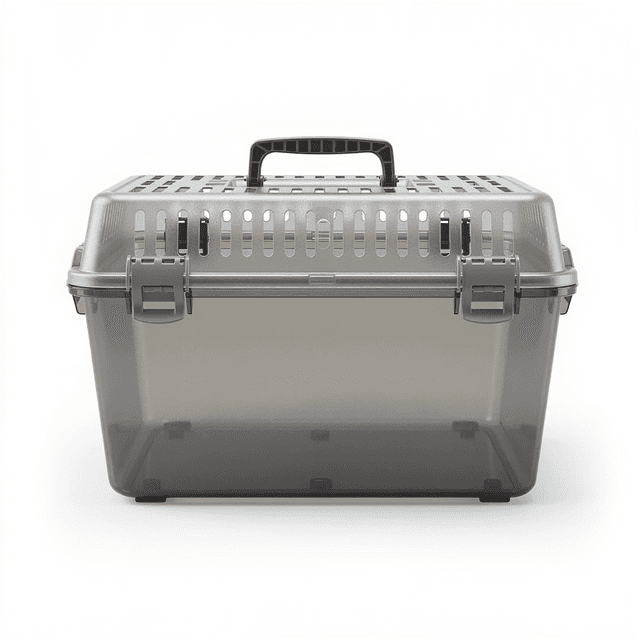
Ventilated polypropylene transport cage with secure locking lid for safe mouse and rat containment during facility transfers and experimental transport.

Louise Corscadden, PhD
Director of Science · ConductScience
Ask Louise about Laboratory Rodent Transport Cage fit, setup, configuration, or quote prep.
Already working with us? Sign in to connect this with My Scientist.
Key Specifications
Full details →- Model fit
- Mouse, Rat
- SKU family
- PTY-0024
- Shipping box
- 39.8 x 19.6 x 50.3 cm
- Ordering
- Online checkout and quote request available
- Category
- Transport Cages
- Build notes
- Polypropylene (PP)
The Laboratory Rodent Transport Cage provides secure, ventilated containment for mouse and rat transport between facilities, experimental areas, and housing locations. Constructed from durable polypropylene with integrated ventilation design, this transport system maintains appropriate airflow while preventing escape during transit.
The secure lid with locking mechanism ensures containment integrity throughout transport procedures. The polypropylene construction offers chemical resistance and ease of cleaning, supporting standard laboratory sanitation protocols between uses.
How It Works
The transport cage utilizes polypropylene construction to provide a lightweight yet durable containment system. The material's chemical resistance allows for standard laboratory disinfection procedures without degradation, while the smooth surfaces facilitate thorough cleaning between uses.
The ventilated design incorporates air exchange pathways that maintain adequate oxygen levels during transport while preventing escape. The secure locking lid mechanism engages to prevent accidental opening during handling and transport procedures, ensuring consistent containment throughout the transfer process.
Features & Benefits
Ventilation
- Ventilated design
Closure
- Secure lid with locking
Automation Level
- manual
Brand
- ConductScience
Material
- Polypropylene (PP)
Species
- Mouse
- Rat
Research Domain
- Addiction Research
- Aging Research
- Anxiety and Depression
- Behavioral Pharmacology
- Cancer Research
- Learning and Memory
- Neuroscience
- Toxicology
Shipping weight
- 1.0 lb
Shipping box
- L: 39.8 cm
- W: 19.6 cm
- H: 50.3 cm
| Feature | This Product | Typical Alternative | Advantage |
|---|---|---|---|
| Construction Material | Durable polypropylene construction | Entry-level models often use thinner plastics or disposable materials | Provides chemical resistance and durability for repeated laboratory disinfection protocols. |
| Containment Security | Secure lid with locking mechanism | Basic models may rely on friction-fit lids or simple closures | Prevents accidental opening during transport procedures that could compromise animal containment. |
| Ventilation Design | Integrated ventilated design | Some transport containers provide limited or no ventilation | Maintains air exchange during transport to support animal welfare without compromising containment. |
| Species Compatibility | Designed for mouse and rat transport | Single-species containers may limit laboratory flexibility | Accommodates the most common laboratory rodent species used in research applications. |
This transport cage combines polypropylene durability with secure locking and ventilation features for reliable laboratory animal transport. The chemical-resistant construction supports standard disinfection protocols while the species-compatible design accommodates common research rodents.
Practical Tips
Allow animals to acclimate in the transport cage for a few minutes before moving to reduce initial stress responses.
Why: Brief acclimation helps minimize transport-induced stress that could affect subsequent experimental measurements.
Inspect the locking mechanism regularly for wear or damage that could compromise containment security.
Why: Mechanical components may wear over time, and early detection prevents potential containment failures during transport.
Rinse thoroughly after disinfection to remove chemical residues that could affect animal behavior or health.
Why: Disinfectant residues may create odors or chemical exposure that could influence experimental results.
Always verify the locking mechanism is fully engaged before lifting or moving the transport cage.
Why: Unsecured lids could open during transport, resulting in animal escape and potential safety hazards.
Minimize transport time and avoid unnecessary stops or delays during animal transfer procedures.
Why: Reduced transport duration decreases stress-induced physiological changes that could confound experimental results.
Store the cage in a clean, dry environment when not in use to prevent contamination and material degradation.
Why: Proper storage extends the usable life of the polypropylene material and maintains hygiene standards.
If the locking mechanism becomes difficult to operate, check for debris or chemical buildup in the latch areas.
Why: Accumulated residues can interfere with proper locking function, compromising containment security.
Setup Guide
What’s in the Box
- Laboratory rodent transport cage (typical)
- Secure locking lid (typical)
- User instructions (typical)
Warranty
ConductScience provides a standard 1-year manufacturer warranty covering defects in materials and workmanship. Technical support is available for proper use and maintenance procedures.
Compliance
What is the maximum transport duration recommended for animals in this cage?
Transport duration should be minimized to reduce animal stress. Consult institutional animal care guidelines for specific time limits, typically ranging from minutes for short facility transfers to hours for longer transport needs with appropriate ventilation.
Can this cage accommodate multiple animals simultaneously?
The cage can hold multiple mice or a single rat depending on size. Consult product datasheet for interior dimensions to determine appropriate animal capacity based on species, size, and transport duration.
What disinfection methods are compatible with the polypropylene construction?
Standard laboratory disinfectants including quaternary ammonium compounds, chlorine dioxide, and alcohol solutions are compatible. Avoid strong acids or bases that may degrade polypropylene over time.
How does the ventilation design prevent escape while maintaining airflow?
The ventilation system incorporates openings sized to provide air exchange while being too small for animal escape. The specific ventilation pattern details should be confirmed in the product specifications.
Is the locking mechanism compatible with standard laboratory gloves?
The secure locking system is designed for operation with gloved hands typical in laboratory environments, though specific glove compatibility should be tested with your laboratory's standard glove types.
Can this transport cage be autoclaved for sterilization?
Polypropylene compatibility with autoclave sterilization depends on specific temperature and pressure parameters. Consult product specifications for maximum temperature tolerance and sterilization recommendations.
How does this compare to disposable transport containers?
This reusable polypropylene cage offers cost-effectiveness for frequent transport needs and superior durability compared to disposable options, while requiring cleaning protocols between uses.
What bedding or substrate should be used during transport?
Minimal absorbent bedding may be used for longer transports, but the smooth cage surfaces are designed to be used without substrate for short-duration transfers to facilitate cleaning.
Have a question about this product?
Have a question? Just ask.
Send it over and we'll email you a personalized answer — no call, no scheduling.
Prefer to talk it through?
Accessories
Enhance your setup with compatible accessories
Related Products