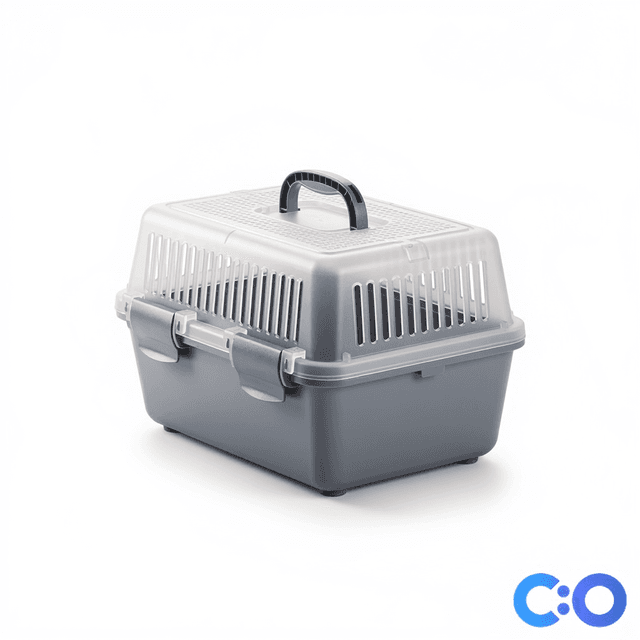
SPF Animal Transport Cage
Autoclavable polypropylene transport cage with filter-top technology for maintaining SPF conditions during laboratory rodent transfers between barrier facilities.

Louise Corscadden, PhD
Director of Science · ConductScience
Ask Louise about SPF Animal Transport Cage fit, setup, configuration, or quote prep.
Already working with us? Sign in to connect this with My Scientist.
Key Specifications
Full details →- Model fit
- Mouse, Rat
- SKU family
- PTY-0025
- Shipping box
- 42.3 x 20.8 x 53.4 cm
- Ordering
- Online checkout and quote request available
- Category
- Transport Cages
- Build notes
- Polypropylene (PP)
The SPF Animal Transport Cage provides secure, filtered transport for laboratory rodents while maintaining specific pathogen-free (SPF) conditions during inter-facility transfers. Constructed from autoclavable polypropylene with integrated filter-top technology, this 600 x 400 x 200 mm transport system ensures pathogen exclusion during animal movement between barrier facilities, vivarium areas, or research spaces.
The filter-top design incorporates ventilation apertures covered with high-efficiency filtration material to prevent airborne pathogen transmission while maintaining adequate air exchange for animal welfare. This transport cage supports laboratory animal care protocols that require maintenance of defined microbiological status throughout the transfer process, critical for protecting valuable research colonies from adventitious infections.
How It Works
The SPF transport system operates through physical barrier isolation combined with filtered air exchange. The polypropylene housing creates a sealed environment that prevents direct contact between transported animals and external pathogens. High-efficiency filtration material integrated into the ventilation apertures allows air movement necessary for animal respiration while blocking particles carrying bacteria, viruses, and fungi.
During transport, the filter-top design maintains positive air pressure relationships when properly handled, preventing inward airflow that could introduce contaminants. The autoclavable construction enables terminal sterilization before use, eliminating any pre-existing microbial load. This approach preserves the defined microbiological status established in SPF barrier facilities throughout the transfer process.
Features & Benefits
Cage Dimensions
- 600 x 400 x 200 mm
SPF Rating
- SPF-compliant, filter-top
Automation Level
- manual
Brand
- ConductScience
Material
- Polypropylene (PP)
Species
- Mouse
- Rat
Research Domain
- Aging Research
- Behavioral Pharmacology
- Cancer Research
- Developmental Biology
- Immunology
- Learning and Memory
- Neuroscience
- Toxicology
Shipping weight
- 1.2 lb
Shipping box
- L: 42.3 cm
- W: 20.8 cm
- H: 53.4 cm
| Feature | This Product | Typical Alternative | Advantage |
|---|---|---|---|
| Filtration System | Integrated filter-top with high-efficiency filtration material | Basic models may lack filtration or use simple ventilation holes | Prevents airborne pathogen transmission critical for maintaining SPF animal colonies during transport. |
| Sterilization Compatibility | Autoclavable polypropylene construction rated for 121°C sterilization | Entry-level containers may not withstand autoclave temperatures | Enables complete pre-use sterilization essential for SPF facility protocols and pathogen exclusion. |
| Internal Dimensions | 600 x 400 x 200 mm interior space | Smaller models often provide limited space for multiple animals | Accommodates multiple mice or larger rats while maintaining adequate space for animal welfare during transport. |
| SPF Compliance | SPF-compliant design with barrier isolation technology | Standard transport containers lack specific SPF design features | Specifically engineered for maintaining defined microbiological status required in barrier facility operations. |
The transport cage combines autoclavable construction with integrated filtration technology specifically designed for SPF facility requirements. The 600 x 400 x 200 mm dimensions provide adequate space for laboratory rodents while the filter-top system maintains pathogen barrier protection during inter-facility transfers.
Practical Tips
Pre-warm the sterilized transport cage to room temperature before animal loading to prevent temperature stress during transfer procedures.
Why: Sudden temperature changes can cause physiological stress that may confound subsequent experimental measurements.
Inspect filter material for blockage or damage before each use and replace if air exchange appears restricted.
Why: Compromised filtration reduces both pathogen protection and ventilation adequacy for animal welfare.
Validate autoclave sterilization effectiveness using biological indicators specific to polypropylene materials.
Why: Ensures complete sterilization without material degradation that could compromise structural integrity.
Use appropriate personal protective equipment when handling the transport cage in SPF environments to prevent facility contamination.
Why: Human-mediated contamination can compromise barrier facility status and invalidate research using SPF animals.
Limit transport duration to minimize animal stress and maintain optimal environmental conditions within the filtered container.
Why: Extended confinement can elevate stress hormones and alter physiological parameters relevant to research outcomes.
If condensation accumulates during transport, verify adequate air exchange through filter apertures and consider environmental humidity control.
Why: Excessive moisture can create conditions favorable for microbial growth and compromise animal comfort.
Document transport procedures and timing as potential variables in experimental protocols using transported animals.
Why: Transport stress can influence behavioral and physiological measurements for several hours post-transport.
Setup Guide
What’s in the Box
- SPF transport cage with filter-top assembly
- High-efficiency filtration material (typical)
- Assembly hardware (typical)
- User manual with sterilization protocols (typical)
Warranty
ConductScience provides a one-year manufacturer warranty covering material defects and construction quality, with technical support for proper sterilization and handling procedures.
Compliance
References
Background reading relevant to this product:
What sterilization parameters should be used for the polypropylene construction?
Standard autoclave protocols at 121°C for 15 minutes effectively sterilize the polypropylene components without material degradation.
How many animals can be safely transported in a single cage?
The 600 x 400 mm base accommodates 4-6 adult mice or 1-2 adult rats, depending on transport duration and animal welfare requirements.
Does the filter system require replacement between uses?
Consult product datasheet for filter replacement intervals; high-efficiency filtration material may require periodic replacement depending on usage frequency.
Can the transport cage maintain SPF conditions during extended transport times?
The filter-top design supports short to medium duration transport; extended transport requires assessment of ventilation adequacy and animal welfare considerations.
Is the cage compatible with standard vivarium equipment?
The 400 mm width fits standard laboratory cage rack systems, facilitating integration with existing vivarium infrastructure.
What maintenance is required between transport operations?
Complete disassembly, cleaning, and re-sterilization between uses prevents cross-contamination and maintains SPF status for subsequent transports.
How does this compare to standard non-filtered transport containers?
Unlike standard containers, the integrated filtration system prevents airborne pathogen transmission while maintaining animal comfort during SPF facility transfers.
Have a question about this product?
Have a question? Just ask.
Send it over and we'll email you a personalized answer — no call, no scheduling.
Prefer to talk it through?
Related Products