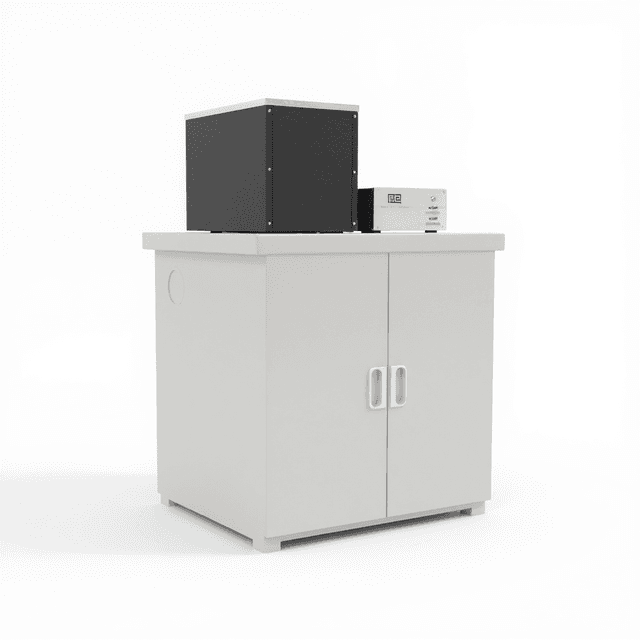
Large Maze
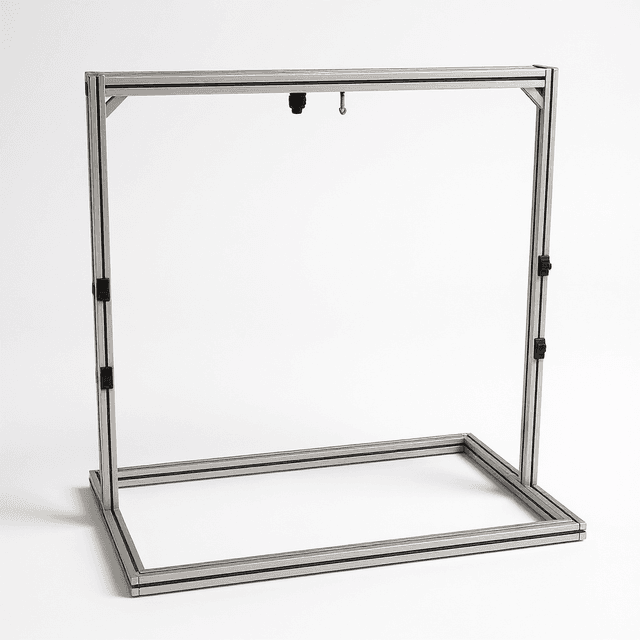
Large-scale behavioral maze (18m x 7.5m) designed for advanced spatial learning and memory research in laboratory animals.
| Automation Level | manual |
| Species | Mouse, Rat |

The Large Maze represents a comprehensive behavioral testing platform designed for advanced spatial learning and memory research in laboratory animals. With dimensions of 18 meters in length and 7.5 meters in width, this apparatus provides researchers with the space needed to conduct complex navigation studies, spatial cognition experiments, and behavioral assessments that require extended path lengths and multiple choice points.
This large-scale testing environment enables investigation of spatial memory consolidation, navigation strategies, and cognitive mapping in rodents. The substantial dimensions allow for the implementation of various maze configurations including radial arm designs, complex path networks, and modified Morris water maze protocols that benefit from extended swimming distances and multiple spatial cues.
How It Works
The Large Maze operates on the principle of spatial navigation testing, where animals must utilize environmental cues, internal compass systems, and memory consolidation to successfully navigate through the testing environment. Animals rely on hippocampal place cells and grid cells in the entorhinal cortex to form cognitive maps of the spatial environment, encoding distances, directions, and landmark relationships.
During testing protocols, researchers can implement various maze configurations including radial arm designs, T-maze variations, or complex path networks. The extended dimensions allow for longer acquisition phases and more challenging spatial discrimination tasks. Performance metrics include path length, latency to target locations, search strategies employed, and error patterns that reveal underlying cognitive processes.
The large testing area enables researchers to introduce multiple spatial cues at varying distances, creating rich environments for studying allocentric navigation strategies. This approach facilitates investigation of cognitive mapping abilities, spatial working memory capacity, and the neural substrates underlying successful navigation behavior.
Features & Benefits
Behavioral Construct
- spatial memory
- working memory
- reference memory
- spatial navigation
- cognitive mapping
- spatial learning
Automation Level
- manual
Research Domain
- Aging Research
- Anxiety and Depression
- Behavioral Pharmacology
- Learning and Memory
- Neurodegeneration
- Neuroscience
Species
- Mouse
- Rat
Weight
- 6.06 kg
Dimensions
- L: 65.0 mm
- W: 36.0 mm
- H: 27.0 mm
Comparison Guide
| Feature | This Product | Typical Alternative | Advantage |
|---|---|---|---|
| Testing Area Dimensions | 18m x 7.5m (135 square meters) | Standard mazes typically range from 1-4 square meters | Extended area enables investigation of long-distance navigation and complex spatial relationships not possible in smaller environments. |
| Path Length Capability | 18-meter maximum linear distance | Conventional mazes offer 1-3 meter path lengths | Longer navigation distances better approximate natural foraging behaviors and challenge spatial memory systems. |
| Configuration Flexibility | Supports multiple maze types within single large platform | Most mazes are designed for single configuration types | Researchers can implement various protocols without requiring multiple apparatus purchases or room reconfigurations. |
| Multi-Animal Testing | Large area accommodates simultaneous testing of multiple subjects | Standard mazes typically restrict testing to single animals | Enables social navigation studies and increases experimental throughput for large cohort studies. |
The Large Maze provides substantial testing area and extended path lengths that enable sophisticated spatial learning protocols not possible with conventional laboratory maze systems. The configurable design supports multiple experimental approaches within a single large-scale platform.
Practical Tips
Maintain consistent environmental cue placement throughout experimental sessions to ensure reliable spatial reference points for navigation.
Why: Changes in landmark positions can disrupt cognitive mapping and introduce variability in spatial performance data.
Clean maze surfaces thoroughly between subjects using odor-eliminating solutions to prevent olfactory cue interference.
Why: Residual scent traces can provide unintended navigation cues that confound spatial learning measurements.
Verify tracking system accuracy across the full maze area before each experimental session, paying attention to corner regions.
Why: Large testing areas can introduce tracking errors at periphery zones that compromise spatial coordinate data quality.
Record environmental conditions including lighting levels and ambient noise during each testing session.
Why: Environmental variations can affect animal behavior and spatial performance, requiring documentation for data interpretation.
Ensure adequate supervision during extended testing sessions and establish protocols for animal retrieval from large testing areas.
Why: Large maze dimensions require additional safety considerations for both animal welfare and experimental oversight.
Implement systematic protocols for addressing animals that become immobile or exhibit stereotyped behaviors during extended navigation tasks.
Why: Large-scale testing environments can occasionally induce behavioral responses that require intervention to maintain data quality.
Setup Guide
What’s in the Box
- Large maze framework components (typical)
- Assembly hardware and connectors (typical)
- Setup and configuration guide (typical)
- Protocol documentation for common maze configurations (typical)
Warranty
ConductScience provides standard manufacturer warranty coverage with technical support for setup guidance and configuration assistance.
Compliance
References
Background reading relevant to this product:
What maze configurations can be implemented with the 18m x 7.5m dimensions?
The large dimensions support radial arm maze designs with 8-16 arms, complex T-maze networks, modified Morris water maze protocols, and custom pathway configurations that require extended navigation distances and multiple choice points.
How does the extended size affect spatial memory assessment protocols?
Larger dimensions enable investigation of long-term spatial memory consolidation, navigation strategy development, and cognitive mapping abilities that require sustained attention and memory retention over extended distances.
What tracking systems are compatible with this large-scale apparatus?
The apparatus accommodates overhead video tracking systems, RFID-based monitoring, and multi-camera setups capable of maintaining accuracy across the full 135 square meter testing area.
Can multiple animals be tested simultaneously in this maze?
The large dimensions support group testing protocols and social navigation studies, though researchers must consider tracking complexity and potential behavioral interactions between subjects.
What environmental factors must be controlled in large-scale spatial testing?
Consistent lighting conditions, minimal auditory distractions, standardized spatial cue placement, and regular cleaning protocols are essential for maintaining reliable spatial navigation data.
How does maze size affect statistical power in spatial learning studies?
Larger testing environments typically increase measurement sensitivity for spatial discrimination tasks and navigation strategies, potentially reducing required sample sizes for detecting cognitive differences.
Have a question about this product?
Accessories
Enhance your setup with compatible accessories