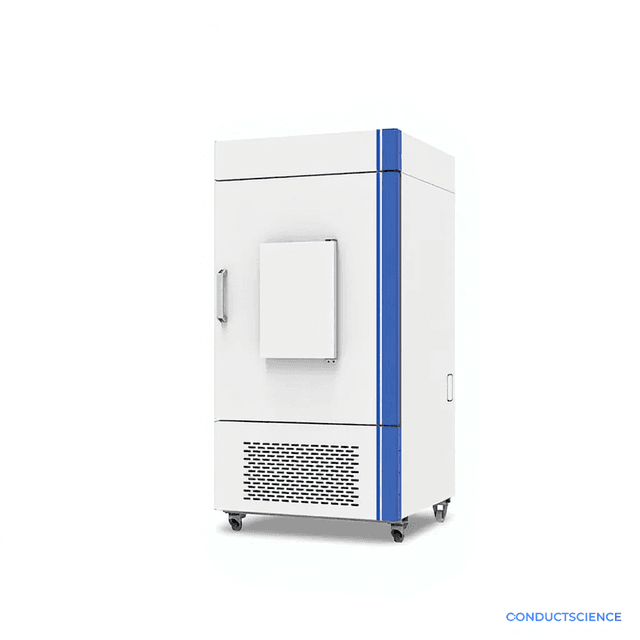
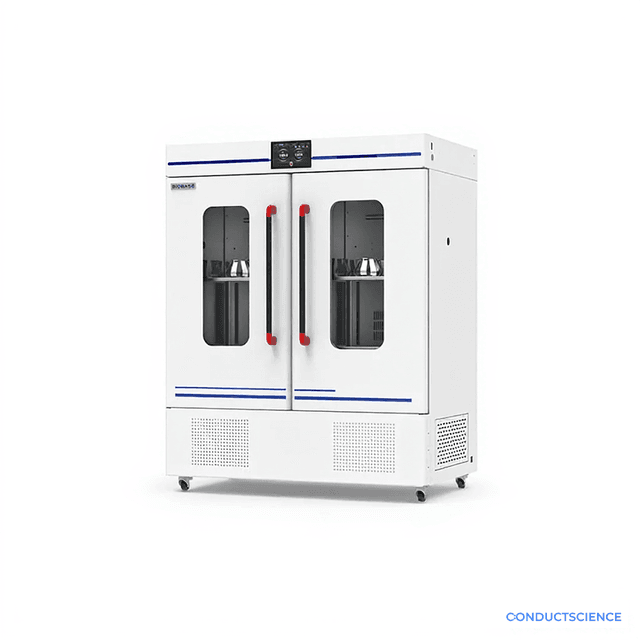
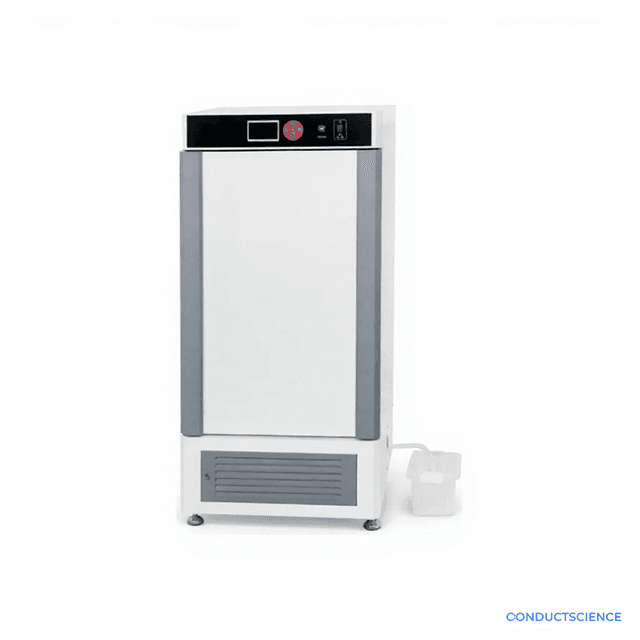
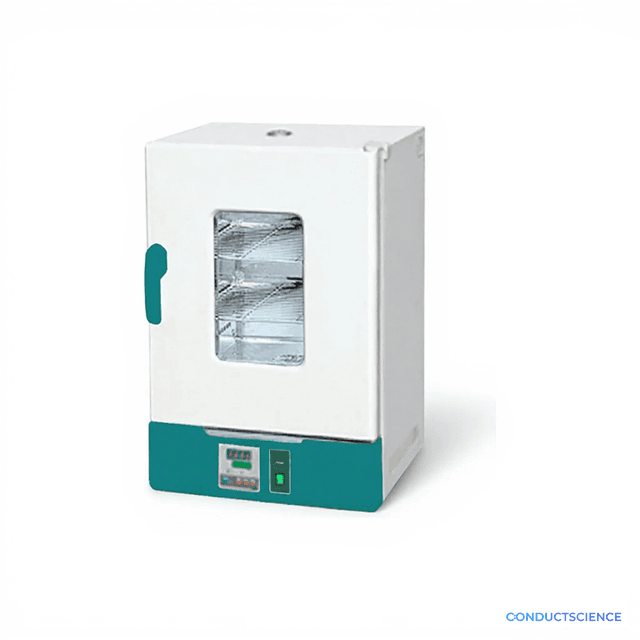
Lighting Incubator
200L capacity incubator with programmable temperature control (0-60°C) and adjustable LED illumination (0-20,000 Lux) for photobiology and developmental research applications.
The Lighting Incubator is a precision temperature-controlled chamber designed for biological research requiring controlled illumination conditions. This 200L capacity unit combines precise temperature regulation with adjustable LED lighting, supporting experiments in plant physiology, photobiology, and developmental studies where light exposure timing and intensity are critical variables.
The system features dual temperature control ranges: 0-60°C without illumination and 10-60°C with illumination active, maintaining temperature uniformity within ±1.0°C throughout the chamber. The integrated top-mounted LED array provides 0-20,000 Lux illumination with 10-grade adjustability, enabling researchers to simulate various lighting conditions or establish specific photoperiod cycles. A 30-segment programmable PID controller allows complex temperature and timing protocols for extended experimental runs.
How It Works
The incubator operates using forced convection circulation to maintain uniform temperature distribution throughout the 200L chamber. A PID controller with 30-segment programming capability manages heating and cooling cycles through R134a refrigeration system, achieving temperature stability within ±0.5°C fluctuation. The dual-range temperature control accommodates both refrigerated operation (0-60°C) and illuminated operation (10-60°C), with the upper range limited during lighting operation due to heat generation from the LED array.
The top-mounted LED lighting system provides uniform illumination across the chamber interior, with intensity adjustable from 0 to 20,000 Lux in 10 discrete steps. The cold light LED technology minimizes additional heat generation, allowing for precise temperature control during illuminated experiments. The LCD display provides real-time monitoring of temperature with 0.1°C resolution, while programmable timing functions enable automated light/dark cycles from 0-9999 minutes/hours or continuous operation.
Features & Benefits
Series
- Standard
- L Series
- LB/E Series
Weight
- 135.0 lbs
Dimensions
- L: 77.8 in
- W: 54.8 in
- H: 47.6 in
Comparison Guide
| Feature | This Product | Typical Alternative | Advantage |
|---|---|---|---|
| Chamber Capacity | 200L volume | Entry-level models often offer 50-100L capacity | Larger capacity accommodates multiple experimental conditions or larger sample sets simultaneously |
| Temperature Range | 0-60°C without illumination, 10-60°C with lighting | Basic incubators may lack refrigeration capability | Dual-range operation supports both ambient and sub-ambient temperature studies |
| Illumination Control | 0-20,000 Lux with 10-grade adjustment | Many incubators lack integrated lighting systems | Eliminates need for separate light sources and enables precise photoperiod control |
| Programming Capability | 30-segment PID controller | Basic models offer simple setpoint control | Complex temperature cycling protocols support advanced experimental designs |
| Temperature Uniformity | ±1.0°C throughout chamber | Standard units may have ±2-3°C variation | Tighter temperature control reduces experimental variability across sample positions |
This lighting incubator combines substantial 200L capacity with dual-range temperature control and integrated LED illumination. The 30-segment programming and precise temperature uniformity support complex experimental protocols requiring both thermal and optical control.
Practical Tips
Verify temperature accuracy using external reference thermometer at multiple locations within the chamber before critical experiments.
Why: Temperature uniformity specifications are chamber-wide averages and actual variation at specific sample positions may differ.
Clean the LED lighting diffuser monthly to maintain consistent illumination intensity and distribution.
Why: Dust accumulation on optical surfaces can create uneven lighting and reduce effective light intensity.
Allow 25% free space around samples for proper air circulation when loading the chamber.
Why: Overcrowding impedes forced convection and can create temperature gradients that affect experimental conditions.
If temperature recovery is slow after door opening, check that ambient temperature is within the recommended 25±2°C range.
Why: High ambient temperatures increase thermal load and extend equilibration time, particularly when using refrigeration.
Record both set temperature and actual chamber temperature during experiments, especially during illuminated operation.
Why: LED heat generation may cause slight temperature variations that should be documented for accurate experimental records.
Ensure adequate ventilation around the unit and avoid blocking air intakes during operation.
Why: Proper ventilation prevents overheating of refrigeration components and maintains optimal performance.
Use the 30-segment programming to create gradual temperature transitions rather than rapid setpoint changes.
Why: Gradual transitions reduce thermal shock to samples and improve temperature stability throughout protocols.
Calibrate light intensity measurements with the chamber at operating temperature to account for any thermal effects on LED output.
Why: LED light output can vary with temperature, affecting experimental consistency in illumination studies.
Setup Guide
What’s in the Box
- Lighting incubator main unit
- Power cable (typical)
- User manual and operation guide (typical)
- Temperature calibration certificate (typical)
- Sample shelves and support accessories (typical)
Warranty
ConductScience provides a standard one-year manufacturer warranty covering parts and labor, with technical support for setup, calibration, and troubleshooting assistance.
Compliance
What is the temperature stability during illuminated operation?
The unit maintains ±0.5°C temperature fluctuation and ±1.0°C uniformity even with LED lighting active, though the temperature range is limited to 10-60°C during illuminated operation.
How uniform is the light distribution across the chamber?
The top-mounted LED array provides illumination across the 200L chamber volume, though specific uniformity values should be verified with light meter measurements at your sample positions.
Can the temperature and lighting be programmed independently?
The 30-segment PID controller manages temperature programming, while illumination uses separate 10-grade adjustment. Timing functions can coordinate both parameters for photoperiod experiments.
What data logging capabilities are available?
The LCD display provides real-time monitoring with 0.1°C resolution. For data logging capabilities and output options, consult the product datasheet for specific interface details.
How does ambient temperature affect performance?
The unit operates in 5-30°C ambient conditions, with 25±2°C recommended for optimal performance. Higher ambient temperatures may affect the lower temperature range capability.
What maintenance is required for the LED lighting system?
LED cold light sources typically require minimal maintenance, but regular cleaning of the light diffuser and monitoring of illumination intensity over time is recommended for consistent experimental conditions.
Have a question about this product?
Accessories
Enhance your setup with compatible accessories
Upgrade Options