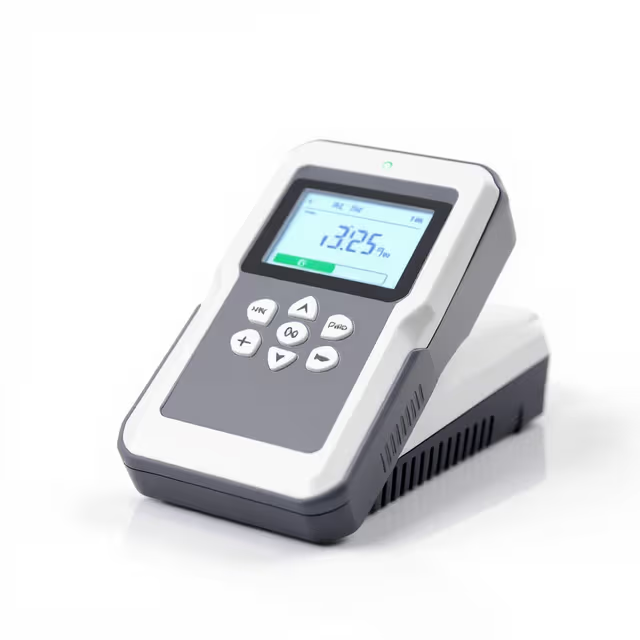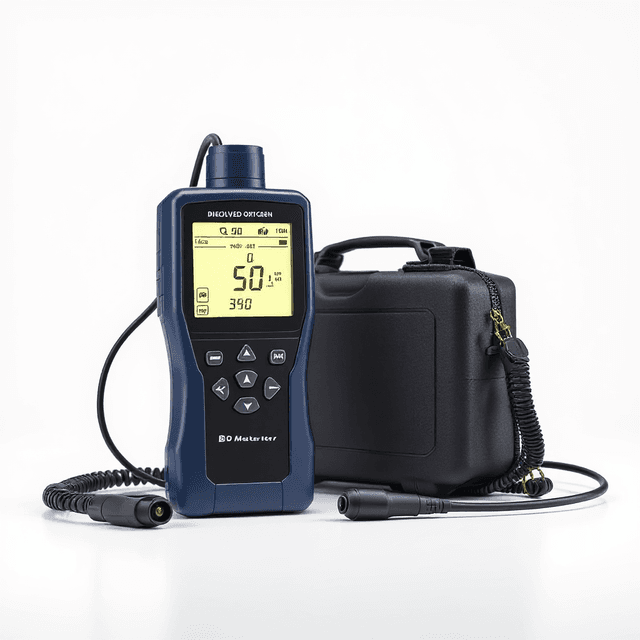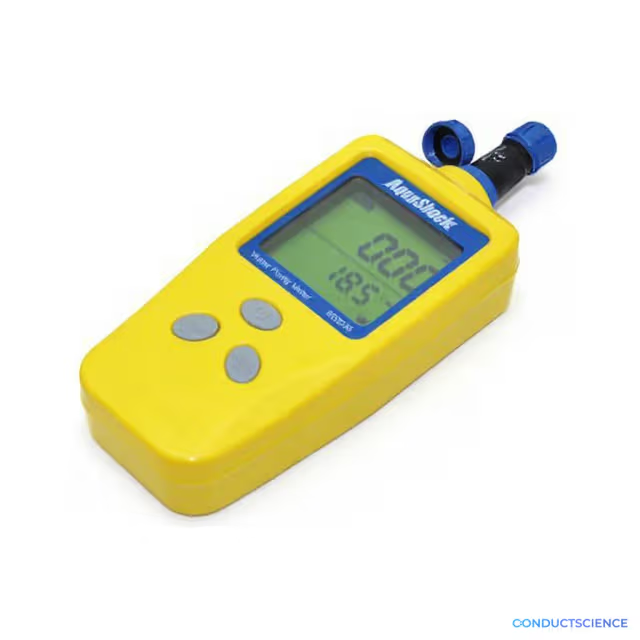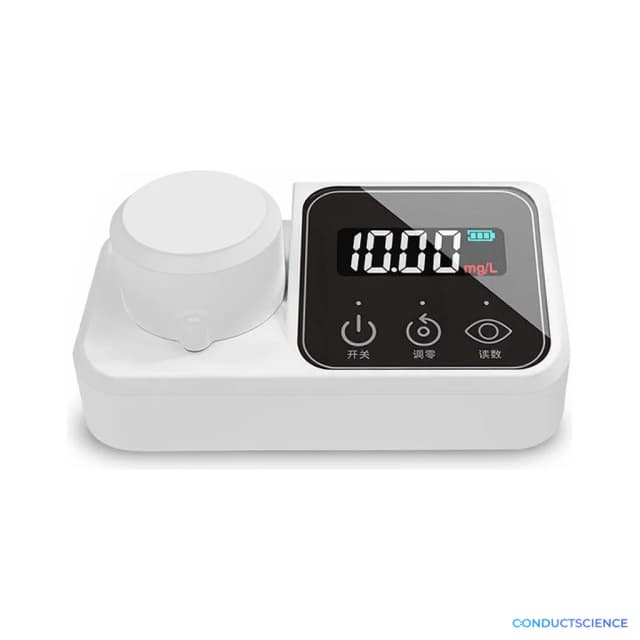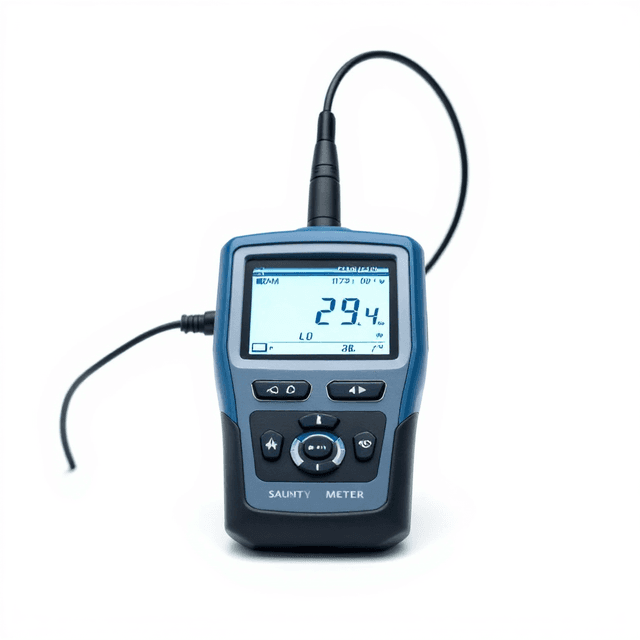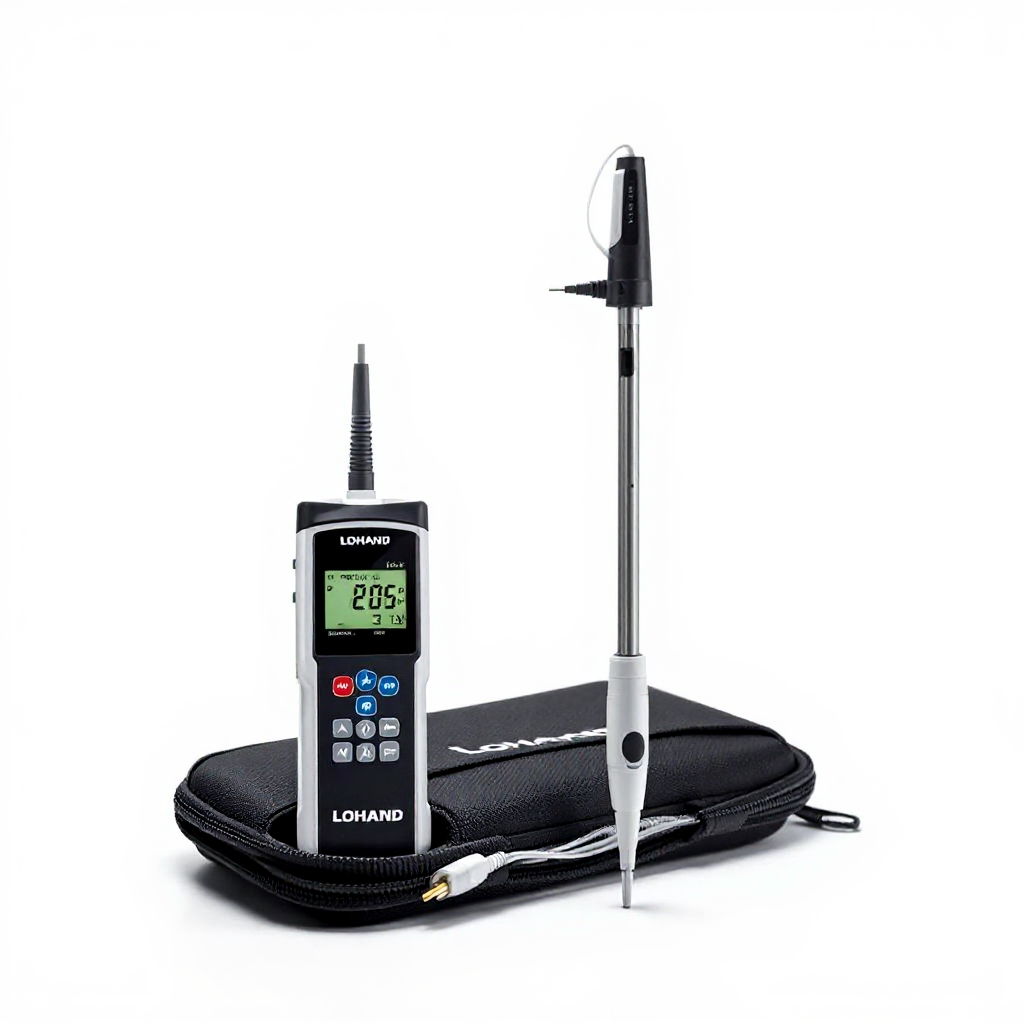
Lohand Pen-Type Conductivity Meter
Portable pen-type conductivity meter measuring EC, TDS, and salinity with automatic temperature compensation, platinum electrode, and IP65 protection for field water quality assessment.
| Model | LH-N300 |
| Item | Specification |
| Measuring range EC | 0.0us/cm(ppm)~20.00us/cm(ppt) |
| Measuring range TDS | 0.0mg/L(ppm)-20.00g/L(ppt) |
| TDS coefficient | 0.40-1.00 adjustable |
| Measuring range Salinity | 0.0mg/L(ppm)-13.00g/L(ppt) |

The LH-N300 pen-type conductivity meter is a portable multi-parameter water quality instrument designed for field and laboratory measurements of electrical conductivity, total dissolved solids (TDS), and salinity. The instrument features a platinum round plane electrode with K=1.0 constant, providing measurements across ranges from 0.0 µS/cm to 20.00 mS/cm for conductivity, 0.0 mg/L to 20.00 g/L for TDS, and 0.0 mg/L to 13.00 g/L for salinity with ±2% full scale accuracy.
Equipped with automatic temperature compensation (ATC) from 0-60°C, the meter incorporates electrode self-diagnosis capabilities and IP65 protection rating for reliable operation in challenging field conditions. The 20×30mm LCD backlight display enables clear readings in various lighting conditions, while the compact pen design allows single-handed operation. The adjustable TDS coefficient (0.40-1.00) and fixed salinity coefficient (0.60) accommodate different water types and measurement protocols commonly required in environmental monitoring and water quality assessment workflows.
How It Works
Electrical conductivity measurement operates on the principle that ionic solutions conduct electric current proportionally to their dissolved ion concentration. The LH-N300 employs a four-electrode conductivity cell with platinum electrodes arranged in a K=1.0 configuration, where an alternating current is applied between two outer electrodes and the resulting voltage is measured across two inner sensing electrodes. This four-electrode design minimizes polarization effects and electrode fouling that can compromise measurement accuracy.
The instrument calculates total dissolved solids (TDS) and salinity through empirical conversion factors applied to the measured conductivity. TDS estimation uses an adjustable coefficient (0.40-1.00) to account for different ion compositions in various water types, while salinity calculation employs a fixed coefficient of 0.60 optimized for typical dissolved salt mixtures. Automatic temperature compensation corrects conductivity readings to a standard reference temperature, as ionic conductivity exhibits temperature dependence of approximately 2% per degree Celsius.
The integrated microprocessor continuously monitors electrode condition through self-diagnosis algorithms that detect electrode degradation, coating, or damage. The IP65-rated housing protects internal electronics while allowing electrode contact with test solutions, enabling reliable measurements in field environments where exposure to moisture and particulates is unavoidable.
Features & Benefits
Model
- LH-N300
Item
- Specification
Measuring range EC
- 0.0us/cm(ppm)~20.00us/cm(ppt)
Measuring range TDS
- 0.0mg/L(ppm)-20.00g/L(ppt)
TDS coefficient
- 0.40-1.00 adjustable
Measuring range Salinity
- 0.0mg/L(ppm)-13.00g/L(ppt)
Salinity coefficient
- 0.60
Working temperature range
- 0-60âï¼32-140âï¼
ATC
- 0-60â
Conductivity probe
- Ф13mm K=1.0
IP grade
- IP65
Automatic backlight
- 1 minute
Automatic shut-down
- 20 minutes
Automation Level
- semi-automated
Brand
- ConductScience
Accuracy
- ±2%F.S
Display Type
- 20*30mm LCD backlight display
Research Domain
- Analytical Chemistry
- Environmental Monitoring
- Food Science
- Industrial Hygiene
- Pharmaceutical QC
- Water Quality & Environmental Monitoring
Weight
- 0.26 kg
Dimensions
- L: 20.0 mm
- W: 10.0 mm
- H: 5.0 mm
Comparison Guide
| Feature | This Product | Typical Alternative | Advantage |
|---|---|---|---|
| Measurement Parameters | EC, TDS, and Salinity in single instrument | Entry-level models often measure only conductivity | Provides comprehensive water quality assessment without requiring multiple instruments or additional calculations. |
| Conductivity Range | 0.0 µS/cm to 20.00 mS/cm | Basic models may limit range to 10 mS/cm or lower | Covers both ultrapure water and high-salinity samples in single instrument, reducing equipment inventory needs. |
| Temperature Compensation | Automatic compensation from 0-60°C | Manual compensation or limited temperature range | Eliminates calculation errors and enables accurate measurements across full environmental temperature range. |
| Electrode Design | Platinum round plane electrode, K=1.0 | Graphite or basic metal electrodes | Platinum construction provides superior chemical resistance and measurement stability in diverse water matrices. |
| Environmental Protection | IP65 rating | Lower IP ratings or no protection specification | Enables reliable field operation in wet conditions and dusty environments without instrument damage. |
| TDS Coefficient Adjustment | 0.40-1.00 adjustable range | Fixed coefficient or no adjustment capability | Improves TDS accuracy across different water types and regional variations in ionic composition. |
The LH-N300 combines multi-parameter measurement capability with field-ruggedized design and professional accuracy specifications. The platinum electrode and IP65 protection provide durability advantages, while the adjustable TDS coefficient and wide measurement range accommodate diverse application requirements in a compact, portable format.
Practical Tips
Perform single-point calibration with 1413 µS/cm standard before each field session and three-point calibration weekly for critical applications.
Why: Regular calibration maintains measurement accuracy and compensates for electrode aging or contamination effects.
Store the electrode in distilled water or appropriate storage solution between uses, never allow it to dry completely.
Why: Maintaining electrode hydration preserves the platinum surface and prevents measurement drift from electrode conditioning effects.
Allow 30 seconds for reading stabilization when measuring samples with significantly different temperatures or conductivity than previous measurements.
Why: Adequate equilibration time ensures accurate temperature compensation and stable electrode response.
If readings appear erratic, check for air bubbles on the electrode surface and verify complete immersion in the sample.
Why: Air bubbles create measurement artifacts by reducing the effective electrode area and disrupting current flow patterns.
Rinse the electrode thoroughly between samples, especially when moving between high and low conductivity measurements.
Why: Sample carryover can cause significant measurement errors, particularly when transitioning between samples with large conductivity differences.
Adjust the TDS coefficient based on your water source: 0.45-0.50 for natural freshwater, 0.65-0.70 for groundwater, 0.80-1.00 for industrial process water.
Why: Proper coefficient selection improves TDS estimation accuracy by accounting for different ionic compositions and specific conductance relationships.
Always turn off the instrument before cleaning the electrode with any solvents or cleaning solutions stronger than mild detergent.
Why: Protecting the electronic components from chemical exposure prevents damage to internal circuitry and measurement systems.
Verify temperature compensation accuracy by measuring the same standard solution at room temperature and after cooling or warming by 10-15°C.
Why: Temperature compensation verification ensures that field measurements at varying environmental temperatures remain accurate.
Setup Guide
What’s in the Box
- LH-N300 conductivity meter (typical)
- Protective electrode cap (typical)
- User manual and calibration instructions (typical)
- Conductivity calibration standard solution (typical)
- Carry case or protective pouch (typical)
- Battery (typical)
Warranty
ConductScience provides a one-year manufacturer warranty covering defects in materials and workmanship, with technical support for calibration procedures and troubleshooting assistance.
Compliance
References
Background reading relevant to this product:
What is the measurement accuracy across the full conductivity range?
The LH-N300 provides ±2% full scale accuracy across the entire conductivity range from 0.0 µS/cm to 20.00 mS/cm, with resolution from 0.1 µS/cm in the low range to 0.01 mS/cm in the high range.
How does the automatic temperature compensation function?
ATC operates from 0-60°C, automatically correcting conductivity readings to account for temperature-dependent ionic mobility. The system compensates for the typical 2% per degree change in conductivity without requiring manual temperature entry.
Can the TDS coefficient be adjusted for different water types?
Yes, the TDS coefficient is adjustable from 0.40 to 1.00 to accommodate different ionic compositions. Use 0.40-0.50 for high-purity water, 0.50-0.70 for typical freshwater, and 0.70-1.00 for high-salinity or industrial waters.
What electrode maintenance is required for optimal performance?
Clean the platinum electrode with distilled water after each use and store in appropriate storage solution. The self-diagnosis feature will alert you to electrode degradation, but periodic cleaning with mild detergent may be needed for samples with high organic content.
Is the instrument suitable for measurements in harsh field conditions?
The IP65 protection rating provides dust-tight sealing and protection against water jets, making it suitable for outdoor field work. The operating temperature range of 0-60°C covers most environmental conditions encountered in field sampling.
How does the salinity measurement compare to dedicated salinity meters?
The instrument uses a fixed 0.60 conversion coefficient optimized for typical salt mixtures. While adequate for general water quality assessment, dedicated salinity meters with ion-specific algorithms may provide higher accuracy for oceanographic or specialized applications.
What calibration standards are recommended for this conductivity range?
Use certified conductivity standards at 84 µS/cm, 1413 µS/cm, and 12.88 mS/cm for three-point calibration covering the measurement range. Single-point calibration with 1413 µS/cm standard is acceptable for routine monitoring applications.
Can the instrument data be exported or logged?
The basic pen design focuses on real-time measurement display. For data logging requirements, consider connecting to external data collection systems or recording readings manually during field surveys.
Have a question about this product?
Accessories
Enhance your setup with compatible accessories