Mirror Box
Research apparatus with central mirror configuration for investigating mirror therapy mechanisms, motor imagery, and visual feedback integration in neurorehabilitation studies.
| mirror_configuration | one mirror in the center |
| compartments | two sides for hand placement |
| therapy_type | mirror therapy (MT) |
| Automation Level | manual |

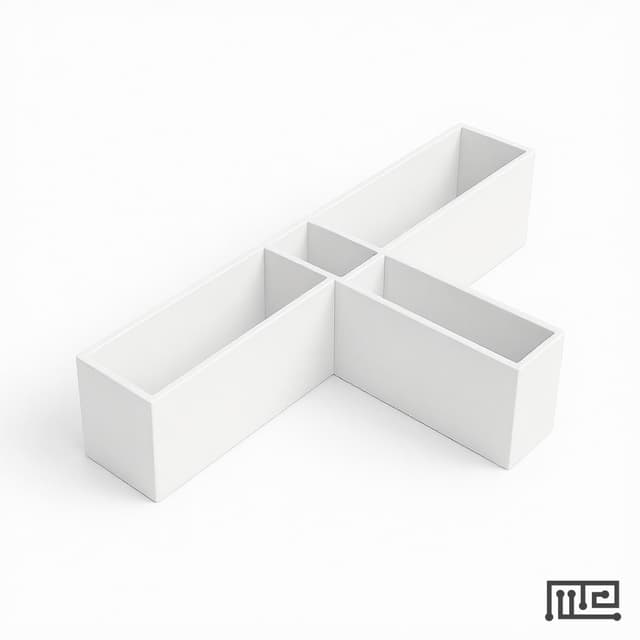
The Mirror Box is a research apparatus designed for mirror therapy (MT) investigations and neurorehabilitation studies. The device features a central mirror configuration that creates a visual illusion by reflecting the unaffected limb to appear in place of the affected limb. This reflective mechanism enables researchers to study motor imagery, sensorimotor integration, and neuroplasticity mechanisms in controlled experimental conditions.
The apparatus consists of two compartments separated by a central mirror, allowing for systematic positioning of limbs during therapeutic and research protocols. One compartment conceals the affected limb while the opposite side displays the unaffected limb whose reflection creates the therapeutic illusion. This design enables standardized mirror therapy protocols for investigating phantom limb phenomena, motor recovery mechanisms, and visual feedback integration in neurological research.
How It Works
Mirror therapy operates on the principle of visual-motor illusion to modulate cortical activity and sensorimotor integration. The central mirror creates a reflection of the unaffected limb that appears to replace the affected limb, effectively tricking the visual system into perceiving bilateral limb movement. This visual feedback activates mirror neuron systems and can influence motor cortex excitability through cross-modal sensory integration.
The neurological mechanism involves activation of premotor and primary motor cortices through visual observation of limb movement, even when the observed movement is a reflection. This activation can promote cortical reorganization and may facilitate motor recovery through enhanced neuroplasticity. The illusion also modulates pain perception pathways by providing conflicting sensory input that can override nociceptive signals, particularly relevant in phantom limb and complex regional pain syndrome research.
Research applications utilize this mechanism to study cortical mapping changes, investigate sensorimotor learning, and examine the role of visual feedback in motor control and rehabilitation protocols.
Features & Benefits
mirror_configuration
- one mirror in the center
compartments
- two sides for hand placement
therapy_type
- mirror therapy (MT)
Automation Level
- manual
Research Domain
- Behavioral Pharmacology
- Motor Function
- Neurodegeneration
- Neuroscience
- Pain Research
Weight
- 6.06 kg
Dimensions
- L: 65.0 mm
- W: 36.0 mm
- H: 27.0 mm
Comparison Guide
| Feature | This Product | Typical Alternative | Advantage |
|---|---|---|---|
| Mirror Configuration | Single central mirror with two-compartment design | Various configurations including multiple mirrors or adjustable positioning systems | Standardized setup ensures consistent reflection angles and experimental reproducibility across research sessions |
| Construction Type | Stable box framework construction | Portable mirror stands or adjustable mirror systems | Fixed construction eliminates positioning variables that could affect experimental validity |
| Compartment Design | Two defined compartments for limb placement | Open mirror stands requiring manual positioning | Structured compartments ensure consistent limb concealment and positioning protocols |
| Operation Complexity | Manual operation with simple positioning | Electronic or motorized mirror systems with multiple adjustments | Eliminates technical barriers allowing focus on therapeutic protocols rather than equipment operation |
The Mirror Box offers standardized mirror therapy research through fixed central mirror configuration with defined compartments. The stable construction provides consistent positioning and reflection quality for reproducible experimental protocols. Simple manual operation eliminates technical complexity while maintaining research validity.
Practical Tips
Ensure proper room lighting to optimize mirror reflection clarity while avoiding glare that could compromise the visual illusion.
Why: Optimal lighting conditions are essential for maintaining the convincing visual illusion required for effective mirror therapy protocols.
Clean the mirror surface with streak-free glass cleaner before each research session to prevent visual artifacts.
Why: Mirror clarity directly affects the quality of the therapeutic illusion and experimental validity.
Verify reflection alignment by having subjects confirm the illusion appears natural before beginning protocol measurements.
Why: Subject-specific positioning verification ensures the mirror therapy mechanism is functioning effectively for each individual.
Inspect the mirror for cracks or damage before each use to prevent injury from broken glass.
Why: Safety inspection prevents potential harm to research subjects and maintains equipment integrity.
Document subject positioning and mirror alignment for each session to ensure protocol reproducibility.
Why: Consistent positioning documentation enables reliable comparison of results across sessions and subjects.
If subjects report poor illusion quality, adjust their seating position and limb placement relative to the mirror plane.
Why: Proper geometric alignment between the subject, limb, and mirror is critical for the therapeutic mechanism to function effectively.
Setup Guide
What’s in the Box
- Mirror box apparatus with central mirror
- User manual with setup instructions (typical)
- Cleaning cloth for mirror maintenance (typical)
Warranty
ConductScience provides standard one-year manufacturer warranty covering defects in materials and workmanship. Technical support is available for setup assistance and protocol guidance throughout the warranty period.
Compliance
References
Background reading relevant to this product:
What limb sizes can be accommodated in the compartments?
The open compartment design accommodates various hand and arm sizes, though specific dimensional limits should be verified against individual research requirements by consulting the product datasheet.
How is mirror reflection quality maintained during protocols?
Regular cleaning with appropriate glass cleaner maintains reflection clarity. The fixed mirror position ensures consistent reflection angle and quality across research sessions.
Can the device be used for bilateral limb studies?
The two-compartment design with central mirror is specifically configured for unilateral concealment with contralateral reflection, supporting standard mirror therapy protocols.
What data collection methods are compatible with this apparatus?
The device supports various external measurement systems including EMG, motion capture, and physiological monitoring that can be integrated during mirror therapy protocols.
How does positioning affect the therapeutic illusion?
Proper alignment of the unaffected limb with the mirror plane is critical for convincing illusion. Subject positioning should ensure the reflection appears naturally in place of the concealed limb.
What maintenance is required between research sessions?
Primary maintenance involves mirror surface cleaning and inspection for any structural damage. The simple construction requires minimal routine maintenance.
Can the apparatus accommodate different research protocols?
The standard design supports various mirror therapy research paradigms including motor imagery, phantom limb studies, and rehabilitation protocols through flexible positioning.
Have a question about this product?
Accessories
Enhance your setup with compatible accessories
Frequently Bought Together