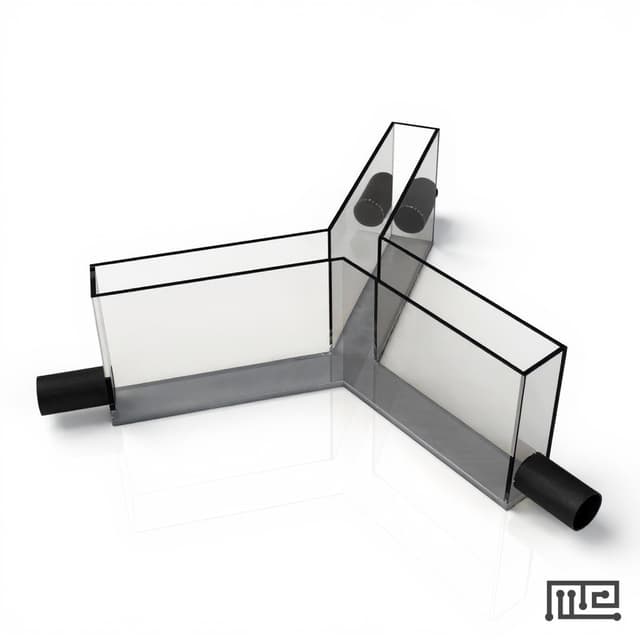
Octopus 3 choice Maze
Multi-arm behavioral maze for assessing spatial learning, memory, and decision-making in laboratory rodents through controlled choice paradigms.

Louise Corscadden, PhD
Director of Science · ConductScience
Ask Louise about Octopus 3 choice Maze fit, setup, configuration, or quote prep.
Already working with us? Sign in to connect this with My Scientist.
Key Specifications
Full details →- Model fit
- Mouse, Rat
- SKU family
- CS-958173
- Shipping box
- 65.0 x 36.0 x 27.0 cm
- Ordering
- Online checkout and quote request available
- Category
- Behavioral Mazes
- Build notes
- Confirm accessories, station layout, and support needs before purchase
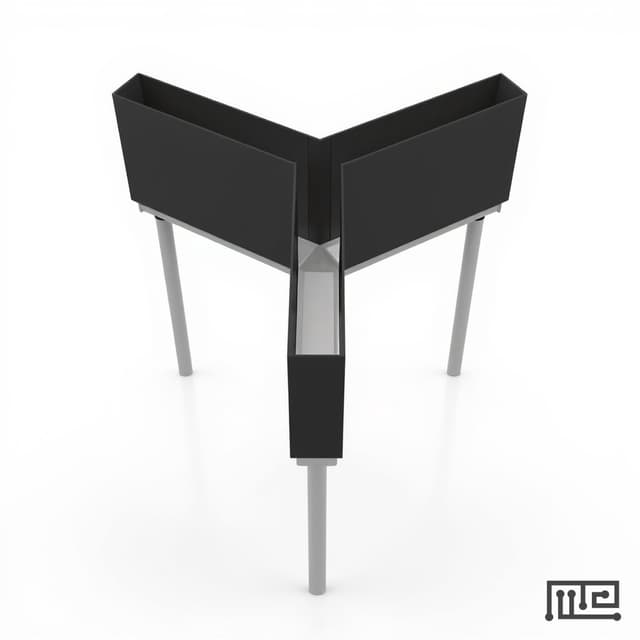
The Octopus 3 Choice Maze is a specialized behavioral testing apparatus designed for assessing spatial learning, memory, and decision-making processes in laboratory rodents. This maze configuration presents subjects with multiple path options from a central starting point, allowing researchers to evaluate cognitive flexibility, working memory, and spatial navigation strategies under controlled experimental conditions.
The apparatus enables systematic investigation of choice behavior patterns, reward-based learning paradigms, and memory consolidation processes. Researchers can implement various experimental protocols including spontaneous alternation tasks, delayed alternation procedures, and reward-based discrimination learning to characterize cognitive function across different experimental conditions and treatment groups.
How It Works
The Octopus 3 Choice Maze operates on principles of spatial navigation and reinforcement learning, where subjects must utilize spatial cues and memory processes to navigate between multiple arm choices. The maze design requires animals to process spatial information, maintain working memory of previous choices, and implement decision-making strategies based on reward contingencies or task demands.
During testing sessions, rodents are placed in the central area and must choose between available arms based on the specific experimental protocol. The apparatus allows for implementation of various paradigms including spontaneous alternation (requiring subjects to alternate arm visits), delayed alternation (incorporating memory delays), and reward-based discrimination tasks. Performance metrics include choice accuracy, response latencies, and error patterns that reflect underlying cognitive processes.
Features & Benefits
Behavioral Construct
- Spatial Working Memory
- Reference Memory
- Decision Making
- Cognitive Flexibility
- Learning Acquisition
Automation Level
- manual
Research Domain
- Aging Research
- Behavioral Pharmacology
- Learning and Memory
- Neurodegeneration
- Neuroscience
- Toxicology
Species
- Mouse
- Rat
Compatible Tracking Software
- ConductVision
Shipping weight
- 6.06 lb
Shipping box
- L: 65.0 cm
- W: 36.0 cm
- H: 27.0 cm
| Feature | This Product | Typical Alternative | Advantage |
|---|---|---|---|
| Number of Choice Arms | Three-arm configuration | Simple mazes often feature two arms while complex radial mazes may have 8 or more arms | Provides optimal balance between task complexity and cognitive load for reliable working memory assessment |
| Central Platform Design | Dedicated central starting platform | Some maze designs use simple intersection points or lack standardized starting positions | Ensures consistent trial initiation and eliminates positional bias in choice behavior |
| Construction Type | Modular assembly system | Fixed configurations are common in simpler maze designs | Allows protocol customization and efficient cleaning while maintaining structural stability |
| Spatial Complexity | Intermediate complexity with three choice options | Binary choice mazes offer less complexity while radial arm mazes can be overwhelming for some paradigms | Provides sufficient cognitive challenge for working memory assessment without excessive task demands |
The Octopus 3 Choice Maze offers an intermediate-complexity solution for spatial cognition research, featuring modular construction and standardized design elements that support reliable behavioral assessment across multiple experimental paradigms.
Practical Tips
Conduct habituation sessions in the maze environment before formal testing to reduce stress-related confounding variables.
Why: Familiarization reduces anxiety responses that can interfere with cognitive performance measures.
Record arm entry criteria clearly and consistently apply the same threshold (e.g., all four paws in arm) across all subjects.
Why: Standardized scoring criteria ensures reproducible results and reduces inter-rater variability.
Inspect connection points regularly and retighten fasteners as needed to prevent maze movement during testing.
Why: Structural stability is essential for consistent spatial cues and reliable behavioral data collection.
Counterbalance arm assignments and reward locations across subjects to control for spatial bias effects.
Why: Systematic counterbalancing eliminates potential confounding variables related to innate spatial preferences.
If subjects show persistent arm preference, verify environmental cues and lighting are balanced across all arms.
Why: Unintended environmental asymmetries can create artificial preferences that confound cognitive measures.
Ensure all surfaces are completely dry after cleaning before introducing subjects to prevent slipping hazards.
Why: Wet surfaces can cause injury and create additional stress factors that interfere with behavioral performance.
Establish clear trial termination criteria including maximum trial duration to maintain consistent testing conditions.
Why: Standardized termination criteria prevents data skewing from subjects that exhibit extended exploration behaviors.
Setup Guide
What’s in the Box
- Central platform assembly (typical)
- Three maze arm segments (typical)
- Connection hardware and fasteners (typical)
- Assembly instructions and user manual (typical)
- Cleaning and maintenance guidelines (typical)
Warranty
ConductScience provides a one-year manufacturer warranty covering defects in materials and workmanship, with technical support for setup and protocol optimization.
Compliance
References
Background reading relevant to this product:
What arm dimensions are optimal for different rodent species?
Consult product datasheet for specific arm length and width specifications. Standard configurations accommodate both mice and rats, with arm dimensions scaled appropriately for each species' locomotion patterns and body size.
How many trials per session are recommended for reliable data?
Typical protocols use 8-12 trials per session for working memory assessment, though this varies by specific paradigm and research question. Pilot studies should establish optimal trial numbers based on subject performance and fatigue factors.
Can the maze be configured for different choice paradigms?
Yes, the modular design supports various experimental protocols including spontaneous alternation, delayed alternation, and reward-based discrimination tasks through the use of blocking inserts and environmental cue modifications.
What cleaning protocols are recommended between subjects?
Clean all surfaces with 70% ethanol or appropriate disinfectant between subjects to eliminate olfactory cues that could influence choice behavior. Allow complete drying before introducing the next subject.
How does this compare to radial arm maze configurations?
The three-arm design offers simpler choice paradigms compared to 8-arm radial mazes, making it suitable for studies focusing on basic working memory and decision-making without the complexity of multiple spatial locations.
What behavioral measures can be quantified?
Primary measures include choice accuracy, response latencies, arm entry sequences, and error patterns. Video tracking systems can provide additional locomotion and exploration metrics for comprehensive behavioral analysis.
Is the apparatus compatible with automated tracking systems?
The open design facilitates video-based tracking and analysis using standard behavioral monitoring software. The maze structure does not interfere with overhead camera positioning or automated scoring systems.
What are the storage and transport considerations?
The modular construction allows for disassembly for compact storage and transport. Components should be stored in a clean, dry environment to maintain surface integrity for behavioral testing.
Have a question about this product?
Have a question? Just ask.
Send it over and we'll email you a personalized answer — no call, no scheduling.
Prefer to talk it through?

Upgrade Options