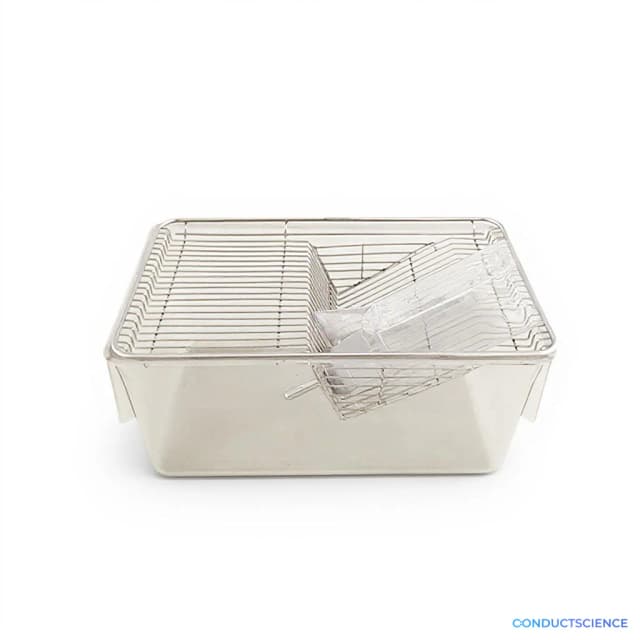
Lab Rodent Cage
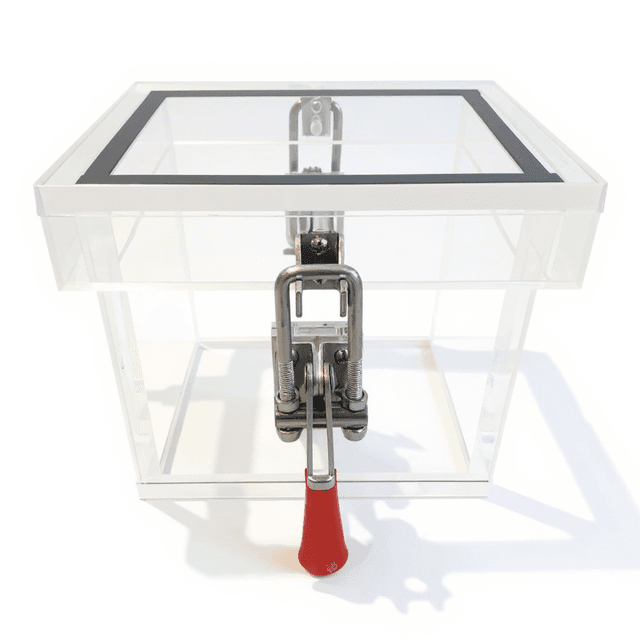
Transparent polycarbonate cage system for housing laboratory mice, rats, hamsters, and gerbils with secure lid and scratch-resistant construction for research applications.
| transparency | Transparent |
| scratch_resistance | Resistant to scratches and cracks |
| lid_type | Secure and tight-fitting lid |
| material_properties | Non-porous |
| Brand | MazeEngineers |
| Dimensions | 18.11 cm x 29.01 cm x 15.01 cm, 40cm x 30cm |

The Lab Rodent Cage (ME-AC-5816) is a transparent polycarbonate housing system designed for small laboratory rodents including mice, rats, hamsters, and gerbils. Constructed from durable, scratch-resistant polycarbonate material, this cage provides clear visual access for behavioral observation while maintaining a secure environment for research subjects. The non-porous surface enables effective decontamination protocols essential for controlled research conditions.
With internal dimensions of 18.11 cm × 29.01 cm × 15.01 cm, the cage accommodates single or pair housing depending on species and experimental protocols. The secure, tight-fitting lid prevents escapes while allowing easy access for routine husbandry tasks, feeding, and experimental manipulations. The transparent design facilitates continuous monitoring without disturbing subjects, supporting both acute studies and longitudinal research protocols.
How It Works
The polycarbonate cage system provides a controlled microenvironment through its non-porous, chemically inert construction. The transparent polycarbonate material maintains optical clarity while resisting chemical degradation from standard laboratory disinfectants, ensuring long-term visibility for behavioral observations. The secure lid mechanism creates a contained atmosphere while allowing adequate ventilation for respiratory exchange.
The scratch-resistant surface properties of polycarbonate maintain visual clarity throughout repeated cleaning cycles, preventing accumulation of surface defects that could harbor contaminants or obstruct observation. The cage dimensions provide adequate floor space for normal locomotor behavior while fitting standard laboratory housing rack systems. The easy-clean design facilitates rapid turnover between experimental cohorts and maintains biosecurity protocols.
Features & Benefits
transparency
- Transparent
scratch_resistance
- Resistant to scratches and cracks
lid_type
- Secure and tight-fitting lid
material_properties
- Non-porous
Brand
- MazeEngineers
Dimensions
- 18.11 cm x 29.01 cm x 15.01 cm
- 40cm x 30cm
Material
- Acrylic
- Polycarbonate
Species
- Gerbil
- Hamster
- Mouse
- Rat
cleaning_method
- Mild disinfectant solution
Display Type
- None
Research Domain
- Addiction Research
- Aging Research
- Anxiety and Depression
- Behavioral Pharmacology
- Developmental Biology
- Learning and Memory
- Motor Function
- Neurodegeneration
- Neuroscience
- Pain Research
- Social Behavior
- Toxicology
Weight
- 3.75 kg
Dimensions
- L: 11.42 mm
- W: 7.13 mm
- H: 5.91 mm
Comparison Guide
| Feature | This Product | Typical Alternative | Advantage |
|---|---|---|---|
| Material Construction | Scratch-resistant polycarbonate with transparent clarity | Wire mesh or standard plastic materials with limited durability | Maintains optical clarity for behavioral observation while providing chemical resistance for cleaning protocols. |
| Visual Access | Fully transparent walls and clear sight lines | Limited visibility through wire mesh or opaque sections | Enables continuous behavioral monitoring without disturbing research subjects or requiring cage manipulation. |
| Cleaning Method | Easy-clean non-porous surface compatible with mild disinfectants | Wire cages require detailed cleaning of mesh structures | Reduces cleaning time and improves biosecurity through effective decontamination protocols. |
| Containment System | Secure tight-fitting lid with complete seal | Basic wire lids or friction-fit systems | Prevents escapes while maintaining easy access for experimental procedures and husbandry tasks. |
This polycarbonate cage system provides superior optical access and cleaning efficiency compared to traditional wire cage designs. The scratch-resistant construction and secure containment system support both short-term experimental protocols and extended housing requirements.
Practical Tips
Position cage to minimize glare and reflections that could interfere with behavioral observations or video recording.
Why: Optimal lighting conditions are essential for accurate behavioral assessment and data collection.
Clean with mild disinfectant solution and avoid abrasive cleaning agents that could scratch the polycarbonate surface.
Why: Maintaining surface integrity preserves optical clarity and prevents bacterial harboring in surface defects.
Ensure lid is properly secured before leaving cage unattended to prevent subject escape.
Why: Escaped subjects compromise experimental integrity and pose facility security risks.
Allow adequate bedding depth for species-specific burrowing and nesting behaviors.
Why: Appropriate environmental enrichment supports normal behavior patterns and reduces stress artifacts in data.
Inspect cage surfaces regularly for cracks or stress fractures that could compromise containment.
Why: Structural integrity is critical for subject safety and experimental security throughout study duration.
If optical clarity decreases, check for residue buildup from cleaning agents and rinse thoroughly with clean water.
Why: Clear visual access is essential for accurate behavioral scoring and observation protocols.
Setup Guide
What’s in the Box
- Polycarbonate cage body
- Secure-fitting lid
- User instructions (typical)
Compliance
Warranty & ConductCare
ConductScience provides a standard one-year manufacturer warranty covering defects in materials and workmanship, with technical support for proper use and maintenance protocols.
What are the internal dimensions and how many animals can be housed?
Internal dimensions are 18.11 cm × 29.01 cm × 15.01 cm. Housing capacity depends on species and institutional guidelines - typically single housing for rats or pair housing for mice based on protocol requirements.
Is the polycarbonate material compatible with standard laboratory disinfectants?
Yes, the polycarbonate construction is chemical resistant and compatible with mild disinfectant solutions commonly used in laboratory animal facilities.
How does the lid mechanism prevent escapes while allowing access?
The secure, tight-fitting lid creates a complete seal to prevent escapes while being easily removable for feeding, cleaning, and experimental access.
What maintenance is required to preserve optical clarity?
Regular cleaning with mild disinfectant solution maintains transparency. The scratch-resistant surface helps preserve optical clarity through repeated cleaning cycles.
Is this cage compatible with standard laboratory rack systems?
The cage dimensions are designed for compatibility with standard laboratory housing systems, though specific rack compatibility should be verified.
Can the cage withstand repeated sterilization procedures?
The polycarbonate material is designed for durability through repeated cleaning cycles, though specific sterilization method compatibility should be confirmed with facility protocols.
Have a question about this product?