Polysulfone Mouse Breeding Cage (Autoclavable)
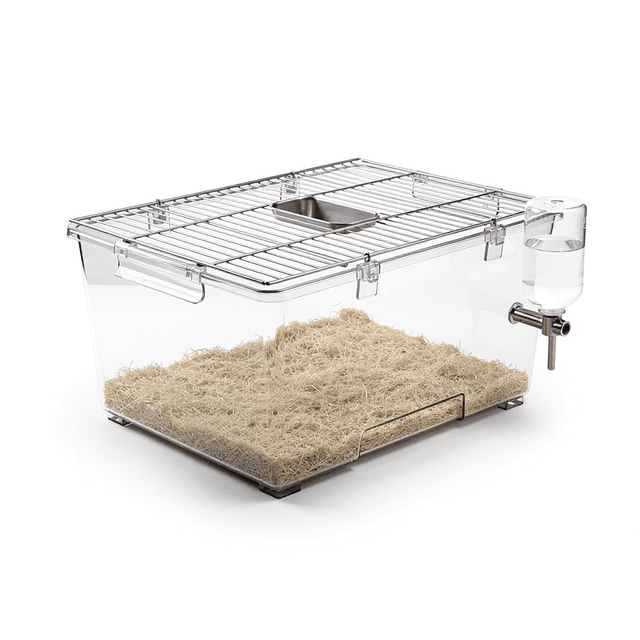
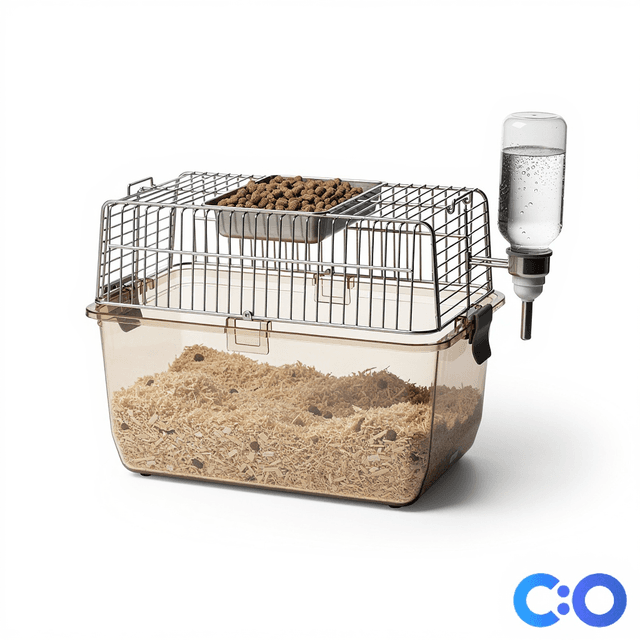
Autoclavable polysulfone mouse breeding cage with stainless steel wire lid, designed for repeated 121°C sterilization cycles in laboratory animal facilities.
| Autoclave Rating | 121C, repeated cycles |
| Lid Material | Stainless Steel wire |
| Automation Level | manual |
| Brand | ConductScience |
| Material | Polysulfone (PSU) — amber transparent |
| Species | Mouse |

The Polysulfone Mouse Breeding Cage (PTY-0011) is designed for laboratory mouse housing and breeding colony management in research environments requiring repeated sterilization cycles. Constructed from amber transparent polysulfone (PSU), this cage withstands autoclave temperatures of 121°C through multiple sterilization cycles while maintaining structural integrity and optical clarity for animal observation.
The cage features a stainless steel wire lid that provides secure containment while ensuring adequate ventilation for breeding pairs and litters. The polysulfone construction offers chemical resistance and durability essential for vivarium operations, supporting both routine husbandry protocols and experimental breeding programs where sterile housing conditions are required.
How It Works
The polysulfone (PSU) construction provides a thermoplastic polymer matrix that maintains dimensional stability and chemical inertness at autoclave temperatures. The amber transparent material allows visual monitoring of animals while providing UV protection that helps preserve the polymer structure during repeated sterilization cycles.
The stainless steel wire lid construction ensures adequate air circulation while preventing escape, supporting the respiratory and thermoregulatory needs of breeding pairs and developing litters. The autoclave-compatible design allows integration into barrier facility protocols where sterile housing is essential for maintaining genetic integrity of research colonies.
Features & Benefits
Autoclave Rating
- 121C, repeated cycles
Lid Material
- Stainless Steel wire
Automation Level
- manual
Brand
- ConductScience
Material
- Polysulfone (PSU) — amber transparent
Research Domain
- Behavioral Pharmacology
- Cancer Research
- Developmental Biology
- Immunology
- Neuroscience
- Toxicology
Species
- Mouse
Weight
- 0.9 kg
Dimensions
- L: 38.5 mm
- W: 18.9 mm
- H: 48.5 mm
Comparison Guide
| Feature | This Product | Typical Alternative | Advantage |
|---|---|---|---|
| Material Construction | Polysulfone (PSU) with amber transparency | Standard polycarbonate construction is common in entry-level breeding cages | PSU offers superior chemical resistance and maintains structural integrity through more autoclave cycles |
| Autoclave Rating | 121°C for repeated cycles | Basic models may have limited cycle durability or temperature restrictions | Enables integration into barrier facility sterilization protocols without material degradation |
| Lid Material | Stainless steel wire construction | Plastic lids are common but may warp with repeated autoclaving | Maintains dimensional stability and ventilation characteristics through sterilization cycles |
| Visual Monitoring | Amber transparent material with UV protection | Clear materials may become cloudy or brittle with repeated sterilization | Preserves optical clarity for breeding monitoring while protecting polymer structure |
This polysulfone breeding cage offers superior autoclave durability and chemical resistance compared to standard polycarbonate alternatives. The amber transparency and stainless steel lid construction support long-term use in barrier facility protocols requiring repeated sterilization cycles.
Practical Tips
Allow cages to cool completely before adding bedding or animals after autoclave cycles.
Why: Prevents thermal stress to animals and ensures bedding materials do not char from residual heat.
Inspect cage surfaces for stress cracks or crazing after extended use with multiple autoclave cycles.
Why: Early detection of material fatigue prevents housing failures that could compromise animal containment.
Verify autoclave temperature and pressure parameters periodically to ensure proper sterilization without material damage.
Why: Maintains sterilization efficacy while preventing overheating that could degrade polysulfone properties.
Handle cages with appropriate PPE when removing from autoclave as metal components retain heat longer than plastic.
Why: Stainless steel lid components may cause burns even after cage body feels cool to touch.
Document autoclave cycle parameters and cage usage history for breeding colony records.
Why: Maintains traceability for research integrity and helps identify optimal sterilization protocols for cage longevity.
If cage develops cloudiness after autoclaving, verify water quality and cycle parameters are within specifications.
Why: Poor water quality or excessive temperatures can cause polymer degradation affecting visual monitoring capabilities.
Setup Guide
What’s in the Box
- Polysulfone cage body
- Stainless steel wire lid
- Product documentation (typical)
Warranty
ConductScience provides standard manufacturer warranty coverage for materials and workmanship, with technical support available for proper use and maintenance procedures.
Compliance
How many autoclave cycles can the polysulfone construction withstand?
The PSU material is rated for repeated autoclave cycles at 121°C, though specific cycle limits depend on autoclave conditions and handling. Consult product datasheet for detailed durability specifications.
What cage dimensions are appropriate for mouse breeding pairs?
Consult product datasheet for specific internal dimensions. Breeding cage sizing should comply with institutional guidelines and species-specific space requirements for reproductive success.
Is this cage compatible with automated watering systems?
The stainless steel lid design may accommodate standard water bottle attachments, though compatibility with specific automated watering systems should be verified based on connection requirements.
How does polysulfone compare to polycarbonate for breeding cages?
Polysulfone offers superior chemical resistance and maintains clarity through more autoclave cycles compared to polycarbonate, which may become brittle or cloudy with repeated sterilization.
Can this cage be used for quarantine protocols?
Yes, the autoclavable design supports quarantine facility protocols where sterile housing is required, though specific quarantine procedures should follow institutional guidelines.
What cleaning agents are compatible with polysulfone construction?
Polysulfone resists most laboratory cleaning agents and disinfectants, though compatibility with specific chemicals should be verified based on concentration and exposure time.
Have a question about this product?
Accessories
Enhance your setup with compatible accessories
Frequently Bought Together