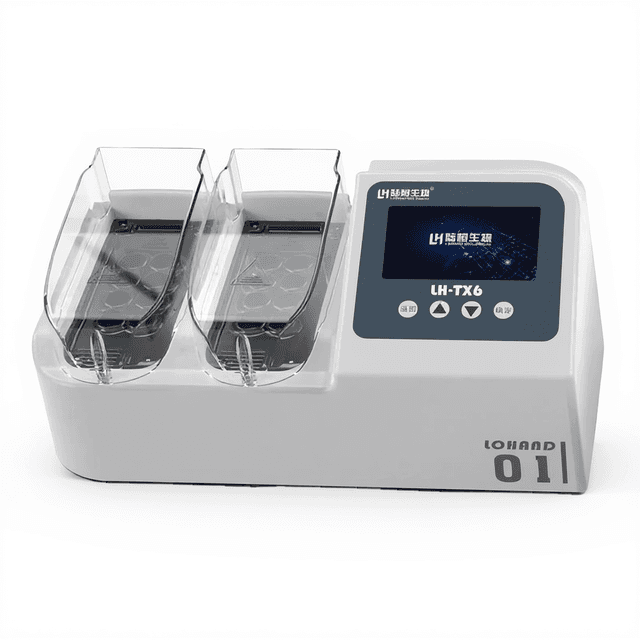
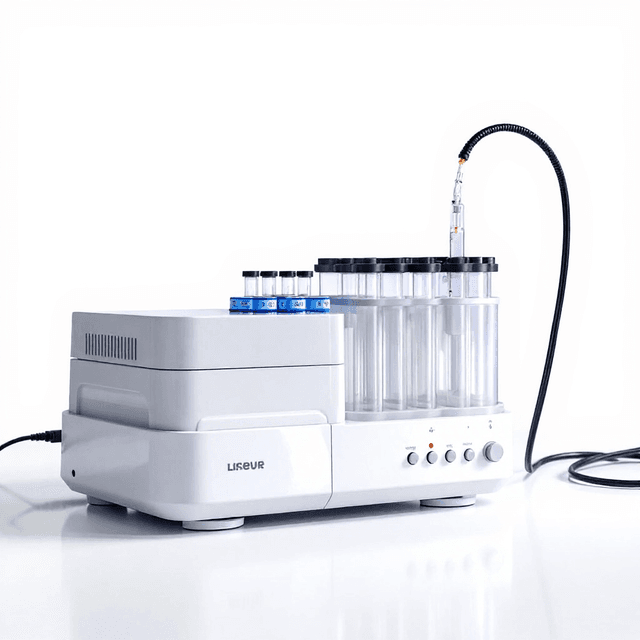
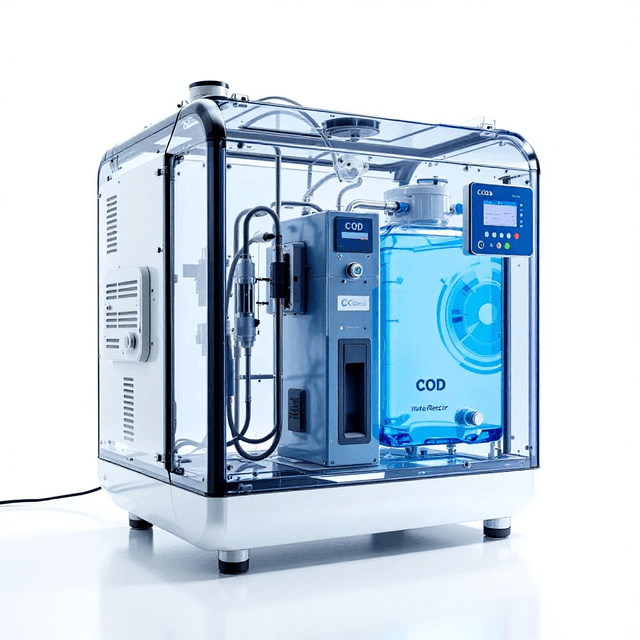
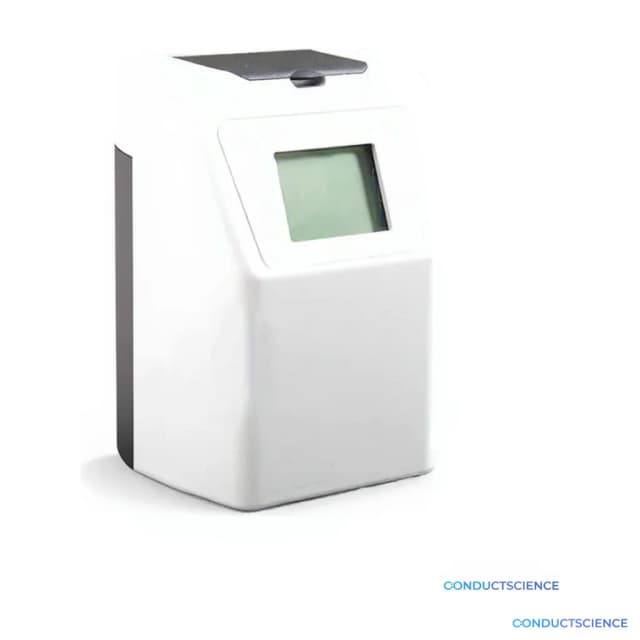
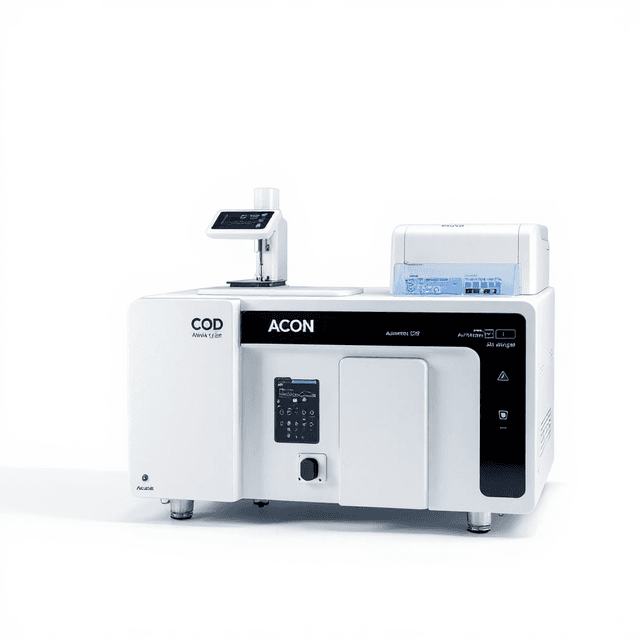
Portable COD Digestion Reactor
Portable 4-vial COD digestion reactor with precise temperature control (20-180°C, ±3°C accuracy) for field and laboratory water quality analysis.
| Temperature Accuracy | +/-3 C |
| Sample Capacity | 4 vials |
| Heating Period | 0-120 minutes (adjustable) |
| Warm-up Time | 10-15 minutes |
| Safety Features | Thermal fuse auto-shutoff, audible alarm |
| Automation Level | semi-automated |

The Portable COD Digestion Reactor is a compact, field-deployable instrument designed for Chemical Oxygen Demand (COD) sample preparation in water quality analysis. This 4-vial capacity reactor provides precise temperature control from 20-180°C with ±3°C accuracy, enabling standardized COD digestion protocols in laboratory and field environments.
The reactor features an adjustable heating period from 0-120 minutes with rapid 10-15 minute warm-up, making it suitable for various COD test methods including dichromate digestion protocols. Vehicle adapter compatibility (DC 12V/10A power supply) enables mobile water quality monitoring applications, while built-in safety features including thermal fuse auto-shutoff and audible alarms ensure safe operation in diverse field conditions.
How It Works
Chemical Oxygen Demand (COD) measurement requires high-temperature acid digestion to oxidize organic compounds in water samples. The reactor employs resistive heating elements to maintain precise temperatures during the dichromate oxidation process, where organic matter is oxidized by potassium dichromate in the presence of sulfuric acid and silver sulfate catalyst.
The digestion process typically occurs at 150°C for 2 hours (120 minutes maximum capacity), during which organic compounds are converted to CO₂ and H₂O. Temperature accuracy of ±3°C ensures consistent oxidation conditions critical for reproducible COD results. The LCD display provides real-time temperature and timing information, while the thermal fuse protection prevents overheating that could compromise sample integrity or safety.
After digestion, the cooled samples are analyzed colorimetrically by measuring the reduction in dichromate concentration, which correlates directly to the COD value. The portable design with vehicle power compatibility enables this standardized laboratory procedure to be performed at field locations.
Features & Benefits
Temperature Accuracy
- +/-3 C
Sample Capacity
- 4 vials
Heating Period
- 0-120 minutes (adjustable)
Warm-up Time
- 10-15 minutes
Research Domain
- Analytical Chemistry
- Environmental Monitoring
- Food Science
- Industrial Hygiene
- Pharmaceutical QC
Safety Features
- Thermal fuse auto-shutoff, audible alarm
Automation Level
- semi-automated
Brand
- ConductScience
Temperature Range
- 0-40 C
Display Type
- LCD
Power/Voltage
- DC 12V / 10A (vehicle adapter compatible)
Weight
- 2.0 kg
Dimensions
- L: 110.0 mm
- W: 170.0 mm
- H: 135.0 mm
Comparison Guide
| Feature | This Product | Typical Alternative | Advantage |
|---|---|---|---|
| Sample Capacity | 4 vials simultaneous processing | Entry-level models often offer 2-vial capacity, while larger laboratory units may handle 8-25 vials | Balances analytical throughput with portable design for field applications requiring multiple samples or duplicates. |
| Temperature Range and Accuracy | 20-180°C with ±3°C accuracy | Basic models may have limited temperature ranges or lower accuracy specifications | Wide temperature range accommodates various COD protocols while maintaining consistent digestion conditions for reproducible results. |
| Power Supply Options | DC 12V/10A with vehicle adapter compatibility | Most laboratory units require AC power limiting field deployment | Vehicle power capability enables COD analysis at remote sampling sites without electrical infrastructure. |
| Heating Period Control | 0-120 minutes adjustable timing | Some models offer fixed timing or shorter maximum periods | Accommodates full 2-hour EPA and ISO protocol requirements with flexible timing for method optimization. |
| Warm-up Time | 10-15 minutes to operating temperature | Larger units may require 20-30 minutes for temperature stabilization | Rapid warm-up reduces total analysis time and enables responsive field testing schedules. |
| Safety Features | Thermal fuse auto-shutoff and audible alarm | Basic models may lack comprehensive safety protection | Enhanced safety protection enables unattended operation and prevents damage from temperature excursions. |
This portable COD reactor combines laboratory-grade temperature control with field deployment capabilities. The 4-vial capacity and vehicle power compatibility provide practical advantages for environmental monitoring and remote testing applications where standard laboratory digesters cannot be used.
Practical Tips
Verify temperature accuracy at multiple set points (50°C, 100°C, 150°C) using a calibrated thermometer before critical analyses.
Why: Temperature accuracy directly affects COD oxidation completeness and result reproducibility across different sample types.
Clean heating block surfaces after each use to remove any acid residue or sample spillage that could affect heat transfer.
Why: Residue buildup can create hot spots and temperature non-uniformity affecting digestion consistency.
Allow reactor to reach stable temperature before loading samples and use consistent vial placement for uniform heating.
Why: Temperature stability ensures all samples receive identical thermal treatment for comparable results.
Always use appropriate PPE including acid-resistant gloves and eye protection when handling digested samples containing sulfuric acid.
Why: COD digestion produces hot, corrosive solutions that pose chemical burn hazards during sample handling.
If temperature accuracy drifts, check for loose connections and clean temperature sensor probe if accessible.
Why: Environmental contamination and thermal cycling can affect sensor accuracy over time.
Process blank and spike samples with each batch to verify digestion efficiency and identify systematic errors.
Why: Quality control samples ensure method performance and identify issues with reagents or heating conditions.
For vehicle power operation, ensure engine is running during digestion cycles to maintain battery charge and stable voltage.
Why: Battery drain during long heating cycles can cause voltage drops affecting temperature control stability.
Store reactor in dry conditions and protect LCD display from extreme temperatures when not in use.
Why: Moisture and temperature extremes can damage electronic components and affect long-term reliability.
Setup Guide
What’s in the Box
- Portable COD Digestion Reactor main unit (typical)
- DC 12V/10A power adapter (typical)
- Vehicle power adapter cable (typical)
- Sample vial holders (4-position) (typical)
- User manual and operating instructions (typical)
- Safety guidelines documentation (typical)
Warranty
ConductScience provides a standard 1-year manufacturer warranty covering defects in materials and workmanship. Technical support is available for setup, calibration, and troubleshooting assistance.
Compliance
What COD test methods are compatible with this reactor's temperature and timing capabilities?
The reactor supports EPA Method 410.4, ISO 6060, and Standard Methods 5220 protocols with its 20-180°C range and 0-120 minute timing. Most COD methods require 150°C for 2 hours, well within the reactor's specifications.
How does the ±3°C temperature accuracy affect COD measurement precision?
The ±3°C accuracy is adequate for COD digestion where temperature variations of this magnitude do not significantly affect oxidation completeness. Consistent temperature control is more critical than absolute accuracy for reproducible results.
Can this reactor handle high-strength waste samples with elevated COD levels?
The reactor provides the thermal conditions for high-strength sample digestion, but sample preparation including appropriate dilutions and reagent concentrations must be adjusted based on expected COD levels. Consult method protocols for high-strength sample handling.
What maintenance is required for consistent temperature performance?
Regular temperature calibration verification using certified thermometers is recommended. Clean heating block surfaces periodically to remove residue that could affect heat transfer. Check thermal fuse function and power connections routinely.
How does vehicle power operation compare to AC laboratory power?
The DC 12V/10A power supply provides equivalent heating performance to AC operation. Vehicle alternators typically provide adequate power during engine operation, but battery capacity should be considered for extended digestion cycles.
What vial types and sizes are compatible with the 4-position heating block?
Consult product datasheet for specific vial dimensions and compatibility. Standard COD digestion vials with appropriate heat resistance and chemical compatibility are required for safe operation.
Can samples be processed unattended during the 120-minute digestion cycle?
The thermal fuse auto-shutoff and audible alarm enable unattended operation with safety protection. However, periodic monitoring is recommended for quality assurance and to address any operational issues.
How does this portable reactor compare to bench-top COD digesters?
This reactor offers field portability and vehicle power compatibility not available in larger bench units, while providing similar temperature control and timing capabilities. The 4-vial capacity may be lower than some laboratory digesters but adequate for field applications.
Have a question about this product?
Accessories
Enhance your setup with compatible accessories
Upgrade Options