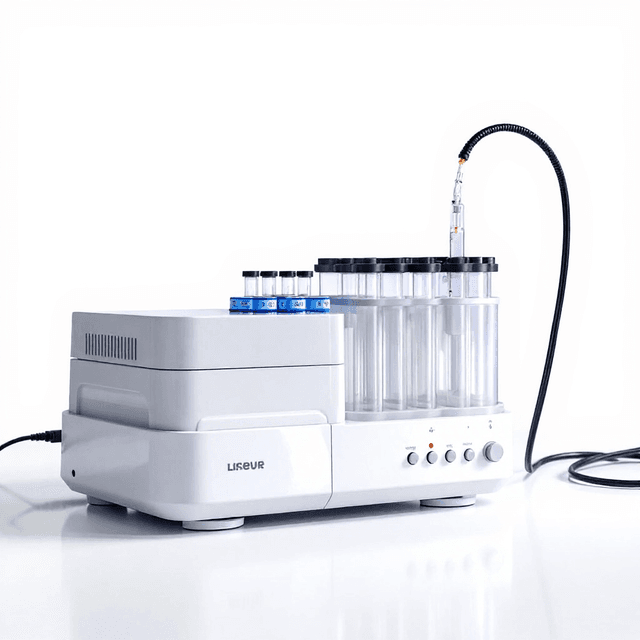
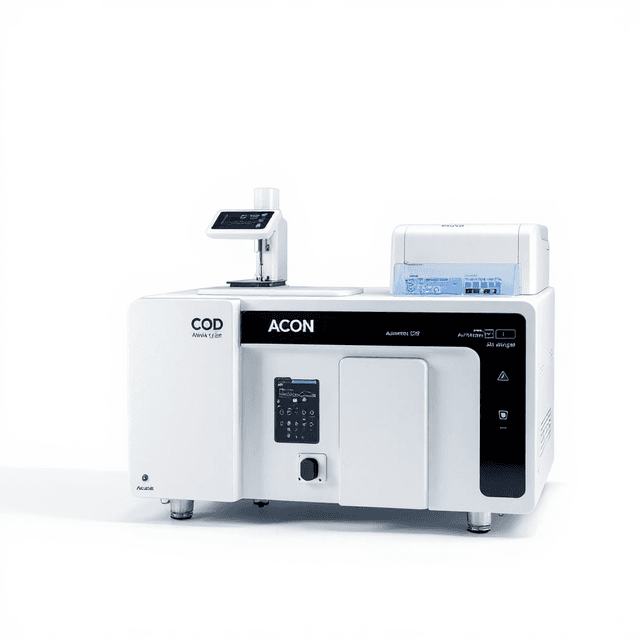
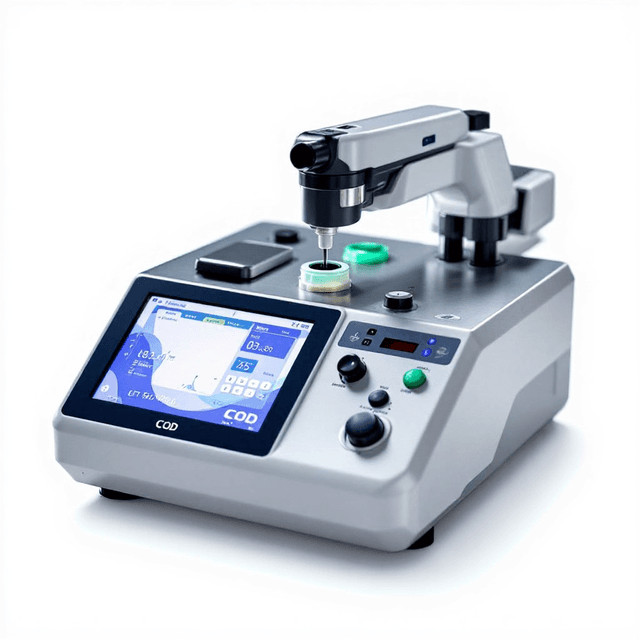
Portable COD Water Reactor
Portable 4-vial COD digestion reactor with 20-180°C temperature control and automated timing for water quality analysis in laboratory and field environments.

Louise Corscadden, PhD
Director of Science · ConductScience
Ask Louise about Portable COD Water Reactor fit, setup, configuration, or quote prep.
Already working with us? Sign in to connect this with My Scientist.
Key Specifications
Full details →- Model fit
- Configured during quote
- SKU family
- CS-LH-COD005
- Shipping box
- 8.8 x 7.3 x 5.9 cm
- Ordering
- Online checkout and quote request available
- Category
- COD & BOD Testing
- Build notes
- Confirm accessories, station layout, and support needs before purchase
The Portable COD Water Reactor provides controlled thermal digestion for chemical oxygen demand analysis in water quality testing. This compact benchtop unit accommodates four sample vials simultaneously, operating at precisely controlled temperatures from 20-180°C with ±3°C accuracy. The sealed micro-return line design eliminates condensed water interference during digestion reactions.
The reactor incorporates automated timing control with programmable heating periods from 0-120 minutes and automatic shutoff with audible notification. A transparent protective shield ensures operator safety during high-temperature digestion processes, while individual vial positions undergo pressure and heating validation. The 10-15 minute warm-up time and DC power supply enable field deployment for environmental monitoring applications.
How It Works
COD analysis requires controlled thermal digestion of water samples with strong oxidizing agents, typically potassium dichromate in sulfuric acid solution. The reactor provides precise temperature control essential for complete oxidation of organic compounds. During the 2-hour standard digestion period, organic materials are oxidized to carbon dioxide and water, with the extent of oxidation proportional to the sample's oxygen demand.
The sealed micro-return line design prevents sample concentration changes due to evaporation while maintaining reflux conditions necessary for complete digestion. Temperature accuracy of ±3°C ensures reproducible oxidation kinetics across samples. The automated timing system eliminates operator variability in digestion duration, critical for quantitative COD determination.
After digestion completion, samples are cooled and analyzed by spectrophotometry or titration to quantify remaining dichromate, which is inversely proportional to the sample's COD value. The 4-vial capacity enables simultaneous processing of samples with blanks and standards for quality assurance.
Features & Benefits
Research Domain
- Analytical Chemistry
- Environmental Monitoring
- Food Science
- Industrial Hygiene
- Pharmaceutical QC
- Water Quality & Environmental Monitoring
Warm-up Time
- 10 - 15 minutes, depending on selectedtemperature
Heating period
- 0-120mins
Environment temperature
- (0ï½40)â
Environment relative humidity
- <=85%
Automation Level
- semi-automated
Brand
- ConductScience
Temperature Range
- 20-180â
Accuracy
- ±3°C (@ 25°C)
Capacity
- 4 vials
Power/Voltage
- DC 12V/10A
Shipping weight
- 0.26 lb
Shipping box
- L: 8.8 cm
- W: 7.3 cm
- H: 5.9 cm
| Feature | This Product | Typical Alternative | Advantage |
|---|---|---|---|
| Sample capacity | 4 vials simultaneous processing | Entry-level models often accommodate 1-2 vials | Enables simultaneous analysis of samples with blanks and standards for improved quality control. |
| Temperature accuracy | ±3°C accuracy across 20-180°C range | Basic heating blocks may have ±5-10°C variation | Ensures reproducible oxidation kinetics critical for quantitative COD determination. |
| Automated timing control | 0-120 minute programmable timer with auto-shutoff | Manual timing systems require constant operator attention | Eliminates timing variability and allows unattended operation during digestion cycles. |
| Sealed digestion design | Micro-return line prevents condensed water interference | Open systems may suffer from evaporation losses | Maintains sample concentration and reflux conditions for complete organic matter oxidation. |
| Portability | DC 12V power supply for field deployment | AC-only systems limited to laboratory use | Enables on-site COD analysis for immediate results and reduced sample transport requirements. |
| Safety features | Transparent shield and thermal fuse protection | Basic models may lack comprehensive safety systems | Protects operators during high-temperature digestion while maintaining sample visibility. |
This reactor combines automated control with field portability, offering precise temperature management and simultaneous 4-vial processing. The sealed micro-return design and comprehensive safety features provide reliable COD digestion for both laboratory and field applications.
Practical Tips
Verify temperature accuracy monthly using a certified thermometer placed in a vial filled with mineral oil at the standard 150°C COD digestion temperature.
Why: Temperature accuracy directly affects oxidation completeness and analytical precision.
Clean heating block wells weekly with dilute acid solution to remove residue buildup that can affect heat transfer.
Why: Clean wells ensure uniform heat distribution and prevent sample cross-contamination.
Allow the reactor to reach temperature equilibrium before inserting vials to ensure accurate timing starts when samples reach digestion temperature.
Why: Proper timing begins only when samples reach the target temperature for complete oxidation.
Always use heat-resistant gloves and safety glasses when handling hot vials, and ensure the protective shield is in place during operation.
Why: COD reagents are highly corrosive and vials reach temperatures above 150°C during digestion.
Include method blanks and certified reference materials in each batch to monitor reagent quality and digestion efficiency.
Why: Quality control samples detect reagent degradation and systematic errors in the digestion process.
If temperature overshoots occur, check that ambient temperature is within 0-40°C range and ensure adequate ventilation around the unit.
Why: Excessive ambient heat or poor ventilation can interfere with temperature control systems.
Pre-cool vials gradually after digestion rather than immediate cooling to prevent thermal shock and potential sample loss.
Why: Gradual cooling prevents vial cracking and maintains sample integrity for accurate analysis.
Inspect the transparent protective shield monthly for cracks or chemical damage that could compromise operator safety.
Why: The shield protects against chemical splashes and thermal hazards during high-temperature digestion.
Setup Guide
What’s in the Box
- Portable COD reactor unit
- DC 12V/10A power adapter
- Transparent protective shield
- User manual and operation guide
- Calibration certificate (typical)
- Sample vial positioning guides (typical)
Warranty
ConductScience provides a standard 1-year manufacturer warranty covering defects in materials and workmanship, with technical support for operation and maintenance guidance.
Compliance
References
Background reading relevant to this product:
What COD methods are compatible with this reactor?
The reactor supports standard EPA Method 410.4, ISO 6060, and Standard Methods 5220 protocols requiring 150°C digestion temperature. The 20-180°C range accommodates both standard and modified COD procedures.
How do I ensure temperature accuracy for regulatory compliance?
Verify temperature accuracy using a certified thermometer during the warm-up period. The ±3°C specification meets requirements for standard COD methods, but periodic calibration verification is recommended.
Can the reactor handle high-chloride samples?
Yes, but chloride interference must be addressed through sample pretreatment or mercury sulfate addition as specified in standard methods. The sealed design prevents chloride vapor loss during digestion.
What maintenance is required for reliable operation?
Regular cleaning of heating block wells, inspection of protective shield for damage, and annual temperature calibration verification. The thermal fuse provides overheating protection but consult service manual for replacement procedures.
How does this compare to microwave digestion systems?
This reactor provides conventional heating similar to traditional COD methods, while microwave systems offer faster heating but require specialized vials. This unit offers portability and compatibility with standard glass COD vials.
What is the sample volume range?
Compatible with standard COD vials accommodating 2.5-25 mL samples depending on method requirements. Consult product datasheet for specific vial dimensions and maximum volumes.
Can it operate in field conditions?
Yes, the DC power requirement and portable design enable field use with appropriate power sources. Ensure operation within 0-40°C ambient temperature and ≤85% humidity specifications.
How do I validate digestion completeness?
Use certified reference materials and duplicate analyses to verify digestion efficiency. The automated timing and temperature control provide consistency, but method blanks and standards remain essential.
Have a question about this product?
Have a question? Just ask.
Send it over and we'll email you a personalized answer — no call, no scheduling.
Prefer to talk it through?
Accessories
Enhance your setup with compatible accessories
Frequently Bought Together