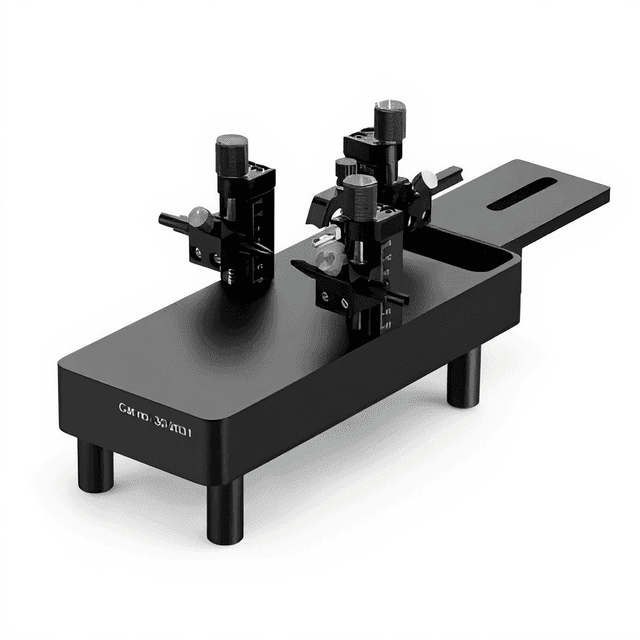
Automated and Intelligent Stereotaxic Instrument
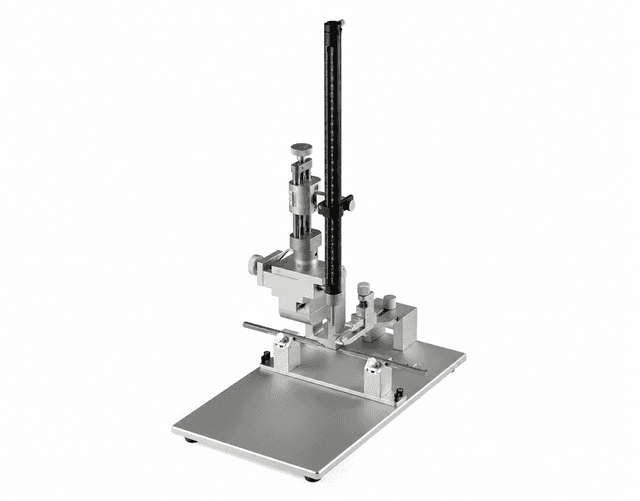
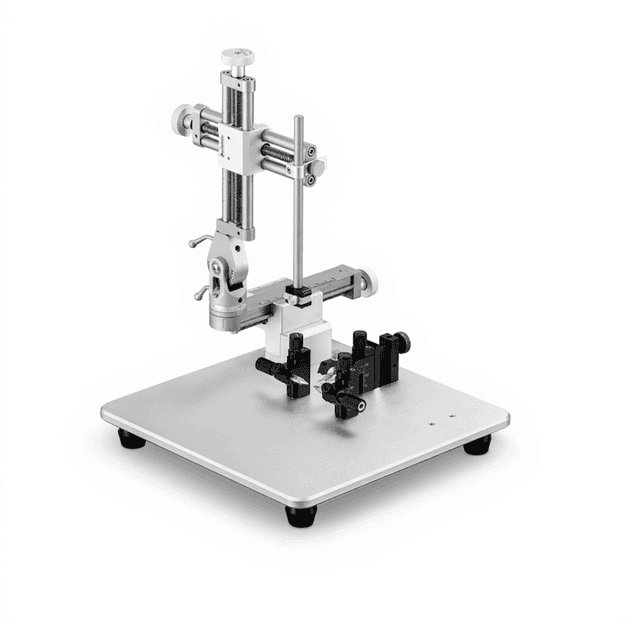
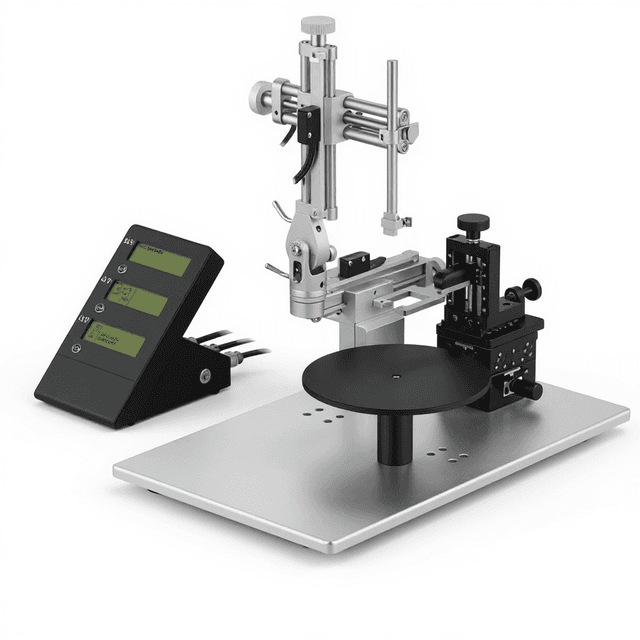
ConductScience’s Automatic Lens Implantation Locator is a precision instrument used for Grin Lens implantation surgery in deep-brain calcium imaging experiments.
The instrument accurately controls the stepper motor through computer software, and then drives the locator operating arm to move, combined with the vacuum pump automatic precision Remove the brain tissue to better implant the lens. The experiment greatly reduced the damage caused by traditional manual operations to the animal brain, thereby improving the quality of neuronal imaging and the success rate of the experiment.

Louise Corscadden, PhD
Director of Science · ConductScience
Ask Louise about Automated and Intelligent Stereotaxic Instrument fit, setup, configuration, or quote prep.
Already working with us? Sign in to connect this with My Scientist.
Key Specifications
Full details →- Model fit
- Mouse, Rat
- SKU family
- RWD-71000-S/71000-D/ 71001-S/ 71001-D
- Shipping box
- 46.0 x 40.0 x 33.0 cm
- Ordering
- Online checkout and quote request available
- Category
- Stereotaxic Complete Systems
- Build notes
- Confirm accessories, station layout, and support needs before purchase
Specifications
| Model | Product Description | Remarks |
|---|---|---|
| RWD-71000-S | Automated Stereotaxic Instrument, SGL.M* | Left manipulator, without laptop, adaptor, ear bars,
holder and mask. |
| RWD-71000-D | Automated Stereotaxic Instrument, Dual.M* | Two manipulators and nanoliter injection pump included,
without laptop, adaptor, ear bars, holder and mask. |
| RWD-71001-S | Automated Stereotaxic Instrument, Single.M, Automatic Injection* | Left manipulator and nanoliter injection pump included,
without laptop, adaptor, ear bars, holder and mask. |
| RWD-71001-D | Automated Stereotaxic Instrument, Dual.M, Automatic Injection* | Two manipulators and nanoliter injection pump included,
without laptop, adaptor, ear bars, holder and mask. |
*Stereotaxic host (without accessories)
Accesories
| Model | Product Description | Remark |
|---|---|---|
| RWD-68055 | Mouse Adaptor | |
| RWD-68030 | Mouse/Neonatal Rat Adaptor | Recommended for Mice |
| RWD-68021 | Rat Adaptor | Recommended for Rats |
| RWD-68057 | Mouse Anesthesia Adaptor | No additional mask is required |
| RWD-68053 | Rat Anesthesia Adaptor | No additional mask is required |
| RWD-68301 | Rat 18° Ear Bars | Recommended for Rats |
| RWD-68306 | Mouse 60° Ear Bars | Recommended for Mice |
Additional Accesories
| Model | Product Description | Remarks |
|---|---|---|
| RWD-TRA110 | Tissue Removal Optional Kit (220V ) | Optional when using tissue removal procedure, including needle connector, holder (68202), vacuum pump-GM-0.5Ⅱ -220V-50HZ, liquid storage tank, connecting tube, needle. |
| RWD-TRA-220 | Tissue Removal Optional Kit (110V ) | Optional when using tissue removal procedure, including needle connector, holder (68202), vacuum pump-GM-0.5Ⅱ -110V-50HZ, liquid storage tank, connecting tube, needle. |
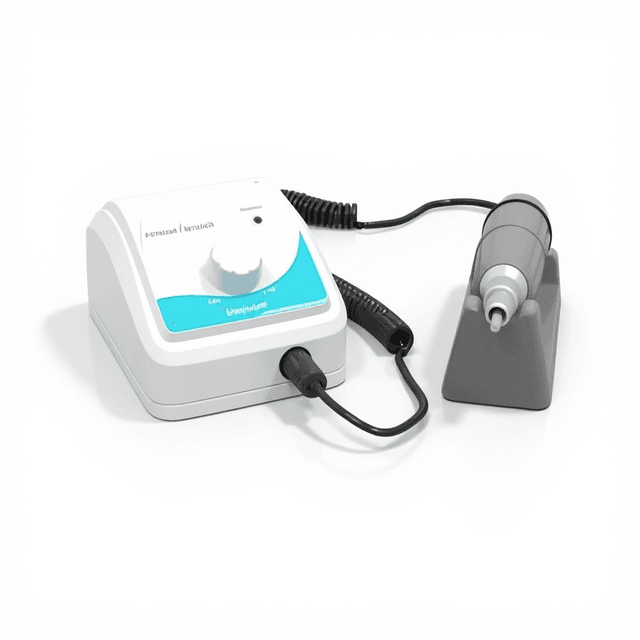
| RWD-78001 | Microdrill | For craniotomy. (Bits not included) |
| RWD-78040 | Drill Bits HM1005 0.5mm, Round Tip, pkg of 5** | |
| RWD-78042 | Drill Bits HM1005 0.8mm, Round Tip, pkg of 5** | |
| RWD-68605 | Microdrill holder | |
| RWD-71000-I | Injection Module for Automated Stereotaxic Instrument | Contains nanoliter injection pump + connecting wire + 3.5-inch glass capillary + 7-inch glass capillary + universal fixing accessories + 68207V-attachment + filling needle + sealing material + hexagonal wrench |
Features
1µm Accuracy
Higher precision, suitable
for injection of small nuclei
Software Control
Move at a constant
speed to reduce damage.
Built-in Atlas
Know the probe
position in real time.
Automated Craniotomy
Optional round or
square cranial window
No Leveling Required
Precise positioning
without leveling.
Single Point Injection
Control nanoliter syringe
pump for automated injection.
Mutil-point Injection
Up to 10 points can
be injected.
Tilted Injection
No need to manually calculate
displacement after tilting.
Tissue Removal
Tissue removal suitable for
calcium imaging experiments
Optional Dual Manipulators
Bilateral brain regions of the
same animal can be located.
Needle Withdrawal Speed
The needle withdrawal speed
can reach as low as 1μm/s.
One-click Movement
Move to target point or
entry point with one click.
Information
High-precision stepping motor
The high-precision stepper motor stably outputs a minimum step angle of 0.04, which is a minimum displacement of 0.33μm, ensuring the accuracy requirement of 1μm. A high-precision projector is used to detect the accuracy of the motor to meet
the needs of higher-precision experiments.
Anti-backlash function
Eliminate the gap error caused by the movement of the screw rod and achieve higher positioning accuracy.
Frame calibration
Quickly calibrate three-axis coordinate values, users can calibrate by themselves.
Constant Speed
The AP or ML axis has 5 adjustable speeds, the DV axis has 9 adjustable speeds, and the lowest speed in the DV direction can reach 1μm/s.
Reduce jitter at a uniform speed to ensure precise positioning. Reduce mechanical damage. Prevent massive bleeding from affecting surgery.
Built-in Atlas
The software integrates the rat and mouse brain atlas, which can display the movement trajectory and position of the probe in real time and keep track of the experimental progress.
No Leveling Required
By determining four points to determine the skull tilt angle, accurate positioning can be achieved without leveling through angle calculation.
(Bregma, Lambda, 2mm left and right of the sagittal suture) At the same time, the brain atlas can be scaled according to the actual skull
size, making the positioning more accurate.
Automated Injection
The software directly controls the nanoliter syringe pump for single-point, multi-point and tilted injection. Tilted injection also does notrequire manual calculation of the three-axis displacement after tilting. The injection precision is high, the injection volume is 0.6-5000nL, and the injection rate is 0.02-200nL/s. The needle withdrawal speed can be customized, with a minimum of 1μm/s. Slowly withdrawing the needle can prevent drugs or viruses from spilling into the needle tract. Multi-point injection procedure can achieve up to 10 injection sites. Needle retention time setting can realize automated needle retention and extraction. Real-time display of injection progress.
Tilted Trajectory: Manipulator Tilted Function
Traditional positioning methods require manual calculation of the three-axis displacement distance after tilting when performing experiments such as tilt injection or implantation, which is time-consuming and labor-intensive. The Automated Stereotaxic Instrument includes a tilted trajectory function, eliminating the need to manually calculate the displacement distance after tilting. It can be used for experiments such as tilted craniotomy, tilted injection and tilted implantation.
Optional Dual Manipulators
It can realize experiments such as injection and implantation of bilateral brain areas of the same animal, which is more efficient.
Automated Craniotomy: Skull Windows Function
You can choose a round or square window, which is suitable for brain imaging scenarios, such as miniscope calcium imaging experiments, two-photon imaging or other brain imaging experiments before craniotomy.
Tissue Removal
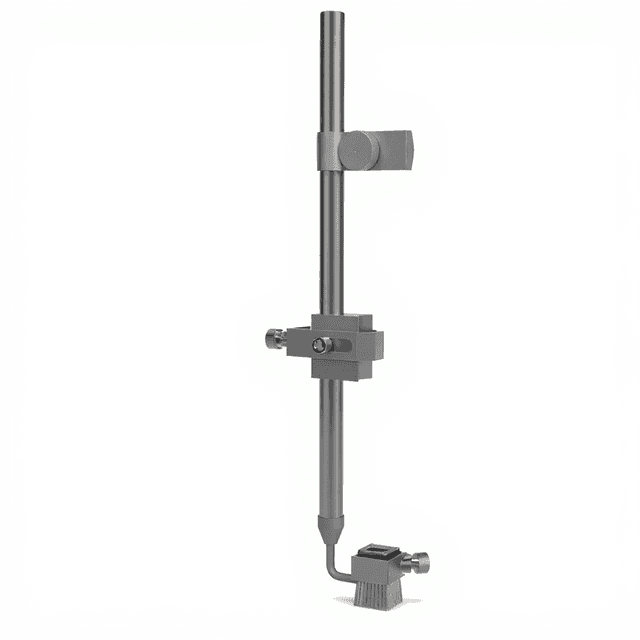
Equipped with a tissue removal kit, it is used to remove tissue before implanting the GRIN Lens. It is suitable for miniscope calcium imaging experiments. Compared with manual tissue aspiration, fully automated aspiration ensures flat wound end surfaces, less additional neuronal damage, and better imaging as compared to manual tissue removal.
Features
- Choose a high-precision stepper motor drive, resolution 1μm, running accuracy up to 10μm
- The output torque of the motor is large, which can drive other accessories attached to the locator
- Save time, set the target position to move independently
- Automatic record, display position parameters, reduce human error
- The computer interface can display the trajectory and position of the probe in real-time
- Can accurately control the depth of entry
- Support four types of needle tubes: 30G, 29G, 28G, 27G
- The depth, order, and repetition times of tissue extraction can be set through software
- Bregma point can be set with one click;
How It Works
Stereotaxic surgery utilizes a three-dimensional coordinate system referenced to anatomical landmarks on the skull to achieve precise targeting of internal brain structures. The instrument positions the animal's head in a standardized orientation using ear bars and a nose clamp, establishing consistent anteroposterior (AP), mediolateral (ML), and dorsoventral (DV) coordinate planes relative to bregma and lambda cranial sutures.
High-precision stepper motors control manipulator movement along each axis with anti-backlash mechanisms to ensure accurate positioning without mechanical drift. The integrated brain atlas provides anatomical coordinates for target structures, while the automated injection system delivers precise volumes through glass micropipettes or metal cannulae. Programmable injection protocols control infusion rates and volumes, with automated needle withdrawal at specified speeds to minimize tissue damage and backflow.
Self-calibration functions establish coordinate zero points and compensate for minor variations in animal positioning, while tilted trajectory capabilities enable approach angles that avoid critical structures or optimize injection site access.
Features & Benefits
Injection
- Automatic
Minimum Step Angle
- 0.04°
Minimum Displacement
- 0.33μm
Positioning Accuracy
- 10μm
AP ML Axis Speeds
- 5 adjustable speeds
DV Axis Speeds
- 9 adjustable speeds
Minimum DV Speed
- 1μm/s
Injection Volume Range
- 0.6-5000nL
Injection Rate Range
- 0.02-200nL/s
Minimum Needle Withdrawal Speed
- 1μm/s
Maximum Injection Sites
- 10
Motor Type
- High-precision stepper motor
Anti Backlash Function
- Yes
Frame Calibration
- Self-calibration available
Built in Atlas
- Rat and mouse brain atlas
Leveling Required
- No
Automated Injection
- Yes
Tilted Trajectory Function
- Yes
Dual Manipulator Option
- Available
Automated Craniotomy
- Round or square windows
Tissue Removal Kit
- Available
Automation Level
- fully-automated
Accuracy
- 1μm
Species
- Mouse
- Rat
Brand
- RWD
Research Domain
- Addiction Research
- Behavioral Pharmacology
- Learning and Memory
- Neurodegeneration
- Neuroscience
- Pain Research
Shipping weight
- 26.46 lb
Shipping box
- L: 46.0 cm
- W: 40.0 cm
- H: 33.0 cm
| Feature | This Product | Typical Alternative | Advantage |
|---|---|---|---|
| Positioning Accuracy | 1 μm accuracy with 10 μm positioning precision | Entry-level models typically offer 5-25 μm positioning accuracy | Sub-micrometer precision enables targeting of small brain nuclei and precise placement within anatomically defined regions. |
| Injection Volume Range | 0.6-5000 nL programmable delivery | Manual systems often limited to larger volumes with less precision | Nanoliter precision supports viral vector delivery and pharmacological studies requiring exact dose control. |
| Atlas Integration | Built-in rat and mouse brain atlas with coordinate reference | Most systems require external atlas consultation and manual coordinate calculation | Integrated atlas eliminates calculation errors and reduces procedure setup time for target identification. |
| Automation Level | Fully automated injection with self-calibration and programmable protocols | Manual systems require operator control of all positioning and injection parameters | Automated protocols ensure reproducible procedures and eliminate operator-dependent variability in injection timing and volume delivery. |
| Multi-Site Capability | Up to 10 programmable injection sites per procedure | Manual repositioning required for multiple targets | Multi-site programming enables complex experimental designs with bilateral or circuit-based injection patterns in single procedures. |
This automated stereotaxic instrument combines sub-micrometer positioning accuracy with integrated brain atlas functionality and programmable nanoliter injection capabilities. The system's automation features and anti-backlash motor design provide superior reproducibility compared to manual systems while reducing operator variability in complex neuroscience procedures.
| Model | SKU | Listed price | Status | Shipping box |
|---|---|---|---|---|
| Dual | RWD-71001-D | $25,470.00 | Available | 46.0 x 40.0 x 33.0 cm |
| Single | RWD-71001-S | $15,350.00 | Available | 46.0 x 40.0 x 33.0 cm |
| Dual | RWD-71000-D | $22,350.00 | Available | 46.0 x 40.0 x 33.0 cm |
| Single | RWD-71000-S | $12,150.00 | Available | 46.0 x 40.0 x 33.0 cm |
Practical Tips
Perform self-calibration before each experimental session and verify positioning accuracy using known reference points.
Why: Temperature variations and mechanical settling can introduce small coordinate shifts that affect targeting precision.
Flush injection pathways with sterile saline between different solutions and perform thorough cleaning after viscous or particulate solutions.
Why: Residual solutions can cause blockages or cross-contamination that affects injection accuracy and experimental validity.
Use the tilted trajectory function to approach targets at optimal angles that avoid surface vessels and minimize tissue displacement.
Why: Angled approaches can reduce bleeding and tissue damage while maintaining accurate targeting of deep brain structures.
Program injection protocols with gradual rate increases and pause periods to minimize pressure artifacts and tissue damage.
Why: Rapid injection can cause tissue displacement and backflow that reduces effective dose delivery and creates pressure-induced artifacts.
If positioning accuracy decreases, check for mechanical obstructions and verify that anti-backlash functions are properly engaged.
Why: Mechanical play in drive systems can accumulate positioning errors that compound during multi-site procedures.
Record actual injection volumes and rates achieved during procedures to verify protocol execution and document any deviations.
Why: Automated systems can experience flow resistance or blockages that affect intended doses without obvious operator feedback.
Ensure proper anesthesia depth monitoring during automated procedures and maintain backup manual override capability.
Why: Automated procedures can continue execution during anesthesia complications, requiring operator intervention to maintain animal safety.
Setup Guide
What’s in the Box
- Stereotaxic instrument base unit
- Selected manipulator configuration (single or dual)
- High-precision stepper motors with anti-backlash function
- Nanoliter injection pump (models 71001 only)
- Control software with integrated brain atlas
- User manual and calibration procedures
- Basic tool kit (typical)
- Power cable and interface connections (typical)
- Note: Laptop computer, species adaptors, ear bars, holders and masks sold separately
Warranty
ConductScience provides a comprehensive 1-year manufacturer warranty covering all mechanical and electronic components, with technical support for software installation and operational training.
Compliance
References
Background reading relevant to this product:
What is the minimum injection volume accuracy and how does it compare to manual injection methods?
The system delivers volumes as low as 0.6 nL with programmable rates from 0.02-200 nL/s. This automated precision eliminates the variability inherent in manual pressure injection and provides superior volume control compared to hand-operated microsyringes.
How does the integrated brain atlas function and can custom coordinates be programmed?
The built-in atlas provides standard rat and mouse brain coordinates referenced to bregma. Custom coordinates can be programmed for novel targets or modified atlas references, with the system storing up to 10 injection sites per procedure protocol.
What is the positioning accuracy for deep brain structures and how is drift compensated?
Positioning accuracy is 10 μm with 1 μm resolution. Anti-backlash stepper motors prevent mechanical drift during procedures, while self-calibration functions establish stable coordinate reference points for each experimental session.
Can the system accommodate different injection needle types and what are the flow rate limitations?
The system accepts standard glass micropipettes and metal cannulae. Flow rate range spans 0.02-200 nL/s with automatic needle withdrawal at minimum 1 μm/s to minimize tissue damage and solution backflow.
How does the dual manipulator configuration work for bilateral procedures?
Dual manipulator models (71000-D/71001-D) enable simultaneous bilateral targeting or combined recording/injection paradigms. Each manipulator operates independently with identical precision specifications and can execute different protocols simultaneously.
What maintenance procedures are required and how often should calibration be performed?
Routine maintenance includes cleaning injection pathways between experiments and periodic verification of motor positioning accuracy. Self-calibration should be performed before each experimental session to ensure coordinate system accuracy.
Are there limitations on injection solution viscosity or pH compatibility?
Consult product datasheet for specific chemical compatibility and viscosity limits. The system is designed for aqueous solutions typically used in neuroscience applications, including viral vectors, pharmaceutical compounds, and physiological tracers.
How does this automated system compare to traditional manual stereotaxic frames?
Automated systems eliminate operator variability in injection speed and volume delivery while providing programmable protocols for reproducible procedures. The integrated atlas and self-calibration reduce setup time compared to manual coordinate calculation and instrument leveling.
Have a question about this product?
Have a question? Just ask.
Send it over and we'll email you a personalized answer — no call, no scheduling.
Prefer to talk it through?
Accessories
Enhance your setup with compatible accessories
Frequently Bought Together
Upgrade Options