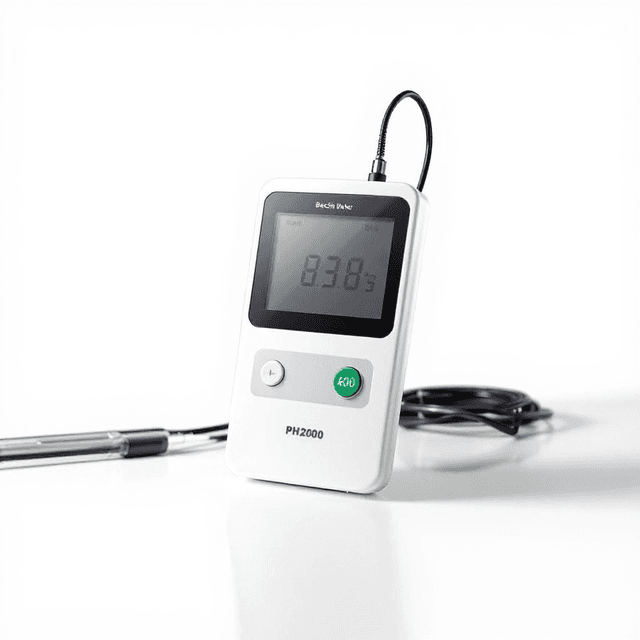
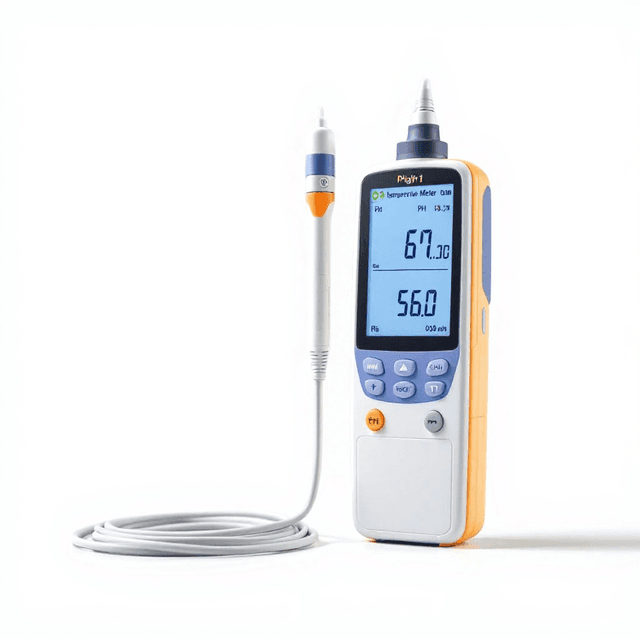
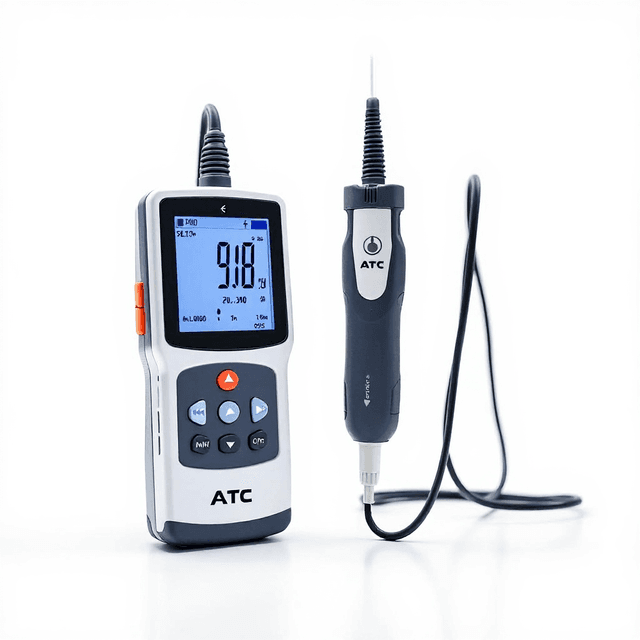
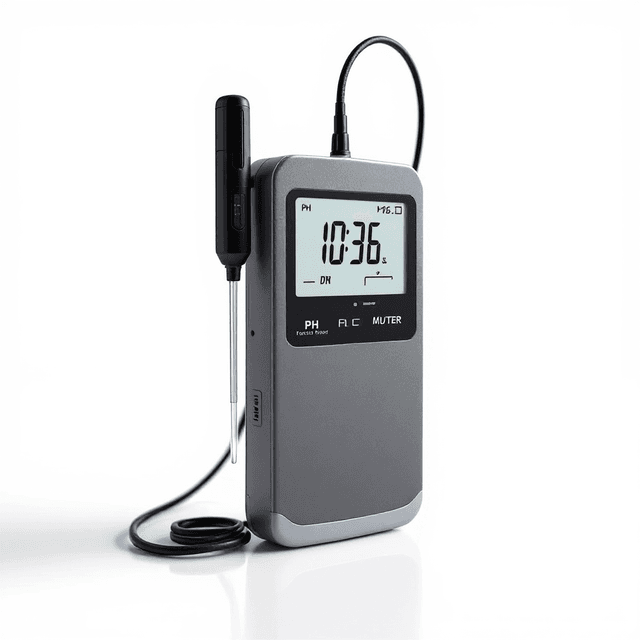
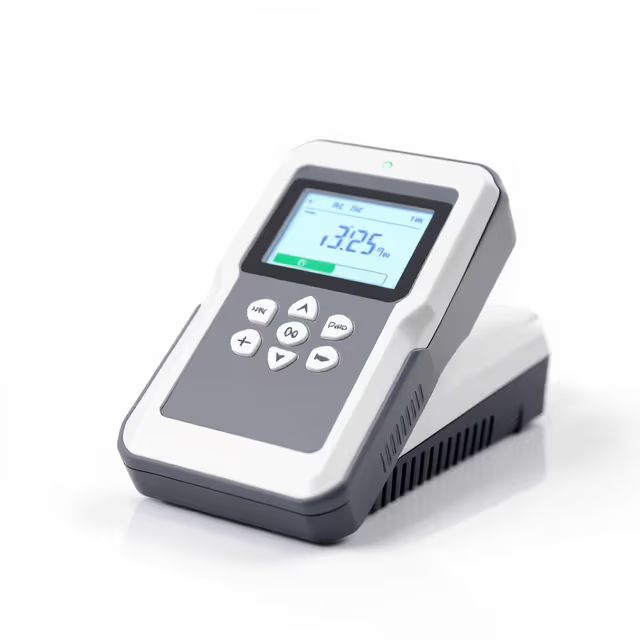
Portable pH/ORP Meter
Dual-parameter handheld meter measuring pH (-2.00 to 20.00) and ORP (-1999.9 to 1999.9 mV) with automatic temperature compensation and ±0.01 pH accuracy.
| Automation Level | manual |
| pH | pH Range |
| -2.00~20.00pH | -2.000~20.000pH |
| pH Accuracy | ±0.01pH |
| Calibration Points | / |
| ORP | mV Range |

The Portable pH/ORP Meter provides dual-parameter measurement capabilities for aqueous solutions across a wide pH range from -2.00 to 20.00 pH with ±0.01 pH accuracy. This handheld instrument combines pH measurement with oxidation-reduction potential (ORP) monitoring, offering -1999.9 to 1999.9 mV range with ±1 mV accuracy. The meter features automatic or manual temperature compensation across 0-100°C range with ±0.5°C accuracy.
The compact design incorporates both manual and automatic temperature compensation modes, with offset calibration capability providing ±10°C adjustment range around the measurement point. Temperature measurement resolution of 0.1°C/0.1°F enables precise thermal monitoring during pH and ORP measurements. The portable form factor allows field measurements while maintaining laboratory-grade accuracy specifications.
How It Works
pH measurement utilizes a glass electrode system that generates voltage proportional to hydrogen ion activity in solution. The glass membrane selectively responds to H+ ions, creating a potential difference across the electrode that follows the Nernst equation. Temperature compensation adjusts for the temperature dependence of electrode response and solution pH changes.
ORP measurement employs a platinum electrode paired with a reference electrode to measure the solution's oxidation-reduction potential. The platinum surface equilibrates with redox couples in solution, generating a voltage that reflects the solution's tendency to accept or donate electrons. The mV reading indicates whether conditions favor oxidation (positive values) or reduction (negative values).
Automatic temperature compensation uses a built-in temperature sensor to apply real-time corrections to both pH and ORP measurements, accounting for temperature-dependent electrode behavior and solution properties.
Features & Benefits
Automation Level
- manual
pH
- pH Range
-2.00~20.00pH
- -2.000~20.000pH
pH Accuracy
- ±0.01pH
Calibration Points
- /
ORP
- mV Range
-1999~1999mV
- -1999.9~1999.9mV
mV Accuracy
- ±1mV
Temperature Accuracy
- ±0.5°C/±0.9°F
Offset Calibration
- 1 point, reading ±10°C
Temperature Compensation
- 0~100°C, manual or automatic
Stability Criteria
- /
Calibration Due Alarm
- /
Brand
- ConductScience
Research Domain
- Analytical Chemistry
- Environmental Monitoring
- Food Science
- Industrial Hygiene
- Microbiology
- Pharmaceutical QC
Accuracy
- 0.1°C/0.1°F
Temperature Range
- Temperature Range
Weight
- 2.0 kg
Dimensions
- L: 3.0 mm
- W: 17.0 mm
- H: 8.5 mm
Comparison Guide
| Feature | This Product | Typical Alternative | Advantage |
|---|---|---|---|
| pH Measurement Range | -2.00 to 20.00 pH with ±0.01 pH accuracy | Entry-level meters often provide 0-14 pH range with ±0.1 pH accuracy | Extended range accommodates extreme pH samples without dilution or special handling procedures. |
| ORP Measurement Capability | -1999.9 to 1999.9 mV range with ±1 mV accuracy | Basic pH meters lack ORP measurement functionality | Dual-parameter measurement eliminates need for separate ORP meter and provides complete solution chemistry characterization. |
| Temperature Compensation Range | 0-100°C automatic or manual compensation | Limited temperature ranges or manual-only compensation | Wide temperature range supports measurements from near-freezing to boiling conditions with automatic correction. |
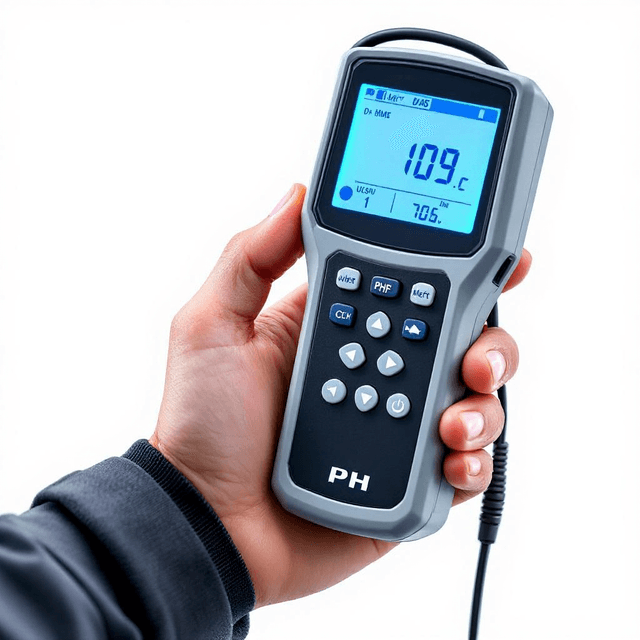
| Portable Design | Handheld form factor with 2.0 kg weight | Benchtop meters offer more features but require fixed installation | Field measurement capability enables on-site analysis without sample transport and storage concerns. |
| Temperature Resolution | 0.1°C/0.1°F resolution with ±0.5°C accuracy | Basic meters may have 1°C resolution or less precise temperature measurement | Precise temperature measurement improves accuracy of temperature-compensated pH and ORP readings. |
The meter combines wide-range pH measurement with ORP capability in a portable design. The -2.00 to 20.00 pH range with ±0.01 accuracy and comprehensive temperature compensation from 0-100°C provides laboratory-grade performance in field-portable format.
Practical Tips
Use fresh buffer solutions and calibrate at temperatures close to your sample measurement temperature for optimal accuracy.
Why: Buffer solution degradation and temperature differences between calibration and measurement introduce systematic errors.
Store electrodes in appropriate storage solutions between measurements and replace electrode filling solution regularly.
Why: Proper electrode hydration and reference junction maintenance are critical for stable, accurate readings.
Allow adequate equilibration time in each sample and rinse electrodes thoroughly between measurements.
Why: Incomplete equilibration and sample carryover can cause measurement drift and cross-contamination artifacts.
If readings drift or respond slowly, check electrode condition and recalibrate with fresh buffer solutions.
Why: Electrode aging, coating, or reference junction blockage manifests as response time increases and accuracy degradation.
Record temperature alongside pH and ORP measurements, even with automatic compensation enabled.
Why: Temperature data provides quality control information and enables post-measurement validation of compensation accuracy.
Avoid measuring samples that could damage electrodes, such as solutions containing organic solvents or hydrofluoric acid.
Why: Chemical compatibility limits protect electrode membranes and reference systems from irreversible damage.
Perform offset calibration when working consistently at temperatures significantly different from ambient conditions.
Why: Temperature sensor calibration optimization reduces measurement uncertainty in specialized temperature environments.
Use the appropriate measurement mode (automatic vs manual temperature compensation) based on sample stability and measurement duration.
Why: Sample temperature changes during measurement can affect accuracy when automatic compensation tracking is inappropriate.
Setup Guide
What’s in the Box
- pH/ORP Meter main unit (typical)
- pH electrode (typical)
- ORP electrode (typical)
- Temperature sensor probe (typical)
- Calibration buffer solutions (typical)
- Electrode storage solutions (typical)
- Power adapter or battery pack (typical)
- User manual and calibration certificate (typical)
- Protective carrying case (typical)
Warranty
ConductScience provides standard 1-year manufacturer warranty covering defects in materials and workmanship. Technical support includes calibration guidance and troubleshooting assistance for optimal measurement performance.
Compliance
What calibration frequency is recommended for maintaining ±0.01 pH accuracy?
Daily calibration with fresh buffer solutions is recommended for critical measurements. Weekly calibration may suffice for routine monitoring, but verify with quality control standards.
Can the meter measure pH and ORP simultaneously or are measurements sequential?
Measurements are typically sequential using separate electrodes. Temperature compensation applies to both parameters when measured in the same solution.
How does automatic temperature compensation affect ORP measurements?
Temperature compensation adjusts ORP readings for electrode temperature effects. The 0-100°C range covers typical laboratory and field conditions.
What electrode maintenance is required for consistent performance?
Regular cleaning with appropriate solutions, proper storage in electrode storage solution, and periodic electrode replacement based on response time and accuracy verification.
Is the meter suitable for measurements in harsh environmental conditions?
Consult product datasheet for environmental specifications. The portable design suggests field capability, but verify temperature and humidity operating ranges.
What data logging or connectivity options are available?
Consult product datasheet for data output capabilities, memory storage, and computer connectivity options for measurement recording and analysis.
How does measurement accuracy compare to benchtop pH meters?
The ±0.01 pH accuracy matches many benchtop instruments. Portable design may involve trade-offs in long-term stability or advanced features compared to laboratory-grade meters.
Have a question about this product?
Accessories
Enhance your setup with compatible accessories
Upgrade Options