Rodent Hot/Cold Plate Pain Assay
Precision thermal nociception testing apparatus for quantitative assessment of hot and cold pain thresholds in laboratory rodents with temperature control from -10°C to 80°C.
| cylinder_diameter | 24 cm |
| cylinder_height | 29 cm |
| time_display_range | 0.01 seconds to 1999.99 seconds |
| timing_error | 0.01 seconds |
| warming_time | Approx 2 min (0°C to 55°C at 20°C) |
| cooling_time | 5 minutes (20°C to 0°C, or 0°C to -10°C) |

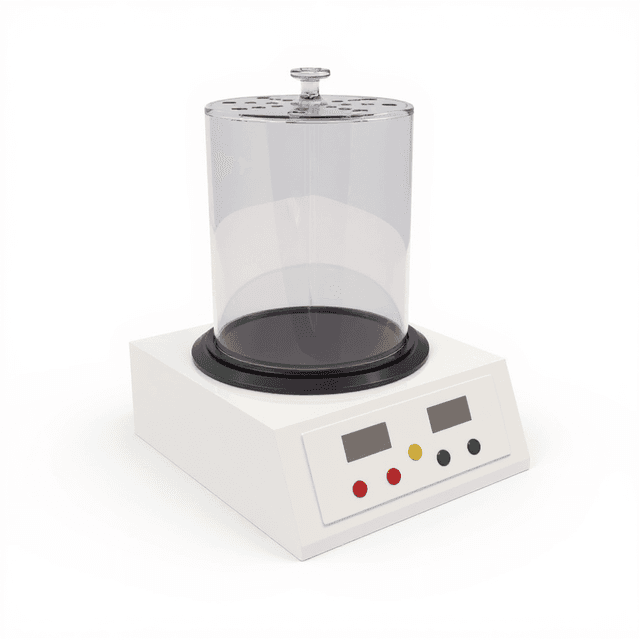
The Rodent Hot/Cold Plate Pain Assay is a precision thermal nociception testing apparatus designed for quantitative assessment of pain thresholds and analgesic efficacy in laboratory rodents. This integrated system combines hot plate and cold plate testing capabilities in a single platform, allowing researchers to evaluate both heat and cold sensitivity responses using standardized protocols. The apparatus features precise temperature control across a wide range (-10°C to 80°C) with high accuracy (±0.2°C) and fine adjustment resolution (0.1°C).
The system incorporates a glass and metal testing surface enclosed by an acrylic cylinder (24 cm diameter × 29 cm height) that contains the test subject while permitting clear observation of behavioral responses. Built-in timing functions provide millisecond precision for measuring paw withdrawal latencies, jump responses, and other nociceptive behaviors. The apparatus supports standardized thermal pain protocols commonly used in preclinical pain research, behavioral pharmacology studies, and analgesic drug development programs.
How It Works
The apparatus operates by delivering controlled thermal stimuli through direct contact with the plantar surface of the rodent's hind paw. The testing surface uses thermoelectric cooling/heating elements to achieve precise temperature control across the full range from -10°C to 80°C. Temperature regulation is maintained through feedback control systems that monitor surface temperature and adjust heating/cooling output to maintain the target temperature within ±0.2°C.
During testing, the rodent is placed within the acrylic cylinder enclosure, which allows natural movement while preventing escape. The animal's paws make contact with the temperature-controlled surface, and nociceptive responses (paw withdrawal, jumping, licking) are observed and timed. The integrated timing system records behavioral responses with 0.01-second precision across a range from 0.01 to 1999.99 seconds.
Thermal nociception occurs when tissue temperature activates peripheral nociceptors, including TRPV1 channels for heat detection and TRPM8/TRPA1 channels for cold sensation. The measured withdrawal latency correlates with pain threshold, allowing quantitative assessment of thermal sensitivity and analgesic drug effects.
Features & Benefits
cylinder_diameter
- 24 cm
cylinder_height
- 29 cm
time_display_range
- 0.01 seconds to 1999.99 seconds
timing_error
- 0.01 seconds
warming_time
- Approx 2 min (0°C to 55°C at 20°C)
cooling_time
- 5 minutes (20°C to 0°C, or 0°C to -10°C)
temperature_adjustment_step
- 0.1°C
control_mode
- panel buttons
Behavioral Construct
- thermal nociception
- pain threshold
- analgesic response
- thermal hyperalgesia
- paw withdrawal latency
Automation Level
- semi-automated
Material
- glass
- Metal
Temperature Range
- -10°C to 80°C
Accuracy
- 0.1°C
Research Domain
- Addiction Research
- Aging Research
- Behavioral Pharmacology
- Neurodegeneration
- Pain Research
- Toxicology
Species
- Mouse
- Rat
Weight
- 21.0 kg
Dimensions
- L: 43.18 mm
- W: 35.56 mm
- H: 53.34 mm
Comparison Guide
| Feature | This Product | Typical Alternative | Advantage |
|---|---|---|---|
| Temperature Range | -10°C to 80°C in single apparatus | Separate hot plate (up to 70°C) and cold plate (down to 0°C) systems required | Enables comprehensive thermal nociception studies with consistent methodology and reduced equipment investment. |
| Temperature Accuracy | ±0.2°C control precision | Entry-level models often provide ±0.5°C to ±1°C accuracy | Ensures reproducible thermal stimuli for sensitive detection of small changes in pain thresholds. |
| Temperature Adjustment Resolution | 0.1°C incremental adjustment | Basic systems typically offer 1°C or 0.5°C steps | Allows precise protocol optimization and fine-tuned dose-response studies for thermal sensitivity. |
| Timing Precision | 0.01-second resolution up to 1999.99 seconds | Standard models often limited to 0.1-second precision | Provides accurate measurement of rapid nociceptive responses critical for analgesic drug evaluation. |
| Cylinder Size | 24 cm diameter × 29 cm height | Smaller enclosures common in basic models | Accommodates natural rodent movement while maintaining experimental control and paw contact consistency. |
| Temperature Transition Speed | 2 minutes warming, 5 minutes cooling | Slower transition times typical in lower-cost systems | Enables efficient experimental protocols with reduced inter-trial intervals and higher throughput testing. |
This apparatus provides research-grade temperature control accuracy and timing precision in an integrated hot/cold platform. The wide temperature range, fine adjustment resolution, and rapid transitions support comprehensive thermal nociception studies with methodological consistency.
Practical Tips
Verify temperature accuracy at three points (low, mid, high range) using a calibrated thermometer before each experimental series.
Why: Temperature drift over time can affect stimulus consistency and compromise data reproducibility across sessions.
Clean the testing surface with 70% ethanol between animals and inspect for scratches or damage that could affect heat conduction.
Why: Surface contamination and damage can create temperature inconsistencies and introduce confounding variables.
Allow 30-minute system stabilization after power-on and 5-minute animal acclimation before testing.
Why: Temperature stability and reduced animal stress improve measurement reliability and minimize non-specific behavioral responses.
If temperature recovery seems slow, check ambient conditions and ensure adequate ventilation around the apparatus.
Why: Environmental factors significantly influence heating and cooling performance, especially at temperature extremes.
Record ambient temperature, humidity, and time of day for each test session as potential confounding variables.
Why: Environmental conditions can influence both apparatus performance and animal thermal sensitivity responses.
Program appropriate cut-off times (15-20 seconds for hot, 20-30 seconds for cold) and monitor continuously during testing.
Why: Prevents tissue damage while allowing sufficient time for nociceptive response measurement.
Randomize temperature sequence when conducting both hot and cold testing to minimize order effects.
Why: Sequential testing can introduce sensitization or habituation effects that confound thermal threshold measurements.
Document all calibration readings and maintain calibration logs for regulatory compliance and data integrity.
Why: Traceable calibration records support data validity and meet requirements for pharmaceutical and regulatory studies.
Setup Guide
What’s in the Box
- Hot/Cold Plate main unit (typical)
- Acrylic cylinder enclosure (typical)
- Power adapter and cables (typical)
- User manual and protocol guide (typical)
- Temperature calibration certificate (typical)
Warranty
ConductScience provides a standard one-year manufacturer warranty covering defects in materials and workmanship, with comprehensive technical support for calibration and operational guidance.
Compliance
What are the recommended temperature settings for standard hot and cold plate protocols?
Hot plate testing typically uses 50-55°C with 15-20 second cut-off times, while cold plate protocols commonly employ 0-5°C with 20-30 second cut-offs. The apparatus allows precise adjustment in 0.1°C increments to optimize protocols for specific experimental requirements.
How quickly can the apparatus transition between hot and cold testing temperatures?
The system requires approximately 2 minutes to warm from 0°C to 55°C and 5 minutes to cool from 20°C to 0°C. Plan experimental sessions to accommodate these transition times for efficient protocol execution.
What behavioral responses can be measured with this apparatus?
The timing system accurately records paw withdrawal latency, jump responses, paw licking, and other nociceptive behaviors with 0.01-second precision. The transparent acrylic cylinder allows clear observation of all behavioral responses.
How does this compare to separate hot plate and cold plate systems?
This integrated system eliminates the need for separate apparatus while maintaining the precision of dedicated systems. The wide temperature range and accurate control match the performance of standalone hot and cold plates.
What calibration procedures are required for accurate temperature control?
Regular calibration using a certified thermometer at multiple temperature points across the operating range is recommended. The ±0.2°C accuracy specification should be verified monthly or before critical experiments.
Can the apparatus accommodate different rodent species and sizes?
The 24 cm diameter cylinder accommodates both mice and rats, providing adequate space for natural movement while ensuring consistent paw contact with the testing surface.
What data output and recording capabilities are available?
The panel-based timing system displays response latencies to 0.01-second precision. External data recording systems can be integrated for automated data collection and analysis.
Have a question about this product?
Accessories
Enhance your setup with compatible accessories

Upgrade Options