
1 / 6
Rodent Hot Plate Pain Assay
SKU CS-958218
$3,590.00
IncludesStandard care
Thermal nociception testing apparatus for evaluating pain thresholds and analgesic efficacy in laboratory rodents through controlled heat exposure protocols.
CE MarkedBAA available
Scientist guidance

Louise Corscadden, PhD
Director of Science · ConductScience
Ask Louise about Rodent Hot Plate Pain Assay fit, setup, configuration, or quote prep.
Already working with us? Sign in to connect this with My Scientist.
Key Specifications
Full details →- Model fit
- Mouse, Rat
- SKU family
- CS-958218
- Shipping box
- 65.0 x 36.0 x 27.0 cm
- Ordering
- Online checkout and quote request available
- Category
- Behavioral Mazes
- Build notes
- Confirm accessories, station layout, and support needs before purchase
The Rodent Hot Plate Pain Assay provides a standardized method for evaluating thermal nociception and analgesic efficacy in laboratory rodents. This thermal stimulation apparatus delivers controlled heat exposure to assess pain thresholds, latency responses, and the effectiveness of analgesic compounds in preclinical pain research.
The system enables researchers to conduct reproducible thermal pain studies by measuring the time required for animals to exhibit withdrawal responses when exposed to a heated surface. This methodology is fundamental to pain research protocols and drug development studies investigating analgesic mechanisms and therapeutic interventions.
How It Works
The hot plate assay operates on the principle of thermal nociception, where controlled heat stimulation activates nociceptors in the paws and triggers withdrawal responses. The heated surface provides uniform thermal stimulation at precisely controlled temperatures, typically ranging from 48°C to 56°C, allowing researchers to establish thermal pain thresholds.
When placed on the heated surface, rodents exhibit characteristic withdrawal behaviors including paw lifting, licking, or jumping responses. The latency to first withdrawal response serves as the primary outcome measure, with shorter latencies indicating increased thermal sensitivity and longer latencies suggesting reduced pain sensitivity or analgesic effects.
Temperature control systems maintain consistent thermal stimulation throughout testing sessions, while safety features prevent tissue damage through automatic cutoff times. This standardized approach enables reproducible measurements of thermal nociceptive responses across experimental groups and treatment conditions.
Features & Benefits
Precise Temperature Control
Maintains accurate thermal stimulation temperatures for reproducible nociceptive testing across experimental sessions
Uniform Heating Surface
Provides consistent thermal stimulation across the entire testing area, eliminating hot spots that could bias results
Safety Cutoff System
Prevents tissue damage through programmable maximum exposure times, ensuring animal welfare compliance
Temperature Monitoring
Real-time temperature feedback ensures precise thermal control and validates test conditions throughout experiments
Easy Cleaning Design
Smooth heating surface facilitates thorough cleaning between subjects, preventing cross-contamination and maintaining hygiene
Adjustable Parameters
Customizable temperature settings and cutoff times accommodate different experimental protocols and species requirements
Add-ons and modifications
| Add-on | Price | Details |
|---|---|---|
| Hot Plate | $2,995 | Apparatus size: (L) 25 cm × (W) 33 cm ×(H) 12.5 cm Restrainer size: (D) 20cm x (H) 25cm Temperature Range: +20 °C to +65 °C Time Display Range: >10 hours |
Add any of these to your quote request.
Behavioral Construct
- Thermal Nociception
- Pain Threshold
- Withdrawal Response
- Analgesic Response
Automation Level
- semi-automated
Research Domain
- Addiction Research
- Aging Research
- Behavioral Pharmacology
- Neurodegeneration
- Neuroscience
- Pain Research
Species
- Mouse
- Rat
Compatible Tracking Software
- ConductVision
Shipping weight
- 6.06 lb
Shipping box
- L: 65.0 cm
- W: 36.0 cm
- H: 27.0 cm
| Feature | This Product | Typical Alternative | Advantage |
|---|---|---|---|
| Temperature Control Accuracy | Consult product datasheet for temperature accuracy specifications | Entry-level models often provide ±2-3°C accuracy | Precise temperature control ensures reproducible thermal stimulation conditions across experimental sessions |
| Heating Surface Size | Consult product datasheet for surface dimensions | Compact models may have limited surface area | Adequate surface area allows natural movement while maintaining consistent thermal exposure |
| Safety Features | Includes programmable cutoff system | Basic models may lack automatic safety shutoffs | Prevents tissue damage while maintaining experimental validity through customizable exposure limits |
| Temperature Range | Consult product datasheet for temperature range | Limited range systems may not accommodate all protocols | Flexible temperature settings enable optimization for different species and experimental paradigms |
This hot plate system provides controlled thermal nociception testing with safety features and precise temperature control. The system accommodates standard rodent pain research protocols while maintaining animal welfare standards through programmable cutoff times and uniform heating.
Pain Research
Measuring thermal pain thresholds and withdrawal latencies to assess baseline nociceptive responses and evaluate changes following experimental interventions.
Neuroscience
Investigating central and peripheral pain processing mechanisms by analyzing thermal nociceptive behaviors in animal models of neurological conditions.
Behavioral Pharmacology
Screening analgesic compounds and determining dose-response relationships by measuring changes in thermal withdrawal latencies following drug administration.
Addiction Research
Evaluating hyperalgesia and altered pain sensitivity during withdrawal states in models of substance dependence and addiction.
Aging Research
Assessing age-related changes in thermal pain sensitivity and nociceptive processing in geriatric animal models.
Neurodegeneration
Monitoring pain sensitivity alterations in neurodegenerative disease models to understand sensory system dysfunction progression.
Practical Tips
Calibration
Verify temperature accuracy using a certified digital thermometer at multiple surface locations before each testing session.
Why: Temperature uniformity across the heating surface ensures consistent thermal stimulation and prevents biased results.
Maintenance
Clean the heating surface daily with appropriate solvents and inspect for scratches or damage that could affect heat distribution.
Why: Surface contamination and damage can create temperature irregularities and influence animal behavior.
Best Practices
Allow animals to acclimate on the room-temperature plate for 5-10 minutes before heating to reduce stress-related variables.
Why: Acclimation reduces novelty stress that could confound nociceptive measurements and improves baseline behavior consistency.
Data Quality
Record ambient temperature and humidity during testing sessions as these factors can influence thermal sensitivity.
Why: Environmental conditions affect thermoregulation and may impact withdrawal latency measurements.
Troubleshooting
If animals show no response at expected temperatures, verify surface contact and check for interference from bedding material on paws.
Why: Poor thermal conduction due to debris or callused paws can reduce thermal stimulation effectiveness.
Safety
Set conservative cutoff times during initial protocol optimization and gradually adjust based on observed responses.
Why: Prevents tissue damage while establishing appropriate exposure limits for your specific experimental conditions.
Best Practices
Test the same animals at consistent times of day to minimize circadian influences on pain sensitivity.
Why: Pain thresholds can vary throughout the day due to natural circadian rhythms in nociceptive processing.
Data Quality
Record multiple trials per animal with appropriate inter-trial intervals to assess response consistency.
Why: Repeated measurements improve statistical power and help identify animals with abnormal pain responses.
Setup Guide
Unpack and Inspect
Remove the hot plate apparatus from packaging and inspect all components for damage. Verify that the heating surface is clean and free from scratches or debris.
Position and Connect
Place the unit on a stable, level surface in the testing area. Connect the power cable and any temperature monitoring accessories according to the user manual.
Temperature Calibration
Calibrate the temperature control system using a certified thermometer to verify accurate temperature readings across the testing range.
Safety Configuration
Set appropriate cutoff times (typically 30-60 seconds) to prevent tissue damage and configure any automatic shutoff features.
Test Protocol Setup
Program the desired test temperature and allow the system to reach thermal equilibrium before beginning behavioral testing sessions.
Validation Testing
Conduct initial validation tests with control animals to verify consistent withdrawal latencies and proper system operation.
Data Recording Preparation
Prepare timing equipment and data recording systems to accurately capture withdrawal latency measurements during experimental sessions.
What’s in the Box
- Hot plate main unit (typical)
- Temperature controller (typical)
- Power cable (typical)
- Temperature probe (typical)
- User manual and protocol guide (typical)
- Calibration certificate (typical)
Warranty
ConductScience provides a one-year manufacturer warranty covering defects in materials and workmanship, with technical support for protocol optimization and troubleshooting.
Compliance
ARRIVE GuidelinesSupports standardized reporting of animal research methodology in pain studies through reproducible thermal nociception protocols.
IASP GuidelinesCommonly used in pain research workflows following International Association for the Study of Pain recommendations for animal pain assessment.
NIH Guidelines for Laboratory Animal CareSupports animal welfare compliance in federally funded research through built-in safety features and standardized testing protocols.
Protocol and background
Introduction
Hot Plate test is one of the many nociception tests employed in the assessment of nociception. The test was first described in the literature by Woolfe and Macdonald in 1944 in their paper investigating the analgesic effects of compounds. The test can be performed at a constant temperature or with increasing temperature of the hot plate. The Hot Plate test serves as a simple test for investigating the effects and effectiveness of analgesics on pain response. A variation of this test is the Tail Flick test wherein instead of placing the subject on a heated surface, the heat is directed only to its tail. Other similar assays are Hot/Cold Plate and Thermal Gradient tests.
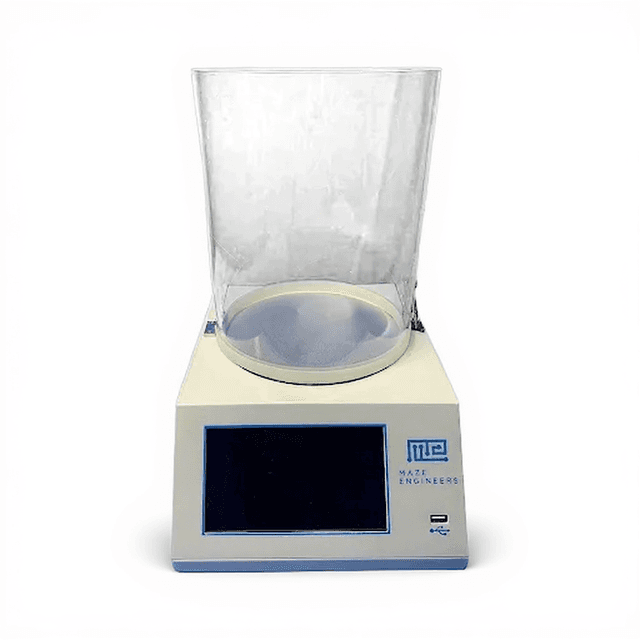
The Hot Plate apparatus consists of a hot plate that can be set to a constant temperature or programmed to increase the temperature slowly and a glass cylindrical restainer above in which to hold the animal.. When subjected to the heat, subjects can show varied nocifensive behaviors such as jumping, licking paw and stamping. However, hind paw withdrawal and licking are considered as better indications of nociception than forepaw related response, since forepaws of the animals are usually busy in exploration and grooming. Repeated trials on the Hot Plate may not be beneficial as the subject quickly learns that its reaction to pain will lead to termination of the task by the experimenter.
Apparatus & Equipment
The Hot Plate apparatus is composed of a metal temperature plate with digital display and a lidded transparent glass cylindrical restrainer. The plantar surface is a metal floor equipped with adjustable temperature control. The glass cylinder (diameter 20 cm x height 30 cm) and lid are used to limit the subject to the plate and prevent it from jumping off the apparatus while allowing an unobstructed view.
Training Protocol
Before beginning the experiment, the entire apparatus must be cleaned thoroughly with 70% ethanol solution. Ensure the apparatus is cleaned in between trials.
Pre-heat the Hot Plate to between 52° to 55° Celsius. Bring the subject into the test area and allow it at least 30 to 60 minutes to acclimate. Once the subject has familiarized with the test area, place it on the hot plate and immediately start the timer. Remove the subject immediately after it has shown a nocifensive response such as hind paw licking, hind paw flicking, vocalization or jumping. If the subject shows no such response within 30 seconds, remove the subject from the apparatus and terminate the test. Repeating trials may not be advantageous.
To assist observation, tracking and video system such as Noldus EthoVision XT may be used.
Determining the noxious heat threshold
Bölcskei et al., 2010 determined the lowest temperature that evoked pain-avoiding behavior in female Wistar rats. For their experiment, the hot plate was heated to 30°C and the subject placed on it. The temperature was increased at a rate of 12°C/min until the cut-off of 50°C was reached. When the subject showed nocifensive behavior, the heating was stopped, and the corresponding temperature was recorded as the noxious heat threshold for that subject. The subject undergoes a second trial after the 30-minute interval, and the average of the two threshold values is considered the control noxious heat threshold.
Data Analysis
Data extraction from the Hot Plate test is straightforward using a USB drive. The latency to react to the pain associated with the heat is recorded as the time between the placement of the subject on the plate and the first sign of nocifensive response such as paw licking or jumping. Other data that can be recorded is the duration of the nocifensive response and the temperature at which nocifensive behavior is shown. Recorded data can be exported into spreadsheet software.
Both hardware and software are user-friendly with user manual included.
Strengths & Limitations
Strengths
The Hot Plate test is a simple method to evaluate thermal pain responses and in assessing the effectiveness of analgesics. In comparison to the Tail Flick test, the Hot Plate test integrates supraspinal pathways. The apparatus can be used to create a steady heat range that can be used to evaluate thermal pain thresholds in animals. In combination with other assessment assays, the Hot Plate test can provide insights into the working of pain response and pain tolerance.
Limitations
Although a simple and straightforward test, the Hot Plate test can be affected by the anxiety the subject might feel due to the enclosed space. The test also allows free exploration of the surface during the trial which may lead to incorrect observations of the nocifensive responses. During the test, the plantar surface of the subject is exposed to heat only which may confound the results for unilateral models of pain and the compounds administered by intraplantar injections. The test also may not be advantageous when used at a constant temperature set-up due to learned behavioral responses which may lead to reduced response time. The gender of the subject may also be a factor in the response behavior.
Summary & Key Points
- Hot Plate test was first described in literature by Woolfe and Macdonald in 1944.
- Hot Plate test is one of the many nociception tests available to test for pain response behaviors.
- The Tail Flick Test is similar to the Hot Plate test.
- Hind paw withdrawal or licking is taken as the best indication of nocifensive response to thermal pain.
- Hot Plate test is commonly used in evaluating the effectiveness of analgesics.
From the Maze Engineers documentation for this apparatus.
Q
What temperature range should be used for different rodent species?
A
Mice typically require 52-55°C while rats respond at 48-52°C, though specific temperatures should be optimized based on strain, age, and experimental requirements. Consult product datasheet for complete temperature specifications.
Q
How do I establish appropriate cutoff times to prevent tissue damage?
A
Standard cutoff times range from 30-60 seconds depending on temperature and species. Monitor initial pilot animals closely and adjust cutoffs to prevent tissue damage while allowing sufficient response time.
Q
What are the key factors affecting measurement reproducibility?
A
Temperature stability, surface cleanliness, ambient room conditions, and animal acclimatization time significantly impact results. Allow 15-30 minutes for temperature equilibration and maintain consistent testing protocols.
Q
How should the system be calibrated for accurate temperature readings?
A
Use a certified digital thermometer to verify surface temperature at multiple points across the heating plate. Calibration should be performed before each testing session or according to institutional protocols.
Q
What cleaning procedures are recommended between test subjects?
A
Clean the heating surface with 70% ethanol and allow complete drying between subjects. Ensure no cleaning residue remains as this could affect animal behavior or temperature distribution.
Q
How does this method compare to radiant heat testing?
A
Hot plate testing provides contact thermal stimulation affecting multiple nociceptors simultaneously, while radiant heat typically targets localized areas. Both methods assess thermal nociception but may engage different pain processing mechanisms.
Q
What environmental factors should be controlled during testing?
A
Maintain consistent ambient temperature (22-24°C), humidity, and lighting conditions. Sound levels should be minimized and testing area should be free from vibrations that could influence animal behavior.
Have a question about this product?
Track rodents with ConductVision
ConductVision is our video-tracking software. Record your sessions on video, and it scores standard rodent tests, such as those listed below.
Examples of tests it scores
To check whether ConductVision scores your protocol in this apparatus, ask in your quote request.
Ask a question
Have a question? Just ask.
Send it over and we'll email you a personalized answer — no call, no scheduling.
Personalized email reply
Usually within one business day
Helpful answers published here
Prefer to talk it through?
Accessories
Enhance your setup with compatible accessories
Total: $0.00


Creator Insights
G. WoolfeIntroduced the hot plate analgesia test (1944, with A. D. MacDonald)
About the Creator
G. Woolfe and A. D. MacDonald described the hot plate test in a 1944 Journal of Pharmacology and Experimental Therapeutics paper evaluating pethidine (Demerol). Rodents are placed on a thermostatically heated surface and the latency to a nocifensive response — paw licking or jumping — is measured, giving a sensitive, reproducible endpoint for the potency of centrally acting analgesics. The hot plate became one of the two canonical thermal nociception assays alongside the tail-flick test; Eddy and Leimbach (1953) applied and helped standardize it across analgesic drug-evaluation programs. It remains in wide use for analgesic screening and basic pain research, often paired with the tail-flick test to separate spinal from supraspinal effects.
To view G. Woolfe’s publications, visit PubMed.
Are you G. Woolfe? to review your photo and bio, and find out how to submit Creator Insights.
ConductScience celebrates method creators: researchers who, through rigorous and often ingenious experiments, develop the tools that reveal how the brain and body work. These are real scientific discoveries that become everyday instruments for the labs that follow.
Foundational papers
- Woolfe, G., & MacDonald, A. D. (1944). The evaluation of the analgesic action of pethidine hydrochloride (Demerol). Journal of Pharmacology and Experimental Therapeutics, 80, 300–307. doi:10.1016/s0022-3565(25)09094-9
- Eddy, N. B., & Leimbach, D. (1953). Synthetic analgesics. II. Dithienylbutenyl- and dithienylbutylamines. Journal of Pharmacology and Experimental Therapeutics, 107, 385–393. doi:10.1016/s0022-3565(25)05180-8
Use this apparatus with
The complete Hot Plate Test workflow
Track behavior
No exact ConductVision hot-plate page is currently published. First-response type and withdrawal latency are normally scored from a close-up video with the plate timer rather than overhead tracking; keep this as a roadmap gap.
Supporting page not yet builtRun protocol
Plate-temperature calibration, humane cutoff time, habituation rules, first-response classification, and withdrawal-latency scoring for the thermal nociceptive assay.
ConductMaze Hot Plate Protocol ->Analyze output
Summarize withdrawal latency, first-response type, cutoff hits, plate temperature, and test-retest reliability with quality-control flags.
Hot Plate Latency Calculator ->Configuration considerations
Common Hot Plate Test setup decisions
Use these notes to scope species, cohort, tracking, and automation needs. Only verified product or support routes are linked from this section.
This productSingle plate
Hot Plate Apparatus
Temperature-controlled plate with a clear enclosure and a manual or foot-switch latency timer
Standard configuration for thermal nociceptive latency, recording the time to a first organized response while a humane cutoff protects the animal.
Quote
Request QuoteBuyableMouse or rat
Species-Scaled Enclosure
Plate area and enclosure height scaled for mouse or rat body size
Plate area and enclosure height change paw contact and movement, so the enclosure should match the species and cohort being tested.
Quote
View options ->SpecialtyIncremental
Incremental Hot Plate
Ramping-temperature plate that records the temperature at the first organized response
Best when a temperature threshold is more informative than a fixed-temperature latency, ramping the plate slowly and logging the temperature at withdrawal.
Quote
Request automation help§ 1
Introduction
The Hot Plate Test measures thermal nociceptive latency by recording the time from placement on a temperature-controlled plate to a first organized response such as a hindpaw lick or a jump. Eddy and Leimbach introduced the procedure as a graded readout of thermal responsiveness in rodents. 1
The primary readout is withdrawal latency, classified by first-response type because a hindpaw lick and a jump reflect different organized responses. A humane cutoff time ends any trial in which the animal does not respond, protecting the animal and giving a defined ceiling value. 1
Plate-temperature calibration, the humane cutoff, habituation and novelty, body weight and paw contact, and repeated-exposure learning all change latency independent of true thermal sensitivity. A defensible protocol calibrates the plate, fixes the cutoff, limits repeated exposures, and reports first-response type. 1
§ 2
Methods
2.1 Procedure
Fixed-temperature plate exposure with first-response classification, a humane cutoff, and withdrawal-latency scoring.
Pre-test setup
- 1.Plate calibration: Calibrate and verify the plate temperature with an independent probe before testing, because small temperature errors shift latency substantially.
- 2.Set the humane cutoff: Fix a maximum exposure time as a humane cutoff so an animal that does not respond is removed at the ceiling rather than burned.
- 3.Habituate to the enclosure: Habituate animals to the unheated enclosure so the first heated trial reflects thermal responsiveness rather than novelty or handling.
- 4.Define first-response rules: Pre-define which response ends the trial (hindpaw lick versus jump) and how first-response type is recorded, since labs score the endpoint differently.
Trial sequence
- 1.Place on the plate: Place the animal on the calibrated plate and start the latency timer at the moment of contact.1
- 2.Score first response: Stop the timer at the first organized response per the pre-defined rule and record whether it was a lick or a jump.3
- 3.Apply the cutoff: Remove the animal at the humane cutoff if no response occurs and record the latency as the cutoff value.2
- 4.Limit repeated exposures: Space any repeat exposures widely and cap their number, because repeated heating produces learned avoidance that shortens latency.
- 5.Return and clean: Return the animal to the home cage, allow recovery, and clean the plate and enclosure between subjects to remove odor cues.
Critical methodological constraints
- Plate-temperature calibration. Latency is steeply temperature dependent. Calibrate against an independent probe and hold the temperature constant across all groups.2
- Humane cutoff time. A fixed cutoff protects the animal and defines the ceiling value. Record cutoff hits rather than allowing prolonged exposure.2
- Repeated-exposure learning. Repeated heating produces learned avoidance that shortens latency independent of sensitivity. Limit and space exposures.
- First-response definition. A hindpaw lick and a jump are different organized responses. Pre-specify which ends the trial and score first-response type consistently.3
2.2 Measurement & Analysis
Core hot-plate endpoints for thermal nociception, welfare, and reliability.
Withdrawal Latency
Thermal nociception
Time from plate contact to the first organized response, the primary thermal-nociception readout.1
First-Response Type
Response classification
Whether the first organized response was a hindpaw lick or a jump, recorded because they reflect different responses.3
Cutoff Reached
Welfare quality control
Whether the trial reached the humane cutoff without a response, logged as a welfare and ceiling-value flag.2
Plate Temperature
Stimulus control
Verified plate temperature for the session, since latency is steeply temperature dependent.
Test-Retest Latency
Reliability
Latency stability across spaced sessions, used to confirm the measure is reliable and not shifting from repeated-exposure learning.
+ Additional metrics: exposure number, inter-session interval, body weight, ambient temperature, enclosure habituation time, and per-session calibration notes.
2.3 latency fraction of cutoff (analysis)
A compact fraction of the humane cutoff window the animal took to make its first organized response.
2.4 sample-size planning
Estimate the N per group needed to detect a literature-anchored thermal effect at the endpoint you plan to report. Override the defaults with your own pilot numbers.
§ 3
Results
PubMed publication counts, sample apparatus output, and recent papers from a dated PubMed snapshot.
3.1 Publication trends
PubMed volume and co-occurring behavioral methods for thermal-nociception studies.
3.2 Sample apparatus output
Representative output from a fixed-temperature hot-plate session with a humane cutoff.
3.3 Recent findings (PubMed)
- Sep 2026PMID: 42696506
Decalcified and Decellularized Bone Conduits for Peripheral Nerve Regeneration: A Comparative In Vivo Study Using Rat Femur and Chicken Ulna Conduits.
Sepehri Z, Moradi A, Mahdavi-Shahri N, et al.. Brain Behav. 2026 Sep.
Peripheral nerve injuries (PNIs) pose a major clinical challenge, especially when nerve gaps exceed 5 mm and spontaneous regeneration is inadequate.
- Sep 2026PMID: 42591633
Puerarin alleviates sciatic nerve injury in diabetic peripheral neuropathy rat via HSP90AA1.
Shen N, Zheng L, Sun H, et al.. 3 Biotech. 2026 Sep.
Diabetic peripheral neuropathy (DPN) is one of the most prevalent complications of Diabetes. Puerarin, a natural isoflavone glycoside extracted from Pueraria lobata, has been proven effective for DPN, while the mechanisms underlying its therapeutic effects remain elusive.
- Aug 2026PMID: 42645705
IRF2 exacerbates diabetic neuropathic pain by promoting high glucose-induced M1 polarization through IL-6/STAT3.
Liang Y, Ning Y, Li X, et al.. Genes Genomics. 2026 Aug 26.
M1 macrophage polarization is a key mechanism in diabetic neuropathic pain (DNP), and interferon regulatory factor 2 (IRF2) has been shown to regulate macrophage polarization. The present study investigated whether IRF2 participates in DNP progression by regulating macrophage polarization.
- Aug 2026PMID: 42608500
Neuroprotective effects of myricetin against rotenone-ınduced parkinsonian neurotoxicity: a multidimensional analysis in rats.
Ozhan O, Erikci Z, Yildiz A, et al.. J Mol Histol. 2026 Aug 18.
Parkinson's disease (PD) is a progressive neurodegenerative disorder characterized by dopaminergic neuronal loss, oxidative stress (OS), and α-synuclein pathology. As OS is a major contributor to neuronal injury in PD, therapeutic approaches targeting redox homeostasis have attracted increasing interest.
- Aug 2026PMID: 42588557
Investigating the Anti-Inflammatory and Pain-Relieving Properties of Glaucium corniculatum (L.) Rud subsp. refractum (NAB) Cullen and Glaucium leiocarpum Boiss., Along with Their Active Compounds.
Karaaslan M, Ergene B, İleri HK, et al.. Molecules. 2026 Aug 4.
The genus Glaucium (Papaveraceae), comprising approximately 30 species, is widely distributed across the Mediterranean region, Europe, North Africa, and Central and Southwest Asia. In the flora of Türkiye, the genus is represented by 11 taxa and is commonly known as "boynuzlu gelincik" and "çömlek çatlatan".
- Aug 2026PMID: 42547655
Drp1/HK1/NLRP3-Associated Pathway Contributes to Neuronal Pyroptosis-Related Signaling in Neuropathic Pain.
Wang P, Jialing Chen, Zhang B, et al.. Mol Neurobiol. 2026 Aug 3.
Neuropathic pain (NP) is a prevalent and debilitating chronic pain condition within the nervous system. Recent studies have implicated pyroptosis as a potential mechanism underlying NP. Therefore, this study investigates NLRP3-mediated neuronal pyroptosis and its regulation in NP.
§ 4
Discussion
Limitations of the paradigm, methodological caveats, and current directions.
4.1 Common confounds
Variables that can shift Hot Plate Test results apart from the effect under study.
Plate-temperature calibration
Latency is steeply temperature dependent. Calibrate against an independent probe and hold the temperature constant across all groups.
Humane cutoff time
A fixed cutoff protects the animal and defines the ceiling value. Record cutoff hits rather than allowing prolonged exposure.
Habituation/novelty
An unhabituated animal moves and responds to novelty rather than to the thermal stimulus. Habituate to the enclosure first.
Body weight & paw contact
Body weight and posture change how much plantar surface contacts the plate, shifting latency independent of sensitivity.
Repeated-exposure learning
Repeated heating produces learned avoidance that shortens latency. Limit and space exposures and watch for downward drift.
Preview exported markdown
## Hot Plate Test — methods controls

Confounds controlled in this protocol:

- **Plate-temperature calibration.** Latency is steeply temperature dependent. Calibrate against an independent probe and hold the temperature constant across all groups.
- **Humane cutoff time.** A fixed cutoff protects the animal and defines the ceiling value. Record cutoff hits rather than allowing prolonged exposure.
- **Habituation/novelty.** An unhabituated animal moves and responds to novelty rather than to the thermal stimulus. Habituate to the enclosure first.
- **Body weight & paw contact.** Body weight and posture change how much plantar surface contacts the plate, shifting latency independent of sensitivity.
- **Repeated-exposure learning.** Repeated heating produces learned avoidance that shortens latency. Limit and space exposures and watch for downward drift.
4.2 Construct validity caveats
The hot plate test is a research methods model of thermal nociceptive latency in rodents; it is not a clinical measure and clinical interpretation is out of scope. It is strongest when plate temperature, the humane cutoff, and exposure history are fixed before testing, with first-response type recorded and reliability confirmed across spaced sessions. 1
4.3 Special considerations
When should I use the von Frey assay instead?
Use the electronic von Frey for mechanical sensitivity and the hot plate for thermal nociceptive latency. They probe different sensory channels, so pick by the modality under study and keep the method constant across all groups.
Should I record first-response type?
Yes. A hindpaw lick and a jump are different organized responses, so recording first-response type, rather than a single latency, gives a clearer picture of how the animal responded.
How do I avoid repeated-exposure learning?
Limit the number of exposures and space them widely. Repeated heating produces learned avoidance that shortens latency independent of sensitivity, so watch for downward drift across sessions.
4.4 Current directions
Quarterly editorial review of emerging Hot Plate Test methodology. Q2 2026
Methods
Plate-temperature standardization
Independent calibration of plate temperature across instruments improves comparability of latencies between labs and apparatus models.
Emerging
Automated response detection
Video-based detection of licks and jumps reduces observer burden and records first-response type and latency consistently.
Methods
Humane-cutoff reporting
Reporting the cutoff value and cutoff-endpoint hits is increasingly expected as a welfare and quality-control measure.
Emerging
Multi-assay sensory batteries
Thermal latency is paired with mechanical-sensitivity assays to separate thermal and mechanical sensory channels in the same cohort.
§ 5
References
6 selected methods and validation references for Hot Plate Test.
- Eddy NB, Leimbach D. Synthetic analgesics. II. Dithienylbutenyl- and dithienylbutylamines. J Pharmacol Exp Ther. 1953;107(3):385-393. PMID:13035677
- Le Bars D, Gozariu M, Cadden SW. Animal models of nociception. Pharmacol Rev. 2001;53(4):597-652. PMID:11734620
- Bannon AW, Malmberg AB. Models of nociception: hot-plate, tail-flick, and formalin tests in rodents. Curr Protoc Neurosci. 2007;Chapter 8:Unit 8.9. doi:10.1002/0471142301.ns0809s41
- Deuis JR, Dvorakova LS, Vetter I. Methods used to evaluate pain behaviors in rodents. Front Mol Neurosci. 2017;10:284. doi:10.3389/fnmol.2017.00284
- Mogil JS. Animal models of pain: progress and challenges. Nat Rev Neurosci. 2009;10(4):283-294. doi:10.1038/nrn2606
- Espejo EF, Mir D. Structure of the rat's behaviour in the hot plate test. Behav Brain Res. 1993;56(2):171-176. doi:10.1016/0166-4328(93)90035-o

Rodent Hot Plate Pain Assay
$3,590.00
Added to quoteView Quote