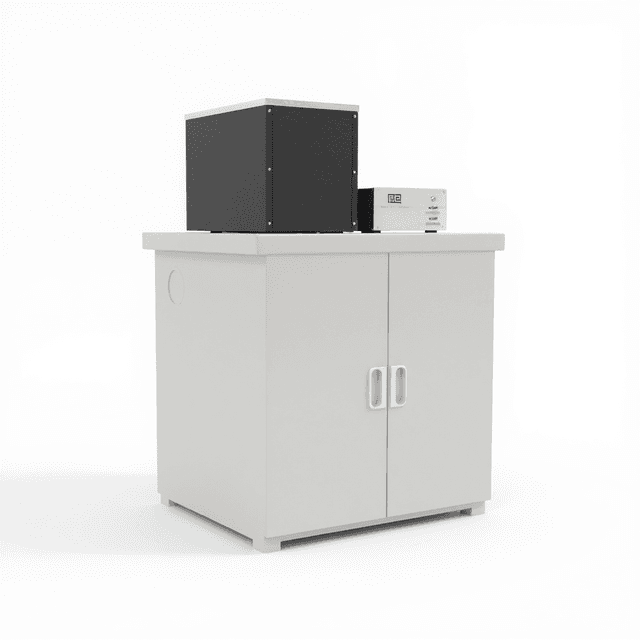
Rotarod Test
Automated behavioral testing apparatus for quantitative assessment of rodent motor coordination and balance using programmable rotating rod protocols with infrared fall detection.
| angular_acceleration | 0.1-50 RPM |
| acceleration_time_range | 1-4999 seconds |
| run_time | 1-900 minutes |
| speed_modes | Constant or Accelerating |
| device_configurations | 4-lane, 6-lane |
| sensor_type | Precision IR Sensor |
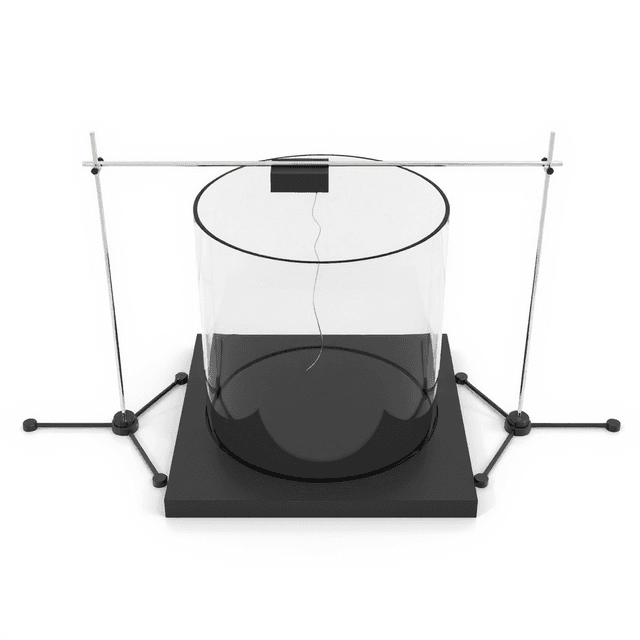
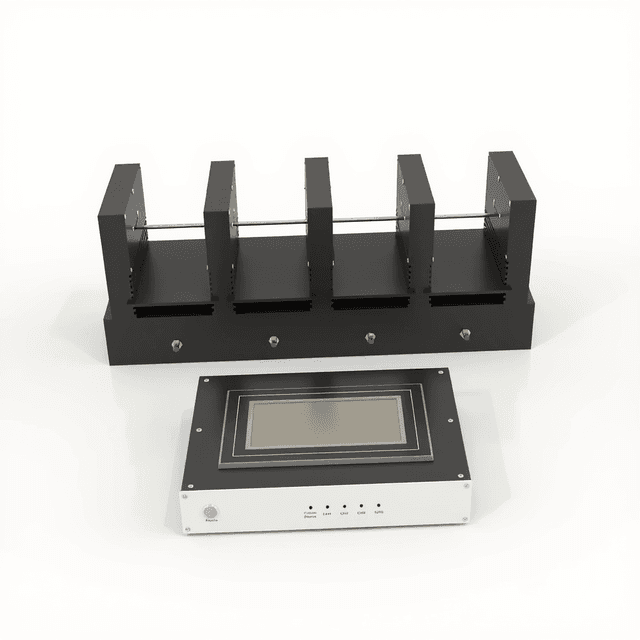
The Rotarod Test is a standardized behavioral assessment apparatus for evaluating motor coordination, balance, and learning in rodents. The device utilizes the animal's natural fear of falling as motivation to maintain balance on a rotating rod, providing quantitative measurement of motor performance through latency to fall metrics. Available in 4-lane and 6-lane configurations with species-specific rod diameters (3cm for mice, 6cm for rats), the system accommodates simultaneous testing of multiple subjects with independent lane tracking.
The apparatus features programmable speed control (0.1-99.9 RPM with 0.1 RPM accuracy) and acceleration protocols (0.1-50 RPM acceleration range), enabling both constant-speed and progressive acceleration paradigms. Precision infrared sensors automatically detect falls and record data through the integrated Conductor Software, eliminating manual timing errors. The system includes safety features such as adjustable fall height (16cm standard) with soft landing surfaces and horizontal ridges on the rod for improved grip stability.
How It Works
The Rotarod Test operates on the principle of forced motor coordination under the natural behavioral drive to avoid falling. Subjects are placed on a horizontal rotating rod where they must continuously adjust their gait and balance to match the rod's rotational speed. The test exploits the animal's instinctive fear of falling to provide consistent motivation without external reinforcement or punishment.
Precision infrared sensors positioned beneath each lane detect when an animal falls from the rod, automatically recording the latency to fall with millisecond precision. The system can operate in constant-speed mode for baseline motor assessment or accelerating mode (0.1-50 RPM acceleration over 1-4999 seconds) to evaluate motor adaptation and maximum performance capacity. Real-time data display shows duration, revolutions completed, fall speed, and rotation direction for immediate protocol monitoring.
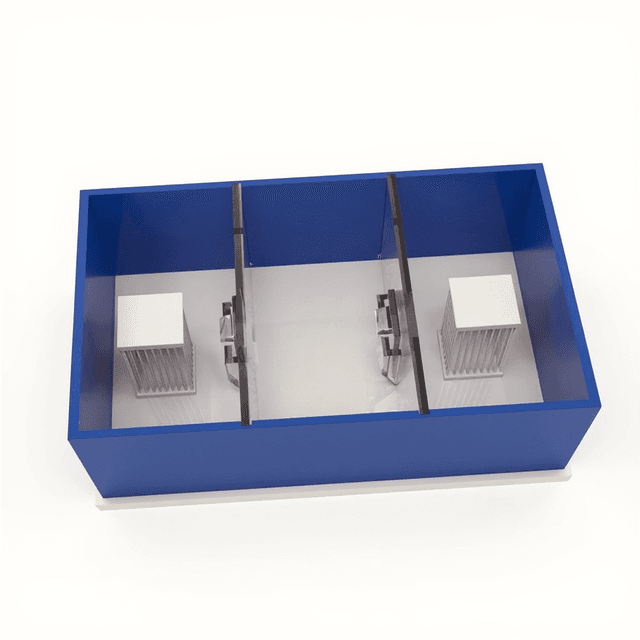
The rod surface features horizontal ridges that provide standardized grip conditions while preventing excessive clinging behavior that could confound motor assessment. Lane dividers ensure independent testing of multiple subjects, while the adjustable floor height allows customization of fall consequences to match experimental requirements without causing injury.
Features & Benefits
angular_acceleration
- 0.1-50 RPM
acceleration_time_range
- 1-4999 seconds
run_time
- 1-900 minutes
speed_modes
- Constant or Accelerating
device_configurations
- 4-lane, 6-lane
sensor_type
- Precision IR Sensor
data_tracking
- Lane independent tracking, auto start/stop
data_export
- CSV file to Excel
safety_features
- Minimal height & soft landing prevents harm
rod_features
- Horizontal ridges for grip
sensitivity_wheel_rungs_mice
- 30 rungs
sensitivity_wheel_rungs_rats
- 25 rungs
software_included
- Conductor Software (Free with order)
Device Type
- 4-lane
- 6-lane
Behavioral Construct
- Motor Coordination
- Balance
- Motor Learning
- Motor Performance
- Locomotor Function
Automation Level
- fully-automated
Speed/RPM
- 0.1-99.9 RPM
Accuracy
- 0.1 RPM
Display Type
- Real-Time Display
Research Domain
- Aging Research
- Behavioral Pharmacology
- Learning and Memory
- Motor Function
- Neurodegeneration
- Neuroscience
- Toxicology
Species
- Mouse
- Rat
Weight
- 17.0 lbs
Dimensions
- L: 56.0 in
- W: 38.0 in
- H: 44.0 in
Comparison Guide
| Feature | This Product | Typical Alternative | Advantage |
|---|---|---|---|
| Speed Range and Accuracy | 0.1-99.9 RPM with 0.1 RPM accuracy | Entry-level models often provide 1-60 RPM ranges with lower precision | Wider speed range enables testing from subtle motor deficits to maximum performance capacity with precise protocol control. |
| Lane Configuration Options | Available in 4-lane (rat) and 6-lane (mouse) configurations | Many systems offer single configuration only | Species-optimized designs with appropriate lane widths maximize throughput while ensuring proper biomechanical scaling. |
| Acceleration Programming | 0.1-50 RPM acceleration over 1-4999 seconds | Basic models may offer limited acceleration options | Flexible acceleration protocols enable both gentle ramp testing and aggressive challenge paradigms for comprehensive motor assessment. |
| Fall Detection System | Precision infrared sensors with automatic data logging | Some systems rely on manual timing or simple contact sensors | Infrared detection provides millisecond accuracy without physical contact artifacts that could influence animal behavior. |
| Data Export and Integration | CSV export with real-time display of duration, revolutions, and fall speed | Basic systems may provide limited data output options | Comprehensive data capture supports detailed statistical analysis and protocol optimization for research publications. |
| Safety and Animal Welfare | Adjustable 16cm fall height with soft landing and horizontal grip ridges | Fixed height systems with varying safety features | Customizable fall consequences enable protocol optimization while maintaining animal welfare standards throughout repeated testing. |
This automated Rotarod system provides comprehensive motor coordination assessment through precision speed control, automated data collection, and species-optimized configurations. The combination of flexible programming, infrared fall detection, and integrated software supports both routine behavioral screening and specialized motor research applications.
Practical Tips
Verify speed accuracy weekly using a digital tachometer at 5, 20, and 40 RPM settings.
Why: Speed drift over time can introduce systematic errors that compromise data reproducibility across testing sessions.
Clean rod surface with 70% ethanol between subjects and inspect horizontal ridges monthly for wear patterns.
Why: Consistent grip conditions are essential for standardized motor assessment, and ridge wear can gradually alter task difficulty.
Maintain consistent ambient temperature (22±2°C) and lighting conditions during testing sessions.
Why: Environmental factors can influence motor performance and introduce confounding variables in longitudinal studies.
Randomize lane assignments across treatment groups to control for potential lane-specific performance differences.
Why: Subtle mechanical variations between lanes could introduce bias if treatment groups are consistently assigned to specific positions.
If sensors show intermittent detection, verify that the fall height allows complete beam interruption when animals drop.
Why: Partial beam breaks can cause false readings, particularly with smaller mice that may not fully interrupt the infrared path.
Establish minimum trial duration criteria (e.g., >10 seconds) to exclude immediate falls that may indicate handling stress rather than motor deficit.
Why: Very short latencies often reflect behavioral factors rather than motor coordination deficits and can skew statistical analyses.
Monitor animals for signs of fatigue during repeated testing sessions and implement rest periods as needed.
Why: Motor fatigue can confound coordination measurements and may compromise animal welfare during intensive testing protocols.
Document rod surface condition and ridge wear as part of protocol standardization for longitudinal studies.
Why: Progressive surface changes can alter grip characteristics over time, affecting the consistency of motor challenge across study phases.
Setup Guide
What’s in the Box
- Rotarod apparatus (4-lane or 6-lane configuration)
- Conductor Software with USB interface cable
- Lane dividers and safety inserts
- Power adapter and interface cables
- User manual and protocol guides
- Calibration verification tools (typical)
- Quick reference protocol cards (typical)
Warranty
ConductScience provides a standard one-year manufacturer warranty covering defects in materials and workmanship, with comprehensive technical support for software integration and protocol development.
Compliance
References
Background reading relevant to this product:
What is the Rotarod Test?
The Rotarod Test is a behavioral assay that evaluates motor coordination, balance, and endurance in rodents by measuring the time an animal can maintain itself on a rotating rod at increasing speeds.
How does the Rotarod Test work?
Animals are placed on a horizontal rotating rod that gradually accelerates. The latency to fall is recorded as a measure of motor function. Multiple trials across days can assess motor learning and progressive motor deficits.
What research applications use the Rotarod Test?
The Rotarod is the standard test for motor function in Parkinson's disease, ALS, ataxia, and stroke models. It is also used to screen drugs for motor side effects and to evaluate cerebellar function.
Have a question about this product?
Frequently Bought Together
Upgrade Options