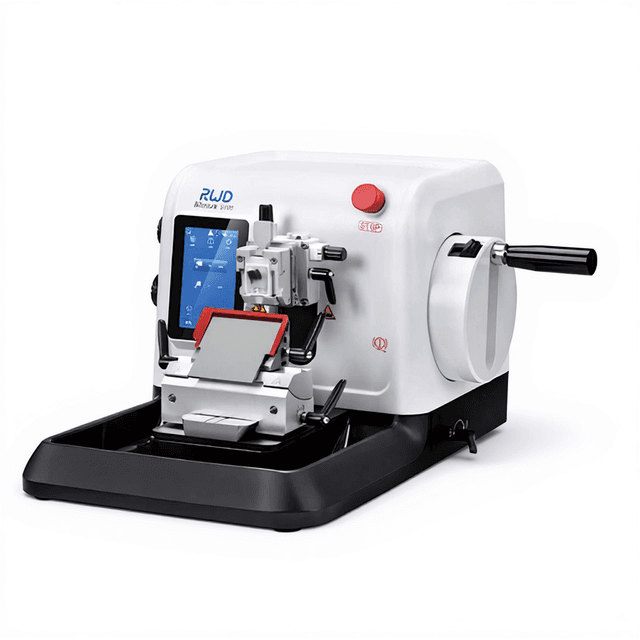
Spin Coater for Microfluidics
Precision spin coating system for uniform photoresist and PDMS thin film deposition in microfluidic device fabrication.
| Automation Level | semi-automated |
| Brand | ConductScience |

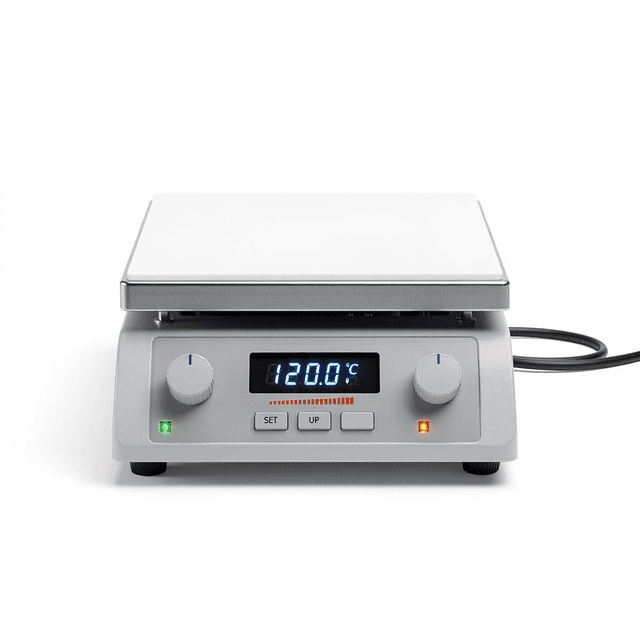
The Spin Coater for Microfluidics is a precision coating instrument designed for uniform thin film deposition in microfluidic device fabrication. This benchtop system enables controlled application of photoresist materials and polydimethylsiloxane (PDMS) films with consistent thickness across substrate surfaces. The compact 300mm footprint accommodates standard laboratory workflows while providing the rotational control necessary for reproducible coating parameters.
The system supports critical steps in microfluidic device manufacturing, including photolithographic patterning and soft lithography processes. Researchers utilize this equipment to achieve uniform coating thickness essential for precise channel geometries and surface functionalization in lab-on-chip applications.
How It Works
Spin coating operates on the principle of centrifugal force distribution of liquid materials across a rotating substrate. When the substrate is secured to the rotating chuck and photoresist or PDMS solution is dispensed onto the surface, rotational acceleration spreads the material radially outward. The balance between centrifugal forces, viscous forces, and surface tension determines the final film thickness.
Film thickness is primarily controlled by spin speed and solution viscosity, following the relationship where thickness is proportional to the square root of viscosity divided by angular velocity. During the coating process, solvent evaporation occurs simultaneously with spreading, contributing to film formation and final thickness. The controlled acceleration and deceleration profiles ensure uniform distribution while minimizing edge effects that could compromise coating quality.
Features & Benefits
Automation Level
- semi-automated
Brand
- ConductScience
Research Domain
- Analytical Chemistry
- Cell Biology
- Clinical Diagnostics
- Materials Science
- Microbiology
- Pharmaceutical QC
Weight
- 12.0 kg
Dimensions
- L: 300.0 mm
- W: 300.0 mm
- H: 200.0 mm
Comparison Guide
| Feature | This Product | Typical Alternative | Advantage |
|---|---|---|---|
| Footprint Size | 300mm x 300mm compact design | Larger systems often require 600mm or greater footprint | Fits standard laboratory benchtops without requiring dedicated floor space or specialized installation. |
| Application Scope | Optimized for photoresist and PDMS coating | General-purpose systems may lack optimization for microfluidic materials | Provides parameters specifically suited to microfluidic device fabrication requirements. |
| Weight and Stability | 12 kg operational weight | Entry-level models often have lighter construction | Enhanced mechanical stability reduces vibration-induced coating defects during high-speed operation. |
| Laboratory Integration | Benchtop design for standard lab environments | Industrial systems may require specialized installation | Integrates directly into existing laboratory workflow without infrastructure modifications. |
This spin coater combines the precision required for microfluidic applications with a laboratory-appropriate form factor. The system provides specialized capabilities for photoresist and PDMS coating while maintaining the compact design and mechanical stability essential for research environments.
Practical Tips
Verify rotational speed accuracy using a calibrated tachometer before critical coating runs.
Why: Speed variations directly affect coating thickness and uniformity, impacting device performance.
Clean the chuck surface with appropriate solvents after each use and inspect for residue buildup.
Why: Contamination affects substrate adhesion and can cause coating defects or thickness variation.
Allow substrates to reach room temperature before coating to prevent condensation effects.
Why: Temperature differences can cause uneven coating due to altered viscosity and evaporation rates.
Check for mechanical vibration sources if coating shows radial thickness variations or streaking patterns.
Why: External vibrations during spinning can create periodic thickness variations that compromise device uniformity.
Document spin parameters and environmental conditions for each coating run to establish process repeatability.
Why: Systematic record-keeping enables optimization and troubleshooting of coating protocols.
Ensure proper ventilation and use appropriate PPE when handling photoresist and PDMS materials.
Why: Solvent vapors and uncured polymers present health hazards requiring proper exposure control.
Use controlled acceleration and deceleration profiles rather than abrupt start/stop to minimize edge effects.
Why: Gradual speed changes reduce fluid instabilities that can cause thickness non-uniformity near substrate edges.
Inspect and lubricate rotating components according to manufacturer schedule to maintain speed accuracy.
Why: Mechanical wear can introduce speed variations and vibrations that degrade coating quality over time.
Setup Guide
What’s in the Box
- Spin coater main unit
- Substrate chuck assembly
- Power supply and cables
- Safety shield (typical)
- User manual and operating procedures
- Cleaning kit (typical)
- Sample substrates for testing (typical)
Warranty
ConductScience provides a standard one-year manufacturer warranty covering defects in materials and workmanship. Technical support includes installation guidance, operational training, and troubleshooting assistance for optimal coating performance.
Compliance
What substrate sizes are compatible with the 300mm chuck?
Consult product datasheet for specific chuck diameter and substrate compatibility. The 300mm system footprint suggests accommodation of standard wafer sizes, but exact specifications depend on chuck design and clamping mechanism.
What spin speed range is available for different coating thicknesses?
Spin speed capabilities determine achievable coating thickness range. Consult product datasheet for RPM specifications, as thickness varies inversely with the square root of rotational velocity.
How is coating uniformity maintained across the substrate?
Uniformity depends on controlled acceleration profiles, vibration isolation, and proper substrate centering. The 12 kg mass provides mechanical stability, while controlled speed ramping minimizes radial thickness variation.
What ventilation requirements are needed for solvent management?
Photoresist and PDMS coating generates solvent vapors requiring appropriate fume extraction. Install local exhaust ventilation with sufficient airflow to maintain safe exposure levels during operation.
Can the system handle both positive and negative photoresists?
The mechanical coating process is compatible with various photoresist chemistries. Specific material compatibility and optimal coating parameters should be verified through process development trials.
What cleaning procedures are required between different materials?
Thorough chuck cleaning with appropriate solvents prevents cross-contamination between photoresist and PDMS applications. Establish cleaning protocols specific to material combinations used in your workflow.
How does this compare to manual coating methods?
Spin coating provides superior thickness uniformity and repeatability compared to manual application techniques, essential for reproducible microfluidic device performance and dimensional control.
What substrate sizes is the spin coater compatible with?
The WH-SC-01 spin coater is compatible with substrates of 8 mm diameter or 1 to 6 inches in diameter.
Is the spin coater compatible with QCM-D gold sensors (12–13 mm diameter)?
No. QCM-D gold sensors with a diameter of 12–13 mm are not compatible with this spin coater. The WH-SC-01 supports 8 mm substrates or substrates in the 1–6 inch range; the 12–13 mm sensor diameter falls outside this range.
What type of vacuum pump does the spin coater use?
The standard model uses an oil-filled (Oil-Sealed Rotary Vane) vacuum pump, which holds the substrate securely on the vacuum chuck during spin coating. An oil-free vacuum pump variant is also available for applications where oil contamination is a concern.
What is the maximum rotation speed of the spin coater?
The maximum rotation speed is 8,500 RPM. Rotation speed is adjustable.
Have a question about this product?
Accessories
Enhance your setup with compatible accessories