Tablet Hardness Tester
Precision tablet hardness testers providing quantitative crushing strength measurement from 2-200N with 0.1N resolution for pharmaceutical quality control applications.
| pressure_sensor | High-precision pressure sensor |
| operation_modes | Manual loading and manual tablet compressing for THT-1, manual single tablet and automatic continuation for THT-2/3 |
| automatic_functions | Automatic display, automatic latching, automatic reset, automatic cycle test, automatic linear error correction and automatic fault diagnosis |
| unit_conversion | Unit conversion function available before or after tests |
| data_processing | Statistics, analysis, printing and display available for test result (THT-2 only) |
| built_in_printer | Built-in printer (THT-2 only) |

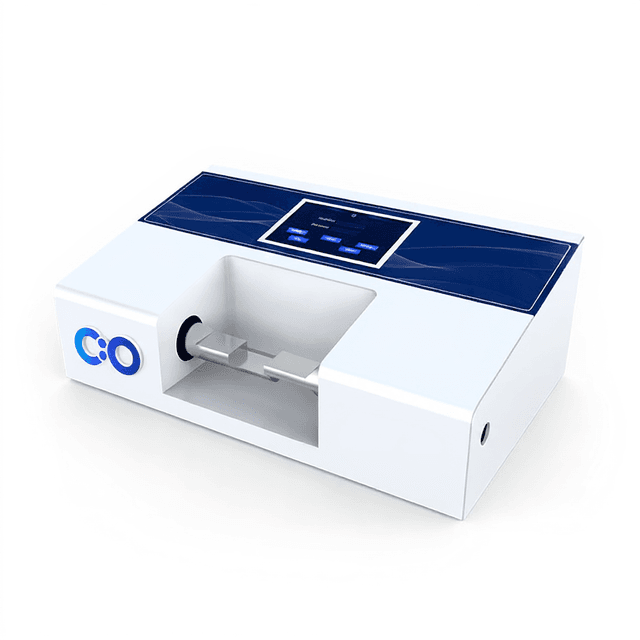
The Tablet Hardness Tester series (BIO-THT-1/2/3) provides quantitative measurement of tablet crushing strength through calibrated compression testing. These instruments employ high-precision pressure sensors to determine the diametral crushing force required to fracture pharmaceutical tablets, delivering critical quality control data for tablet manufacturing processes. The measurement principle follows pharmacopeial guidelines for resistance to crushing tests, where tablets are subjected to controlled compression until failure occurs.
Available in three configurations offering manual to semi-automated operation modes, these systems provide test ranges from 2-200N (0.2-20kg) with 0.1N resolution and ±0.5% accuracy. Advanced models feature integrated data processing capabilities including statistical analysis, automatic cycle testing, and built-in thermal printing for documentation of test results according to pharmaceutical quality control protocols.
How It Works
Tablet hardness testing operates on the principle of diametral compression, where a tablet is positioned between two opposing compression platens and subjected to gradually increasing force until fracture occurs. The instrument applies force perpendicular to the tablet's diameter while continuously monitoring the applied load through high-precision pressure sensors. When the tablet fails, the maximum force recorded immediately prior to fracture represents the tablet hardness value.
The measurement process involves automated force application with real-time monitoring displayed on an LCD interface. The system captures peak force values with 0.1N resolution, automatically accounts for linear measurement errors through built-in correction algorithms, and provides immediate digital readout of crushing strength values. Advanced models incorporate automatic cycle testing capabilities, allowing sequential testing of multiple tablets with statistical analysis of results including mean, standard deviation, and coefficient of variation calculations.
Features & Benefits
Model
- BIO-THT-1
- BIO-THT-2
- BIO-THT-3
pressure_sensor
- High-precision pressure sensor
operation_modes
- Manual loading and manual tablet compressing for THT-1, manual single tablet and automatic continuation for THT-2/3
automatic_functions
- Automatic display, automatic latching, automatic reset, automatic cycle test, automatic linear error correction and automatic fault diagnosis
unit_conversion
- Unit conversion function available before or after tests
data_processing
- Statistics, analysis, printing and display available for test result (THT-2 only)
built_in_printer
- Built-in printer (THT-2 only)
Automation Level
- semi-automated
Test Range
- 2~200N (0.2~20kg)
Dimensions (W×D×H)
- 280×180×110mm
Display Type
- LCD
Research Domain
- Analytical Chemistry
- Food Science
- Materials Science
- Pharmaceutical QC
Accuracy
- ±0.5%
Weight
- 6kg
Power/Voltage
- AC110/220V±10%, 50/60Hz
Weight
- 44.09 kg
Dimensions
- L: 11.02 mm
- W: 7.09 mm
- H: 4.33 mm
Comparison Guide
| Feature | This Product | Typical Alternative | Advantage |
|---|---|---|---|
| Force Measurement Range | 2-200N (0.2-20kg) standard range | Entry-level models often offer narrower ranges of 50-100N maximum | Wide range accommodates diverse tablet formulations from soft chewables to highly compressed dosage forms in a single instrument. |
| Measurement Resolution | 0.1N resolution with ±0.5% accuracy | Basic models typically provide 1N resolution with lower accuracy | High precision enables detection of small batch-to-batch variations critical for pharmaceutical quality control. |
| Operation Modes | Three model configurations from manual to semi-automated | Single operation mode per instrument | Allows laboratories to select automation level matching their throughput requirements and budget constraints. |
| Data Processing | Integrated statistical analysis with automatic cycle testing | Manual data recording and external calculation | Streamlines multi-tablet testing protocols and provides immediate statistical analysis for quality assessment. |
| Documentation Capabilities | Built-in thermal printer (THT-2) with real-time results | Manual transcription or external printing required | Immediate hard-copy documentation supports regulatory compliance and reduces transcription errors. |
The Tablet Hardness Tester series combines pharmaceutical-grade measurement precision with flexible automation options and integrated data processing. The wide force range, high resolution, and built-in statistical analysis capabilities provide comprehensive tablet characterization for quality control applications.
Practical Tips
Perform calibration verification using certified reference tablets or calibrated force standards at the beginning of each testing session.
Why: Ensures measurement accuracy and traceability for pharmaceutical quality control requirements.
Allow tablets to equilibrate to room temperature before testing and position tablets consistently with their largest diameter perpendicular to compression platens.
Why: Temperature affects tablet mechanical properties and consistent positioning ensures reproducible hardness measurements.
Clean compression platens with lint-free cloth after each testing session and inspect for wear or damage that could affect force distribution.
Why: Platen condition directly impacts measurement accuracy and prevents tablet fragments from affecting subsequent tests.
Test minimum of 10 tablets per batch and evaluate coefficient of variation to assess measurement reproducibility and tablet uniformity.
Why: Adequate sample size and statistical analysis provide reliable assessment of tablet quality and manufacturing consistency.
If readings appear inconsistent, verify platen alignment and check for tablet fragments interfering with compression mechanism.
Why: Mechanical interference is the most common source of erratic hardness measurements in routine testing.
Keep fingers clear of compression platens during operation and dispose of tablet fragments properly to prevent cross-contamination.
Why: Compression forces can cause injury and tablet fragments may interfere with subsequent measurements or contaminate samples.
Setup Guide
What’s in the Box
- Tablet Hardness Tester main unit
- AC power adapter and cord
- Compression platens and tablet holders
- LCD display interface
- User manual and operation guide
- Calibration certificate (typical)
- Sample test tablets for verification (typical)
Warranty
ConductScience provides a standard one-year manufacturer warranty covering defects in materials and workmanship, with technical support for calibration procedures and operational guidance.
Compliance
References
Background reading relevant to this product:
What is the measurement precision for small differences in tablet hardness between formulation batches?
The system provides 0.1N resolution with ±0.5% accuracy, enabling detection of hardness differences as small as 0.1N, suitable for identifying formulation variations and process drift in pharmaceutical manufacturing.
How does the automatic cycle testing function work for multi-tablet sampling protocols?
Advanced models (THT-2/3) offer automatic continuation after manual tablet loading, enabling sequential testing of multiple tablets with integrated statistical analysis including mean, standard deviation, and coefficient of variation calculations.
Can the instrument accommodate both small and large tablet formats?
The 2-200N test range covers tablets from soft chewables requiring minimal force to highly compressed formulations, though specific tablet diameter and thickness limitations should be verified against the compression platen specifications.
What data output options are available for regulatory documentation?
THT-2 includes built-in thermal printing for immediate hard-copy results, while all models provide LCD display with unit conversion capabilities. Consult product datasheet for digital data export capabilities.
How frequently does the instrument require calibration verification?
The automatic linear error correction compensates for measurement drift, though formal calibration frequency depends on laboratory QC protocols and regulatory requirements. Monthly verification using reference standards is common in pharmaceutical environments.
What maintenance procedures are required for consistent performance?
Regular cleaning of compression platens, verification of platen alignment, and periodic calibration checks are essential. The automatic fault diagnosis feature alerts users to operational issues requiring attention.
Have a question about this product?
Accessories
Enhance your setup with compatible accessories
Upgrade Options