The Lobster maze (effect of immediate prior experience)
Behavioral testing apparatus for investigating how immediate prior experience influences spatial navigation and learning in rodents.

Louise Corscadden, PhD
Director of Science · ConductScience
Ask Louise about The Lobster maze (effect of immediate prior experience) fit, setup, configuration, or quote prep.
Already working with us? Sign in to connect this with My Scientist.
Key Specifications
Full details →- Model fit
- Mouse, Rat
- SKU family
- CS-958158
- Shipping box
- 65.0 x 36.0 x 27.0 cm
- Ordering
- Online checkout and quote request available
- Category
- Behavioral Mazes
- Build notes
- Confirm accessories, station layout, and support needs before purchase
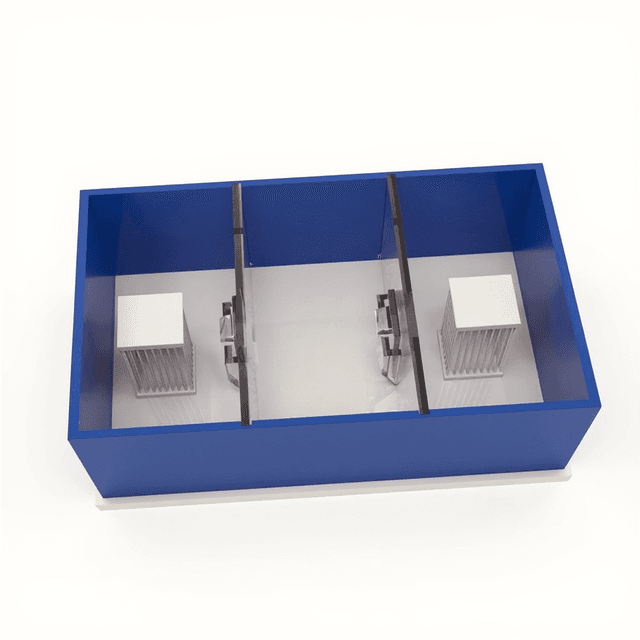
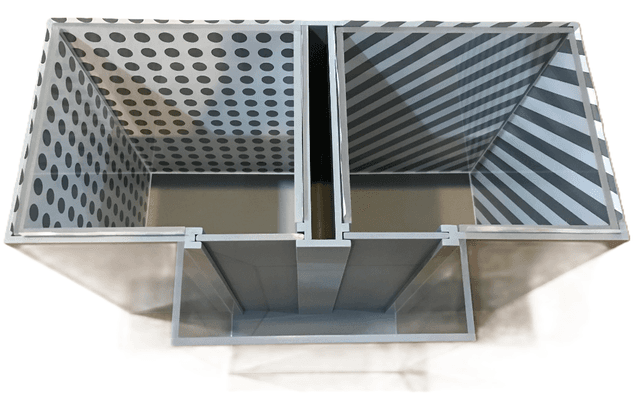
The Lobster maze is a specialized behavioral testing apparatus designed to investigate the effects of immediate prior experience on spatial navigation and learning in rodents. This maze system allows researchers to examine how recent experiences influence subsequent spatial decision-making and memory formation processes.
The apparatus enables controlled studies of experience-dependent learning plasticity, providing insights into how environmental context and temporal factors modulate cognitive performance. The maze design permits systematic investigation of how prior exposure to spatial configurations affects navigation strategies and learning acquisition rates in laboratory animals.
How It Works
The Lobster maze operates on principles of spatial learning and experience-dependent plasticity. The apparatus presents controlled spatial configurations that allow researchers to manipulate prior experience variables while measuring subsequent learning performance. The maze design enables systematic comparison of naive versus experienced subjects in spatial navigation tasks.
The testing protocol typically involves exposing subjects to an initial spatial configuration, then measuring performance changes when the configuration is modified or when subjects encounter related spatial challenges. This approach isolates the contribution of immediate prior experience to learning acquisition and retention processes.
Features & Benefits
Behavioral Construct
- Spatial Learning
- Memory Transfer
- Experience-Dependent Learning
Automation Level
- manual
Research Domain
- Behavioral Pharmacology
- Learning & Memory Tests
- Neuroscience
Species
- Mouse
- Rat
Compatible Tracking Software
- ConductVision
Shipping weight
- 6.06 lb
Shipping box
- L: 65.0 cm
- W: 36.0 cm
- H: 27.0 cm
| Feature | This Product | Typical Alternative | Advantage |
|---|---|---|---|
| Experience Manipulation | Specialized design for studying immediate prior experience effects | Standard mazes focus on acquisition rather than experience transfer | Enables investigation of learning plasticity and memory transfer mechanisms |
| Protocol Flexibility | Configurable for various experience-dependent paradigms | Fixed protocols in traditional spatial learning tests | Allows customization of experience variables to match specific research questions |
| Temporal Control | Designed for controlled timing between experience phases | Limited temporal manipulation in standard mazes | Permits systematic investigation of memory consolidation timescales |
The Lobster maze provides specialized capabilities for investigating experience-dependent learning effects with configurable protocols and controlled temporal manipulation between testing phases.
Practical Tips
Maintain consistent environmental conditions and handling procedures between experience phases to isolate specific learning transfer effects.
Why: Environmental consistency ensures that observed differences reflect experience manipulation rather than confounding variables.
Include appropriate control groups with equivalent exposure time but different spatial configurations.
Why: Controls help distinguish specific experience effects from general exposure or handling effects.
Record detailed behavioral observations beyond basic performance metrics to identify strategy changes.
Why: Qualitative behavioral changes often provide insights into underlying cognitive mechanisms.
Clean maze surfaces thoroughly between subjects using appropriate disinfectants to eliminate olfactory cues.
Why: Residual scent marks can influence navigation behavior and confound results.
If subjects show no experience effects, verify that the manipulation is sufficiently salient and that intervals allow adequate memory consolidation.
Why: Weak manipulations or inappropriate timing can mask genuine experience-dependent learning effects.
Ensure maze edges and surfaces are smooth to prevent injury during active exploration behaviors.
Why: Animal welfare and safety requirements mandate appropriate apparatus design for behavioral testing.
Setup Guide
What’s in the Box
- Maze structure components (typical)
- Assembly hardware (typical)
- Configuration guide (typical)
- Testing protocol documentation (typical)
- Parts inventory list (typical)
Warranty
ConductScience provides standard manufacturer warranty coverage with technical support for proper installation and operation guidance.
Compliance
References
Background reading relevant to this product:
What specific aspects of prior experience can be manipulated with this maze?
The maze allows manipulation of spatial configuration exposure, timing intervals between experience phases, and pathway complexity to study various forms of experience-dependent learning effects.
How do you control for non-specific effects when studying experience influence?
Proper experimental design includes control groups with equivalent handling and exposure time but different spatial configurations to isolate specific experience effects.
What behavioral parameters should be measured during testing?
Key measurements include latency to complete tasks, error rates, path efficiency, and learning acquisition curves across different experience conditions.
How long should the interval be between experience phases?
Interval timing depends on research objectives, ranging from immediate testing for working memory effects to hours or days for consolidation studies.
What sample sizes are typically required for reliable results?
Sample size depends on effect size expectations and statistical power requirements, but typically 8-12 subjects per group provide adequate power for most behavioral comparisons.
How does this compare to standard spatial learning mazes?
Unlike traditional mazes focused on acquisition, this system specifically examines how prior experience modulates subsequent learning, providing insights into learning transfer and interference effects.
Have a question about this product?
Have a question? Just ask.
Send it over and we'll email you a personalized answer — no call, no scheduling.
Prefer to talk it through?