Tissue Cassette Laser Printer, 2.5 sec marking
Non-contact laser marking system for tissue embedding cassettes with integrated purification and multi-platform integration capabilities for pathology laboratories.

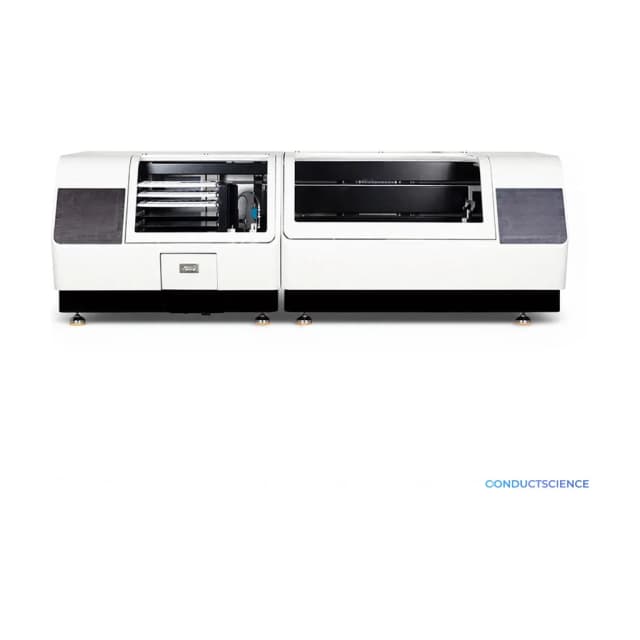
The Labs Tissue Embedding Cassette Laser Printer represents a precision marking solution for pathology laboratories requiring accurate, permanent specimen identification. This non-contact laser marking system utilizes advanced laser technology to create durable markings on tissue embedding cassettes without physical contact or consumable materials. The system accommodates multiple cassette types including no cover, conjoined cover, and split cover configurations across multi-color substrates.
Designed for high-throughput pathology workflows, the printer achieves marking speeds up to 2.5 seconds per cassette depending on content complexity. The integrated purification system with carbon and HEPA filtration manages laser-generated particulates and vapors during operation. The 8-inch LED display provides intuitive operation control, while comprehensive system integration capabilities support connection to laboratory information management systems including LIS, HIS, PIS, and PACS platforms.
How It Works
The laser marking system employs non-contact laser technology to create permanent markings through controlled thermal interaction with cassette surface materials. The laser beam generates localized heating that induces color changes or surface modifications in the cassette material without mechanical contact or material removal. This process creates high-contrast, permanent markings resistant to chemical processing and temperature variations encountered during tissue processing workflows.
The integrated purification system captures laser-generated particulates and volatile compounds through a dual-stage filtration process. Carbon filtration removes organic vapors and odors, while HEPA filtration captures microscopic particles to maintain laboratory air quality standards. The system supports variable print angles at both 45° and 35° orientations to accommodate different cassette designs and mounting configurations.
Content generation capabilities include alphanumeric characters, Chinese characters, one-dimensional barcodes, QR codes, and custom patterns. The marking process is controlled through the integrated 8-inch LED interface, with content data transmitted from connected laboratory information systems or local computer workstations running Windows 7, Windows 10, or Linux operating systems.
Features & Benefits
Weight
- 36.71 kg
Dimensions
- L: 78.0 mm
- W: 70.0 mm
- H: 73.3 mm
Comparison Guide
| Feature | This Product | Typical Alternative | Advantage |
|---|---|---|---|
| Marking Technology | Non-contact laser marking with thermal material modification | Inkjet or thermal transfer methods requiring consumable ribbons or cartridges | Eliminates ongoing consumable costs while providing chemical-resistant, permanent markings that withstand all tissue processing steps. |
| Processing Speed | Up to 2.5 seconds per cassette | Entry-level systems often require 5-10 seconds per cassette for equivalent content | Maintains laboratory productivity during high-volume specimen processing periods without creating workflow bottlenecks. |
| Content Capability | Numbers, characters, Chinese text, 1D barcodes, QR codes, and custom patterns | Basic systems typically limited to simple text and basic barcode formats | Supports comprehensive specimen identification strategies including international text and advanced barcode formats for complex laboratory workflows. |
| System Integration | LIS, HIS, PIS, and PACS connectivity with multi-platform support | Many systems require manual data entry or support limited integration options | Reduces transcription errors and improves workflow efficiency through automated data exchange with existing laboratory information systems. |
| Air Quality Management | Integrated dual-stage purification with carbon and HEPA filtration | Basic systems may lack filtration or require separate ventilation equipment | Maintains laboratory air quality standards without additional ventilation infrastructure or equipment purchases. |
| User Interface | 8-inch LED display with intuitive controls | Varies by model, with some offering smaller displays or basic indicator lights | Provides clear operational feedback and parameter adjustment capabilities for laboratory technicians managing multiple processing tasks. |
The system offers comprehensive marking capabilities with permanent laser technology, high-speed processing, and extensive system integration options. The integrated purification system and large LED interface distinguish it from basic marking solutions in laboratory environments.
Practical Tips
Verify print positioning accuracy using test cassettes from each manufacturer before processing production specimens, as cassette dimensions can vary slightly between suppliers.
Why: Ensures optimal marking placement and readability throughout the processing workflow.
Monitor filter replacement indicators on the LED display and maintain spare carbon and HEPA filters in laboratory inventory.
Why: Prevents air quality degradation and maintains consistent laser performance during high-volume processing periods.
Select appropriate print angle (45° or 35°) based on downstream processing equipment and cassette handling procedures in your laboratory.
Why: Optimizes marking visibility for technicians and automated processing systems throughout the workflow.
Configure system integration to automatically validate specimen identifiers against laboratory databases before marking to prevent duplicate or incorrect identifications.
Why: Reduces specimen identification errors and supports laboratory quality management systems.
Clean cassette positioning surfaces regularly with appropriate solvents to remove residue that may affect marking alignment or quality.
Why: Maintains consistent marking position accuracy and prevents processing delays due to positioning errors.
Ensure adequate ventilation around the unit even with integrated filtration, and avoid blocking air intake or exhaust ports during operation.
Why: Supports optimal filtration system performance and maintains safe laboratory working conditions.
Test new cassette types or colors with sample markings before processing large batches to verify marking contrast and permanence.
Why: Ensures consistent marking quality across different cassette materials and prevents processing delays.
Perform periodic marking quality assessments using processed cassettes that have completed full histological workflows including chemical exposures.
Why: Verifies long-term marking permanence and system performance under actual laboratory conditions.
Setup Guide
What’s in the Box
- Laser cassette printer main unit
- Power supply cable and adapters
- USB communication cable
- Cassette positioning guides and holders (typical)
- Software installation media and license
- User manual and technical documentation
- Filter replacement indicators and initial filter set (typical)
- Calibration test cassettes (typical)
Warranty
ConductScience provides standard one-year manufacturer warranty covering defects in materials and workmanship, with technical support for software configuration and system integration assistance.
Compliance
References
Background reading relevant to this product:
What marking permanence can be expected during standard histological processing?
The laser markings are created through controlled thermal modification of cassette materials, providing permanent identification that withstands xylene clearing, alcohol dehydration, and paraffin infiltration temperatures up to 65°C without fading or degradation.
How does the system integrate with existing laboratory information management systems?
The printer supports direct connectivity to LIS, HIS, PIS, and PACS platforms through network protocols, enabling automated specimen data retrieval and reducing manual data entry errors in high-volume laboratories.
What maintenance is required for the integrated purification system?
The dual-stage filtration system requires periodic replacement of carbon and HEPA filters based on usage volume. Filter status monitoring through the LED display indicates replacement timing to maintain optimal air quality performance.
Can the system accommodate different cassette manufacturers and sizes?
The adjustable positioning system supports no cover, conjoined cover, and split cover cassette types across multiple manufacturers, with angle adjustment capabilities at 45° and 35° for optimal marking placement.
What content types and sizes can be printed on cassettes?
The system prints alphanumeric text, Chinese characters, 1D barcodes, QR codes, and custom patterns. Actual content size and complexity determine processing speed, with simple text achieving the fastest 2.5-second marking time.
How does printing speed vary with different content types?
Simple alphanumeric text achieves the fastest marking speed up to 2.5 seconds per cassette, while complex patterns, QR codes, and high character counts require proportionally longer processing times for optimal marking quality.
What computer systems are compatible for operation?
The printer software operates on Windows 7, Windows 10, and Linux platforms, providing flexibility for integration with existing laboratory computer infrastructure and network configurations.
How does the non-contact laser technology compare to inkjet or thermal transfer printing?
Laser marking eliminates consumable ribbon or ink costs, provides superior chemical resistance, and creates permanent markings that cannot smudge, fade, or detach during tissue processing workflows.
Have a question about this product?
Accessories
Enhance your setup with compatible accessories
Frequently Bought Together