Visual Cliff Apparatus
Behavioral testing apparatus for assessing depth perception and spatial cognition in rodents through cliff avoidance paradigms.
| warranty_length | 1 YEAR |
| storage_included | True |
| assembly_required | True |
| Automation Level | manual |

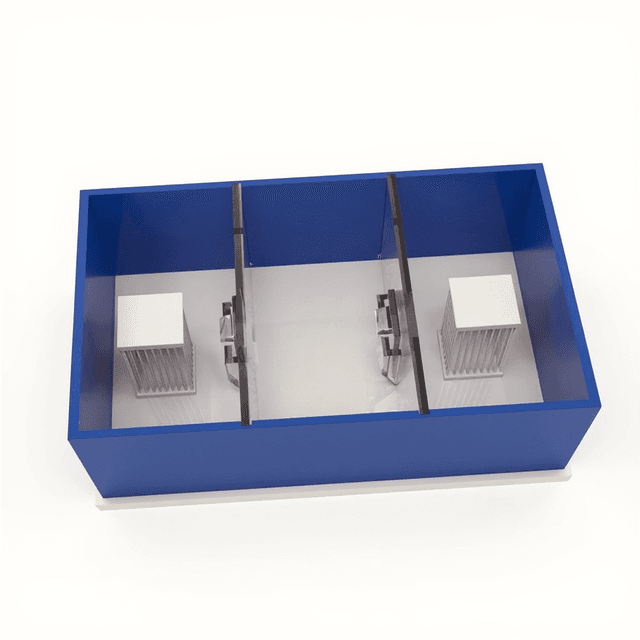
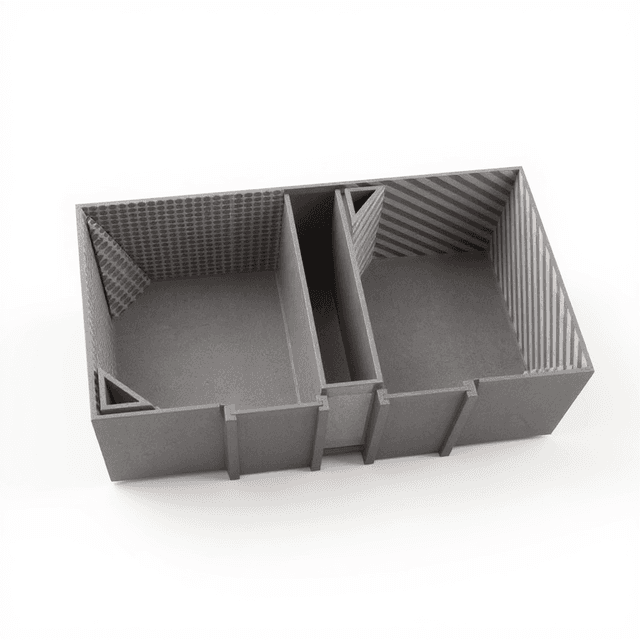
The Visual Cliff Apparatus is a specialized behavioral testing platform designed to assess depth perception and spatial cognition in laboratory rodents. This apparatus consists of a transparent glass surface positioned at height, with a shallow side displaying a checkerboard pattern directly beneath the glass and a deep side where the same pattern is positioned at ground level, creating the visual illusion of a cliff edge.
The apparatus exploits innate cliff avoidance behaviors to quantify visual-motor coordination and depth discrimination abilities without requiring extensive training protocols. Researchers utilize this paradigm to investigate perceptual development, spatial processing deficits, and the effects of genetic modifications or pharmacological interventions on visual-spatial cognition. The platform accommodates both mouse and rat subjects with species-specific dimensions optimized for natural exploratory behaviors.
How It Works
The Visual Cliff Apparatus operates on the principle of binocular depth perception and motion parallax cues to create a compelling illusion of spatial depth. The transparent glass surface provides uniform tactile support across both shallow and deep sides, while visual cues alone differentiate the apparent depth. On the shallow side, a checkerboard pattern is positioned directly beneath the glass surface, providing immediate visual texture feedback. On the deep side, an identical checkerboard pattern is placed at ground level, creating visual depth cues through perspective and texture gradient differences.
Rodents naturally exhibit cliff avoidance behaviors due to evolutionary pressure against falling from heights. When placed on the central platform, subjects can explore both sides while visual processing systems evaluate depth information. The apparatus measures exploration time, latency to cross, and preference ratios between shallow and deep sides. These metrics reflect the integration of visual depth cues with motor planning systems, providing quantitative assessment of spatial cognitive function.
Features & Benefits
warranty_length
- 1 YEAR
storage_included
- True
assembly_required
- True
Behavioral Construct
- depth perception
- spatial cognition
- cliff avoidance
- visual-motor coordination
- risk assessment
- exploratory behavior
Automation Level
- manual
Research Domain
- Anxiety and Depression
- Behavioral Pharmacology
- Developmental Biology
- Learning and Memory
- Neurodegeneration
- Neuroscience
Species
- Mouse
- Rat
Weight
- 6.06 kg
Dimensions
- L: 65.0 mm
- W: 36.0 mm
- H: 27.0 mm
Comparison Guide
| Feature | This Product | Typical Alternative | Advantage |
|---|---|---|---|
| Platform Height | 1m for mice, 1.33m for rats | Entry-level models often use lower heights | Appropriate heights ensure robust activation of cliff avoidance responses for reliable behavioral measurement. |
| Glass Surface Dimensions | 60cm x 60cm (mouse), 79.8cm x 79.8cm (rat) | Smaller platforms may limit natural exploration | Generous surface area accommodates full range of exploratory behaviors without spatial constraints. |
| Species-Specific Design | Optimized dimensions for both mouse and rat testing | Some models use fixed dimensions for all species | Scale-appropriate design ensures ecologically valid testing conditions for different rodent species. |
| Assembly Design | Modular construction with integrated storage | Fixed assemblies require permanent floor space | Space-efficient design enables flexible laboratory space management and equipment storage. |
This Visual Cliff Apparatus provides species-optimized platform dimensions with appropriate height specifications for robust cliff avoidance assessment. The modular design combines research-grade functionality with practical laboratory space management considerations.
Practical Tips
Verify platform height accuracy using a precision measuring device before beginning experimental protocols.
Why: Consistent height parameters ensure reproducible cliff avoidance responses across testing sessions.
Clean the glass surface with ethanol between subjects and inspect for scratches that could affect visual clarity.
Why: Surface contamination or damage can alter visual depth cues and compromise experimental validity.
Allow subjects 2-3 minutes of initial acclimation on the start platform before beginning formal testing.
Why: Acclimation reduces stress-related freezing behavior that can confound depth perception measurements.
If subjects show no cliff avoidance, verify that lighting conditions provide adequate contrast for the checkerboard patterns.
Why: Poor visual contrast can eliminate depth cues necessary for cliff perception and avoidance behaviors.
Record testing sessions from above using high-resolution video for post-hoc behavioral scoring and analysis verification.
Why: Video documentation enables detailed analysis of subtle behaviors and provides backup for real-time scoring accuracy.
Install safety barriers around the apparatus perimeter to prevent accidental falls during subject handling.
Why: Elevated platforms present fall risks during animal placement and retrieval procedures.
Setup Guide
What’s in the Box
- Glass testing plate (species-appropriate dimensions)
- Support framework components (typical)
- Checkerboard visual pattern sets
- Assembly hardware and mounting brackets (typical)
- Installation instructions and protocol guide (typical)
Warranty
ConductScience provides a one-year manufacturer warranty covering structural components and construction defects, with technical support for experimental setup and protocol optimization.
Compliance
What parameters should be measured during visual cliff testing?
Standard metrics include latency to approach the cliff edge, time spent on shallow vs deep sides, number of head dips over the cliff, and total exploration time. Additional measures may include freezing duration and return latency to the start platform.
How long should individual testing sessions last?
Typical testing sessions range from 5-15 minutes depending on the research question. Longer sessions may be required for developmental studies or pharmacological interventions with delayed onset effects.
What environmental controls are necessary for consistent results?
Maintain consistent overhead lighting to eliminate shadows, ensure quiet testing conditions, and standardize room temperature. The apparatus should be cleaned between subjects to remove olfactory cues that might influence behavior.
Can this apparatus accommodate subjects with visual impairments?
Yes, the apparatus is valuable for studying visual system deficits. Subjects with compromised vision may show altered cliff avoidance patterns, providing quantitative measures of visual function in disease models.
What age ranges are appropriate for testing?
Testing is typically conducted on subjects at least 3-4 weeks old when visual systems are sufficiently mature. The apparatus is suitable for studies spanning juvenile through aged subjects to assess developmental changes or age-related decline.
How does this compare to other spatial cognition tests?
The visual cliff requires no training and assesses innate spatial processing, unlike maze-based tests that involve learning components. It provides specific information about depth perception that complements other spatial tasks like the Morris water maze or Barnes maze.
Have a question about this product?
Accessories
Enhance your setup with compatible accessories
Frequently Bought Together

Upgrade Options