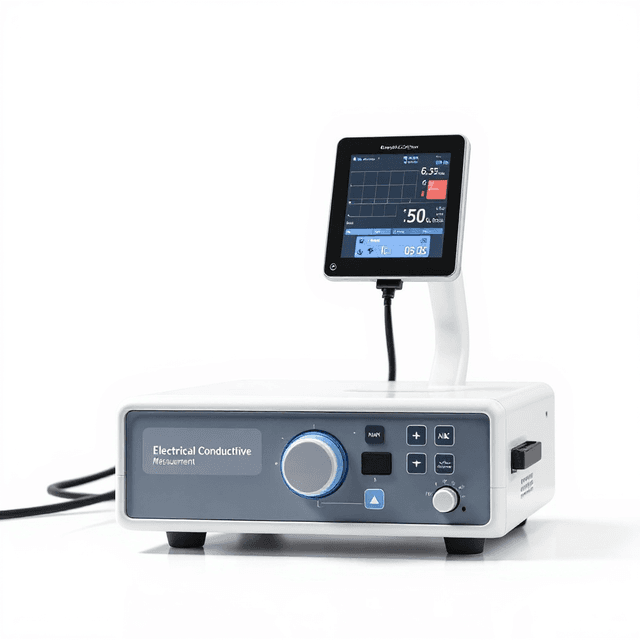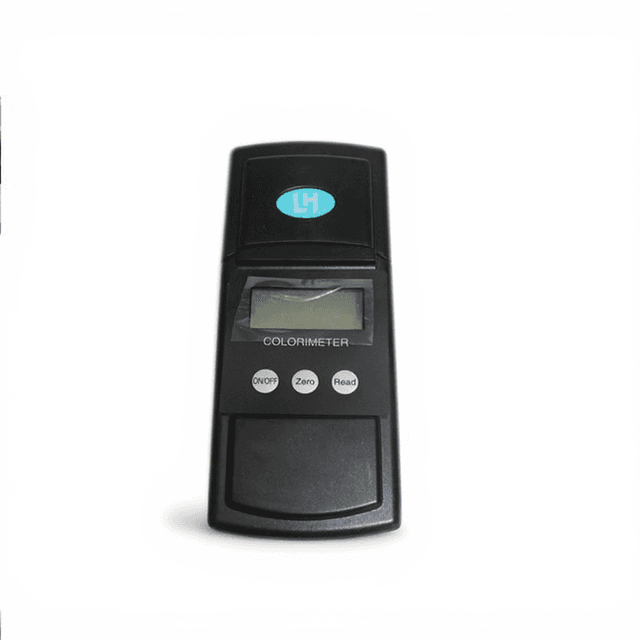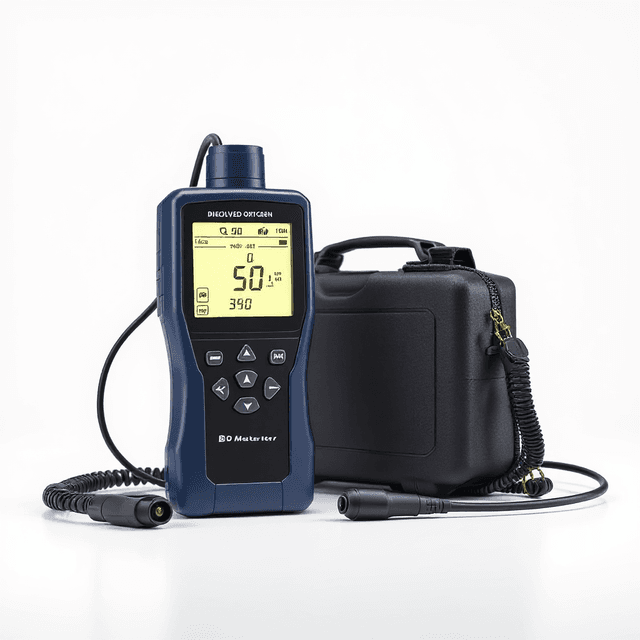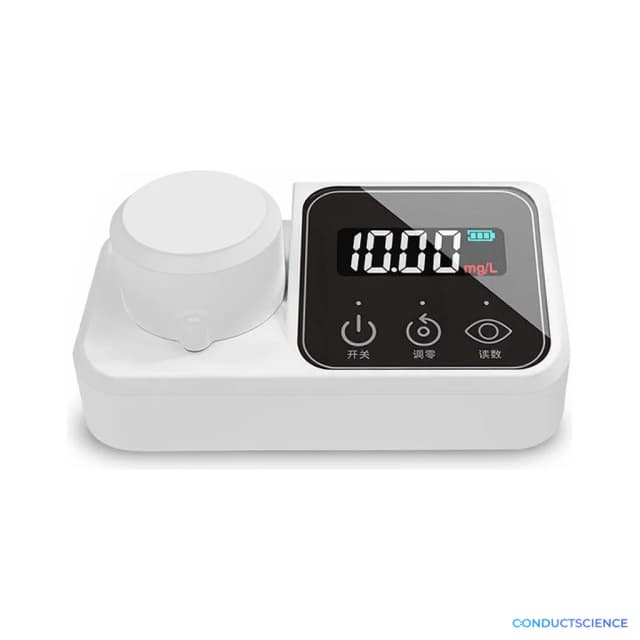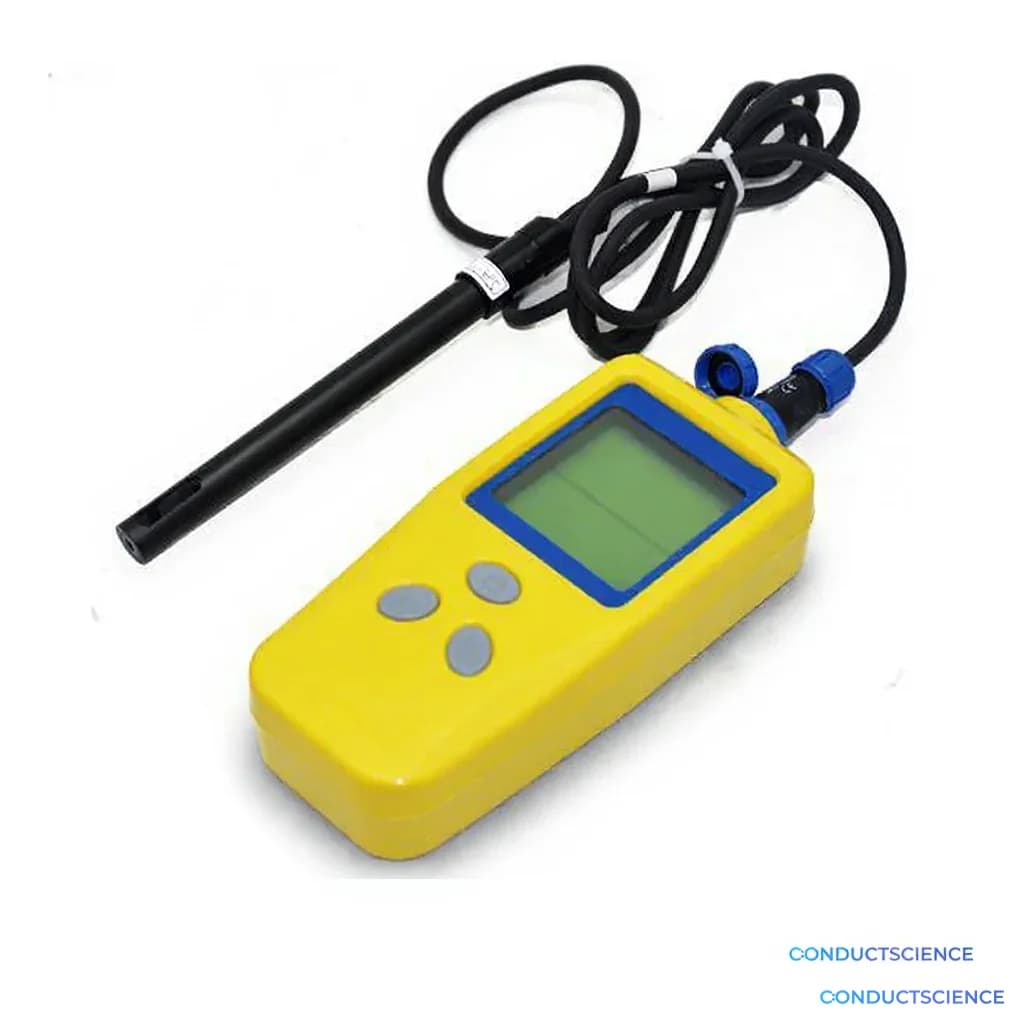
Water Conductivity Test Meter
Portable waterproof conductivity meter with five automatic measurement ranges (0-100 mS/cm), temperature compensation, and two-point calibration for water quality assessment.
| Mode | Conductivity |
| Range | 0 to 19.99uS20.00 to 199.9uS200.0 to 1999uS2.00 to 19.99mS20.0 to 100.0mS |
| Responding Time | 20S |
| Calibration | At most 2 points |
| Temperature Compensation | Auto (ATC) from 32-122â or 0-50â |
| Battery | 2*AAA |
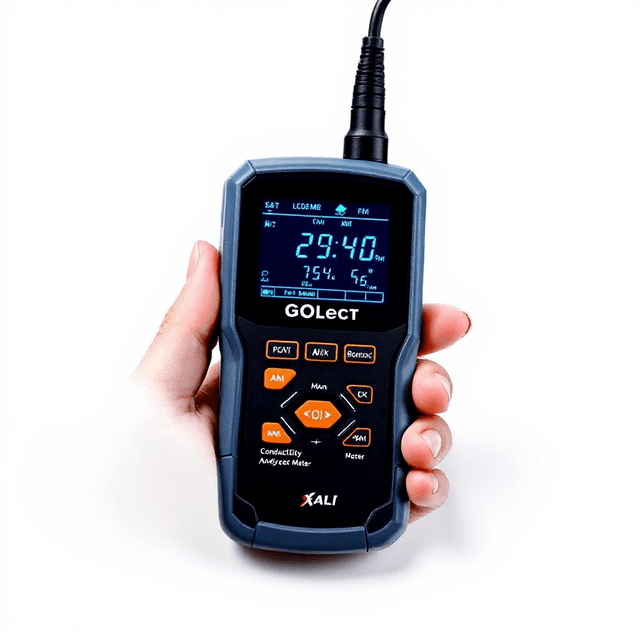
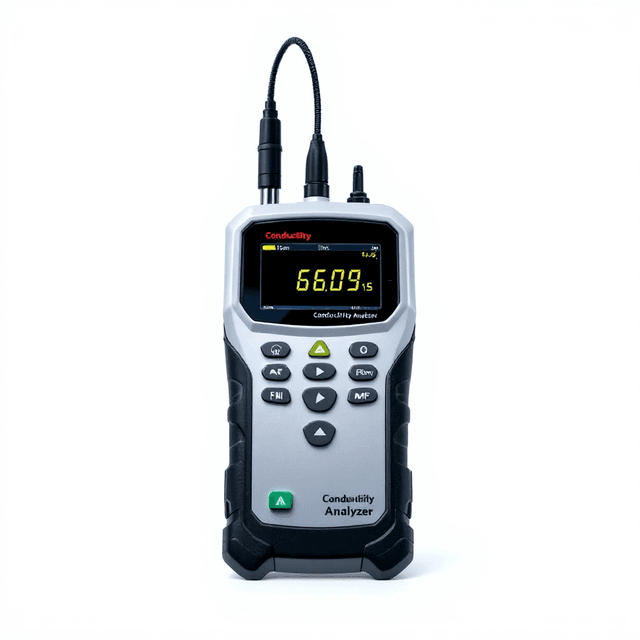
The Water Conductivity Test Meter (CS-LH-EC004) is a portable, waterproof instrument designed for precise electrical conductivity measurements across five automatic measurement ranges from 0 to 100.0 mS/cm. The meter employs a plastic electrode probe to measure the ability of water samples to conduct electrical current, providing direct assessment of total dissolved solids and ionic content. With automatic temperature compensation from 0-50°C and ±2% full-scale accuracy, this instrument delivers reliable conductivity data for water quality assessment, environmental monitoring, and laboratory analysis.
The instrument features automatic range switching across five distinct measurement scales: 0-19.99 μS/cm, 20.00-199.9 μS/cm, 200.0-1999 μS/cm, 2.00-19.99 mS/cm, and 20.0-100.0 mS/cm with 0.1 resolution. Two-point calibration using standard solutions at 1413 μS/cm and 12880 μS/cm ensures measurement accuracy across the full range. The waterproof, shockproof design enables field sampling while dual AAA battery operation provides portable power for extended monitoring campaigns.
How It Works
Electrical conductivity measurement operates on the principle that dissolved ions in water create pathways for electrical current flow. When a voltage is applied across two electrodes immersed in the sample, ions migrate toward oppositely charged electrodes, generating measurable current flow. The conductivity value represents the sample's ability to conduct electricity, directly correlating with the concentration of dissolved salts, acids, and bases.
The meter's plastic electrode probe contains two conductive surfaces separated by a fixed distance, creating a conductivity cell with known geometry. Applied alternating current prevents electrode polarization while measuring the voltage drop across the cell. The instrument calculates conductivity using Ohm's law, converting resistance measurements to conductivity values expressed in microsiemens or millisiemens per centimeter.
Automatic temperature compensation corrects readings to 25°C reference conditions using temperature coefficient algorithms, accounting for the 2-4% conductivity increase per degree Celsius. The five-range automatic switching system selects optimal measurement scales based on sample conductivity, ensuring maximum resolution and accuracy across the full 0-100,000 μS/cm range.
Features & Benefits
Mode
- Conductivity
Range
- 0 to 19.99uS20.00 to 199.9uS200.0 to 1999uS2.00 to 19.99mS20.0 to 100.0mS
Responding Time
- 20S
Calibration
- At most 2 points
Temperature Compensation
- Auto (ATC) from 32-122â or 0-50â
Battery
- 2*AAA
Probe
- Plastic electrode
Conductivityat 25°C
- TDS KCl
ppm Value
- Factor
1413 μS
- 744.7
12880 μS
- 7447
Automation Level
- manual
Brand
- ConductScience
Accuracy
- ±2% FS
Temperature Range
- 32-122âï¼0~50âï¼
Research Domain
- Analytical Chemistry
- Environmental Monitoring
- Food Science
- Industrial Hygiene
- Microbiology
- Pharmaceutical QC
Weight
- 0.26 lbs
Dimensions
- L: 20.0 in
- W: 10.0 in
- H: 5.0 in
Comparison Guide
| Feature | This Product | Typical Alternative | Advantage |
|---|---|---|---|
| Measurement Range Coverage | Five automatic ranges from 0-100.0 mS/cm with 0.1 resolution | Entry-level models often provide 2-3 manual ranges | Eliminates range switching while maintaining optimal resolution for both pure and mineralized water samples. |
| Temperature Compensation | Automatic compensation from 0-50°C | Manual temperature correction or limited compensation ranges | Provides accurate readings across field temperature variations without manual calculations. |
| Calibration Points | Two-point calibration at 1413 and 12880 μS/cm | Single-point calibration or limited standard options | Ensures accuracy across both low and high conductivity samples with traceable standards. |
| Environmental Protection | Waterproof and shockproof design | Basic splash-resistant housings | Enables confident field sampling in harsh conditions without instrument damage risk. |
| Response Time | 20-second stabilization | Response times vary significantly | Balances measurement speed with reading stability for reliable field and laboratory use. |
| Probe Construction | Plastic electrode design | Materials vary by manufacturer and price point | Resists corrosion from aggressive samples while maintaining measurement stability. |
This conductivity meter combines five automatic measurement ranges with temperature compensation and waterproof construction, providing versatile measurement capability for both laboratory and field applications. The two-point calibration system and plastic electrode design ensure accurate, stable measurements across diverse water quality assessment requirements.
Practical Tips
Perform two-point calibration using fresh standard solutions at sample temperature before critical measurements.
Why: Temperature-matched standards eliminate thermal equilibration delays and improve calibration accuracy.
Rinse electrode probe thoroughly with distilled water between samples and store in protective cap.
Why: Prevents sample cross-contamination and maintains electrode surface integrity for consistent measurements.
Allow 20 seconds for reading stabilization before recording values, especially with high-conductivity samples.
Why: Ion migration and thermal equilibration require time to achieve stable, reproducible conductivity readings.
If readings drift or appear unstable, verify electrode probe is fully immersed and sample has sufficient volume.
Why: Incomplete electrode immersion or edge effects from small sample volumes can cause measurement artifacts.
Record sample temperature alongside conductivity values for documentation and trend analysis purposes.
Why: Temperature data enables verification of automatic compensation function and supports quality control procedures.
Inspect electrode probe for cracks or damage before use with unknown or potentially hazardous samples.
Why: Damaged probes may allow sample infiltration into electronics or produce inaccurate readings.
Store calibration standards in original containers at specified temperatures to maintain certified values.
Why: Improper storage can alter standard solution conductivity and compromise calibration accuracy.
Verify calibration drift by checking readings against fresh standards before extended measurement campaigns.
Why: Regular calibration verification ensures measurement accuracy is maintained over time and usage.
Setup Guide
What’s in the Box
- Water conductivity test meter main unit
- Plastic electrode probe
- Battery compartment cover
- User manual and calibration instructions (typical)
- Protective carrying case (typical)
Warranty
ConductScience provides a standard one-year manufacturer warranty covering defects in materials and workmanship, along with technical support for calibration procedures and troubleshooting assistance.
Compliance
References
Background reading relevant to this product:
What is the measurement accuracy across the five conductivity ranges?
The meter provides ±2% full-scale accuracy across all five automatic ranges from 0-19.99 μS/cm to 20.0-100.0 mS/cm, with 0.1 resolution for precise measurements.
How does temperature compensation affect measurement reliability?
Automatic temperature compensation from 0-50°C corrects readings to 25°C reference conditions, accounting for the 2-4% conductivity increase per degree Celsius in most aqueous solutions.
What calibration standards are required for optimal performance?
Two-point calibration uses 1413 μS/cm and 12880 μS/cm standard solutions, covering low and high conductivity ranges to ensure accuracy across the full measurement spectrum.
Can the meter handle aggressive or corrosive water samples?
The plastic electrode probe construction resists chemical corrosion and maintains stability in most aqueous samples, though compatibility with specific aggressive chemicals should be verified.
What is the typical measurement response time in field conditions?
The instrument requires 20 seconds for reading stabilization, allowing adequate time for thermal equilibration and ion migration in the sample.
How does the automatic range switching function operate?
The meter automatically selects the appropriate measurement scale based on sample conductivity, optimizing resolution without manual intervention across the 0-100,000 μS/cm range.
What data output and recording capabilities are available?
Consult product datasheet for specific data logging and output interface specifications, as digital connectivity features vary by model configuration.
Have a question about this product?
Accessories
Enhance your setup with compatible accessories
Upgrade Options