Hand Held Conductivity Meter
Portable conductivity meter measuring 0-1999 µS/cm with 1 µS/cm resolution for field and laboratory assessment of dissolved ionic content in aqueous solutions.

Louise Corscadden, PhD
Director of Science · ConductScience
Ask Louise about Hand Held Conductivity Meter fit, setup, configuration, or quote prep.
Already working with us? Sign in to connect this with My Scientist.
Key Specifications
Full details →- Model fit
- Configured during quote
- SKU family
- CS-LH-EC007
- Shipping box
- 7.09 x 2.64 x 1.3 cm
- Ordering
- Online checkout and quote request available
- Category
- Portable Analyzers
- Build notes
- Confirm accessories, station layout, and support needs before purchase
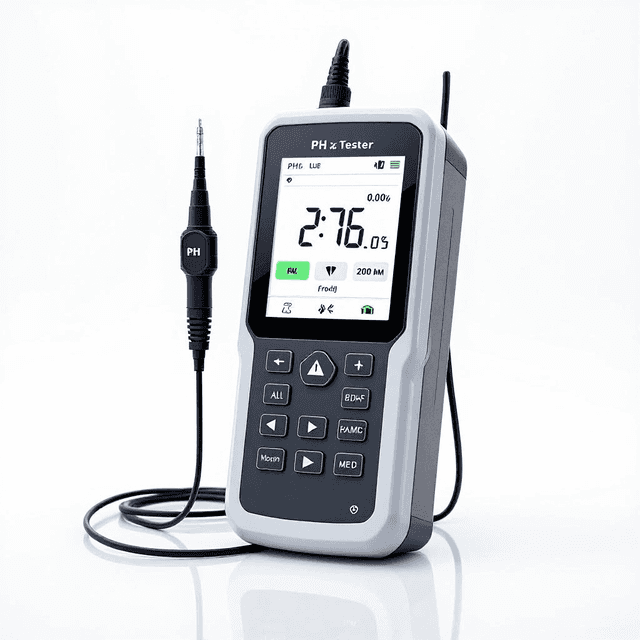
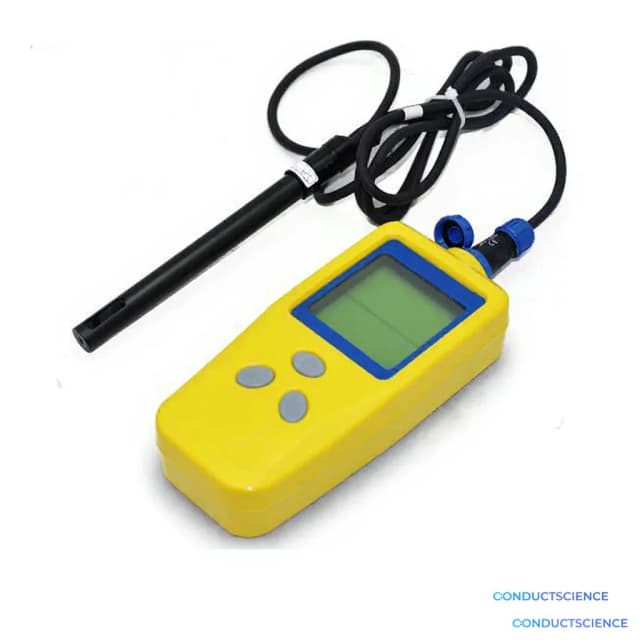
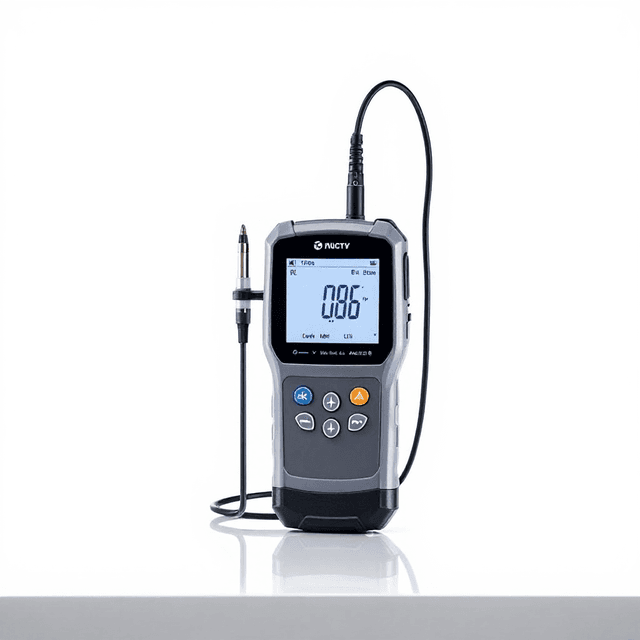
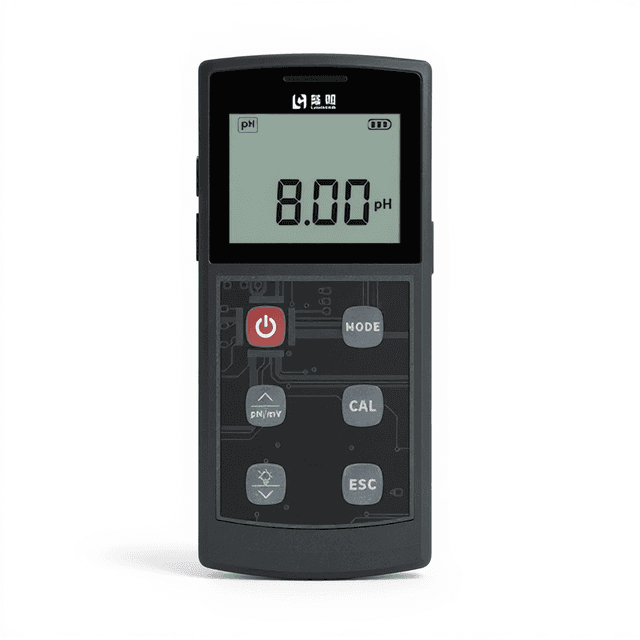
The Hand Held Conductivity Meter (CS-LH-EC007) is a portable instrument for measuring electrical conductivity in aqueous solutions. The meter quantifies the ability of a solution to conduct electrical current, which correlates directly with the concentration of dissolved ionic species. With a measurement range of 0-1999 µS/cm and 1 µS/cm resolution, this instrument provides rapid, field-portable assessment of total dissolved solids in various research and monitoring applications.
The compact design (180×67×33mm, 130g) enables handheld operation with battery power, making it suitable for in-situ measurements where laboratory-based analysis is impractical. The single-point calibration system allows standardization against reference solutions to maintain measurement accuracy of ±2% full scale. Operating temperature range of 5-55°C accommodates typical field and laboratory conditions.
How It Works
Electrical conductivity measurement relies on the principle that dissolved ions in solution facilitate electrical current flow between electrodes. The instrument applies a known voltage across two electrodes immersed in the sample solution and measures the resulting current. Conductivity is calculated using Ohm's law, as the reciprocal of resistance normalized for electrode geometry and spacing.
The measurement is temperature-dependent because ionic mobility increases with temperature. The instrument operates within 5-55°C to maintain measurement stability. Higher ion concentrations produce proportionally higher conductivity readings, making this technique effective for quantifying total dissolved solids without identifying specific ionic species.
Single-point calibration against a standard solution of known conductivity compensates for electrode aging and drift. The 1 µS/cm resolution enables detection of small changes in ionic concentration, while the ±2% full-scale accuracy provides reliable quantitative results for research applications.
Features & Benefits
Research Domain
- Analytical Chemistry
- Clinical Diagnostics
- Environmental Monitoring
- Food Science
- Materials Science
- Microbiology
Measuring range
- 0-1999µS/cm
Calibration
- 1 point
Working condition
- 5-55°C (41-131°F)
Automation Level
- manual
Brand
- ConductScience
Accuracy
- ±2%F·S
Power/Voltage
- 4Ã1.5V lithium batteries
Dimensions
- 180Ã65Ã33mm
Weight
- 130g
Shipping weight
- 0.18 lb
Shipping box
- L: 7.09 cm
- W: 2.64 cm
- H: 1.3 cm
| Feature | This Product | Typical Alternative | Advantage |
|---|---|---|---|
| Measurement Range | 0-1999 µS/cm | Entry-level models often offer narrower ranges or require range switching | Single range covers most environmental and laboratory applications without manual range selection. |
| Resolution | 1 µS/cm | Lower-cost instruments typically offer 10 µS/cm resolution | Higher resolution enables detection of small changes in water quality or solution preparation accuracy. |
| Accuracy | ±2% full scale | Basic meters often specify ±5% accuracy | Better accuracy provides more reliable quantitative data for research documentation and quality control. |
| Calibration Method | Single-point calibration | Some instruments require multi-point calibration procedures | Simplified calibration reduces setup time while maintaining measurement traceability to standards. |
| Operating Temperature | 5-55°C operating range | Limited temperature ranges in basic instruments | Wide temperature range accommodates field conditions and various laboratory environments without temperature compensation. |
| Portability | 130g handheld design | Heavier units or benchtop-only designs | Lightweight design enables field work and in-situ measurements where laboratory analysis is not practical. |
This conductivity meter offers a practical balance of measurement performance and field portability. The 0-1999 µS/cm range with 1 µS/cm resolution and ±2% accuracy provides reliable quantitative results, while the 130g handheld design enables measurements outside the laboratory environment.
Practical Tips
Perform single-point calibration with a standard solution near the expected sample conductivity range for best accuracy.
Why: Calibration accuracy is highest near the calibration point and decreases with distance from the standard value.
Rinse the electrode with deionized water between samples and store with the protective cap to prevent contamination.
Why: Residual ions from previous samples can cause measurement drift and cross-contamination between samples.
Allow readings to stabilize for 30-60 seconds before recording, especially when measuring temperature-equilibrating samples.
Why: Conductivity readings change with temperature and ion distribution, requiring stabilization time for accurate measurement.
Record sample temperature along with conductivity measurements to enable temperature correction if needed for comparative studies.
Why: Conductivity varies approximately 2% per degree Celsius, affecting comparisons between samples at different temperatures.
If readings appear unstable or inconsistent, check electrode surfaces for air bubbles, contamination, or damage.
Why: Electrode condition directly affects measurement stability and accuracy in conductivity determination.
Avoid measuring solutions with unknown chemical composition or extreme pH that could damage the electrode system.
Why: Aggressive chemicals can corrode electrode materials leading to measurement errors and instrument damage.
Use fresh batteries for field work and carry spares, as low battery voltage can affect measurement accuracy.
Why: Stable power supply is critical for consistent electrode voltage and reliable conductivity calculations.
Verify calibration accuracy periodically using a second standard solution at a different conductivity level.
Why: Cross-checking with multiple standards helps detect electrode drift or calibration errors before they affect data quality.
Setup Guide
What’s in the Box
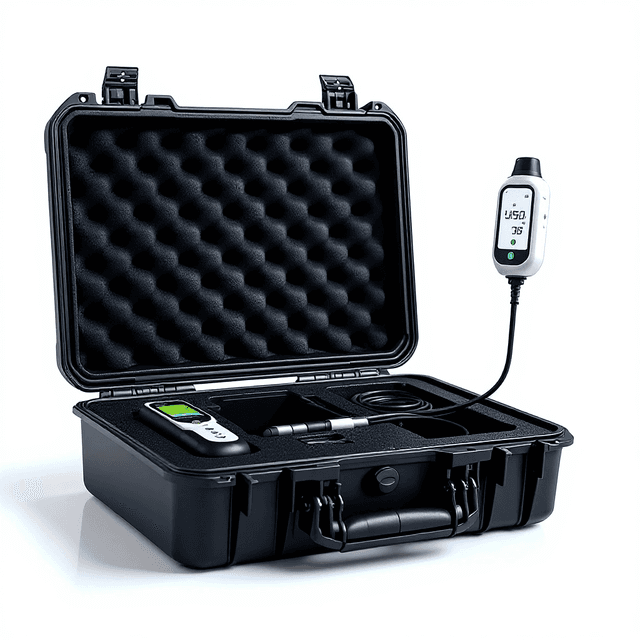
- Hand held conductivity meter (main unit) (typical)
- Electrode probe with cable (typical)
- 4×1.5V lithium batteries (typical)
- Protective electrode cap (typical)
- User manual (typical)
- Calibration certificate (typical)
Warranty
ConductScience provides a standard one-year manufacturer warranty covering defects in materials and workmanship, with technical support for proper operation and maintenance procedures.
Compliance
References
Background reading relevant to this product:
What is the measurement principle and how does temperature affect readings?
The meter measures electrical conductivity by applying voltage across electrodes and measuring current flow. Conductivity increases approximately 2%/°C, but the 5-55°C operating range minimizes temperature effects for comparative measurements.
How often should the instrument be calibrated and with what standards?
Single-point calibration should be performed daily or before critical measurements using NIST-traceable conductivity standards within the measurement range. Common standards include 84 µS/cm and 1413 µS/cm solutions.
What is the minimum sample volume required for accurate measurement?
Consult product datasheet for specific electrode geometry, but typical conductivity electrodes require 10-20 mL sample volume to fully immerse the sensing elements without wall effects.
Can this meter measure solutions with high dissolved organic content?
The instrument measures total ionic conductivity regardless of ion type. High organic content may affect readings if organic compounds ionize, but non-ionic organics do not contribute to conductivity.
What maintenance is required for the electrode system?
Regular rinsing with deionized water prevents contamination buildup. Electrode surfaces may require periodic cleaning with appropriate solvents depending on sample matrix. Replace electrode if readings drift after proper calibration.
Is the instrument suitable for continuous monitoring applications?
The handheld design is optimized for discrete measurements rather than continuous monitoring. Battery life and manual operation make it most suitable for spot sampling and field surveys.
How does this compare to laboratory-grade conductivity meters?
Handheld meters prioritize portability over precision. Laboratory instruments typically offer higher accuracy, temperature compensation, and data logging, while this meter provides field portability and immediate results.
Have a question about this product?
Have a question? Just ask.
Send it over and we'll email you a personalized answer — no call, no scheduling.
Prefer to talk it through?
Accessories
Enhance your setup with compatible accessories