Conductivity Equipment
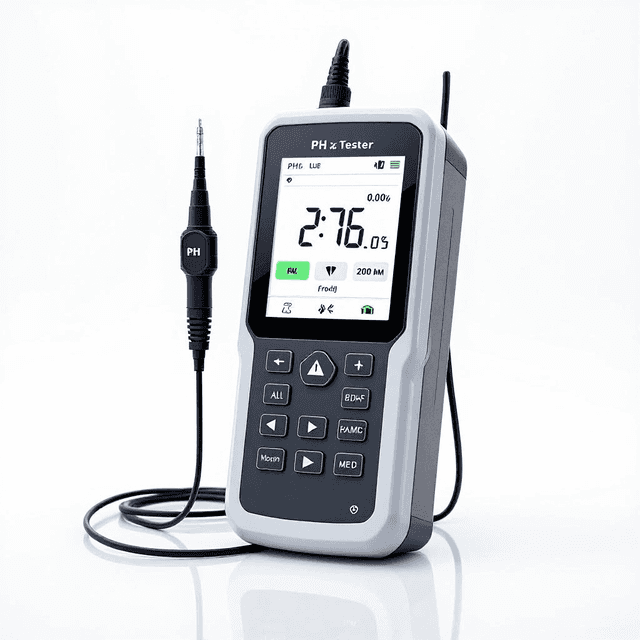
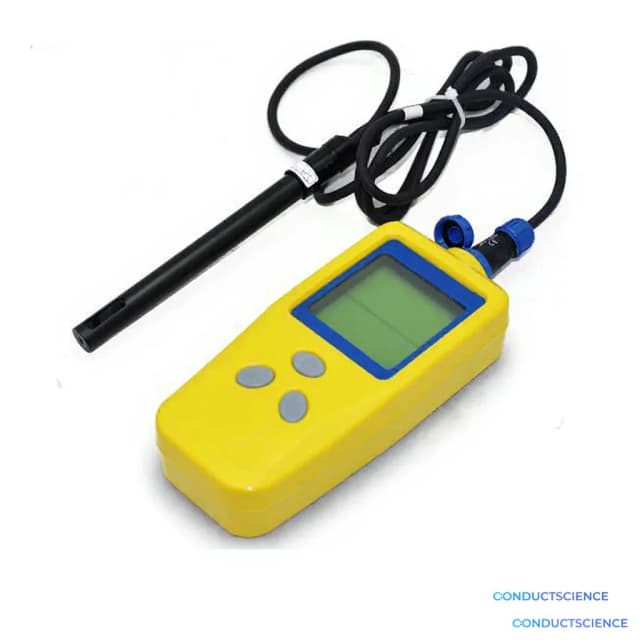
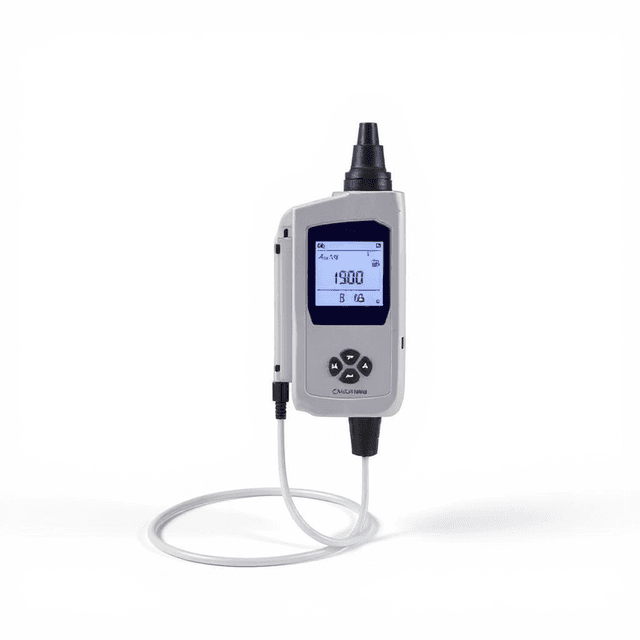
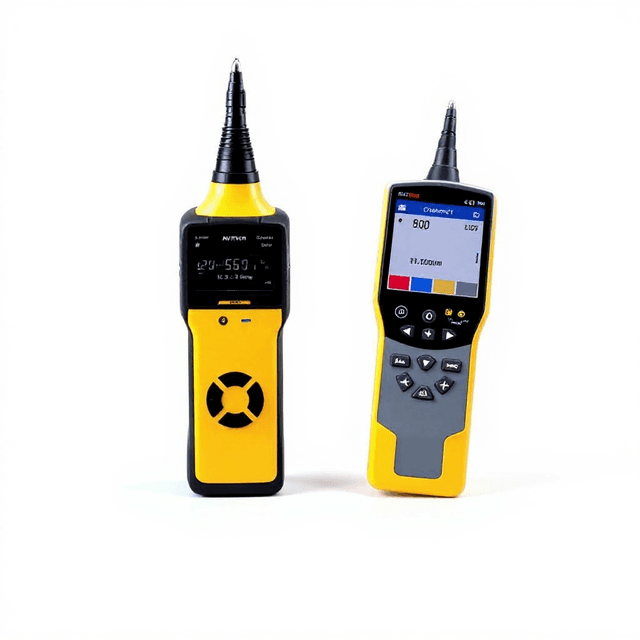
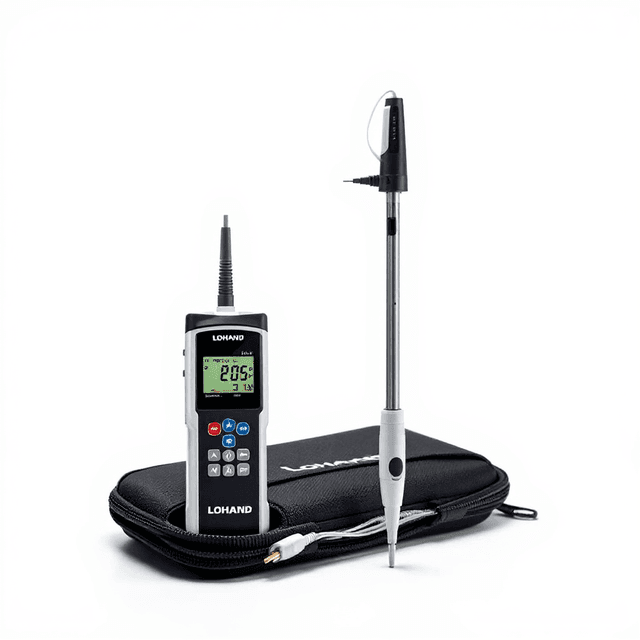
Pen-type digital conductivity meter with 0-19.99 mS/cm range, waterproof design, and backlit display for rapid electrical conductivity measurements in water quality assessment.

Louise Corscadden, PhD
Director of Science · ConductScience
Ask Louise about Conductivity Equipment fit, setup, configuration, or quote prep.
Already working with us? Sign in to connect this with My Scientist.
Key Specifications
Full details →- Model fit
- Configured during quote
- SKU family
- CS-LH-EC006
- Shipping box
- 7.09 x 2.56 x 1.3 cm
- Ordering
- Online checkout and quote request available
- Category
- Portable Analyzers
- Build notes
- Confirm accessories, station layout, and support needs before purchase
The CD-989 Digital Conductivity Meter is a pen-type portable instrument designed for rapid electrical conductivity measurements in aqueous solutions. This waterproof handheld device measures conductivity across a range of 0-19.99 mS/cm with 0.01 mS/cm resolution and ±2% full-scale accuracy. The meter features single-point calibration capability and operates reliably in ambient temperatures from 5-55°C.
The instrument incorporates a backlit LCD display for enhanced readability in various lighting conditions, data-hold functionality for capturing measurements, and low voltage warning to prevent data loss during extended field use. Powered by four 1.5V lithium batteries, the compact 180×65×33mm form factor weighs only 130g, making it suitable for both laboratory bench work and field sampling applications. The waterproof design allows for direct immersion measurements and facilitates cleaning between samples.
How It Works
Electrical conductivity measurement is based on the principle that ionic solutions conduct electrical current proportionally to their total dissolved ionic content. The CD-989 meter employs a two-electrode conductivity cell that applies a low-voltage alternating current across the solution. The instrument measures the resulting current flow, which is directly proportional to the solution's ability to conduct electricity.
The conductivity cell consists of two electrodes with a defined cell constant (electrode geometry factor). When immersed in solution, ions migrate between the electrodes under the applied electric field, creating measurable current flow. The microprocessor converts this current measurement to conductivity units (mS/cm) using the predetermined cell constant and temperature compensation algorithms.
The pen-style design integrates the conductivity cell at the instrument tip, allowing direct immersion into samples. Single-point calibration with a known standard solution establishes the measurement reference, correcting for electrode aging and environmental factors that might affect accuracy.
Features & Benefits
Measuring range
- 0-19.99mS/cm
Research Domain
- Analytical Chemistry
- Environmental Monitoring
- Food Science
- Industrial Hygiene
- Microbiology
- Pharmaceutical QC
Product name
- conductivity equipment
Calibration
- 1 point
Working condition
- 5-55°C (41-131°F)
Automation Level
- manual
Brand
- ConductScience
Accuracy
- ±2%F·S
Power/Voltage
- 4Ã1.5V lithium batteries
Dimensions
- 180Ã65Ã33mm
Weight
- 130g
Shipping weight
- 0.18 lb
Shipping box
- L: 7.09 cm
- W: 2.56 cm
- H: 1.3 cm
| Feature | This Product | Typical Alternative | Advantage |
|---|---|---|---|
| Measurement Range | 0-19.99 mS/cm with 0.01 mS/cm resolution | Basic models often limited to 0-10 mS/cm range | Extended range accommodates brackish water and moderately concentrated process solutions without requiring multiple instruments. |
| Accuracy Specification | ±2% full-scale accuracy | Entry-level meters often specify ±3-5% accuracy | Higher accuracy supports quality control applications where measurement uncertainty affects process decisions. |
| Display Features | Backlit LCD with data-hold function | Basic models may lack backlighting or data capture | Enhanced usability in field conditions and ability to capture readings in challenging sampling locations. |
| Operating Temperature Range | 5-55°C operational range | Limited models may restrict operation to 15-35°C | Broader temperature tolerance enables measurements in diverse environmental conditions and seasonal variations. |
| Power Management | Low voltage warning with lithium battery power | Basic meters may lack power monitoring features | Prevents measurement errors from power depletion and provides advance warning for battery replacement planning. |
| Physical Design | Waterproof construction with 130g weight | Some models may lack full waterproofing or be heavier | True waterproof capability enables immersion cleaning and reduces risk of damage in wet field environments. |
The CD-989 offers an extended measurement range to 19.99 mS/cm with enhanced accuracy specification and user-friendly features like backlit display and data-hold function. The waterproof design and low voltage warning system support reliable field operation across diverse environmental conditions.
Practical Tips
Calibrate with a standard solution closest to your expected sample range rather than always using the same calibration point.
Why: Calibrating near your measurement range minimizes interpolation errors and improves accuracy for your specific application.
Rinse the electrode tip with distilled water and gently blot dry with lint-free tissue after each measurement session.
Why: Prevents salt buildup and sample cross-contamination that can cause measurement drift and electrode fouling.
Allow samples to reach ambient temperature before measurement, or record temperature for post-measurement correction.
Why: Temperature significantly affects conductivity readings, and compensation ensures accurate comparison between samples collected at different temperatures.
Immerse the electrode tip 2-3 cm into solution and gently stir to eliminate air bubbles around the conductivity cell.
Why: Air bubbles on electrode surfaces create measurement artifacts by increasing electrical resistance between electrodes.
Wait for reading stabilization (typically 10-30 seconds) before using data-hold function to capture measurements.
Why: Conductivity measurements require time for ionic equilibration, and premature reading capture introduces measurement uncertainty.
If readings appear erratic, check for electrode fouling, contaminated calibration solution, or low battery voltage warning.
Why: These common issues cause measurement instability and can be quickly resolved with proper identification and corrective action.
Avoid measuring conductivity in solutions containing organic solvents or at pH extremes outside 2-12 range.
Why: Aggressive chemicals can damage electrode surfaces and affect measurement reliability or pose safety hazards to the user.
Store the meter with the protective cap in place and batteries removed if not used for extended periods.
Why: Prevents electrode contamination and battery leakage that could damage internal electronics during long-term storage.
Setup Guide
What’s in the Box
- CD-989 Digital Conductivity Meter
- Protective electrode cap
- Four 1.5V lithium batteries
- User manual with calibration procedures (typical)
- Calibration solution sample (typical)
- Carrying case (typical)
Warranty
ConductScience provides a one-year manufacturer warranty covering defects in materials and workmanship, with technical support for calibration procedures and measurement troubleshooting.
Compliance
References
Background reading relevant to this product:
What calibration solutions are recommended for the single-point calibration?
Standard potassium chloride solutions at 1.41 mS/cm (1000 ppm) or 12.9 mS/cm (10,000 ppm) are typically used, depending on your measurement range. Calibrate using a standard closest to your expected sample conductivity.
How does temperature affect conductivity measurements?
Conductivity increases approximately 2% per degree Celsius. While this meter operates in 5-55°C range, temperature compensation may be manual. For critical measurements, record sample temperature and apply correction factors.
Can this meter measure ultra-pure water conductivity?
No, the 0.01 mS/cm resolution is insufficient for ultra-pure water (typically <1 μS/cm). This meter is designed for process water, drinking water, and moderately concentrated solutions.
How often should calibration be performed?
Calibrate daily for critical measurements, weekly for routine monitoring, or whenever readings seem inconsistent. Always calibrate after electrode cleaning or if the meter has been stored for extended periods.
What maintenance is required for the conductivity electrode?
Rinse with distilled water after each use, store in the protective cap, and inspect for electrode fouling or damage. Replace electrode if readings become unstable or calibration drifts significantly.
Is this suitable for measuring highly concentrated salt solutions?
The 19.99 mS/cm upper limit restricts use to moderately concentrated solutions. Seawater (~50 mS/cm) or concentrated brines exceed this range and require a higher-range instrument.
How does this compare to benchtop conductivity meters?
Portable pen meters offer convenience and field capability but typically have lower accuracy and fewer features than benchtop models. Benchtop meters often provide automatic temperature compensation and data logging.
Can data be exported or logged automatically?
This model features manual data-hold functionality but lacks automated data logging or digital export capabilities. Readings must be recorded manually or transcribed from the LCD display.
Have a question about this product?
Have a question? Just ask.
Send it over and we'll email you a personalized answer — no call, no scheduling.
Prefer to talk it through?
Accessories
Enhance your setup with compatible accessories