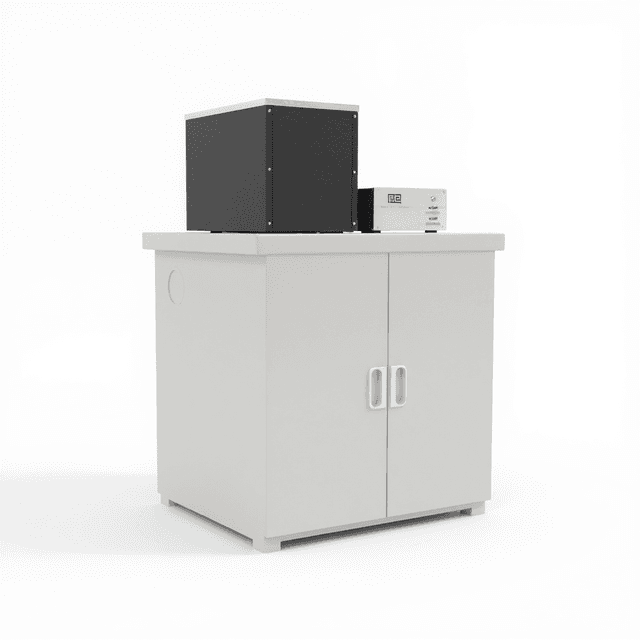
Zebrafish Bifurcating T Maze
Aquatic behavioral testing apparatus for assessing spatial memory, choice behavior, and learning in zebrafish through T-maze paradigms with configurable environmental cues.
| start_arm_dimensions | 50 x 10 cm |
| start_zone_dimensions | 30 x 10 cm |
| choice_chamber_dimensions | 30 x 30 cm |
| opaque_partition_dimensions | 4.5 x 30 cm |
| maze_configuration | T-shaped with bifurcating design |
| removable_transparent_door | yes |

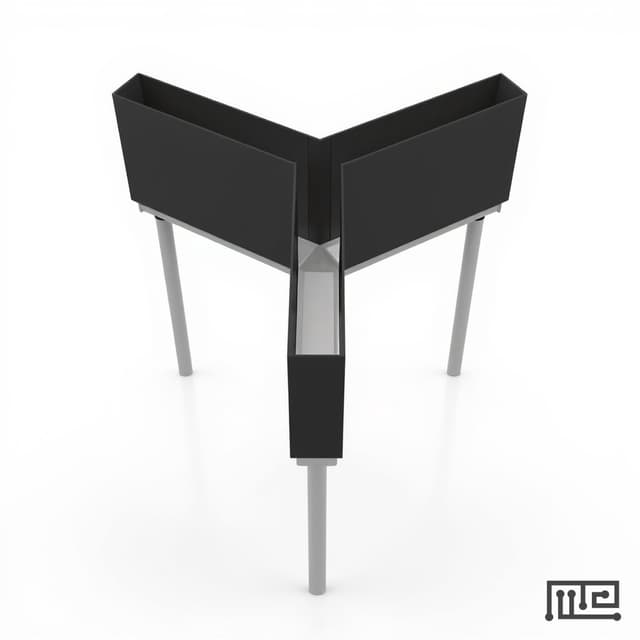
The Zebrafish Bifurcating T-Maze is a specialized behavioral testing apparatus designed for assessing cognitive and learning abilities in zebrafish (Danio rerio). This aquatic adaptation of the classic T-maze leverages the natural swimming behavior of zebrafish to evaluate spatial memory, choice behavior, and learning paradigms in a controlled laboratory environment.
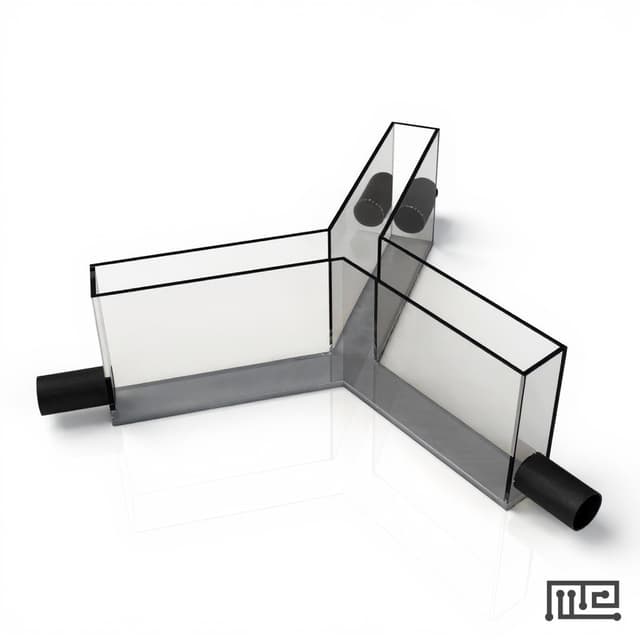
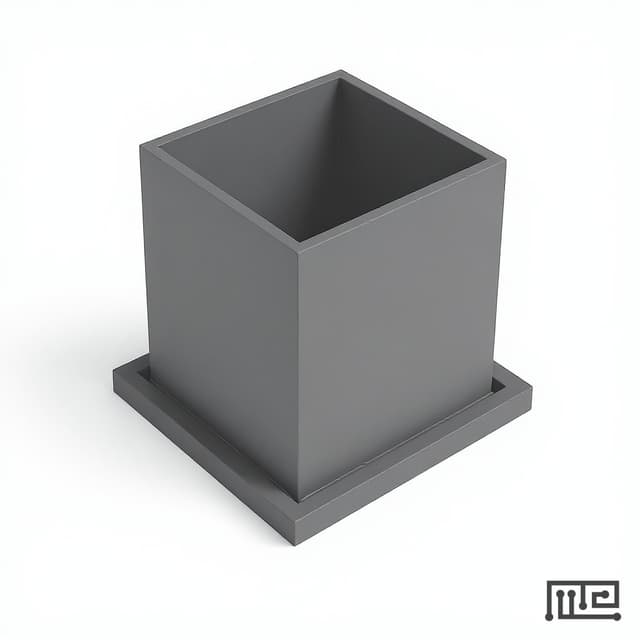
The apparatus features a T-shaped configuration with a starting zone (30 cm×10 cm×15 cm), a long central arm (50 cm×10 cm), and two short choice arms (20 cm×10 cm). Removable deep water chambers (30 cm×30 cm×30 cm) can be positioned at the end of choice arms to create environmental preferences. The modular design includes removable transparent doors and opaque partitions (4.5 cm×30 cm) that allow researchers to control visual cues and access throughout experimental protocols.
How It Works
The Zebrafish Bifurcating T-Maze operates on the principle of spatial choice behavior, where fish must navigate from a starting zone through a central arm to select between two terminal choice arms. The apparatus exploits zebrafish's natural preference for deeper water and environmental enrichment by allowing one choice arm to contain a more favorable habitat with deeper water chambers.
During testing, fish are placed in the starting zone behind a removable transparent door. Upon release, they swim through the long central arm and encounter a bifurcation point where they must choose between two short arms. Removable opaque partitions control visual access to the choice chambers, allowing researchers to manipulate the availability of spatial cues. The deep water chambers at the terminus of each arm can be configured with environmental enrichment (artificial grass, shells, stones, colored marbles) to create preference gradients.
Learning is assessed by measuring the fish's ability to consistently choose the arm associated with the favorable environment over multiple trials. The modular design allows for counterbalancing of reward locations and systematic manipulation of environmental cues to isolate specific aspects of spatial cognition and memory formation.
Features & Benefits
start_arm_dimensions
- 50 x 10 cm
start_zone_dimensions
- 30 x 10 cm
choice_chamber_dimensions
- 30 x 30 cm
opaque_partition_dimensions
- 4.5 x 30 cm
maze_configuration
- T-shaped with bifurcating design
removable_transparent_door
- yes
removable_deep_water_chambers
- yes
removable_opaque_partitions
- yes
customizable_environmental_cues
- artificial grass, colored marbles
Behavioral Construct
- spatial memory
- choice behavior
- place preference
- learning acquisition
- memory retention
- navigation behavior
Automation Level
- manual
Material
- Acrylic
Species
- Zebrafish
Display Type
- None
Research Domain
- Addiction Research
- Behavioral Pharmacology
- Developmental Biology
- Learning and Memory
- Neuroscience
- Toxicology
Weight
- 21.0 kg
Dimensions
- L: 43.2 mm
- W: 38.0 mm
- H: 27.9 mm
Comparison Guide
| Feature | This Product | Typical Alternative | Advantage |
|---|---|---|---|
| Choice Arm Configuration | Two 20 cm×10 cm choice arms with removable deep water chambers | Fixed shallow chambers or simple left/right corridors | Removable chambers enable flexible experimental design and stronger environmental preferences for reliable choice behavior. |
| Visual Cue Control | Removable 4.5 cm×30 cm opaque partitions for each choice arm | Fixed visual barriers or no partition system | Precise control over spatial cue availability allows isolation of different memory components and systematic cue manipulation. |
| Starting Zone Control | 30 cm×10 cm×15 cm zone with removable transparent door | Open start areas or manual fish placement | Standardized trial initiation and controlled release timing improve data reliability and reduce handling stress. |
| Environmental Enrichment | Customizable habitat materials including artificial grass, shells, stones, and colored marbles | Limited or no environmental modification options | Multiple enrichment options create stronger preference gradients and enable diverse experimental paradigms. |
| Modular Construction | Acrylic components with removable partitions and chambers | Fixed one-piece designs or limited modularity | Easy cleaning, sterilization, and protocol adaptation for different research questions within the same apparatus. |
This apparatus offers superior experimental control through its modular design, removable visual barriers, and configurable environmental chambers. The combination of standardized trial initiation and flexible cue manipulation enables precise behavioral assessment across diverse experimental paradigms.
Practical Tips
Establish baseline choice preferences by running initial trials without environmental enrichment in the deep water chambers.
Why: Identifies any inherent spatial biases that need to be controlled for in subsequent learning trials.
Replace environmental enrichment materials every 2-3 weeks or when algae growth becomes excessive.
Why: Fresh materials maintain consistent visual and chemical cues while preventing biofilm formation that could alter behavior.
Allow 10-15 minutes of habitat exploration in the rewarded chamber after each correct choice.
Why: Extended access to preferred environment strengthens spatial memory formation and maintains motivation across trials.
If fish show persistent arm preference despite reward switching, increase visual contrast between environmental cues.
Why: Enhanced cue salience helps overcome spatial biases and promotes attention to environmental features.
Record both choice latency and time spent in each zone to capture different aspects of spatial behavior.
Why: Multiple behavioral measures provide more comprehensive assessment of learning and memory processes.
Monitor water temperature continuously during long experimental sessions to prevent thermal stress.
Why: Temperature fluctuations can alter swimming behavior and confound spatial learning measurements.
Conduct habituation trials with all doors and partitions removed before beginning formal testing.
Why: Familiarization with the apparatus layout reduces anxiety-related behaviors that could mask learning effects.
Check all removable components for secure fit before each testing session to prevent escape or injury.
Why: Loose partitions or doors compromise experimental control and pose safety risks to test subjects.
Setup Guide
What’s in the Box
- Starting zone (30 cm×10 cm×15 cm)
- Long central arm (50 cm×10 cm)
- Two short choice arms (20 cm×10 cm each)
- Two removable deep water chambers (30 cm×30 cm×30 cm)
- Removable transparent door
- Two removable opaque partitions (4.5 cm×30 cm each)
- Assembly hardware (typical)
- User manual with protocol guidelines (typical)
Warranty
ConductScience provides a standard one-year manufacturer warranty covering defects in materials and workmanship, with technical support for setup and protocol optimization.
Compliance
References
Background reading relevant to this product:
What is the optimal water depth for adult zebrafish testing?
Maintain water depth between 5-10 cm in the maze arms to allow natural swimming behavior while preventing jumping. The deep water chambers should be filled to their full 30 cm depth to create the environmental preference gradient.
How do I counterbalance reward locations across subjects?
Randomize which choice arm contains the deep water chamber and enrichment across subjects, ensuring equal numbers of left and right reward placements to control for spatial biases.
What trial duration and inter-trial interval should I use?
Individual trials typically last 2-5 minutes or until choice is made. Use inter-trial intervals of 5-10 minutes to allow for apparatus cleaning and minimize stress between trials.
How many trials are needed to assess learning?
Most protocols use 10-20 trials per day across 3-5 testing days. Learning curves typically emerge after 15-20 total trials in neurologically intact adult zebrafish.
Can this apparatus be used with juvenile zebrafish?
Yes, but consider scaling water depth and potentially using smaller environmental cues. Juveniles may require longer habituation periods and different reward stimuli than adults.
How do I clean the apparatus between subjects?
Drain completely and rinse all surfaces with conditioned water. For between-group cleaning, use mild aquarium-safe disinfectant followed by thorough rinsing to prevent chemical carry-over effects.
What environmental enrichment materials work best?
Natural materials like small stones, shells, and aquarium plants are effective. Colored marbles provide strong visual contrast. Avoid materials that could be ingested or alter water chemistry.
Have a question about this product?
Accessories
Enhance your setup with compatible accessories
Frequently Bought Together