Behavioral Tracking for Octopus
Octopus vulgaris
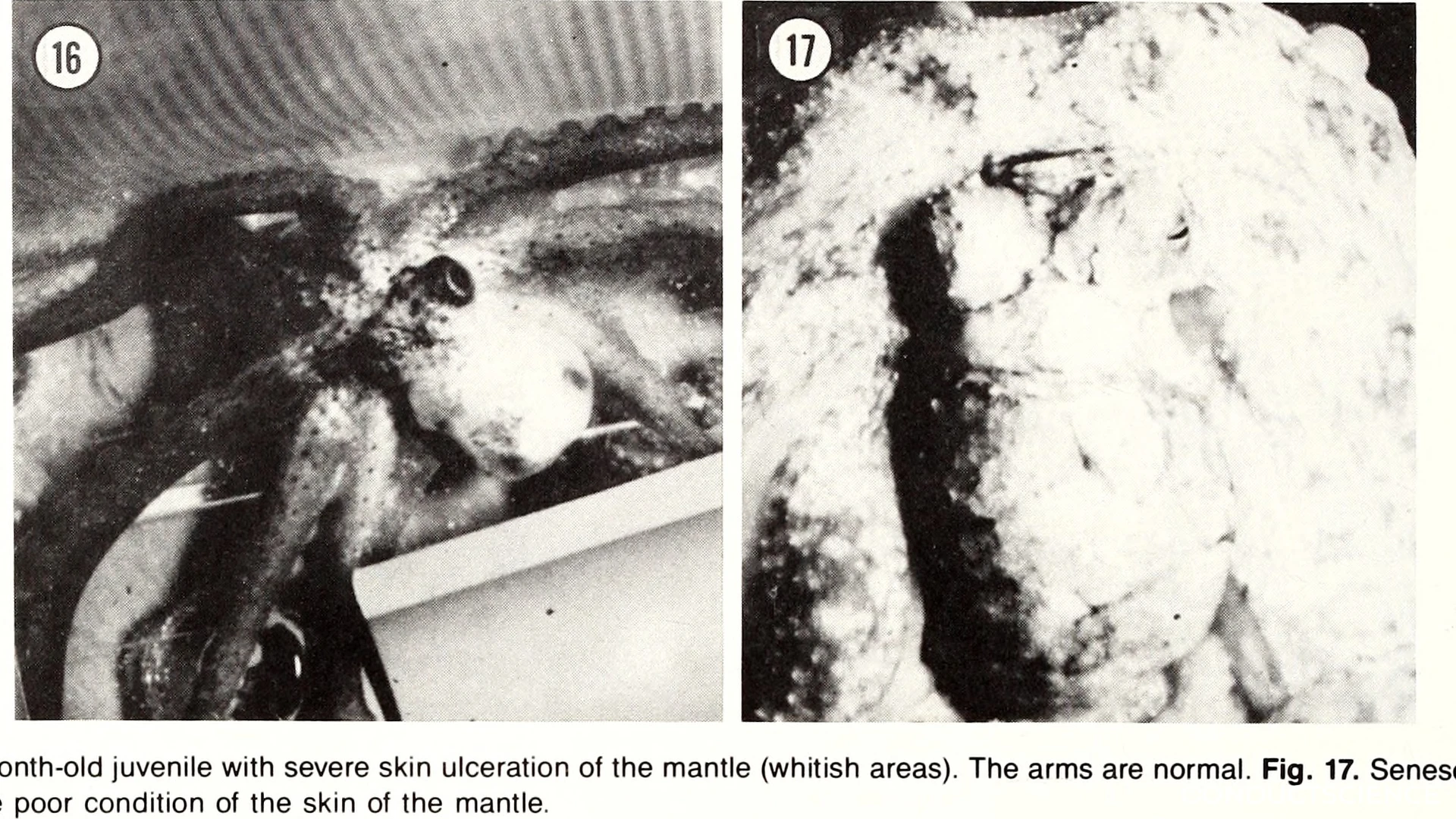
ConductVision delivers automated tracking of octopus maze learning, object play, camouflage, and predator avoidance. Quantify cognitive flexibility, body pattern responses, and den preference in Octopus vulgaris.

Why Octopus in Behavioral Research
Octopuses represent the pinnacle of invertebrate intelligence, with complex problem-solving, observational learning, and play behavior emerging from a fundamentally different neural architecture than vertebrates. Their remarkable camouflage abilities, cognitive flexibility in maze learning, and individual personalities make them a frontier model for comparative cognition research. Studying octopus behavior provides unique insights into convergent evolution of intelligence.
Mather JA. (2008). Cephalopod consciousness: behavioural evidence. Conscious Cogn, 17(1), 37-48. PMID: 17512755
Amodio P, et al. (2019). Grow smart and die young: Why did cephalopods evolve intelligence? Trends Ecol Evol, 34(1), 45-56. PMID: 30446408
What We Measure in Octopus
Validated assays with quantitative parameter tracking for Octopus vulgaris.
Octopuses solve mazes through spatial learning and memory. Trials to criterion, error reduction, path efficiency, and reversal learning measure cognitive flexibility and spatial cognition in these large-brained invertebrates.
| Parameter | Unit | Description |
|---|---|---|
| Trials to criterion | count | Learning speed |
| Error rate across trials | count/trial | Memory improvement |
| Path efficiency | ratio | Shortest vs actual path |
| Reversal learning trials | count | Cognitive flexibility |
Mather JA. (2008). Cephalopod consciousness: behavioural evidence. Conscious Cogn, 17(1), 37-48. PMID: 17512755
Octopuses engage in play-like behaviors with objects, including jetting them across tanks and manipulating them with multiple arms. Object interaction time and play-like events reveal individual differences in exploration and curiosity.
| Parameter | Unit | Description |
|---|---|---|
| Object manipulation time | s | Exploratory contact |
| Arm contacts per object | count | Tactile investigation |
| Play-like behaviors | events/session | Jetting objects, bouncing |
Amodio P, et al. (2019). Grow smart and die young: Why did cephalopods evolve intelligence? Trends Ecol Evol, 34(1), 45-56. PMID: 30446408
Octopuses achieve remarkable camouflage through rapid chromatophore-driven pattern changes. Pattern match latency, pattern type classification, and background matching scores quantify this sophisticated sensorimotor behavior.
| Parameter | Unit | Description |
|---|---|---|
| Pattern match time | s | Latency to camouflage |
| Pattern type | categorical | Uniform, mottle, or disruptive |
| Background matching score | % | Visual similarity metric |
Mather JA. (2008). Cephalopod consciousness: behavioural evidence. Conscious Cogn, 17(1), 37-48. PMID: 17512755
Octopuses maintain home dens and modify them by collecting shells and debris. Den occupancy time, switching frequency, and modification behavior reveal individual personality and spatial attachment.
| Parameter | Unit | Description |
|---|---|---|
| Den occupancy time | h/day | Home-base behavior |
| Den switches | events/week | Exploration vs fidelity |
| Den modification behavior | events | Shell collecting, arranging |
Amodio P, et al. (2019). Grow smart and die young: Why did cephalopods evolve intelligence? Trends Ecol Evol, 34(1), 45-56. PMID: 30446408
Octopus predator avoidance includes jet-propelled escape, ink cloud deployment, and in extreme cases, arm autotomy. Response latency and escape strategy selection reveal threat assessment and decision-making.
| Parameter | Unit | Description |
|---|---|---|
| Escape jet latency | ms | Response speed |
| Ink cloud deployment | yes/no + timing | Defensive inking |
| Arm autotomy threshold | stimulus intensity | Anti-predator sacrifice |
Mather JA. (2008). Cephalopod consciousness: behavioural evidence. Conscious Cogn, 17(1), 37-48. PMID: 17512755
ConductScience Hardware for Octopus Research
Maze System (T-maze/Radial)
Learning and memory testing
Object Interaction Arena
Play behavior observation
Camouflage Substrate System
Body pattern analysis
Den Array Setup
Site fidelity and preference
Seawater Flow-Through System
Cephalopod maintenance
Citations & Further Reading
- Mather JA. (2008). Cephalopod consciousness: behavioural evidence. Conscious Cogn, 17(1), 37-48. PMID: 17512755
- Amodio P, et al. (2019). Grow smart and die young: Why did cephalopods evolve intelligence? Trends Ecol Evol, 34(1), 45-56. PMID: 30446408
Other Model Systems
Discuss Your Octopus Research
Tell us about your models, assays, and experimental goals — we’ll show you how ConductVision fits your workflow.